
Reviewed · STREET FOOD TOURS
Ao Nang: Hands-on Learn to Cook 3 Popular Thai’s street food
Thai cooking is easier than it looks. This 150-minute Ao Nang class gives you a practical way to learn three familiar Thai dishes, rather than simply watching someone else cook. I like the freedom to choose your own soup, main dish, and salad, and I like that the recipes come with you afterward as a PDF. The main consideration is transport: pickup is not included, and one person found it difficult to arrange a Grab ride home.
The class takes place in a clean, open-air kitchen with an English-speaking instructor. I also like the relaxed teaching style, especially from instructors such as New, Tu, Gataii, and Poppy, who are repeatedly praised for being funny, patient, and clear. Some ingredients are prepared before you arrive, which keeps the session moving, but it also means you will not handle every step from start to finish.
In This Review
- Key points at a glance
- Three Thai dishes, your way
- Entering the open-air family kitchen
- How the 150 minutes unfold
- Why the menu choice improves the experience
- The instructors make the difference
- Food quality and what you actually eat
- The recipe PDF is worth keeping
- Price, timing, and the transport catch
- Who should book this class
- Should you book the Ao Nang Thai cooking class?
- FAQ
- Where does the cooking class take place?
- How long does the class last?
- How many dishes do I cook?
- Which dishes can I choose?
- Is the class suitable for vegetarians and vegans?
- Are gluten-free options available?
- Is transportation included?
- Is the cooking class taught in English?
- What is included in the price?
- Can I cancel the booking for a refund?
Key points at a glance
- Choose your own three dishes: Pick one soup, one main course, and one salad instead of making the same menu as everyone else.
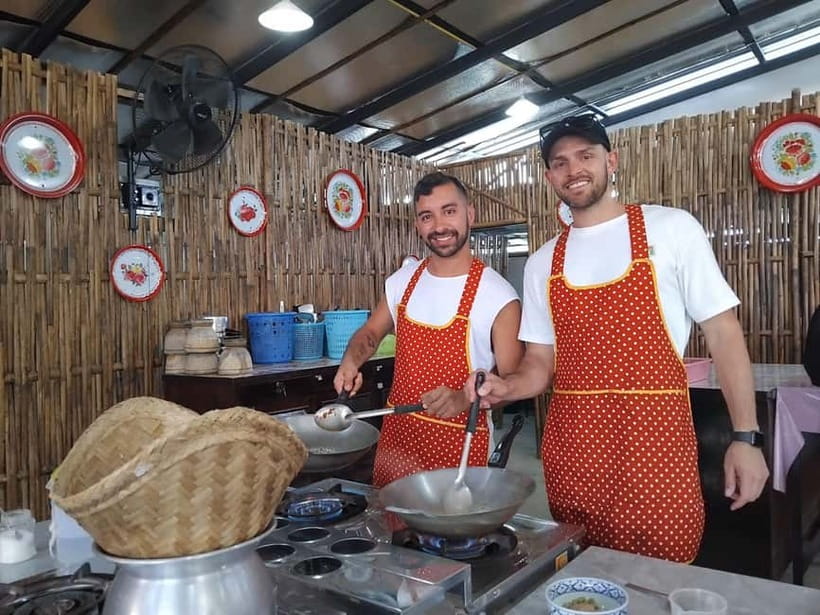
- A real hands-on class: You prepare, cook, season, and eat your own food in an open-air kitchen.
- Strong choice for special diets: Vegan, vegetarian, and gluten-free adaptations are available if you give advance notice.
- Friendly instruction matters here: New, Tu, Gataii, Poppy, Thiwa, and other instructors are praised for clear explanations and good humor.
- Useful take-home value: The PDF recipe book includes the class dishes and many additional recipes.
- Good price for a meal and a skill: At $28 per person, you get three dishes, ingredients, water, instruction, photos, and food to eat.
Three Thai dishes, your way
The format is simple and well judged. You choose one dish from each of three groups, giving you a soup, a main course, and a salad. This makes the class feel more personal than a demonstration where everyone follows one fixed recipe.
For the soup, you can choose local chicken soup or chicken in coconut milk soup. Other menu descriptions mention options such as Tom Yum, Tom Khao Khai, and Tom Zab, so the exact choices may depend on the session. Ask the instructor what is available when you arrive.
Your main course can be Pad Thai, fried holy basil, or cashew nuts with chicken. These are useful choices for home cooking because they show different parts of Thai food: noodles and wok work with Pad Thai, fragrant herbs and seasoning with holy basil, and a sweet-savory combination with cashew chicken.
The final choice is papaya salad or cucumber salad. Papaya salad gives you the sharp, fresh, spicy side of Thai cooking, while cucumber salad is milder and easier for diners who do not enjoy much heat. You can usually adjust the spice level, and the class is designed to accommodate different preferences.
I like this three-course structure because it gives you variety without making the 150-minute session feel rushed. You cook enough food to understand several techniques, then sit down and eat the result.
More Street Food Tours:
- Bangkok: Michelin Guide Street Food Tour by Tuk Tuk
★ 4.4 · 1,274 reviews - Small-Group Chiang Mai Evening Street Food Tour
★ 4.5 · 826 reviews - Bangkok Tuk-Tuk Tour by Night with Chinatown Street Food Meal
★ 5.0 · 635 reviews
Entering the open-air family kitchen
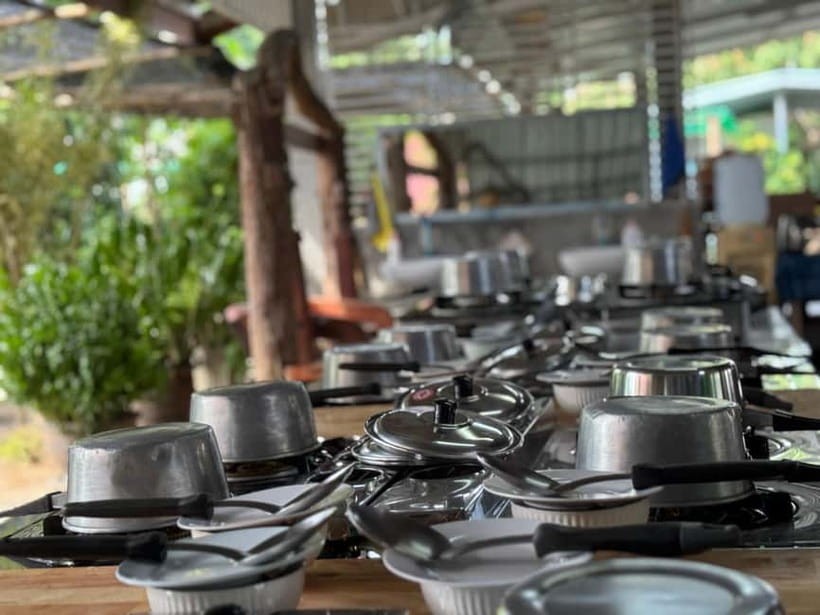
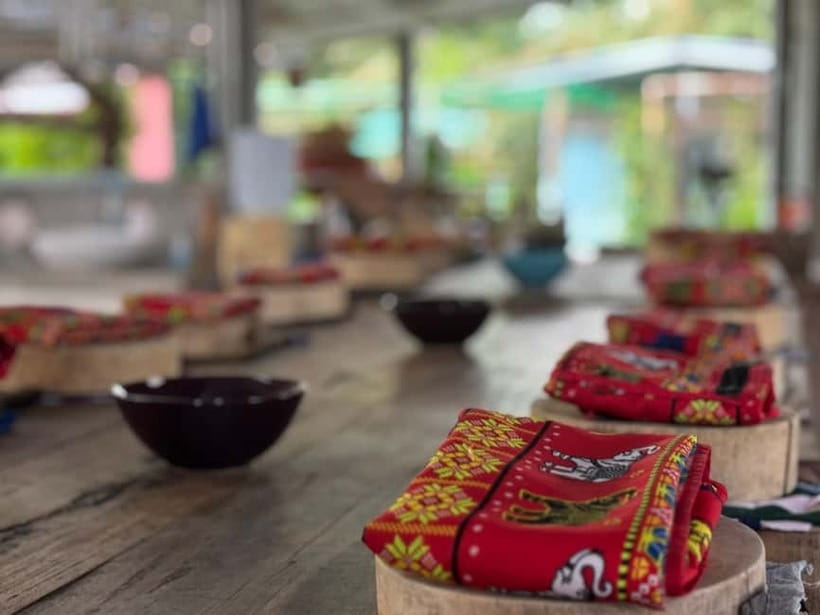
The setting is a traditional Thai family-style kitchen with an open-air layout. It is described as clean and organized, which matters when you are chopping, mixing sauces, and working around heat for the first time.
You meet your instructor before cooking begins. The teaching is in English, and the strongest part of the class appears to be the personal guidance. New is praised for making Thai cooking easy to follow, while Tu is described as clear, friendly, and helpful. Gataii is often singled out for her humor and ability to keep the group relaxed.
That mood is important. Cooking classes can become uncomfortable when an instructor moves too quickly or makes beginners feel clumsy. Here, the tone is forgiving. One person accidentally got a sauce wrong and the instructor turned the mistake into a running joke instead of making it embarrassing.
The class is suitable for people who do not cook often. A 10-year-old enjoyed taking part, and a parent and young child, aged six and a half, also had a good time. You should still keep normal care around hot pans and cooking surfaces, but the activity is not aimed only at serious food enthusiasts.
How the 150 minutes unfold
The class begins with an introduction to the dishes and ingredients. The instructor explains the herbs, spices, oils, sauces, and vegetables being used, then describes how each item affects the finished dish.
This is one of the most useful parts for cooking at home. Thai recipes can look simple on paper, but the balance of salty, sweet, sour, spicy, and aromatic ingredients is easy to miss. Learning what each ingredient does gives you more control later.
Some chopping and preparation may already be done. Onion, carrot, lime, and similar ingredients have been prepared in advance in at least one session. This saves time and lets you focus on the cooking rather than spending half the class cutting vegetables.
The tradeoff is clear: you will not perform every single preparation task yourself. If your main goal is knife practice or a full restaurant-style kitchen routine, this may feel slightly limited. If you want to cook three dishes and eat them within two and a half hours, the preparation is sensible.
You then cook your selected soup, main dish, and salad with the instructor’s guidance. The recipes are made to be repeatable at home, and the instructions are described as simple enough for beginners. The instructor can explain steps again, answer questions, and adjust the dishes to suit your taste.
Finally, you eat what you cooked. You do not simply watch a chef prepare a plate and then receive it at the end. The meal is part of the lesson, and tasting your own food helps you understand how the seasoning came together.
Why the menu choice improves the experience
The ability to select your own dishes is one of the best features. You can focus on Pad Thai if it is the Thai meal you have always wanted to make, or choose a soup and salad that you rarely attempt at home.
The choice also works well for families and mixed groups. One person can choose a vegetarian dish, another can make chicken, and everyone can still cook alongside one another. You are not forced to eat something you dislike simply because it is the day’s fixed menu.
Vegetarian and vegan diners receive particular care. Sauces can be substituted, and meat or eggs can be removed in favor of tofu where appropriate. Gluten-free options are also available on request.
You need to mention dietary restrictions in advance. Do not wait until the first pan is hot, since sauces and prepared ingredients may need to be changed before the class begins.
Spice is another point to discuss with the instructor. Thai food can be adjusted, and the class allows choices such as spicy or not spicy. Still, explain your comfort level clearly rather than assuming a mild dish will match your usual idea of mild.
More Food Tours:
- Krabi: Elephant Feeding Program with Food Preparation
★ 4.8 · 43 reviews - Bangkok: White Orchid Chao Phraya Dinner Cruise free Beer
★ 4.4 · 4,573 reviews - Bangkok by Night: Temples, Markets and Food Tuk-Tuk Tour
★ 5.0 · 3,752 reviews - Bangkok: Backstreets Food Tour with 15+ Tastings
★ 4.9 · 2,880 reviews
The instructors make the difference
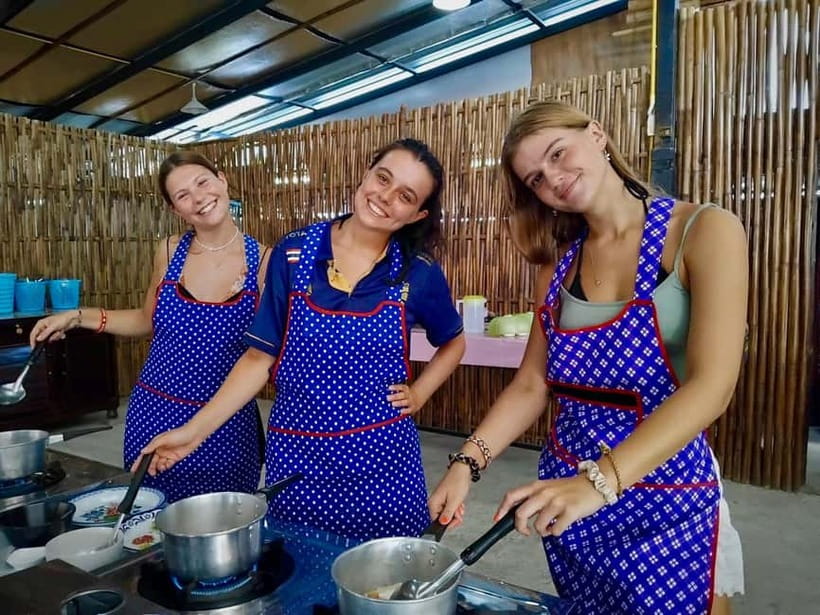
The recipes are important, but the instructor will shape your memory of the class. The praise is especially strong for the teaching style: friendly, patient, entertaining, and clear.
New appears frequently in the feedback and is described as warm, energetic, and good at making Thai cooking feel manageable. Tu receives similar praise for answering questions and explaining each dish carefully. Gataii is noted for creating a relaxed atmosphere and helping even when someone arrives late.
Poppy and Thiwa are also mentioned for clear instruction and calm guidance. The names matter because this is not an anonymous demonstration. You have an instructor close by, helping you correct a sauce, understand an unfamiliar ingredient, or decide how much chili to use.
The class can be social without becoming forced. Small groups of about 10 to 12 people have been reported, while other sessions may vary. A smaller group gives you more direct help and makes it easier to ask questions. If the class is fuller, you may have less individual attention, though the structure still keeps everyone cooking.
Food quality and what you actually eat
The finished food is a major part of the value. You prepare three dishes and eat the food during the class, so this is both a lesson and a substantial meal.
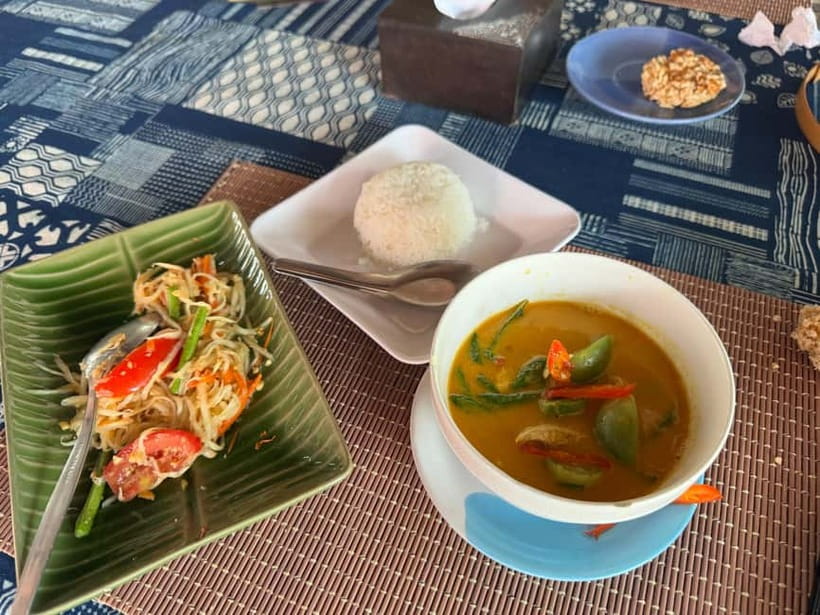
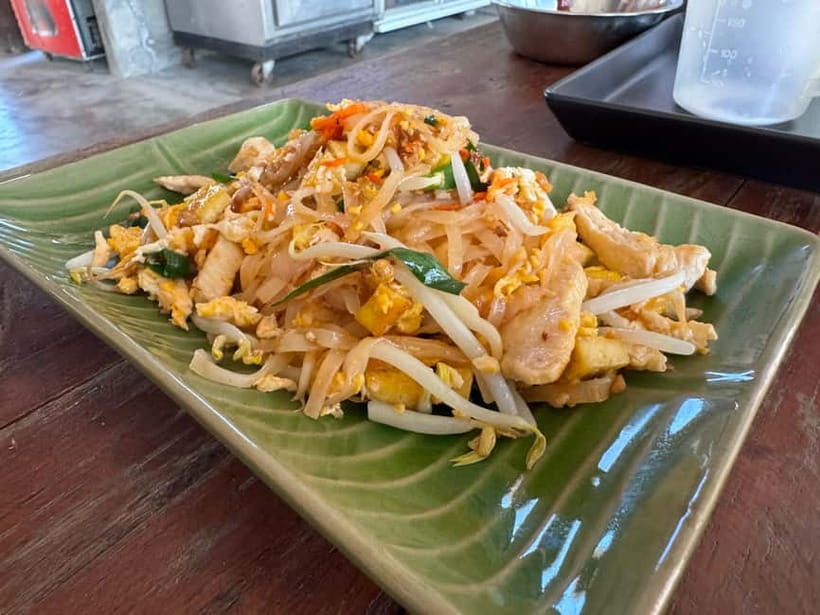
Pad Thai, chicken in coconut milk soup, cucumber salad, papaya salad, and other selected dishes have all been enjoyed by people with different cooking backgrounds. Even soup choices that some diners expected to dislike turned out to be highlights.
The class does not promise restaurant-level presentation. Its strength is flavor, participation, and repetition. You learn how the dish is built, then taste the result while the instructions are still fresh in your mind.
Drinking water is included. Beer, soft drinks, and alcohol are available for an extra charge, but alcohol is not part of the basic price. Pets, drugs, and alcohol brought into the activity are not allowed.
The recipe PDF is worth keeping
A cooking class has limited value if you forget everything by the next morning. The PDF recipe book solves much of that problem.
You receive recipes for the dishes covered, along with a larger selection of recipes to try later. This is more useful than a single printed card because you can return to it when you want to make Thai food at home.
I would save the PDF before leaving Thailand and organize the recipes on your phone or tablet. Take a few notes during the class as well, especially about spice levels, ingredient substitutions, and the texture you want in the finished dish.
The recipes are described as simple to follow, but you may need to find Thai ingredients at home. The class teaches techniques that can be repeated, yet the exact taste will depend on the brands and produce available where you live.
Price, timing, and the transport catch
At $28 per person, this is good value. You receive instruction, all cooking ingredients, drinking water, three dishes, a PDF recipe book, and photos of the activity. You also leave with a full meal and a skill you can reuse.
The price compares well with paying for a meal alone, especially if you are interested in food rather than simply looking for lunch. It is also cheaper than many longer cooking experiences, though the shorter format means the focus stays on three dishes.
The class lasts 150 minutes, with starting times based on availability. Morning and evening sessions are both represented in the feedback. An evening class can fit nicely after a day around Ao Nang, while a morning session leaves the rest of your day free.
There is no pickup and no transportation service. You must arrange your own way to the kitchen and back. Plan the return trip before class ends, particularly if you are depending on a ride-hailing service. One person specifically had trouble finding a Grab afterward.
Free cancellation is available up to 24 hours before the activity for a full refund. You can also reserve now and pay later, which helps if your Krabi schedule is still changing.
Who should book this class
I would recommend it to first-time visitors who want more than another restaurant meal. It gives you a friendly introduction to Thai ingredients without demanding advanced cooking skills.
Families can also make good use of it. Children have enjoyed taking part, and the menu choices give adults a way to manage spice and dietary needs. Keep younger children close around hot cookware.
Vegetarians, vegans, and people avoiding gluten should contact the operator ahead of time. The class is flexible, but advance notice makes the substitutions easier.
This may not suit you if you want a long market visit, a full lesson on preparing every ingredient, or private one-to-one instruction. It is also not a sightseeing tour. The reward is the kitchen, the meal, and the chance to repeat the dishes later.
Should you book the Ao Nang Thai cooking class?
I would book this if you want a useful, good-value activity in Krabi and enjoy learning by doing. The menu flexibility, patient instructors, and recipe PDF make it more practical than a simple food demonstration.
Go in expecting some ingredients to be prepared ahead of time and arrange your return transport before you start. If those limits do not bother you, $28 buys an entertaining class, three dishes, a generous meal, and a skill you can take home.
FAQ
Where does the cooking class take place?
The activity takes place in Ao Nang, Krabi, Thailand, in a clean, open-air kitchen with a traditional Thai family-style setting.
How long does the class last?
The cooking class lasts 150 minutes.
How many dishes do I cook?
You choose three dishes: one soup, one main course, and one salad.
Which dishes can I choose?
Soup choices include local chicken soup or chicken in coconut milk soup. Main choices include Pad Thai, fried holy basil, or cashew nuts with chicken. Salad choices include papaya salad or cucumber salad. Other soup variations may be offered depending on the session.
Is the class suitable for vegetarians and vegans?
Yes. Vegetarian and vegan options are available, including substitutions such as tofu where suitable. Tell the operator about your diet in advance.
Are gluten-free options available?
Yes. Gluten-free options are available on request. You should provide this information before the class.
Is transportation included?
No. Pickup and transportation are not included, so you must arrange your own way to and from the kitchen.
Is the cooking class taught in English?
Yes. The instructor teaches in English.
What is included in the price?
The price includes the hands-on cooking class, ingredients, drinking water, a PDF recipe book, and photos of the activity.
Can I cancel the booking for a refund?
Yes. You can cancel up to 24 hours in advance for a full refund. Reserve-now-and-pay-later booking is also available.
More Workshops
- Krabi: Traditional Thai Cooking Class with Local Chef
★ 4.9 · 537 reviews - Krabi: Cooking Class at Thai Charm Cooking School with Meal
★ 4.9 · 430 reviews - Ya Thai Cookery School Class in Krabi
★ 5.0 · 292 reviews - Ao Nang: Authentic Thai Local Cooking Class
★ 4.8 · 291 reviews
Just added around Krabi
- Ko Lanta: Ko Aung, Ko Phee Ghost Cave Island, Talabeng Kayak★ 4.4 · 16 reviews
- Ko Lanta: Kayak and Long-Tail Boat Nature and Wildlife Tour★ 4.8 · 16 reviews
- Lanta Old Town and Mangrove Forest Sightseeing Tour★ 4.0 · 16 reviews
- Krabi: Ultimate Phi Phi & Maya Bay Ascent by Speedboat★ 4.2 · 16 reviews
- Full-Day Sea Kayaking Adventure in Ao Thalane Bay from Krabi★ 5.0 · 17 reviews
- From Phi Phi islands: Phi Phi, Maya Area by longtail Boat★ 4.4 · 17 reviews
- Krabi 7 Islands Sunset & Bioluminescence by Longtail boat★ 3.5 · 17 reviews
- Krabi: 4 Islands & Thale Waek’s Sandbar Tour By Speedboat★ 4.2 · 17 reviews
Street Food Tours, compared.
Small-Group Chiang Mai Evening Street Food Tour
Read our review →
Bangkok Tuk-Tuk Tour by Night with Chinatown Street Food Meal
Read our review →


Bangkok Tuk-Tuk by Night with Chinatown Street Food Meal
Read our review →
The 10 Tastings of Chiang Mai With Locals: Private Street Food Tour
Read our review →
Browse the lists this tour appears in