
Reviewed · TUK-TUKS
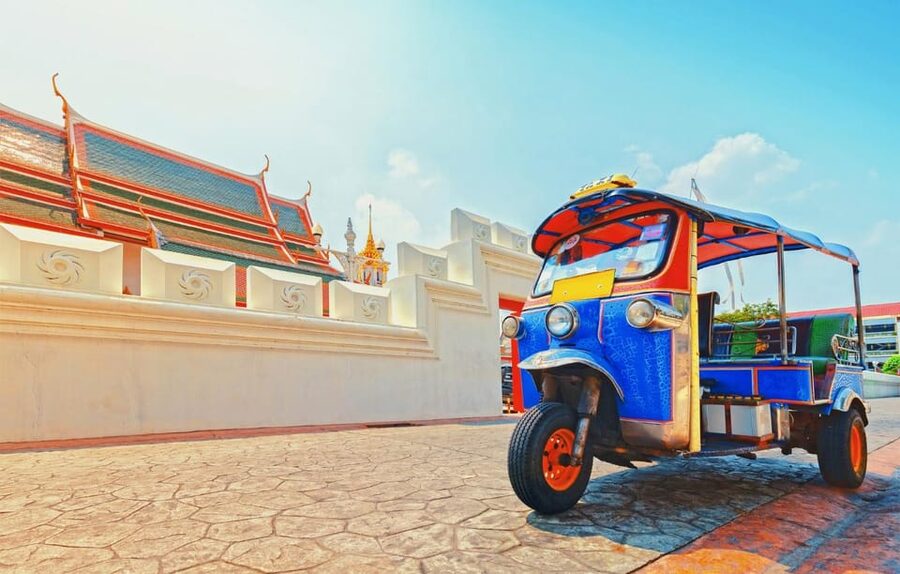
Bangkok: Guided Tour in a Typical Thai Tuk-Tuk
Bangkok makes an entrance on three wheels. This two-hour ride is a lively way to see the city’s famous sights quickly, with a local English-speaking guide adding stories between stops. I especially like the route’s mix of grand temples, the Flower Market, and Chinatown, plus the small lotus-folding activity. The main drawback is clear: you see the major sites from outside and do not enter the Grand Palace, Wat Pho, Loha Prasat, or Wat Arun.
I also like the simple meeting point at Museum Siam MRT station. You avoid the usual tuk-tuk price haggling, and the ride ends in Chinatown, where you can continue with dinner or a walk. Just keep your expectations in check: this is an introduction, not a full temple tour, and two hours passes quickly.
In This Review
- Key details before you book
- Why a Bangkok tuk-tuk ride works so well
- Starting at Museum Siam and Sanam Chai MRT
- The Grand Palace: a grand view without palace entry
- Wat Suthat and the Giant Swing
- Wat Ratchanatdaram and the Loha Prasat view
- Wat Pho and the missing Golden Buddha possibility
- The Flower Market and the lotus-folding activity
- Wat Arun from the opposite riverbank
- Chinatown: the tour’s practical grand finale
- The guide and group setup
- Is $28 good value for two hours?
- Morning, afternoon, or evening?
- Who should book this ride?
- Should you book the Bangkok tuk-tuk tour?
- FAQ
- How long is the Bangkok tuk-tuk tour?
- Where does the tour begin?
- Where does the tour finish?
- Which language is the tour conducted in?
- Is a tuk-tuk ride included?
- Does the tour enter the Grand Palace?
- Does the tour enter Wat Pho?
- Does the tour visit Wat Arun?
- Is the lotus-flower activity included?
- Is water provided?
Key details before you book
- A fast tour of old Bangkok: The route links the Grand Palace, Giant Swing, Wat Ratchanatdaram, Wat Pho, Chinatown, and other central sights.
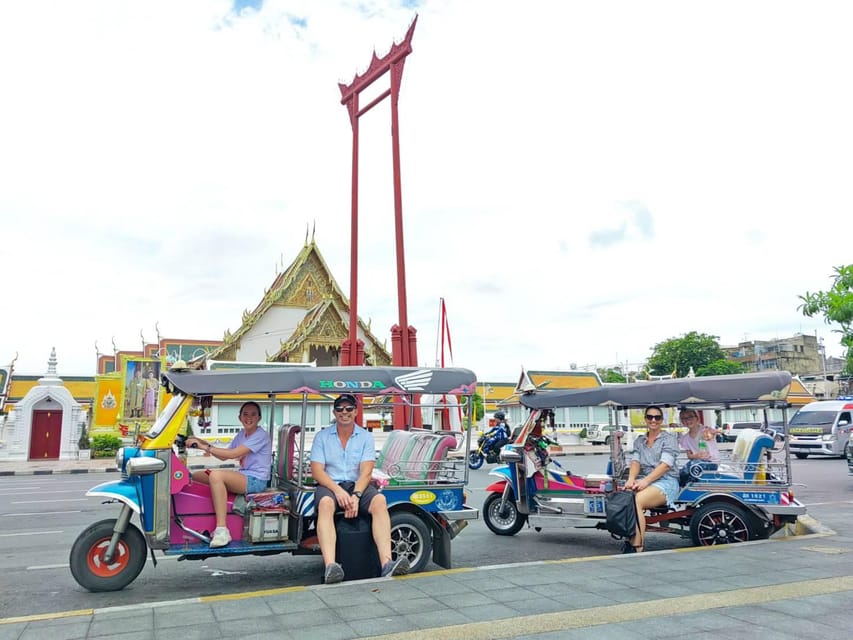
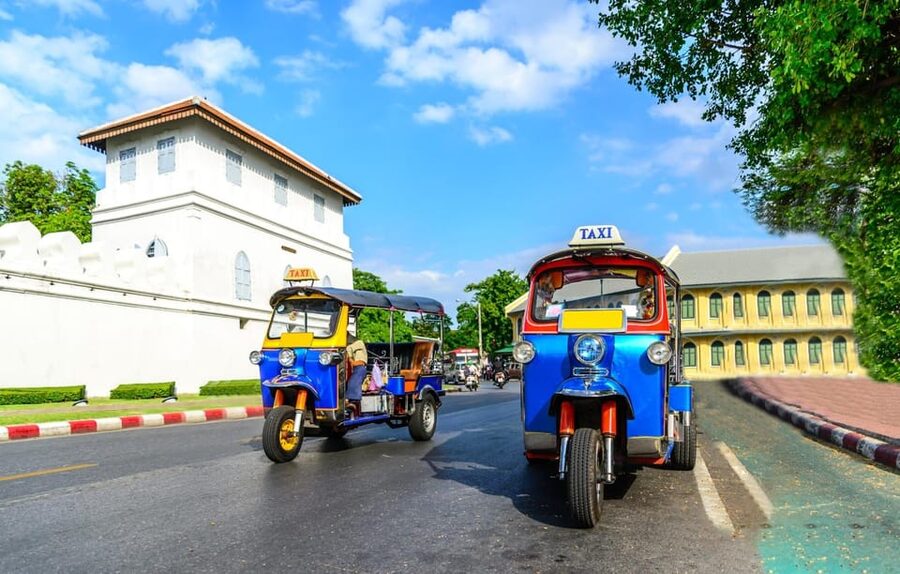
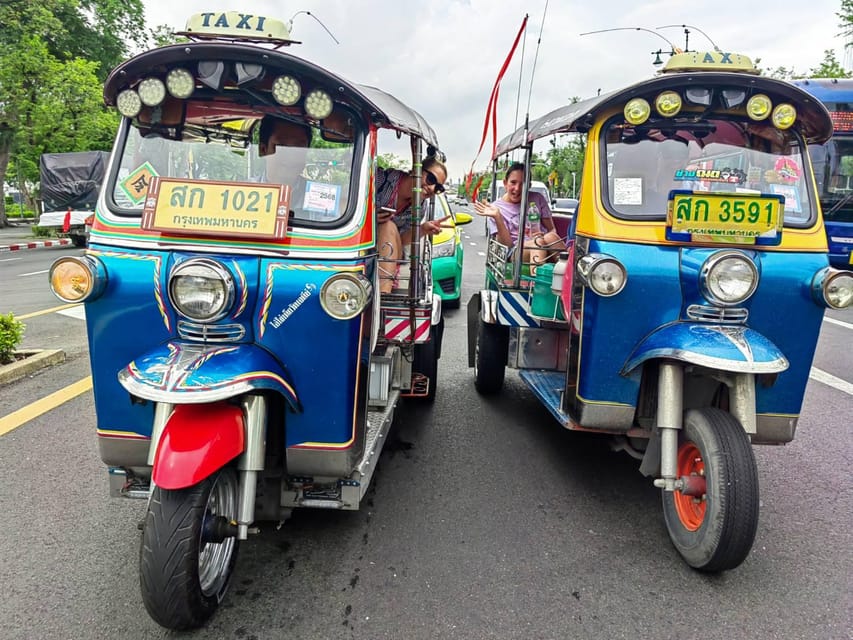
- The ride is part of the attraction: You travel in a traditional Thai tuk-tuk, with its open sides, lively engine note, and close-up view of city streets.
- Outside views only: The tour does not include entry to the Grand Palace, Loha Prasat, Wat Arun, or Wat Pho.
- A useful first-day activity: The route helps you decide which places deserve a longer visit later.
- Small cultural touch: You learn to fold a lotus flower, an easy activity that adds more than another quick photograph.
- The finish works well: The tour ends in Chinatown, close to food stalls and restaurants, especially handy for the 4 p.m. departure.
Why a Bangkok tuk-tuk ride works so well
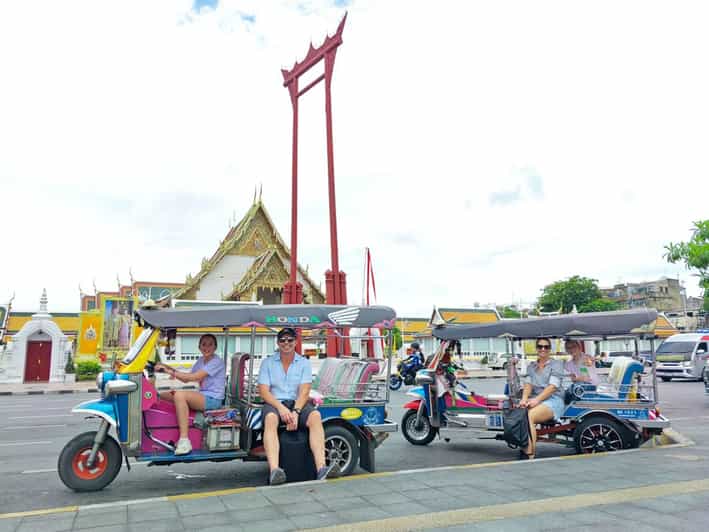
Bangkok’s tuk-tuk is not simply a cheap taxi with a roof. It is one of the city’s familiar symbols, and riding in one gives you a direct feel for the traffic, sounds, smells, and movement of central Bangkok.
The open sides make the city feel close. You can watch shopfronts slide past, hear the traffic around you, and catch glimpses of temples and old streets without looking through a bus window. It can be noisy and bumpy, but that is part of the point. If you want quiet, air conditioning, and a smooth ride, take the MRT. If you want a memorable Bangkok experience, take the tuk-tuk.
This tour also removes one common nuisance. You do not need to negotiate a fare with a driver or wonder if the route is being extended for a shopping stop. The guide and drivers organize the ride, while you concentrate on the city.
The strongest part of the experience is the guide. Ana and Anna receive repeated praise in the feedback, while guides named Johan, Yohan, Enjoy, Ken, and Bella also made strong impressions. Names and spellings may vary by departure, but the pattern is consistent: the guide explains what you are about to see, keeps the group moving, answers questions, and adds personal observations about Thai life.
That matters because the sights can blur together when you see several temples in a short period. A good explanation gives each place a role in Bangkok’s story.
A few more tours and experiences worth a look
- Bangkok by Night: Temples, Markets and Food Tuk-Tuk Tour
★ 5.0 · 3,752 reviews - Bangkok Midnight Food Tuk Tuk Tour
★ 5.0 · 2,542 reviews - Bangkok: Michelin Guide Street Food Tour by Tuk Tuk
★ 4.4 · 1,274 reviews
Starting at Museum Siam and Sanam Chai MRT
The meeting point is outside the Museum Siam exit at Sanam Chai MRT station. This is a practical choice because the metro gets you close without asking you to fight through Bangkok traffic.
Pay attention to the exit. Museum Siam has two exits, and one useful tip is to use the front exit, not the back-road exit. Your guide waits outside the correct Museum Siam entrance, so allow a few minutes to orient yourself before the scheduled start.
The tour begins with a short tuk-tuk ride of about five minutes. That first leg is brief, but it lets you settle into the vehicle before the sightseeing stops begin.
You receive a bottle of water, which is a small but welcome inclusion in Bangkok’s heat. Wear light clothing and comfortable shoes. You will mainly be making short stops and taking photographs, but the streets and temple areas still call for sensible footwear.
The Grand Palace: a grand view without palace entry
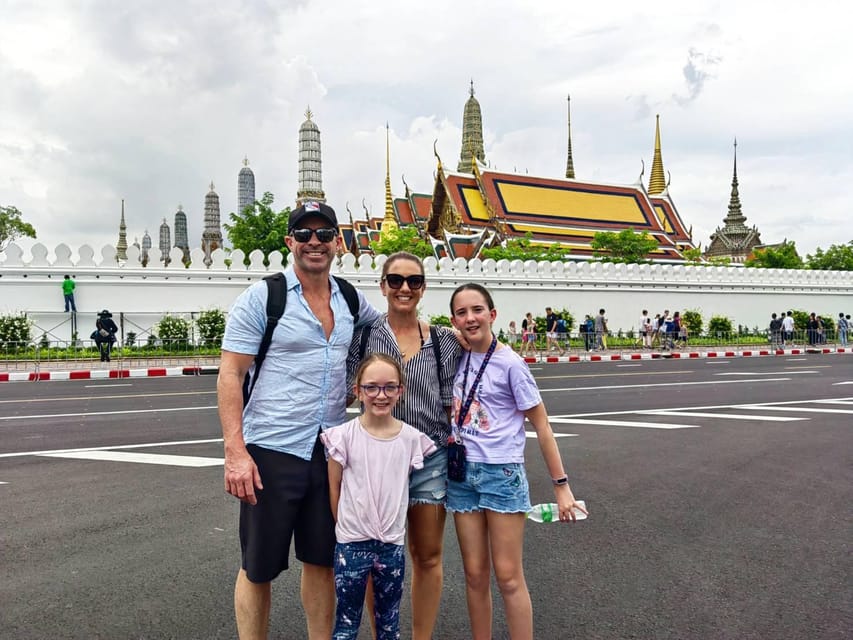
The first major stop is the Grand Palace, one of Bangkok’s defining sights. You get about ten minutes for a photograph and an exterior look.
That short stop is useful for orientation. The palace complex is central to any first visit, and seeing it early gives you a sense of the scale and importance of Bangkok’s old royal district. Your guide can explain what you are looking at, which is far better than arriving alone, snapping a photograph, and moving on without context.
But do not book this tour expecting a palace visit. Entry is not included, and the tuk-tuk does not take you inside. If the Grand Palace is high on your list, return separately with enough time for security, ticketing, and a proper visit.
Ten minutes is enough for a quick look. It is not enough to explore the complex.
Wat Suthat and the Giant Swing
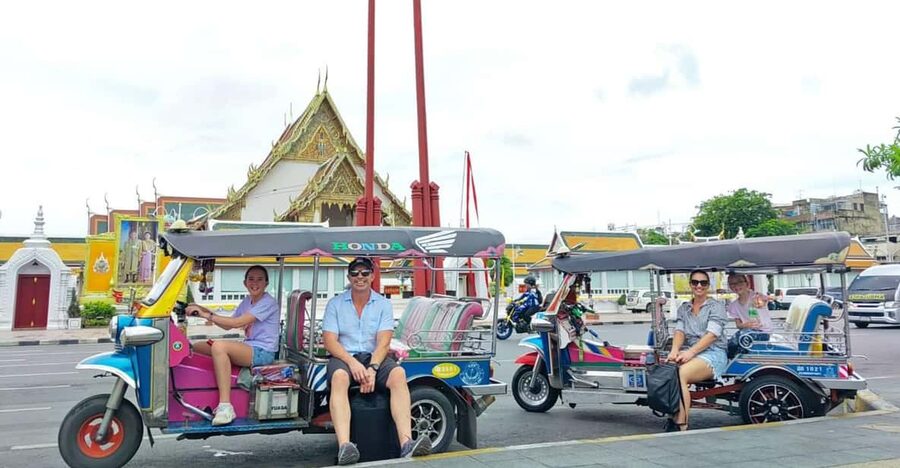
Next comes Wat Suthat and the Giant Swing, another photo stop lasting about ten minutes. The Giant Swing is easy to recognize, and the surrounding temple area gives the route a different feel from the royal precinct.
This stop works well because it breaks up the ride with a clear landmark. You can take photographs while the guide explains the site and its place in Bangkok. The time is short, so listen first and photograph second if you want to understand what you are seeing.
As with the Grand Palace, this is an outside visit. The tour is designed to show you the city’s key sights, not to provide a detailed temple inspection. I would treat Wat Suthat as a preview and return later if its details catch your attention.
Something different for another day:
- Bangkok: Damnoen Saduak Market and Maeklong Railway Market
★ 4.5 · 26,723 reviews - The Old Siam: Damnoen Saduak and Maeklong Railway Market
★ 4.5 · 10,992 reviews - From Bangkok: Ayutthaya Temples Guided Tour with Lunch
★ 4.7 · 10,535 reviews - Bangkok: Train Market & Floating Market with Boat Ride
★ 4.7 · 9,547 reviews
Wat Ratchanatdaram and the Loha Prasat view
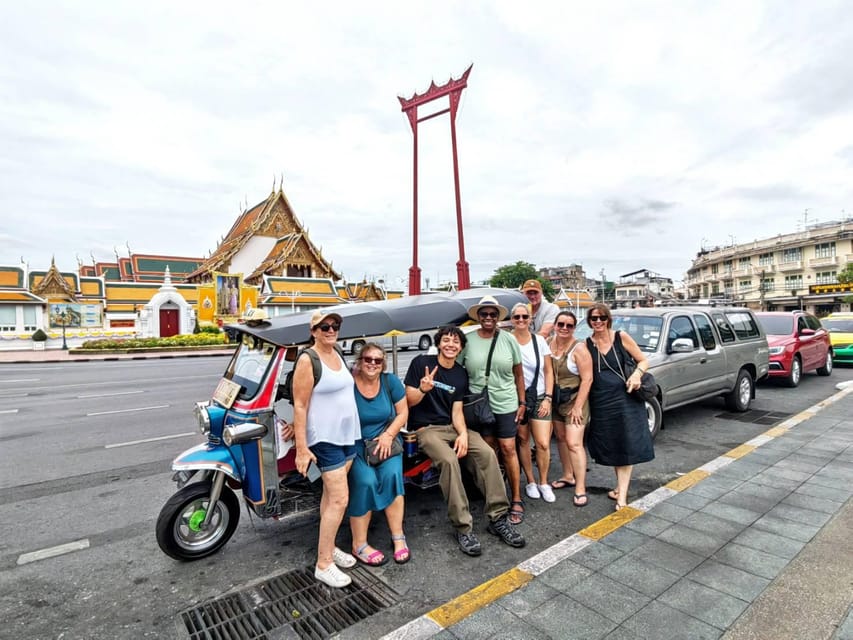
The route continues to Wat Ratchanatdaram, known for the distinctive Loha Prasat structure. You get another ten-minute photo stop.
This is one of the more visually unusual places on the route. The structure looks different from the better-known golden temple forms, so it adds variety to a tour that could otherwise become a parade of similar façades.
The tour information also makes clear that Loha Prasat is viewed from outside. That is important when planning your Bangkok days. You can mark the location for a later return, but you will not have time here for a full look around the temple grounds.
The quick rhythm is both the tour’s strength and its limit. You cover a lot of ground, but each location receives only a short introduction.
Wat Pho and the missing Golden Buddha possibility
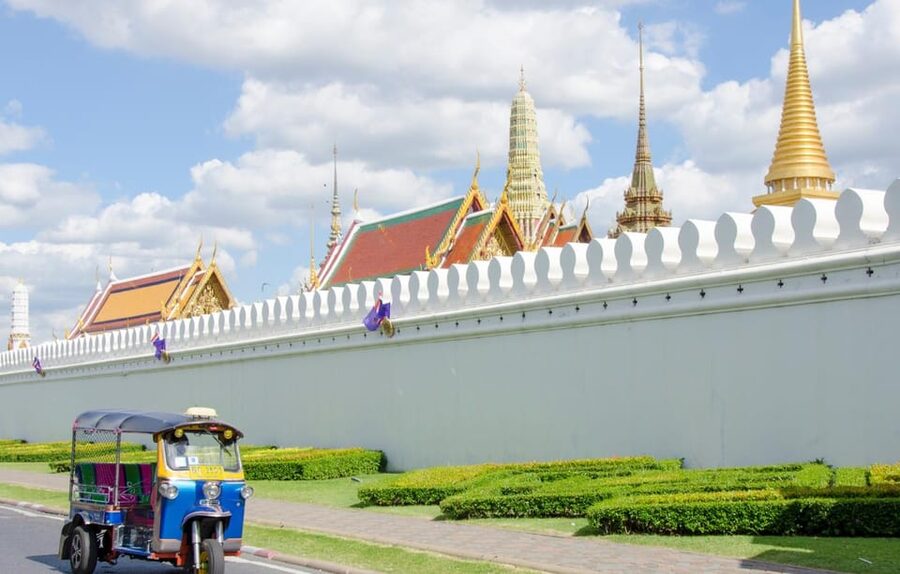
Wat Pho is another ten-minute exterior stop. The temple is one of Bangkok’s best-known sights, so it makes sense to include it on a first look at the old city.
The stop gives you time for photographs and a guide’s explanation, but not an interior visit. You should also know that the route may pass the area without giving you the detailed look you want at the famous reclining Buddha. One person specifically found it disappointing to miss the Golden Buddha while moving through the city.
That comment points to a useful planning idea: do not rely on this ride for a close look at every famous image or statue. If a particular Buddha figure matters to you, schedule a separate visit. This tuk-tuk trip gives you a broad introduction, not guaranteed time at every individual feature.
The Flower Market and the lotus-folding activity
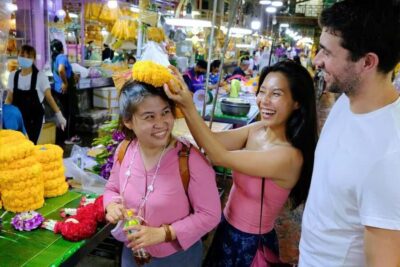
The Flower Market, Pak Khlong Talat, is one of the most appealing parts of the route. It brings you closer to everyday Bangkok rather than only presenting monumental buildings.
You may see flowers being arranged and sold, and the setting gives the tour a more local, working-city feel. Several people singled out the Flower Market as a favorite stop. That makes sense: it offers color, movement, scent, and a change of pace after the temple views.
The included lotus-flower activity adds a hands-on moment. Your guide shows you how to fold a lotus flower, connecting the visit with Thai religious and cultural traditions. It is a modest activity, but it helps the tour feel less like a drive-by sightseeing circuit.
You should still expect a quick visit rather than a long market wander. The overall tour lasts only two hours, and the route must keep moving. If you love markets, return later and give the area more time.
Wat Arun from the opposite riverbank
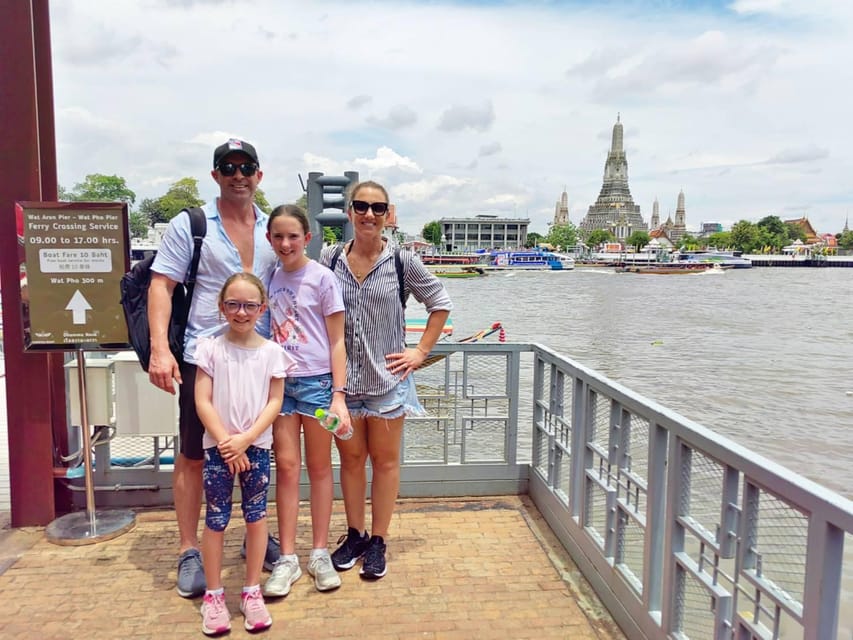
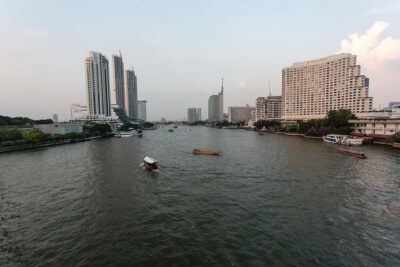
Wat Arun is part of the promised city view, seen from the other side of the river rather than visited directly. This is a good example of how the tour uses the tuk-tuk to link several areas without turning each one into a formal guided entry.
The temple’s riverside position gives you a different kind of photograph from the inland sights. You see it as part of Bangkok’s river setting, not only as a temple wall or entrance gate.
Again, no interior visit is included. If you want to climb, inspect, or photograph Wat Arun up close, plan another outing. The tuk-tuk tour gives you the view and the story, then moves on.
Chinatown: the tour’s practical grand finale
The tour finishes in Yaowarat Road, Bangkok’s Chinatown, after a stop of about twenty minutes. This is the longest named stop on the route, and it is a smart place to end.
Chinatown gives you a strong change of mood. After royal buildings and temple compounds, you finish among shops, restaurants, street food, and busy city life. The tour does not need to return you to its starting point, so you can keep exploring on your own.
The 4 p.m. departure is especially useful. A two-hour schedule should put you in Chinatown around 6 p.m., leaving you in a good position to find dinner. One practical approach is to treat the tour as both sightseeing and a dinner-area introduction. You can ask your guide for general suggestions, then continue at your own pace after the formal ride ends.
The twenty-minute stop is still brief. It will not cover all of Yaowarat Road, but it gives you enough to decide if you want to stay longer.
The guide and group setup
The guide is the difference between a fun ride and a noisy vehicle journey with random stops. The best feedback focuses on guides who explain each stop before the next ride, tell stories about Thai culture, and chat with people rather than reciting a script.
Ana and Anna are especially praised for warmth, humor, clear English, and attention to the group. Johan and Yohan are also described as friendly and well prepared. You cannot choose your guide from the information provided, but the repeated praise suggests that guide quality is a major part of the experience.
The group setup can vary. The tour may place two people together in one tuk-tuk while several tuk-tuks travel as a group. One booking of two people was paired with other groups, with each group assigned its own vehicle. Another person had a private tuk-tuk, possibly because of a late booking and available space.
That means you should not assume a private ride. You can expect the guide to coordinate the group, with everyone meeting at the next sight. This arrangement keeps the tour personal without forcing a large crowd into one vehicle.
Is $28 good value for two hours?
At $28 per person, this is not the cheapest way to ride a tuk-tuk. You could possibly arrange a short local ride for less, but that would not include a licensed English-speaking guide, a planned route through several major sights, water, or the lotus activity.
I see the price as reasonable if you have limited time or feel unsure about arranging Bangkok transport yourself. You are paying for the guide’s local knowledge, the convenience of a set route, and the chance to cover several districts without bargaining at every stop.
The value is weaker if you already know Bangkok well, speak enough Thai to arrange rides, or plan to enter the Grand Palace and temples on your own. In that case, the tour may feel like a quick surface look at places you want to explore properly.
One comment called it slightly pricey for a short activity, and that is a fair assessment. Two hours is not a half-day tour. The price makes the most sense as a first-day sampler or a compact activity between larger plans.
Morning, afternoon, or evening?
The schedule varies, so check the available starting times when you book. The experience works at different points in the day, but each timing gives you a different feel.
A morning departure can be useful if you want a calm introduction before a longer temple visit. The light may also help with photographs, though the exact atmosphere depends on the day.
An afternoon departure lets you finish in Chinatown near dinner time. The 4 p.m. option has a particularly practical rhythm, ending around 6 p.m.
An evening ride adds city lights and a more dramatic tuk-tuk atmosphere. One person specifically recommended going at night with the lights on, while another described seeing Bangkok after dark as a strong part of the experience. If your priority is atmosphere rather than clear daytime detail, an evening departure may be your best choice.
Who should book this ride?
I would recommend it to first-time visitors, solo visitors who want help with photographs, couples, and anyone with only a short stay in Bangkok. It is also useful on your first day because it helps you learn the shape of the old city before choosing where to spend more time.
Families may enjoy the tuk-tuk ride and lotus activity, though the open vehicle and traffic can feel intense for some children. Anyone who dislikes noise, road movement, or quick stops should think twice.
This is not the right choice if you want interior access to the Grand Palace, Wat Pho, Wat Arun, or Loha Prasat. It is also not ideal if you want a slow market visit or a long historical lecture at each temple.
Bring a phone or camera, water beyond the included bottle if you need more, and patience for Bangkok traffic. Keep your belongings secure in the tuk-tuk, and remember that the ride itself is part of the sightseeing.
Should you book the Bangkok tuk-tuk tour?
Book it if you want a lively two-hour introduction to Bangkok, especially on your first day or during a short stop in the city. The route covers a useful cluster of landmarks, the Flower Market adds a local touch, and ending in Chinatown makes the timing practical.
Skip it if your main goal is entering the temples or spending serious time inside the Grand Palace. For everyone else, $28 buys a well-organized ride, a guide who can make the sights meaningful, and a fun first taste of Bangkok’s streets without the usual fare negotiation.
Free cancellation is available up to 24 hours before the activity, and you can reserve now and pay later, which helps if your plans are still shifting.
FAQ
How long is the Bangkok tuk-tuk tour?
The tour lasts two hours.
Where does the tour begin?
It begins outside the Museum Siam exit at Sanam Chai MRT station. The meeting point is specifically at the Museum Siam exit.
Where does the tour finish?
The tour finishes in Chinatown, at or around Yaowarat Road.
Which language is the tour conducted in?
The live tour guide speaks English.
Is a tuk-tuk ride included?
Yes. A typical Thai tuk-tuk ride is included in the experience.
Does the tour enter the Grand Palace?
No. The Grand Palace is viewed from outside, with time for a photo stop.
Does the tour enter Wat Pho?
No. Wat Pho is seen from the outside only.
Does the tour visit Wat Arun?
Wat Arun is viewed from the opposite side of the river. The tour does not include an interior visit.
Is the lotus-flower activity included?
Yes. Folding a lotus flower is included.
Is water provided?
Yes. A bottle of water is included. Personal expenses are not included.
Just added around Bangkok
- Kanchanaburi World War 2 Private Charter Pathway of the Past Tour★ 4.5 · 16 reviews
- 2-hour Bangkok Old City Night CHOB TUK TUK + Talat Noi Street Art★ 5.0 · 16 reviews
- Floating Market with Great Pagoda Temple and Wat Sam Phran★ 5.0 · 16 reviews
- Khao Yai National Park Hiking Day Tour: Haew Narok and Haew Suwat★ 5.0 · 16 reviews
- Shangri-La Hotel’s Salathip Thai Restaurant Experience★ 4.5 · 16 reviews
- Private Transfer Bangkok – Koh Kood Island★ 4.0 · 16 reviews
- Private Half-Day Bangkok Tour Explore Grand Palace and Wat Pho★ 4.5 · 16 reviews
- The Best Bangkok Temples★ 4.0 · 16 reviews
Tuk-Tuks, compared.
Bangkok by Night: Temples, Markets and Food Tuk-Tuk Tour
Read our review →
Tuk Tuk Adventure Chinatown Michelin Food & Temples
Read our review →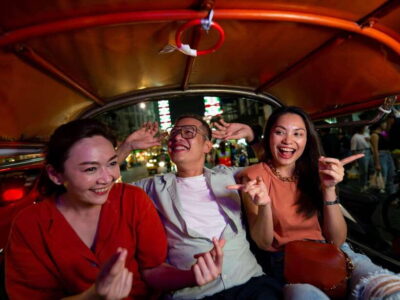
Evening Tour with Wat Arun, Wat Pho & Tuk Tuk Ride
Read our review →
Bangkok Tuk-Tuk Tour by Night with Chinatown Street Food Meal
Read our review →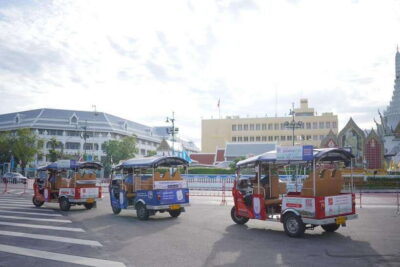
Browse the lists this tour appears in