
Reviewed · FOOD & DRINK
Bangkok Private Walking Food Tour with 10+ Tastings in Chinatown
Come hungry, leave happily full. This three-hour food walk links Bangkok’s Chinatown, Hua Lamphong, and Talat Noi with more than 10 tastings, giving you a broad look at everyday Thai and Chinese-influenced cooking. I like the wide range, from spicy basil chicken and papaya salad to duck noodle soup and sweet black sesame dumplings. I also like the local focus on family-run stalls and long-used recipes, rather than a formal restaurant meal.
The main caution is the amount of food packed into a short walk. You should wear comfortable shoes, expect Bangkok heat and humidity, and tell the operator about dietary needs in advance. The menu and route can change with weather, opening hours, and stall availability, so you should view the listed dishes as a guide rather than a guarantee.
In This Review
- Key things to know before you book
- Starting near Hua Lamphong
- Chinatown brings the biggest food payoff
- Rice dishes show Bangkok’s everyday side
- Talat Noi adds neighborhood character
- Sweet dishes keep the tasting moving
- A private format changes the experience
- Timing, weather, and menu changes
- Who should book this Bangkok food walk?
- Should you book it?
- FAQ
- How long does the Bangkok food tour last?
- Where does the tour begin?
- Is transportation included?
- Is this a private tour?
- What food is included?
- Can I cancel for a refund?
Key things to know before you book
- More than 10 tastings in three hours: This is a grazing tour, not one large meal. Expect small portions spread across snacks, noodles, rice dishes, sweets, and drinks.
- Private for your own group: Only your party takes part, which makes it easier to ask questions, set the pace, and manage food preferences.
- Guide Jan has earned special praise: Jan is noted for adding useful food knowledge and taking good care of the group.
- The duck noodle soup is a likely favorite: It was singled out as a hit with the whole group, making it one dish to look forward to.
- Monday has a different menu: Monday includes pork knuckle with rice, banana roti, roll noodle soup with pork belly, fruit, and a cold dessert. Tuesday through Sunday brings a different set of dishes.
- Hua Lamphong is both start and finish: Transportation is not included, so plan your own way to Rong Mueang, Pathum Wan.
Starting near Hua Lamphong
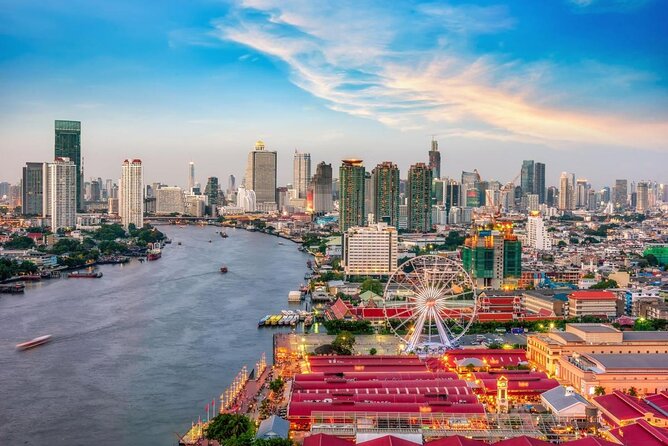
The tour begins at Hua Lamphong, in the Rong Mueang area of Bangkok. This is a practical starting point for a walking route toward Chinatown, and the meeting point is near public transportation. Since transportation is not part of the price, leave enough time to arrive without rushing.
The three-hour format works well for a first taste of Bangkok’s food scene. You are not spending half the day at one market. Instead, you move from one stop to another, tasting a little at each place and seeing how food fits into the city’s older commercial neighborhoods.
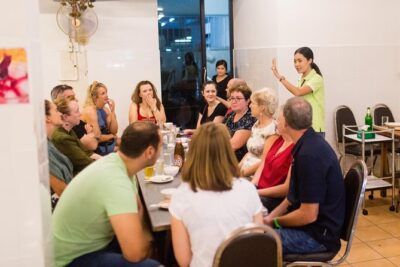
Because this is a private activity, your group has the guide’s attention. That matters on a food tour. You can ask what an unfamiliar dish contains, find out how a sauce is made, or explain what you can and cannot eat. The operator asks you to provide dietary requirements ahead of time so the team can plan properly.
The tour involves a fair amount of walking. Comfortable shoes are not a minor suggestion here. Bangkok’s heat, traffic, and crowded streets can make a short distance feel longer, especially when you are also eating at regular intervals.
More Walking Tours in Bangkok
- Bangkok: City Highlights Temple and Market Walking Tour
★ 4.5 · 3,990 reviews - Bangkok: Grand Palace and Wat Phra Kaew Guided Walking Tour
★ 4.4 · 2,417 reviews - Bangkok: Wat Pho and Wat Arun Guided Walking Tour
★ 4.6 · 1,720 reviews
Chinatown brings the biggest food payoff
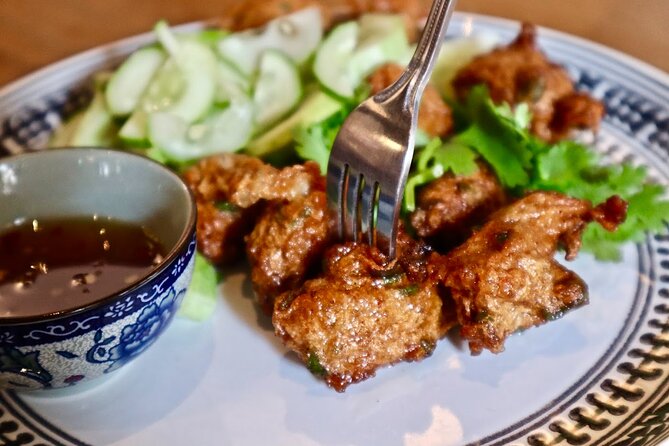
Bangkok Chinatown is one of the central parts of this experience. The area is known for traditional Chinese goods, old shops, markets, and street food. Its cooking reflects the long connection between Thai and Chinese communities, which helps explain the mix of steamed buns, dumplings, noodles, roast meats, and Thai salads on the menu.
You might begin with shrimp dumplings or steamed buns filled with red pork. These are useful early tastings because they show the Chinese influence in Bangkok’s street food without requiring a full plate. The red pork buns provide a soft, filling bite, while shrimp dumplings add a savory seafood note.
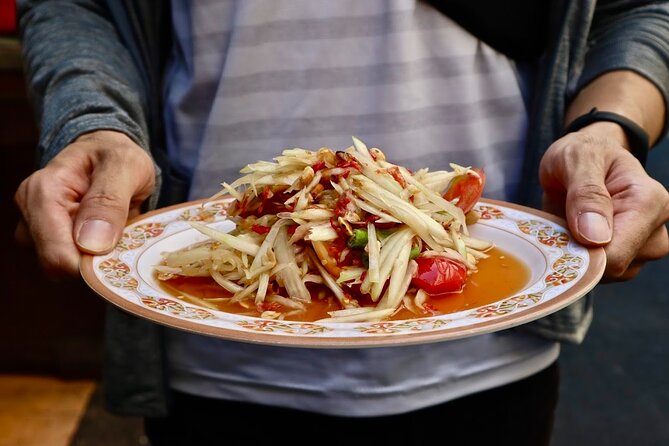
Papaya salad brings a sharper change of pace. Thai-style papaya salad can be spicy, sour, salty, and sweet in one mouthful. It is a small dish with a big personality, so tell your guide your spice tolerance before it arrives. The tour description does not promise a particular heat level, and spice can vary by preparation.
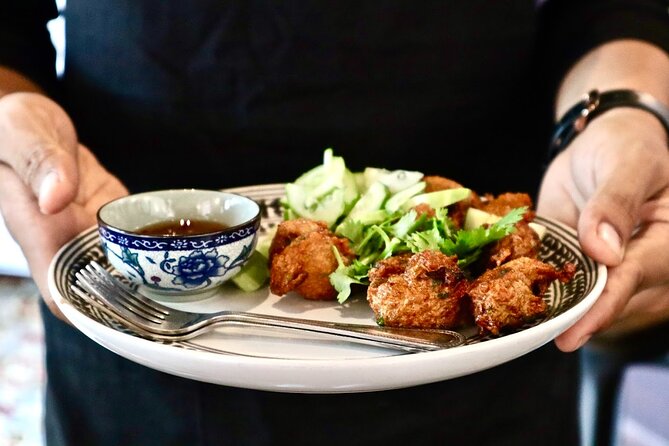
Other possible tastings include crispy Thai pancakes and a Chinese donut served with pandan custard. The pandan custard adds a fragrant, sweet finish to a crisp fried pastry. This is the kind of pairing that makes a food walk more useful than a standard restaurant meal, because you get to compare textures and flavors across several small dishes.
The route may also include pork or chicken satay with peanut sauce. Satay is familiar to many visitors, but it fits well here as a portable street snack. It gives you a grilled, smoky flavor before the tour moves to heavier noodle and rice dishes.
Rice dishes show Bangkok’s everyday side
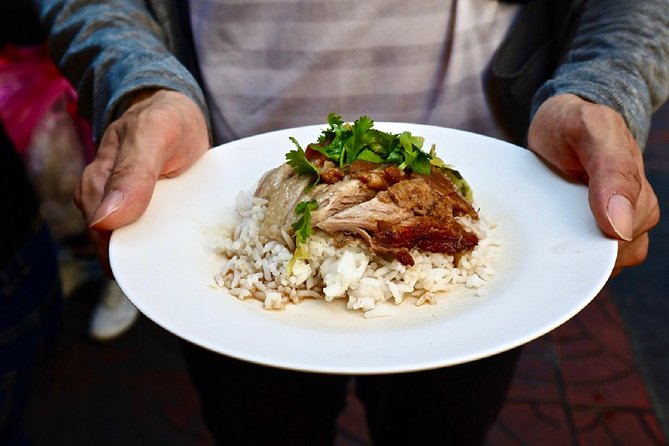
Food tours can easily become a parade of snacks. This one includes substantial dishes, which helps you understand what a regular meal in Bangkok may look like.
Spicy basil chicken over jasmine rice is one of the strongest examples. Thai basil chicken combines seasoned meat with the fragrance of basil and the plain comfort of rice. The rice helps balance the stronger flavors, making this a more complete bite than a simple appetizer.
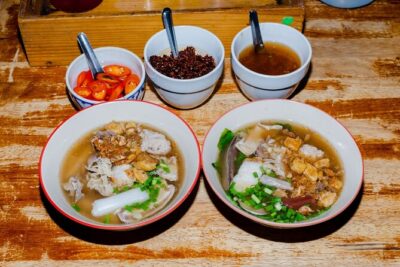
On the Tuesday through Sunday menu, duck noodle soup is another important stop. The dish was especially well received, and it is easy to understand why it can appeal to a whole group. Noodles, broth, duck, and toppings give you several textures in one bowl without requiring a long sit-down meal.
The Monday menu changes direction. Instead of the regular duck noodle soup selection, you may receive stewed pork knuckle with rice and roll noodle soup with pork belly. Pork knuckle is rich and filling, while pork belly brings a softer, fatty texture to the noodle soup. If you have your heart set on duck noodles, do not book Monday without checking the current menu.
Issan-style grilled pork with sticky rice is listed among the featured food experiences. Issan cooking comes from northeastern Thailand and is often associated with strong seasoning, grilled meats, sticky rice, and salads. The combination is simple but satisfying: smoky pork, chewy rice, and bold flavors that make a little food go a long way.
The Monday offerings also include spicy basil and a secret dish served on all tours. Since the secret dish is not identified in advance, you should treat it as a pleasant extra rather than a reason to expect a particular ingredient.
Talat Noi adds neighborhood character
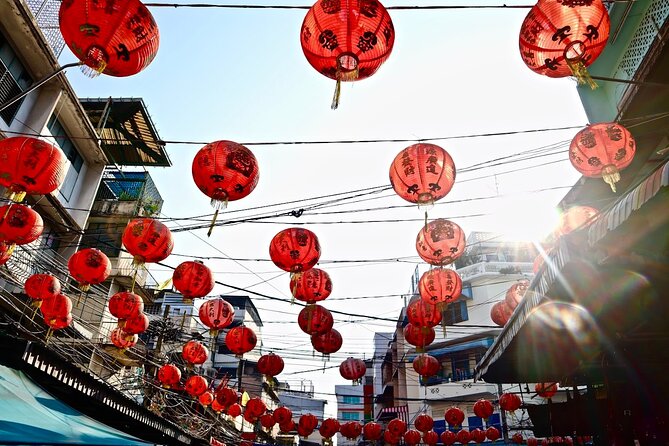
Talat Noi is another key part of the route. This older area near Chinatown is associated with small lanes, traditional workshops, family businesses, and Chinese heritage. The food here is part of a living neighborhood, not a staged dining show.
That setting gives the guide room to explain how Bangkok’s food traditions connect to place. You may pass shops selling traditional goods and food vendors serving dishes that have been made in similar ways for years. The supplied information does not promise a specific shop or exact family history, so the route can shift. Still, Talat Noi is valuable because it places the tastings within the communities that shaped them.
Bang Rak may also feature in the route. The district’s name can mean village of love, and it is known today as a popular place for marriage registration, especially around Valentine’s Day. That detail adds a small bit of local context between food stops. It also shows that this walk is not only about eating. You are moving through several Bangkok districts with different identities.
The route information also names major shopping areas, including MBK Center, Asiatique The Riverfront, and other large malls. These places are not explained as formal food stops, and the itinerary may change. Think of them as route landmarks or possible surroundings rather than guaranteed attractions included inside the three-hour walk.
More Food Tours in Bangkok:
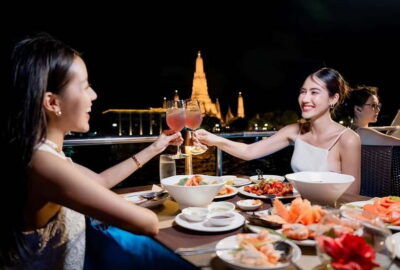
- Bangkok: White Orchid Chao Phraya Dinner Cruise free Beer
★ 4.4 · 4,573 reviews - Bangkok by Night: Temples, Markets and Food Tuk-Tuk Tour
★ 5.0 · 3,752 reviews - Bangkok: Backstreets Food Tour with 15+ Tastings
★ 4.9 · 2,880 reviews - Bangkok Midnight Food Tuk Tuk Tour
★ 5.0 · 2,542 reviews
Sweet dishes keep the tasting moving
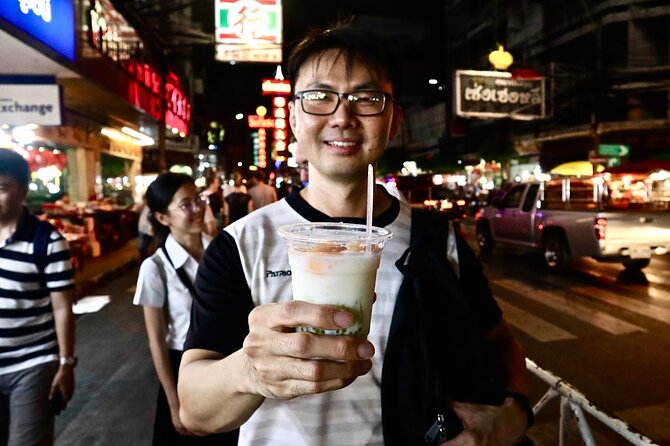
A good food tour needs a change of rhythm, and the desserts provide it. The regular menu includes a Chinese donut with pandan custard, black sesame dumplings in warm ginger tea, and the tour’s secret dish. Crispy pancakes may also appear among the tastings.
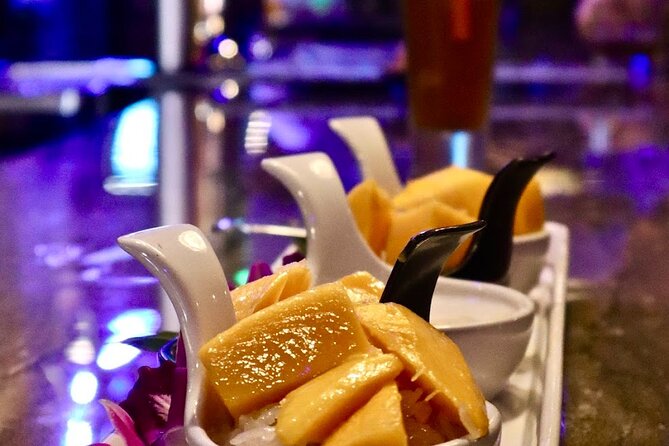
Black sesame dumplings in ginger tea are the most distinctive final course. The warm tea and sweet sesame filling offer a gentle ending after spicy salads, grilled meat, and noodles. Ginger also gives the finish a clean, warming note instead of another heavy dessert.
The Monday menu adds banana roti, fruit, and a cold dessert. Banana roti is a sweet, pan-fried treat that can feel especially welcome in Bangkok’s heat. Fruit and a cold dessert make the Monday food list feel slightly lighter at the end, though the full menu still contains plenty of filling food.
A useful tip is to avoid arriving after a large meal. With ten or more tastings, you need room for variety. At the same time, do not arrive expecting full restaurant portions. The appeal is trying many small servings, not eating ten complete meals.
A private format changes the experience
At $250 per person, this is an expensive food walk by Bangkok standards. The value depends on what you want from the outing. If you simply want cheap street food, you can spend much less by exploring on your own. If you want a planned route, a guide, many tastings, and a private setting, the price becomes easier to justify.
You are paying for more than the ingredients. The tour brings together a route through Chinatown, Hua Lamphong, and Talat Noi, plus explanations of the food and help at each stop. A private guide can also make the experience less awkward when menus are unfamiliar or vendors do not speak much English.
The small-group promise is worth reading carefully alongside the private format. This activity is for your group only, rather than a large mixed party. That makes it a strong choice for families, couples, or friends who prefer a personal outing and do not want to match the pace of strangers.
Group discounts are available, which may improve the per-person value for a larger party. Gratuity is not included, so budget separately if you want to tip the guide.
Timing, weather, and menu changes
The tour lasts about three hours and ends back at the meeting point. That makes it easy to fit into a Bangkok day, but it also means the pace may feel active. You will be walking, stopping to eat, and moving on before you become too settled.
The menu differs by day. Tuesday through Sunday may include basil chicken with jasmine rice, red pork buns, Chinese donut with pandan custard, satay, duck noodle soup, and black sesame dumplings. Monday may include pork knuckle with rice, banana roti, pork belly roll noodle soup, fruit, and a cold dessert.
The operator can change the route and menu because of weather, location availability, and other conditions. That is common with street food, where a stall may close or a dish may sell out. If you need a specific item for dietary or personal reasons, ask ahead rather than assuming it will be available.
The experience requires good weather. If poor weather cancels the tour, you are offered another date or a full refund. You can also cancel for a full refund up to 24 hours before the start time. Changes or cancellations within 24 hours are not accepted for a refund.
Who should book this Bangkok food walk?
I would recommend this experience to someone visiting Bangkok for the first time who wants an organized introduction to several food styles at once. It also suits repeat visitors who have seen the main sights and want more time in Chinatown and nearby old neighborhoods.
It is especially good for people who enjoy tasting small portions and asking questions. The menu includes familiar items such as satay and rice dishes, along with less routine choices such as black sesame dumplings in ginger tea and Issan-style grilled pork.
Families and private groups may appreciate the format, but the walking and food volume deserve attention. Young children, older adults, or anyone who struggles in heat may find the pace demanding. Most people can participate, but comfortable shoes and advance planning remain important.
The current rating is 5 from 67 ratings, with 100 percent recommending the experience. The strongest praise centers on the large range of food, the care shown by the guide, and the duck noodle soup. Jan is specifically praised for making the outing better and looking after the group.
Should you book it?
Book this tour if you want a private, food-first introduction to Bangkok and value guidance more than a bargain meal. The combination of Chinatown, Talat Noi, varied dishes, and a generous tasting list gives you a clear sense of Bangkok’s mixed Thai and Chinese food traditions.
Skip it if you want a slow restaurant dinner, dislike walking in humid weather, or prefer to choose every dish yourself. At $250 per person, the tour makes the most sense for a private group that will use the guide’s help, try widely, and enjoy the neighborhood context as much as the food.
FAQ
How long does the Bangkok food tour last?
The tour lasts approximately three hours and ends back at the Hua Lamphong meeting point.
Where does the tour begin?
It begins at Hua Lamphong, Rong Mueang, Pathum Wan, Bangkok 10330, Thailand.
Is transportation included?
No. Transportation is not included, so you must arrange your own way to and from the meeting point.
Is this a private tour?
Yes. Only your group participates in the activity.
What food is included?
The tastings can include spicy basil chicken with jasmine rice, shrimp dumplings, red pork steamed buns, Thai papaya salad, Chinese donuts with pandan custard, satay, duck noodle soup, black sesame dumplings in ginger tea, and a secret dish. Monday has a different menu with items such as pork knuckle with rice, banana roti, pork belly roll noodle soup, fruit, and a cold dessert.
Can I cancel for a refund?
Yes. You can cancel at least 24 hours before the start time for a full refund. Cancellations or changes within 24 hours are not refunded. If bad weather or an insufficient minimum number of participants cancels the tour, you are offered another date, another experience, or a full refund.
Just added around Bangkok
- Kanchanaburi World War 2 Private Charter Pathway of the Past Tour★ 4.5 · 16 reviews
- 2-hour Bangkok Old City Night CHOB TUK TUK + Talat Noi Street Art★ 5.0 · 16 reviews
- Floating Market with Great Pagoda Temple and Wat Sam Phran★ 5.0 · 16 reviews
- Khao Yai National Park Hiking Day Tour: Haew Narok and Haew Suwat★ 5.0 · 16 reviews
- Shangri-La Hotel’s Salathip Thai Restaurant Experience★ 4.5 · 16 reviews
- Private Transfer Bangkok – Koh Kood Island★ 4.0 · 16 reviews
- The Best Bangkok Temples★ 4.0 · 16 reviews
- Private Half-Day Bangkok Tour Explore Grand Palace and Wat Pho★ 4.5 · 16 reviews
Food & Drink, compared.
White Orchid Chao Phraya Dinner Cruise free Beer
Read our review →
Bangkok by Night: Temples, Markets and Food Tuk-Tuk Tour
Read our review →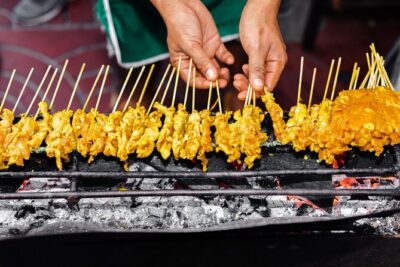
Southern Flavors Phuket Food Tour with 15+ Tastings
Read our review →Bangkok Backstreets Food Tour with 15+ Tastings
Read our review →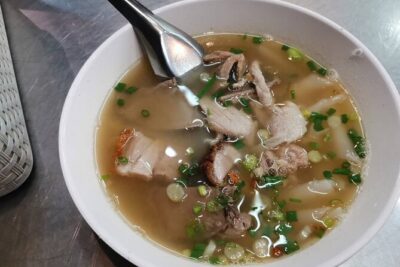
Browse the lists this tour appears in