
Reviewed · HIKING & TREKKING
Chiang Mai Authentic Trekking
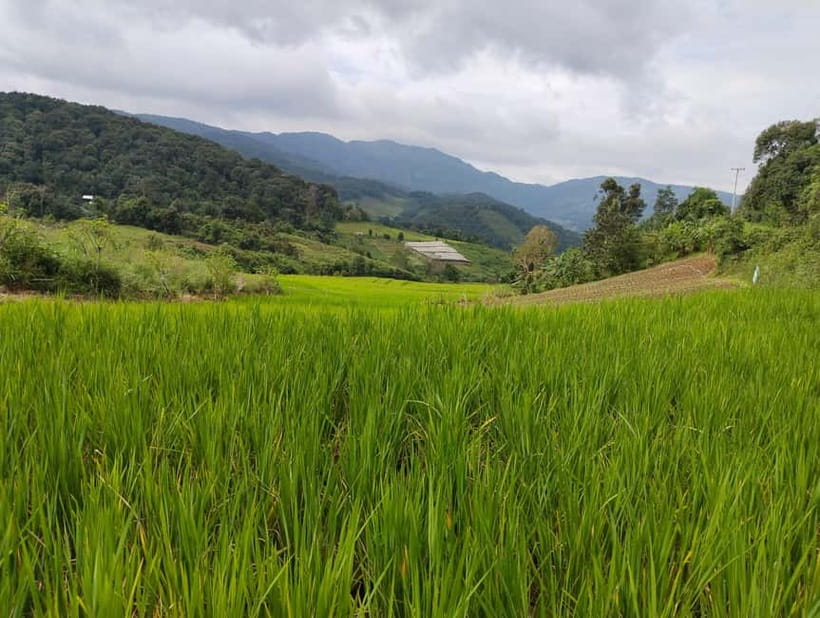
Away from the usual tourist trail. This full-day trek heads south of Chiang Mai into Karen country, where mountain paths pass through rice fields, forest, local farms, and village land. I like the small group limit of eight people, and I like that the day supports a local market, hill tribe community, and local guides rather than relying on a polished tourist attraction.
The route is also a proper workout. You will cover about 10 to 12 kilometers, with four to five hours on mountain trails and some steep, slippery sections. That is the main consideration: this is not a gentle walk with a few photo stops. It suits fit hikers who want quiet trails and real countryside, but not anyone looking for an easy day outdoors.
In This Review
- What makes this trek worth considering
- Leaving Chiang Mai for Karen country
- A viewpoint before the walking begins
- Khun Poi Village and the Karen way of life
- The Phalai Mountain climb is the real test
- Phalai Mountain views and a forest lunch
- Farms, coffee, and a less polished side of Thailand
- The waterfall finish
- Getting back to Chiang Mai
- Price, group size, and what you receive
- Weather changes the character of the route
- Who should book this Chiang Mai trek?
- My verdict: book it for the trail, not the comfort
- FAQ
- Where does the Chiang Mai Authentic Trekking experience take place?
- How long does the experience last?
- How far do you trek?
- How long are you actually hiking?
- Is the hike difficult?
- What is included in the price?
- Are personal purchases included?
- Is swimming part of the day?
- What should you bring?
- How large is the group?
What makes this trek worth considering
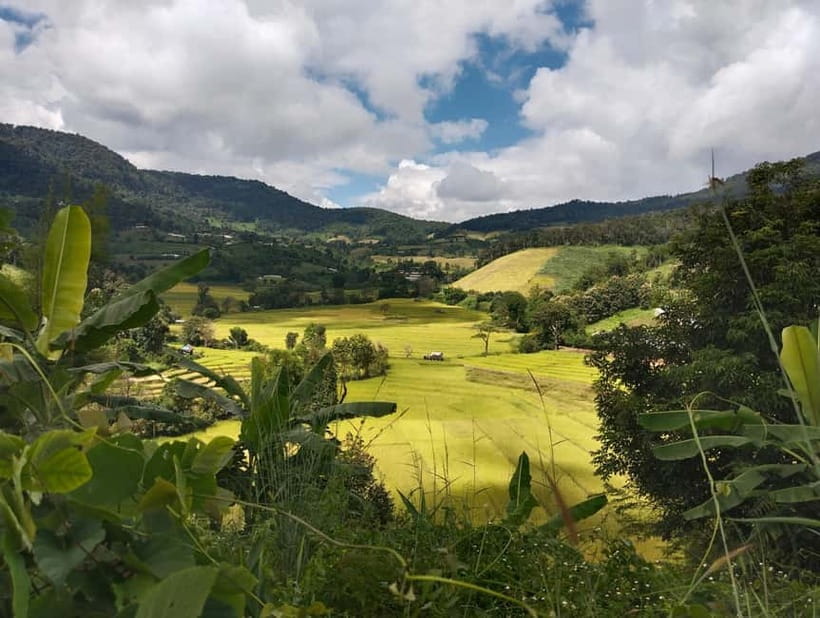
- A two-hour uphill push reaches Phalai Mountain, with broad views toward villages, valleys, and surrounding peaks.
- The route uses local mountain paths, rather than a busy, heavily commercial trekking circuit.
- Pan and his assistant explain useful forest plants, including species used for food, medicine, and everyday life.
- A stop at a traditional market lets you see local shopping and buy the food used for lunch.
- The walk passes Karen farmland, with coffee, passion fruit, tomatoes, taro, zucchini, and cape gooseberry crops.
- A secluded waterfall finishes the hike, giving you time to swim and cool down before returning to Chiang Mai.
Leaving Chiang Mai for Karen country
Pickup takes place between 7:45 and 8:00 AM from hotels around Chiang Mai. You should wait in the lobby about 10 minutes early, since the van then spends roughly an hour heading south toward Mae Wang and Mae Win.
The drive is part of the day’s change of pace. Chiang Mai’s urban streets give way to open countryside, foothills, and farming areas. The group is limited to eight, which matters here. A small vehicle is easier to manage on rural roads, and a small hiking group can stop without turning every pause into a major production.
The first useful stop is a traditional Thai market. This is not just a place to grab a packaged lunch. Your guide introduces local ingredients, snacks, and the way villagers shop for daily meals. You buy lunch and drinking water here, so bring some cash and give yourself time to look around.
The food arrangement is simple and local. In some cases, Pan has carried the food up to the mountain for the group, while the day’s plan generally involves buying lunch at the market before the hike. Either way, you should not expect a restaurant meal or a buffet. The appeal is eating familiar Thai food in a forest setting, not selecting from a long menu.
A few more tours and experiences worth a look
- 3-in-1: Doi Inthanon Tour, Elephant Sanctuary, and Trekking Trail
★ 5.0 · 1,087 reviews - Chiang Mai: Doi Inthanon Trip with Pha Dok Siew Guided Trek
★ 4.6 · 910 reviews - Chiang Mai: Doi Inthanon Park with Kew Mae Pan Hike Day Trip
★ 4.7 · 841 reviews
A viewpoint before the walking begins
A short viewpoint stop breaks up the drive. You can stretch your legs, take photographs, and look across the valley before reaching Khun Poi Village. Another brief walking and viewpoint stop is included in the early part of the day.
These pauses are useful because the main hike is demanding. They also give you a first look at the terrain before you start climbing. Bring your camera, but do not let the first photo stop use up all your attention. The best views come later, especially from Phalai Mountain.
Khun Poi Village and the Karen way of life
Khun Poi is a Karen hill tribe community surrounded by mountain farmland. The village visit offers context for the trek, because you are not simply walking through empty forest. The paths connect homes, crops, school grounds, and working farmland.
The trek begins near the village school. You may see children going about their day, which gives the start of the hike a warm local touch. It is worth being respectful here. Follow your guide’s lead with photographs and remember that this is a working community, not a staged cultural show.
The strongest cultural feature of the day is its ordinary quality. You see agricultural work, local crops, and village routines rather than a performance arranged for visitors. That makes the experience less polished, but also more direct.
The Phalai Mountain climb is the real test
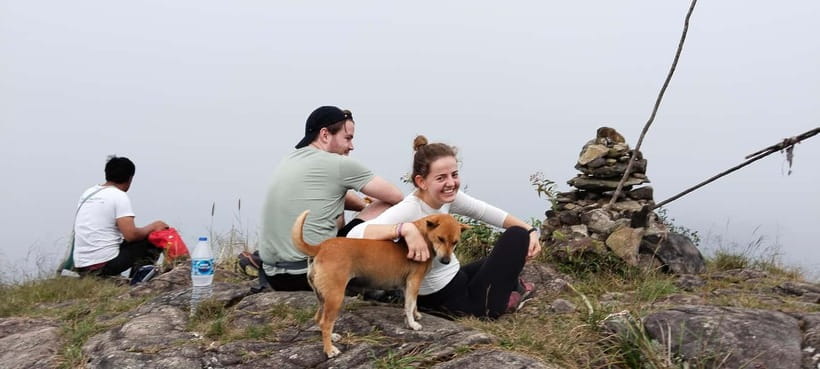
From the school, the trail enters rice fields and forest. The route is about 12 kilometers in total and takes four to five hours of walking, depending on conditions and the group’s pace.
The climb to Phalai Mountain is the hardest part. One account of the route describes nearly two hours of continuous uphill walking. Other sections are steep and slippery, so comfortable shoes are not enough unless they have a solid grip. Proper hiking shoes are the safer choice, particularly during the rainy season.
The forest section is one of the day’s best features. Pan is known for pointing out edible plants, herbs, fruit, and vegetation used in local life. You might taste some of the plants or fruit with the guide’s permission. This turns a long walk into something more interesting than simply counting kilometers.
You should still pace yourself. Take water regularly, especially from mid-February through mid-May when heat can build. Insect repellent, sunscreen, a hat, and light clothing are practical additions. A small daypack is better than a large bag that will catch on branches or make the climb harder.
Something different for another day:
- Half-Day Thai Cooking Class at Organic Farm in Chiang Mai
★ 5.0 · 19,087 reviews - Chiang Mai: Elephant Sanctuary, Waterfall & Bamboo Rafting
★ 4.9 · 9,160 reviews - Chiang Mai: Doi Inthanon National Park Eco-Friendly Tour
★ 4.6 · 6,667 reviews - Chiang Mai: Elephant Sanctuary & Waterfall Group Tour
★ 4.9 · 5,780 reviews
Phalai Mountain views and a forest lunch
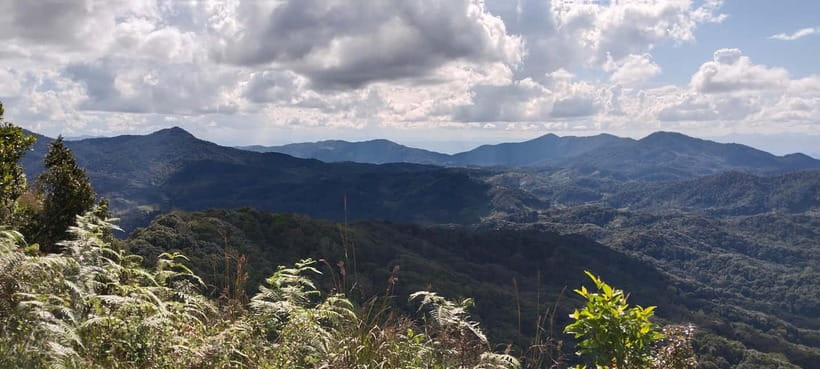
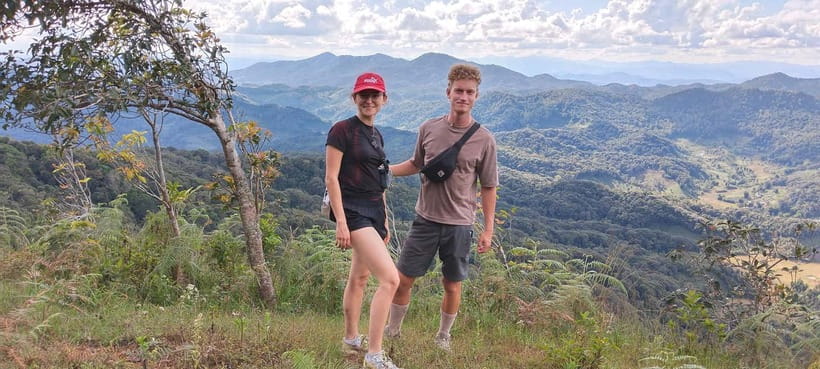
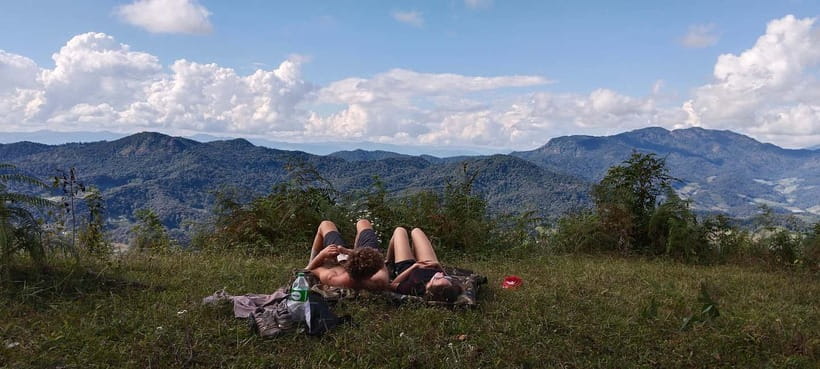
At the top of Phalai Mountain, you get the day’s biggest payoff. The peak lies between Chom Thong and Mae Wang districts and connects with the Doi Inthanon National Park area. From here, you can look toward the valley, nearby villages, rice fields, and mountain ridges.
This is a good place to slow down. The route is not about rushing from one attraction to the next. You have earned the pause, and the open view makes the uphill section feel worthwhile.
Wildlife in the area can include wild boar, gibbons, barking deer, and many kinds of birds. These animals are not guaranteed sightings, so treat them as possible bonuses rather than promised attractions. The forest itself provides plenty to notice, especially if you pay attention to plants and bird calls.
Lunch is served in the forest, with fresh air and quiet around you. The meal is a practical part of the day rather than a culinary event, but the setting adds a lot. Food bought at a local market tastes different when you have carried it up a mountain and are eating beside the trail.
Farms, coffee, and a less polished side of Thailand
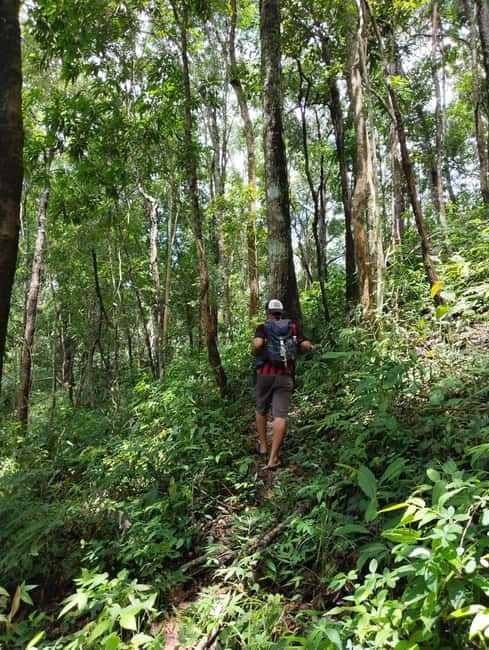
After lunch, the route continues through hill tribe farms. You pass crops such as coffee, passion fruit, cape gooseberries, tomatoes, zucchini, and taro. These details help you understand how the surrounding communities use the mountain land.
Coffee is a particularly nice touch. One day included fresh coffee made from beans picked in the area, giving the walk a direct link to local farming. You may not receive that exact experience every time, but the crop itself is part of the route.
The farm paths also make the sustainability message more concrete. Supporting local businesses here means buying food from the market and using local guiding help, while learning how farming fits into community life. It does not turn the trek into a formal conservation program, but it gives your spending a clearer local connection.
The trails are described as routes used mainly by local people, not standard tourist paths. That is a major reason to book this experience if you want solitude. It also means the surface may be uneven, muddy, steep, or slippery. You trade convenience for a closer look at the countryside.
The waterfall finish
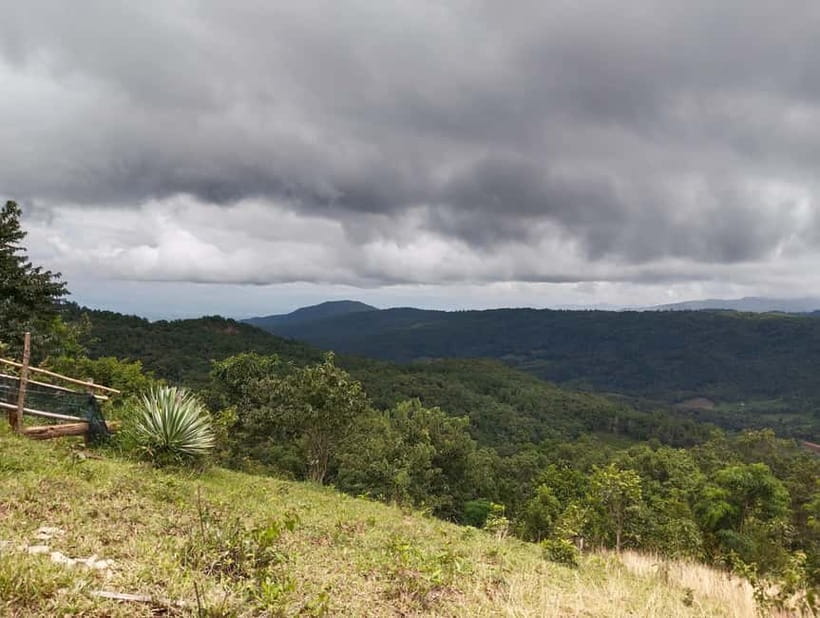
After the walking, you reach a secluded waterfall for about 30 minutes of swimming and rest. This is well timed. A cold swim or foot soak can feel excellent after several hours on mountain trails.
Bring swimwear and a towel in an easy-to-reach part of your bag. Do not bury them under lunch, sunscreen, and spare clothing. The waterfall is also a good place for photos, but keep your phone protected from water and avoid carrying anything you cannot afford to wet.
Thirty minutes is enough for a refreshment stop, not a long swimming session. If you prefer to sit quietly, the area also gives you a chance to cool down before the van ride.
Getting back to Chiang Mai
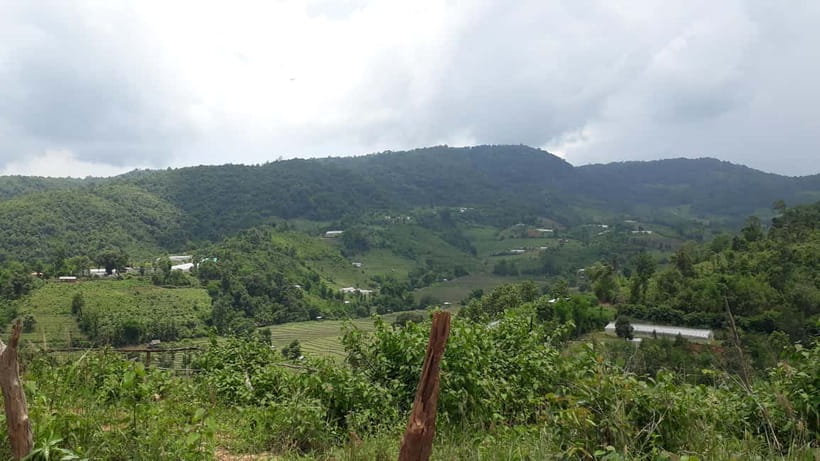
The return drive usually brings you to your hotel around 5:00 to 6:00 PM. You may be ready for a shower and a substantial dinner by then. The transfer is long enough for a rest, which is useful after the climb.
The day runs on mountain conditions and group pace. A four-hour hike can become longer when trails are wet or when the group needs extra rest. Do not book an evening activity that requires a precise arrival time unless you have plenty of room to adjust.
Price, group size, and what you receive
At $57 per person, the price is strong for a full day that includes hotel pickup and drop-off, transport, an English-speaking guide, a local assistant, lunch, drinking water, and accident insurance.
The value comes mainly from the route and guiding. You are not paying for an entrance-heavy attraction or a short nature walk. You get transport from Chiang Mai, several hours of serious hiking, local food, a village visit, farm paths, and a waterfall stop.
The small group limit of eight improves the experience. You can ask questions about plants and farming without competing with a large crowd. It also makes the physical demands easier to manage, since the guide can keep a closer eye on the group.
You still pay for souvenirs, soft drinks, and extra snacks. The market stop gives you a chance to buy those, but bring cash because personal purchases are not included.
The flexible booking terms are useful if your weather plans may change. You can cancel up to 24 hours ahead for a full refund, and reserve without paying immediately. Availability and starting times should still be checked before booking.
Weather changes the character of the route
Chiang Mai’s mountain seasons matter here.
- Mid-February to mid-May: This is the summer season. Expect warmer hiking conditions and carry enough water, sunscreen, and a hat.
- Mid-May to mid-October: Rain can make the trails muddy and slippery. Good footwear and weather-appropriate clothing become especially important.
- Mid-October to mid-February: The winter season is generally the cooler period for a long uphill walk.
The tour does not promise an easy route in any season. Rain may make the ground harder to manage, while heat can make the climb more tiring. Check the forecast and pack insect repellent, personal medication, a towel, swimwear, a daypack, and your passport.
Who should book this Chiang Mai trek?
I would choose this trek if you want an active day with local contact and quieter mountain paths. It is a good match for hikers who enjoy learning about plants, walking through working farms, and accepting a little mud and discomfort in exchange for a less commercial experience.
It is not the right pick for a relaxed sightseeing day. You will climb for long stretches, walk 10 to 12 kilometers, and deal with mountain terrain. The published restrictions exclude pregnant women, wheelchair users, people with mobility impairments or heart problems, babies under one year, and people over 70. Anyone unsure about the physical effort should consider that limitation carefully.
An English-speaking guide leads the day, and Pan has received particular praise for his plant knowledge and strong English. A local assistant also joins the group. The combination is useful because the guide can explain the forest while the assistant helps the small group move safely along the route.
My verdict: book it for the trail, not the comfort
I recommend Chiang Mai Authentic Trekking if your ideal day includes a hard climb, local food, Karen farmland, useful plant knowledge, and a swim at the end. The most praised parts are clear: the route feels non-commercial, Pan brings strong plant and cultural insight, and the group can spend much of the day away from crowds.
Book it with proper hiking shoes, realistic expectations, and no tightly timed evening plans. If you want a soft adventure with paved paths and a short walk, choose something easier. If you want a demanding day that connects Chiang Mai to mountain communities and working countryside, the $57 price offers very good value.
FAQ
Where does the Chiang Mai Authentic Trekking experience take place?
It takes place in Chiang Mai Province, south of Chiang Mai, around Khun Poi Village, Mae Wang District, and Mae Win.
How long does the experience last?
It is a full-day activity. Pickup is around 7:45 to 8:00 AM, and you usually return to your hotel around 5:00 to 6:00 PM.
How far do you trek?
The total trekking distance is about 10 to 12 kilometers, with the route description giving approximately 12 kilometers.
How long are you actually hiking?
The mountain trek lasts about four to five hours.
Is the hike difficult?
It is rated moderate, but it includes steep mountain terrain. Some parts can be slippery, and one route description includes nearly two hours of continuous uphill walking.
What is included in the price?
Hotel pickup and drop-off around Chiang Mai, transportation, accident insurance, an English-speaking guide, a local assistant, lunch, and drinking water are included.
Are personal purchases included?
No. Souvenirs, soft drinks, and snacks are your own expense.
Is swimming part of the day?
Yes. The tour stops at a secluded waterfall for about 30 minutes of swimming and relaxation.
What should you bring?
Bring comfortable or hiking shoes, a sun hat, swimwear, a towel, a camera, sunscreen, insect repellent, comfortable and weather-appropriate clothing, a daypack, personal medication, cash, and your passport.
How large is the group?
The group is limited to eight participants.
Just added around Chiang Mai
- Chiang Mai: Chiang Rai White, Blue & Black Temples Day Tour★ 4.2 · 16 reviews
- Chiang Mai Adventure ATV Secret Waterfall and Bamboo Rafting★ 5.0 · 16 reviews
- Inthanon Small-Group with Kew Mae Pan Trail from Chiang Mai include Lunch★ 4.5 · 16 reviews
- 2-Day Best of Chiang Rai from Chiang Mai Private Package★ 4.5 · 16 reviews
- Doi Inthanon Discovery Tour: Waterfalls, Villages & Highest Peak★ 3.5 · 16 reviews
- Private-Tour Doi Suthep Temple and Khun Chang Kien Village Half-Day★ 4.5 · 16 reviews
- Chiang Mai Iconic Temples and City Tour★ 4.5 · 17 reviews
- Fantastic! Famous Doi Inthanon National park tour with 2hr trekking★ 4.5 · 17 reviews
Hiking & Trekking, compared.
3-in-1: Doi Inthanon Tour, Elephant Sanctuary, and Trekking Trail
Read our review →
Doi Inthanon Trip with Pha Dok Siew Guided Trek
Read our review →
Doi Inthanon Park with Kew Mae Pan Hike Day Trip
Read our review →
Doi Inthanon Private Tour with Trek & Lunch from Chiang Mai
Read our review →
Doi Inthanon National Park and Pha Dok Siew Trek
Read our review →Browse the lists this tour appears in