
Reviewed · CANOES & KAYAKS
Ko Lanta: Half-Day Mangrove Kayaking Tour with Lunch
Quiet water, wild monkeys, and lunch by the mangroves. This three-hour outing from Ko Lanta packs a lot into a modest price. You paddle through Ban Thung Yee Peng’s winding mangrove channels, watch mudskippers and fiddler crabs, then visit a local village and fish farm. I especially like the calm, nature-focused setting and the fact that the tour adds local life instead of stopping at kayaking alone. The main consideration is that you will get wet, and the monkey encounter needs care because curious animals may climb onto kayaks or grab loose items.
The $26 price includes hotel transport, a guide, kayak, life jacket, waterproof bag, lunch, fruit, and soft drinks. That is strong value for a three-hour trip. Guides such as Karim, Alim, and Ramadon receive repeated praise for explaining the ecosystem, keeping the group together, and handling the monkey stops sensibly. Still, tides affect how far you can paddle, and hotel drop-off can take longer if several people are being returned to different parts of the island.
In This Review
- Key points to know before booking
- Why the Ban Thung Yee Peng mangroves are worth your time
- Mudskippers, fiddler crabs, and birds along the route
- The monkey stop, thrilling but not a free-for-all
- A rural village and fish farm after the paddling
- Lunch, fruit, and the real value of the $26 price
- Morning or afternoon, and how weather changes the mood
- The guides are the tour’s strongest asset
- Who should book this Ko Lanta kayaking tour?
- Should you book it?
- FAQ
- How long does the mangrove kayaking tour last?
- What is included in the price?
- Where does the kayaking begin?
- What animals might I see?
- Can the monkeys climb onto the kayaks?
- Is lunch included?
- Are hotel transfers included?
- Can I cancel the booking?
Key points to know before booking
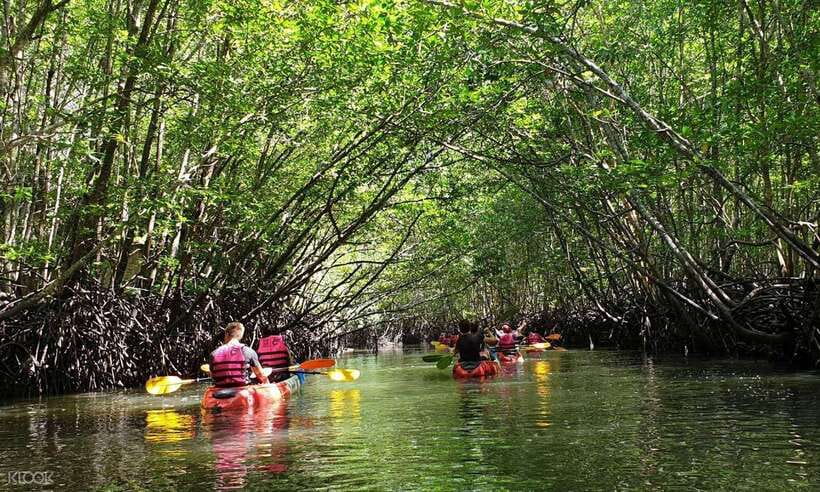
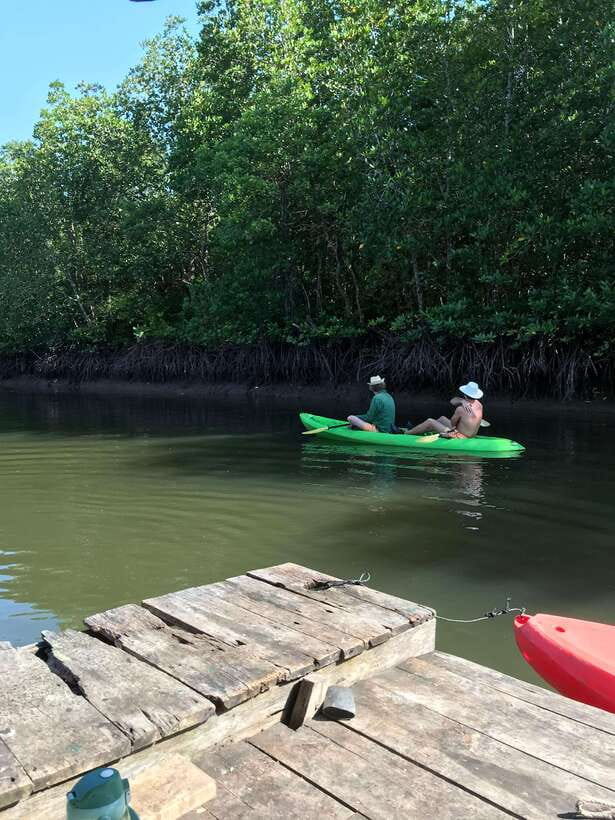
- Ban Thung Yee Peng mangroves: Paddle quiet channels lined with mangrove roots, with stops for mudskippers, crabs, birds, and other wildlife.
- Monkeys from the water: You may see whole family groups, and some monkeys may approach the kayaks for water or food.
- Guides make the difference: Karim, Alim, and Ramadon are often praised for clear explanations, humor, safety, and good group care.
- More than a kayak ride: The route includes a village visit and local fish farm, giving you a glimpse of daily life around the mangroves.
- Lunch is included: Fried rice, seasonal fruit, and a soft drink follow the paddling, with fish feeding included in the village stop.
- Bring dry clothes: Water splashes into the kayak, rain is possible, and several people found their shorts soaked by the end.
Why the Ban Thung Yee Peng mangroves are worth your time
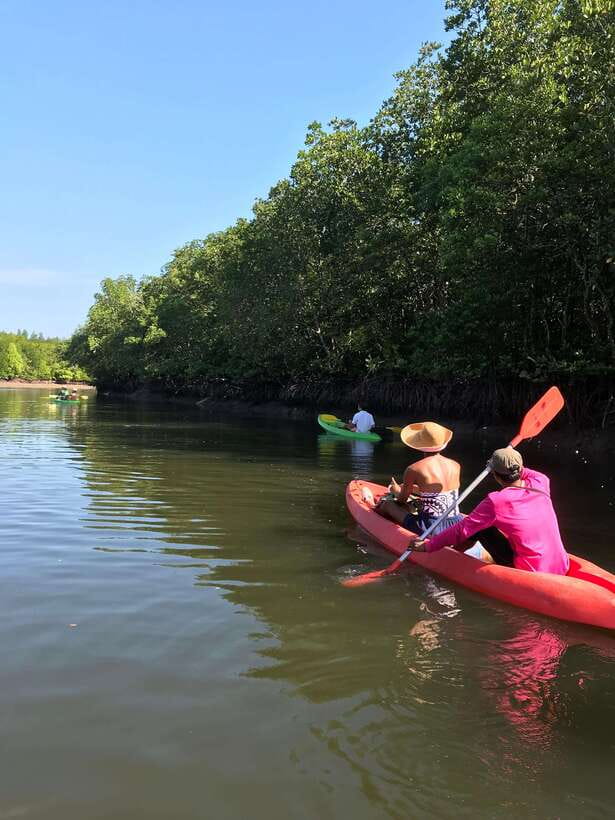
Ko Lanta is best known for beaches and island trips, but the east side offers a different view of the island. At Ban Thung Yee Peng, the sea reaches into a maze of mangrove waterways. These trees protect the coast, shelter young marine life, and support an ecosystem that changes with the tide.
You begin with pickup at your Ko Lanta hotel and travel to Tung Yee Peng Pier. The ride is included, and the transfer is generally described as efficient. The exact pickup time depends on the start time you select, so give the operator your hotel name and room number when booking.
At the pier, you board a kayak and receive a life jacket. A guide gives basic paddling instructions before leading the group into the channels. This is not a hard-core kayak expedition. The boats are described as easy to use, and families with children as young as three and five managed the paddling with life jackets and adult help. Still, you should be comfortable sitting in a kayak for roughly one to two hours, depending on stops, tide, and the route that day.
The first part feels peaceful. Motor noise fades, and the kayak lets you move quietly beside the roots. That quiet matters. You have a better chance of spotting wildlife when you are not charging through the water in a large boat.
A few more tours and experiences worth a look
- Krabi: Kayak Adventure through Ao Thalane Mangrove Forest
★ 4.6 · 2,024 reviews - Sea Kayaking in Ao Thalane & Optional Full-Day Hong Island
★ 4.8 · 548 reviews - Deep Mangrove and Canyon Kayak Tour in Krabi
★ 5.0 · 543 reviews
Mudskippers, fiddler crabs, and birds along the route
The guides point out small creatures that are easy to miss from a distance. Mudskippers, sometimes described in the tour accounts as walking fish, wriggle across exposed mud and roots. Fiddler crabs and mud crabs appear around the banks, especially where the water has pulled back.
You may also see birds of prey, curlews, and other birds moving through the trees. One outing included a sleeping mangrove snake coiled around a branch. Another spotted snakes hidden in the forest. Wildlife is never guaranteed, but the guides know what to look for and regularly stop to explain how the animals fit into the mangrove system.
This is where the trip becomes more than a pleasant paddle. Karim is often singled out for explaining how the ecosystem works, while Alim and Ramadon are also praised for sharing facts about the local area and wildlife. Their role is not just to point at animals. A good guide helps you understand why a mudskipper lives on the mud, why crabs gather near the roots, and why mangroves matter to the coast.
Tides shape the experience. On a high-tide morning, you may reach farther into the forest but see fewer animals along the muddy edges. At lower water, exposed mud can make crabs and mudskippers easier to spot, though some narrow channels may be harder to reach. The route varies with conditions, so go for the overall setting rather than a guaranteed animal checklist.
The monkey stop, thrilling but not a free-for-all
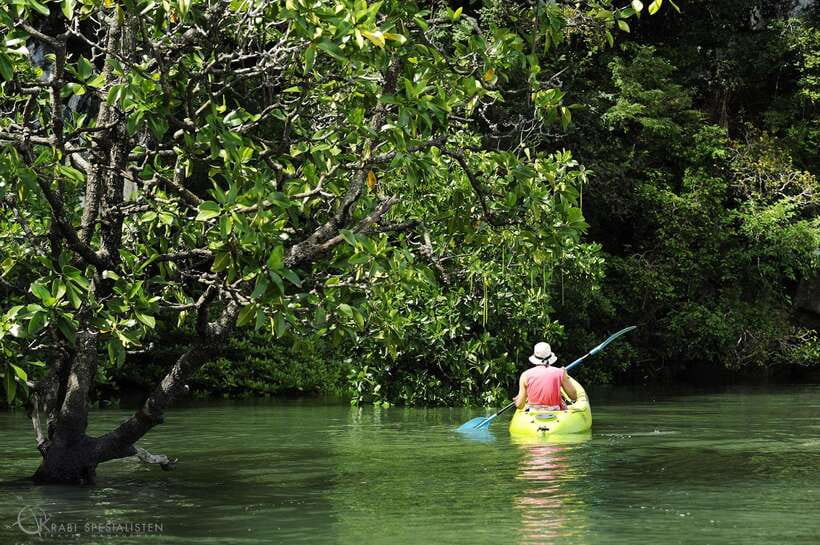
The monkey encounter is the tour’s biggest crowd-pleaser, but it is also the part that deserves the clearest warning. The guide takes you to areas where groups of monkeys live along the mangrove banks. From the water, you may watch them moving through the trees, and some may approach the boats.
The planned activity includes feeding monkeys from the boat. In practice, guides may offer food or water, and some animals may climb onto a kayak. Karim is praised for having a long-running relationship with the monkeys and for controlling the encounter. He reportedly lets them approach his kayak while keeping more aggressive animals away from the group.
You are not required to paddle close. If you are uneasy around monkeys, stay farther out and observe from the water. That option is important, especially for children or anyone carrying cameras, passports, wallets, or phones.
Keep your belongings inside the provided waterproof bag, and follow the guide’s instructions. One monkey reportedly grabbed a dry bag containing a passport and money. Alim recovered it by getting out of the kayak and shaking the tree until the animal dropped the bag. That is a memorable rescue, but it is much better not to give a monkey the chance.
Do not bring extra food unless the guide has approved it. One person suggested carrying bananas, but other guidance on the trip emphasizes protecting the animals’ natural behavior. Feeding wild monkeys can also encourage them to approach boats and steal plastic bottles. Keep water bottles secured, and do not leave loose rubbish in the kayak.
The monkey stop is best understood as a close look at wild animals, not a petting zoo. The most responsible moments are often when you watch the families from a respectful distance. Some monkeys may still jump onto kayaks, but the guides work to keep the situation safe and orderly.
A rural village and fish farm after the paddling
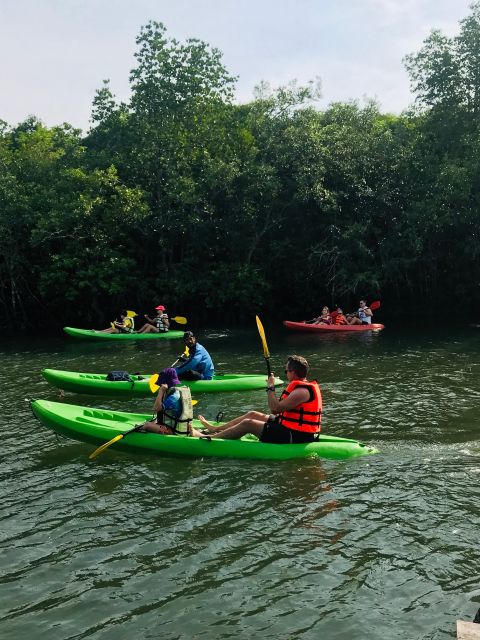
Once you leave the water, the experience shifts from wildlife to local life. You visit a small village and a local fish farm, where the guide explains how people live and work around the mangrove area.
This stop gives the trip useful context. The mangroves are not an untouched backdrop set aside only for sightseeing. They are part of the local economy and daily routine. The fish farm helps show the connection between the water, food, and village life.
The visit is not described as a long formal museum tour. Expect a simple, informal look at a rural setting. That suits the rest of the experience. You are seeing the place through its working waterways rather than being rushed from one polished attraction to another.
Several outings include feeding fish after lunch. It is a small activity, but children tend to enjoy it, and it rounds out the wildlife theme without adding another long transfer.
Something different for another day:
- Krabi: Premium 4-Island Day Trip by Longtail Boat with Lunch
★ 4.5 · 4,812 reviews - Krabi: Hong Islands Day Trip by Speedboat with Lunch
★ 4.5 · 3,952 reviews - Krabi: Tiger Cave Temple, Emerald Pool and Hot Springs Tour
★ 4.8 · 3,616 reviews - From Krabi: Phi Phi Islands Speedboat Day Tour
★ 4.3 · 3,340 reviews
Lunch, fruit, and the real value of the $26 price
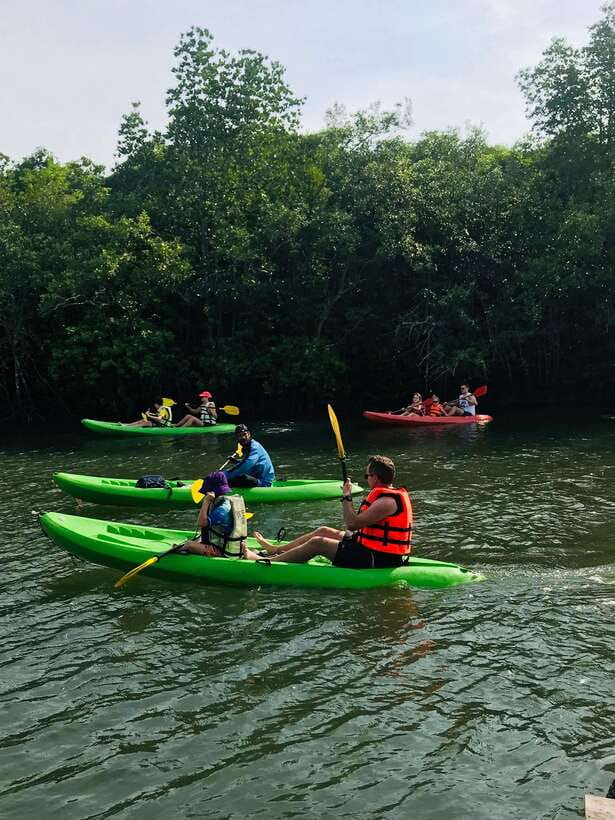
The tour costs $26 per person, with hotel pickup and drop-off included. You also get the kayak, guide, life jacket, waterproof bag, lunch, seasonal fruit, and soft drinks.
For a half-day activity, that package is unusually complete. A self-organized paddle might appear cheaper at first, but you would still need to arrange transport to Tung Yee Peng Pier, find the channels, identify wildlife, and organize food. Here, the guide leads the route and handles the timing while you concentrate on the surroundings.
Lunch is usually fried rice, with chicken or vegetable options mentioned, plus a drink. Fresh fruit follows or accompanies the meal. The food is simple rather than elaborate, but it is welcome after paddling, especially if you choose a morning departure and have not eaten much beforehand.
One practical point: lunch comes after kayaking. If you are hungry early, carry a small snack that can stay securely packed and dry. Do not feed it to the monkeys. The meal itself is repeatedly described as tasty and well earned.
The price also includes round-trip hotel transport, which makes the trip convenient if you are not renting a scooter. If you do have your own scooter, driving to the pier may save time at the end. One particularly detailed account found the return drive a little long because the van dropped other people at several hotels.
Morning or afternoon, and how weather changes the mood
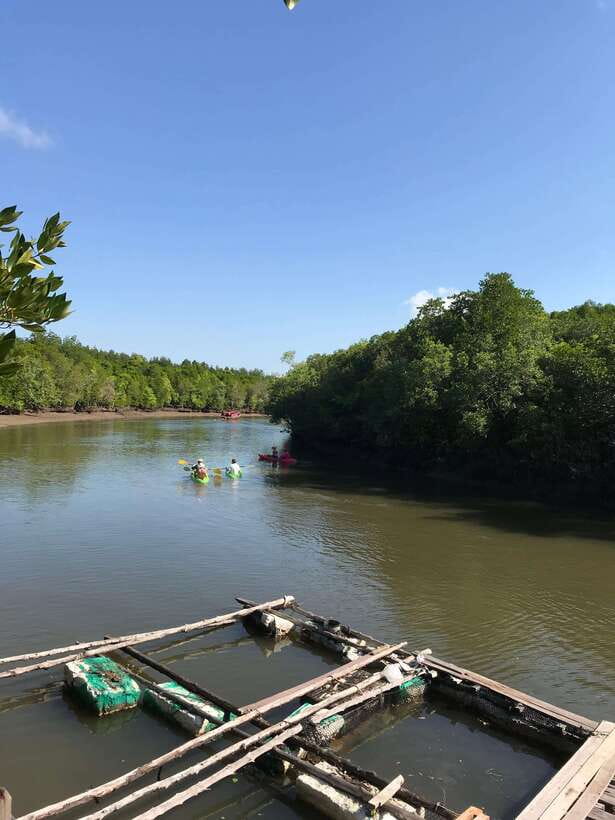
The activity lasts three hours, but the actual paddling time varies. Some outings include about one hour of paddling with many wildlife and photo stops. Others spend roughly one and a half to two hours on the water. Tide, rain, the group’s pace, and the route all affect the balance.
A morning start can be a good choice in hot weather. One account noted that the group was roasting by the end of the trip, while an early outing felt cooler and more comfortable. High tide may allow the kayak to reach farther into the forest, but it can make some animals less visible.
Rain does not automatically spoil the trip. Several outings continued through heavy weather and still found the mangroves beautiful. Rain bouncing off the open water, mist gathering around the distant hills, and wet greenery can create a memorable scene.
You should still prepare properly. Wear swimwear or quick-drying clothes, and bring a change of shorts or trousers. Water splashes into the kayak as you paddle, and rain can soak you when the channels open toward the sea. A raincoat is useful, although it will not keep every part of you dry.
The supplied waterproof bag is helpful for valuables, but do not treat it as permission to leave the bag exposed around monkeys. Keep passports, money, cameras, and phones zipped inside and follow the guide’s directions at the monkey stop.
The guides are the tour’s strongest asset
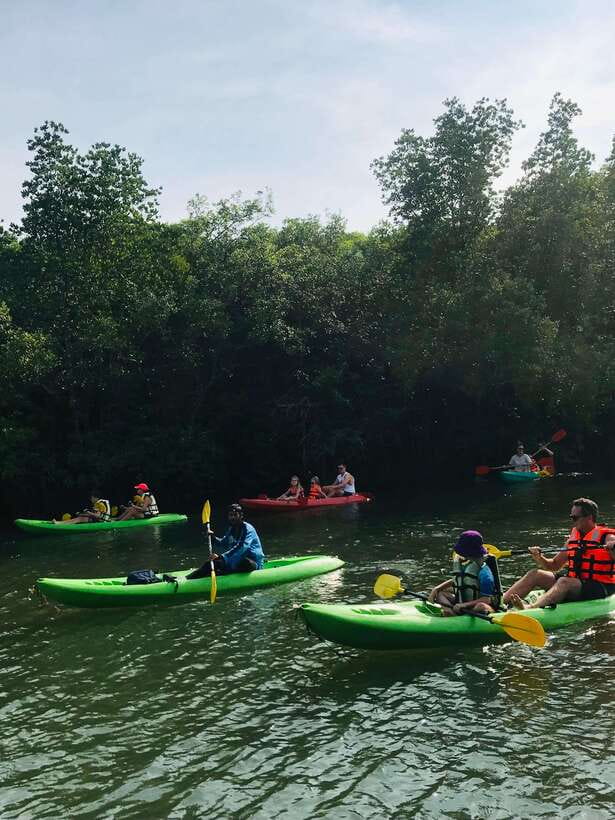
The repeated praise for Karim, Alim, and Ramadon is not just about friendliness. Their value comes from several practical jobs: explaining the mangrove ecology, spotting small animals, taking photographs at stops, helping new paddlers, and making sure nobody falls behind.
Karim is especially often praised for his humor, clear English, positive energy, and care for the group. He is also described as careful around the monkeys. Ramadon receives similar praise for an entertaining style and strong explanations. Alim is remembered for pointing out fish, snakes, and jumping fish, as well as helping with the monkey encounter.
Guide names may vary by departure, so you cannot count on a particular person. The important point is that the guide-led format adds real value. A solo paddle would give you the same trees and water, but probably not the same help finding mudskippers, crabs, birds, snakes, and monkey families.
There are a few small organizational imperfections. One person said the guide initially forgot to explain paddling to people new to kayaks. The issue appears minor, but if you have never kayaked before, ask for a quick demonstration before setting off. The guides also use a second staff member to help watch the back of the group on some outings, which is reassuring when several kayaks spread out.
Who should book this Ko Lanta kayaking tour?
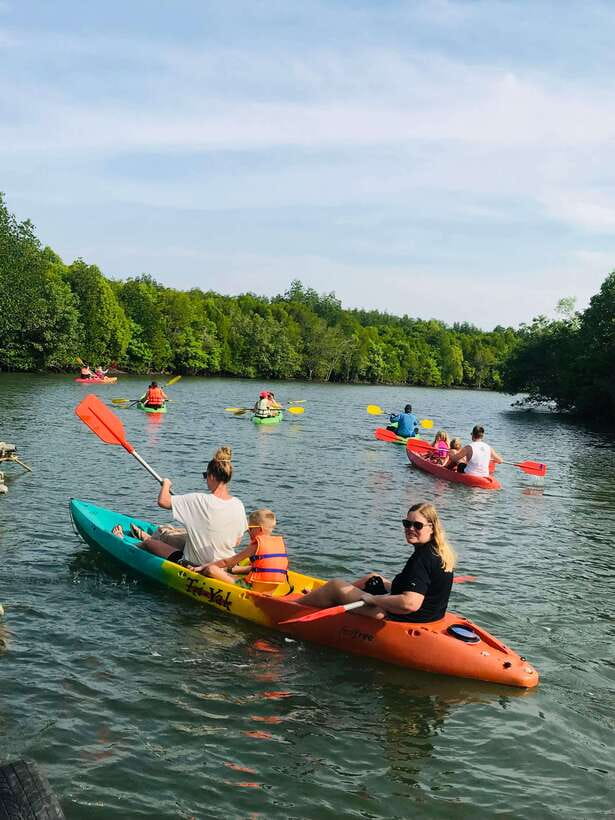
I would recommend it to couples, families, and first-time kayakers who want a gentle nature outing without giving up half a day. Children have managed the activity, but adults remain responsible for helping them paddle and keeping them calm around monkeys.
It is also a good choice for anyone who wants a break from beach time. The mangrove channels are quiet, shaded in places, and very different from the open sea. You do not need advanced kayaking skills, but you should be prepared to paddle and accept getting wet.
This may not suit you if you want a long, strenuous kayaking route, guaranteed animal sightings, or a completely dry boat ride. It is also not the best fit if you dislike close contact with monkeys. You can keep your distance, but the animals are wild and may still approach.
The tour is available with Thai and English-speaking guides. Hotel pickup is offered from Ko Lanta hotels, and you need to provide the hotel name and room number so the pickup can be confirmed. Free cancellation is available up to 24 hours before the activity, and you can reserve now and pay later, useful if your island plans depend on weather.
Should you book it?
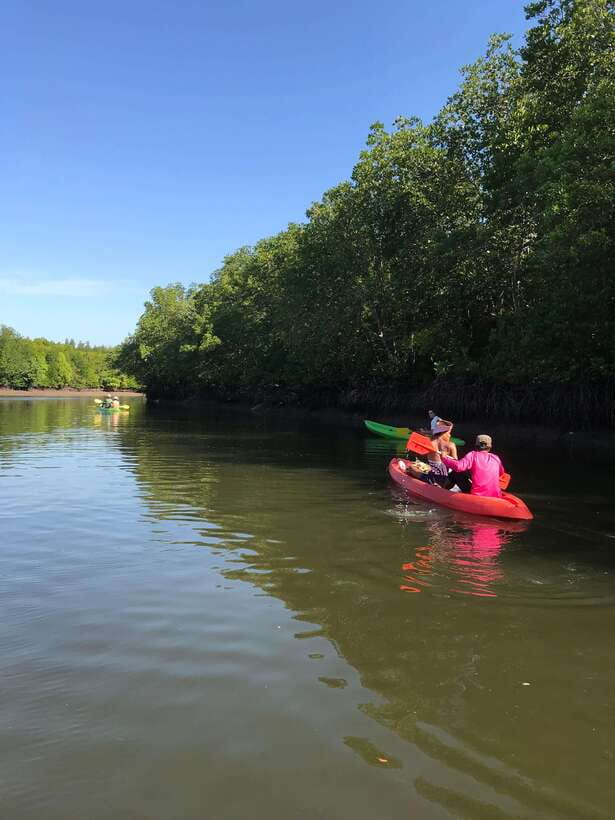
At $26, this is an easy activity to justify. You get transport, a guide, a kayak, wildlife viewing, a village and fish farm visit, lunch, fruit, drinks, and a three-hour change of pace from Ko Lanta’s beaches.
Book it if you value local scenery, small wildlife, and a guide who can add meaning to what you see. Choose a morning start for cooler conditions, pack dry clothes, secure your valuables, and treat the monkeys with caution. If you want a quiet, affordable look at another side of Ko Lanta, this tour earns its strong 4.7 rating and is one of the better-value half-day outings on the island.
FAQ
How long does the mangrove kayaking tour last?
The tour lasts three hours, including hotel pickup, kayaking, the village and fish farm visit, lunch, and the return to your hotel.
What is included in the price?
The $26 price includes hotel pickup and drop-off, a guide, kayak tour, lunch, seasonal fruit, soft drinks, life jackets, and a waterproof bag.
Where does the kayaking begin?
The tour travels to Tung Yee Peng Pier, where you board the kayak and enter the Ban Thung Yee Peng mangrove forest.
What animals might I see?
Possible sightings include mudskippers, fiddler crabs, mud crabs, birds, birds of prey, curlews, snakes, jumping fish, and monkeys. Wildlife sightings can vary with the tide and conditions.
Can the monkeys climb onto the kayaks?
Yes. Some monkeys may approach or climb onto kayaks, although you can remain farther away and watch from the water. Follow the guide’s instructions and secure your belongings.
Is lunch included?
Yes. Lunch is included, along with seasonal fruit and a soft drink. Fried rice with chicken or vegetables is mentioned as a meal option.
Are hotel transfers included?
Yes. Pickup and drop-off are available from hotels in Ko Lanta. You need to provide your hotel name and room number so the pickup can be confirmed.
Can I cancel the booking?
You can cancel up to 24 hours in advance for a full refund. The activity also offers a reserve-now, pay-later option.
Just added around Krabi
- Ko Lanta: Ko Aung, Ko Phee Ghost Cave Island, Talabeng Kayak★ 4.4 · 16 reviews
- Ko Lanta: Kayak and Long-Tail Boat Nature and Wildlife Tour★ 4.8 · 16 reviews
- Lanta Old Town and Mangrove Forest Sightseeing Tour★ 4.0 · 16 reviews
- Krabi: Ultimate Phi Phi & Maya Bay Ascent by Speedboat★ 4.2 · 16 reviews
- Full-Day Sea Kayaking Adventure in Ao Thalane Bay from Krabi★ 5.0 · 17 reviews
- From Phi Phi islands: Phi Phi, Maya Area by longtail Boat★ 4.4 · 17 reviews
- Krabi 7 Islands Sunset & Bioluminescence by Longtail boat★ 3.5 · 17 reviews
- Krabi: 4 Islands & Thale Waek’s Sandbar Tour By Speedboat★ 4.2 · 17 reviews
Canoes & Kayaks, compared.
Phang Nga Bay Sea Cave Canoeing & James Bond Island by Big Boat
Read our review →
Mu Ko Ang Thong Park Cruise with Kayaking Option
Read our review →
James Bond Island Longtail Boat and Sea Canoe Tour
Read our review →
Kayak Adventure through Ao Thalane Mangrove Forest
Read our review →
Hong by Starlight: Sea Cave Kayaking and Loy Krathong Floating
Read our review →
James Bond Island with Canoeing and Lunch by Speedboat
Read our review →
Day Trip to James Bond (Canoeing & Kayaking Islands & Lunch)
Read our review →Browse the lists this tour appears in