
Reviewed · RIVER KWAI & KANCHANABURI TOURS
River Kwai Day Tour from Bangkok – History, Scenery & Culture
The bridge is only part of the story. This long day from Bangkok combines the Kanchanaburi War Cemetery, JEATH War Museum, the River Kwai bridge, and a train ride along the Death Railway. I especially like the small-group limit of 15 people and the chance to see the railway from the train itself, not just from a museum display.
I also like the way the tour balances solemn history with countryside views and a Thai lunch beside the railway. Guides such as Rach, Oom, Nina, and Jira have been praised for clear explanations and personal care. The main drawback is the length: expect roughly 11 hours, much of it in a minibus, and the quality of the commentary can depend heavily on which guide leads your group.
In This Review
- Key points to know before booking
- Why the River Kwai still matters
- The early minibus ride from Bangkok
- Kanchanaburi War Cemetery: a quiet first stop
- JEATH War Museum and the prisoner camp display
- Walking across the River Kwai bridge
- The Death Railway train ride
- Wang Po station lunch beside the river
- Guide quality can make or break the day
- Is $97.77 a fair price?
- Who should book this River Kwai day trip?
- Should you book the River Kwai tour?
- FAQ
- How long does the River Kwai tour from Bangkok last?
- What is included in the tour price?
- Is hotel pickup available in Bangkok?
- How many people are in the group?
- Is the longboat ride included?
- What is the cancellation policy?
Key points to know before booking
- The cemetery is the emotional heart of the day: Allow yourself time to look at the names and graves rather than treating it as a quick photo stop.
- The train ride uses a real section of the Death Railway: Expect basic seating, local passengers, dust, smoke, and open-air conditions rather than a polished tourist train.
- A group of no more than 15 is a real advantage: Smaller numbers make it easier to hear the guide and move between sites.
- The day begins early and ends late: Some departures start around 6 a.m., with a return to Bangkok near 5:30 or 6 p.m.
- Lunch is included at Wang Po station: The Thai-style meal is buffet-style, with plenty of choice and views toward the river.
- Ask about train-seat upgrades: Standard seating may involve hard benches, while an upgrade costing about 500 baht may provide a more comfortable double seat.
Why the River Kwai still matters
The Kanchanaburi area is tied to one of the most painful chapters of World War II in Southeast Asia. Prisoners of war and Asian laborers were forced to work on the railway linking Thailand with Burma, now Myanmar, under brutal conditions. Thousands died from disease, exhaustion, hunger, violence, and accidents.
The bridge has become famous through books and films, but the real story is much harsher than the romantic image suggested by the 1957 movie. This tour is most worthwhile when you treat the bridge as one piece of a larger memorial area, not as the whole attraction.
I like that the route begins with the cemetery and museum before you reach the bridge. That order gives the structure and the train ride a human context. Without it, you might simply see old railway equipment and a scenic river crossing. With it, you begin to understand the cost behind the railway.
The subject can be difficult. The museums and memorials deal with imprisonment, forced labor, military cruelty, and death. You should come ready for a serious day, not a light sightseeing outing with a few historical decorations added.
More River Kwai and Death Railway trips:
- From Bangkok: Erawan Park & Kanchanaburi Small-Group Tour
★ 4.5 · 1,582 reviews - From Bangkok: Historical Day Tour to River Kwai
★ 4.6 · 868 reviews - Bridge on the River Kwai and Thailand-Burma Railway Tour
★ 4.5 · 658 reviews
The early minibus ride from Bangkok
Pickup is offered from various Bangkok hotels, with the exact meeting point and time provided at booking. You are asked to wait in your hotel lobby 15 minutes before the stated pickup time. Traffic can delay the driver by 15 to 45 minutes, so I would not schedule a tight appointment or airport transfer after the tour.
The air-conditioned minibus is included, along with a driver and English-speaking guide. A maximum of 15 people keeps the vehicle and stops more manageable than a large coach tour, though the ride is still long. Bangkok traffic can make the outbound and return journeys feel slow, particularly at the beginning and end of the day.
Bring water, comfortable clothing, and something small to read or listen to during the road sections. Guides have also handed out water and fruit during the day, but I would not rely on that as your only supply.
The drive is part of the trade-off for visiting Kanchanaburi as a day trip. You get round-trip transport from Bangkok without arranging trains, taxis, or local transfers yourself, but you spend a substantial portion of the day on the road. If you want a slower visit with more time at each memorial, an overnight stay in Kanchanaburi would be more relaxed. This tour is designed for convenience.
Kanchanaburi War Cemetery: a quiet first stop
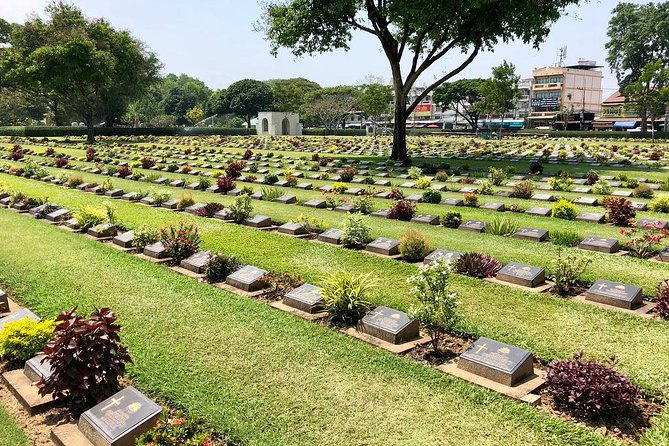
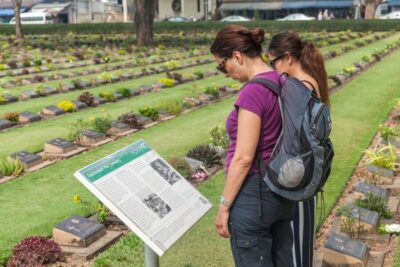
The Kanchanaburi War Cemetery is free to enter and is generally scheduled for about an hour, although the exact time may vary. Its neat rows of graves create a sharp contrast with the suffering connected to the railway.
This is the stop where I would slow down. Read a few names. Look at the ages when shown. Notice the different nationalities represented. If you are visiting because a relative served in the region, tell your guide early in the day. Rach has helped people locate particular graves and walked them directly to the right section, which can make a personal visit far more meaningful.
The cemetery is not a place for loud group chatter or rushed selfies. Your guide may provide background, but you will also want a few quiet minutes alone. The clean, open setting does not soften the subject, but it gives you room to think.
Some people have found that the stop lasts closer to 20 minutes in practice. If the cemetery matters most to you, politely ask for enough time to see the grave areas rather than assuming the full listed duration will be available.
JEATH War Museum and the prisoner camp display
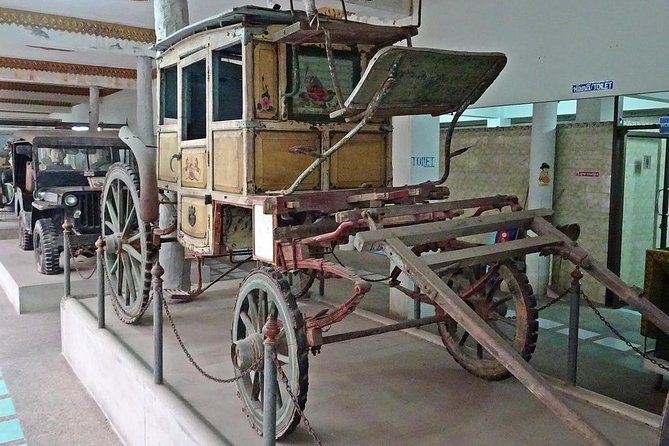
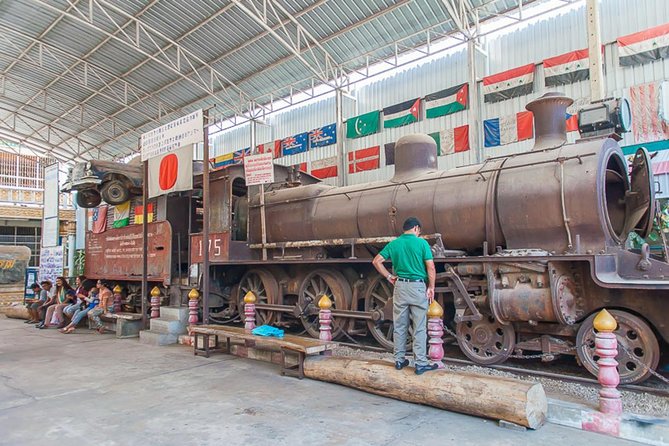
The JEATH War Museum presents photographs, paintings, objects, and a recreation of a prisoner-of-war hut. The name refers to Japan, England, America, Australia, Thailand, and Holland, the groups connected with the wartime story represented here.
This stop helps explain the living conditions behind the railway project. The recreated hut is more useful than a modern display case because it gives you a physical sense of the cramped accommodation. The photographs also show why the railway cannot be understood as merely an engineering achievement.
The museum is basic. Some displays have limited English descriptions, and parts of the site have been described as needing cleaning and repair. That is important to know before you arrive. Do not expect a polished national museum with extensive labels and air-conditioned galleries.
Your guide’s commentary matters here. Rach, Oom, and Nina have received strong praise for explaining the railway, the POW camps, and the wider setting in clear English. Other guide assignments have been less effective, with little information beyond what visitors could read themselves. The small group helps only if the guide uses it well.
Treat this as a short introduction rather than the final word on the subject. If you want detailed military history, read a book or watch a documentary before or after the tour. The museum gives you a useful foundation, but it cannot cover every part of the story in one visit.
More Historical Tours in Bangkok:
- From Bangkok: Ayutthaya Historical Park Guided Day Trip
★ 4.6 · 3,020 reviews - UNESCO’s Ayutthaya Historical Park: Full-Day Tour from Bangkok
★ 4.5 · 1,559 reviews - Historical City of Ayutthaya – Unesco Full Day Tour From Bangkok
★ 5.0 · 847 reviews - Private Excursion to Floating Market and Ayutthaya World Heritage
★ 5.0 · 515 reviews
Walking across the River Kwai bridge
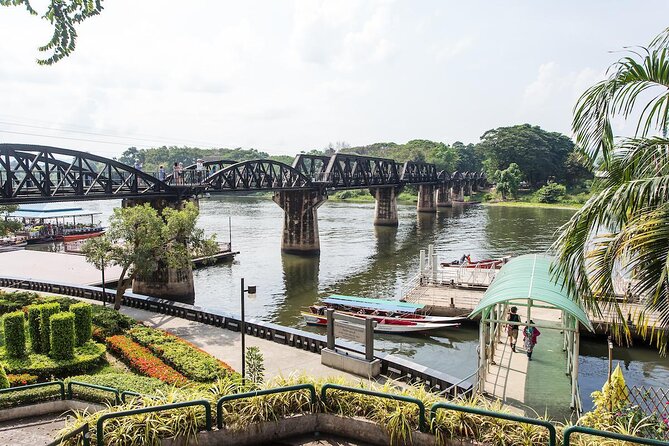
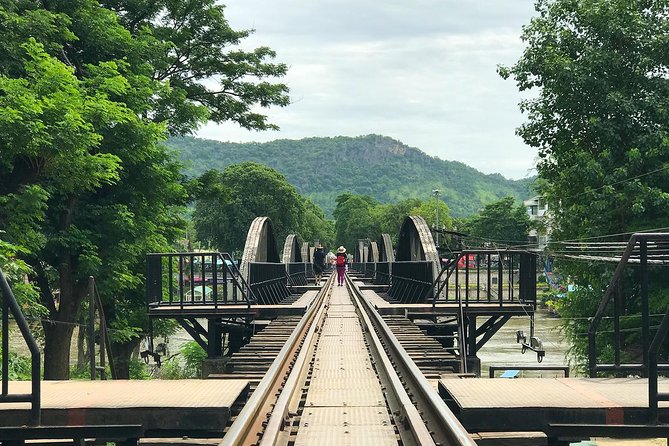
You then walk across the bridge over the river. The structure is the obvious photo stop, but it is also a working railway crossing, so pay attention to instructions and other people using the bridge.
The bridge has a strong visual impact. You can look down toward the water, see the metal framework, and understand why the crossing became such a powerful symbol. The surrounding scenery also breaks up the memorial stops with a calmer view of the river and countryside.
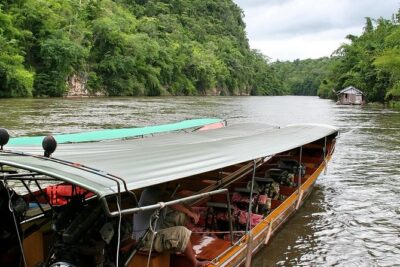
Some tours offer an optional longboat ride on the day. This gives you a lower view of the bridge and the river, and it can be a pleasant addition if you want more time on the water. It is not included in the stated tour price, so ask about the cost before agreeing.
Do not expect the bridge to look exactly like the film version. The real structure, its setting, and the historical record are not a perfect match for the movie. That difference is useful. It reminds you that the popular image is only a starting point.
The Death Railway train ride
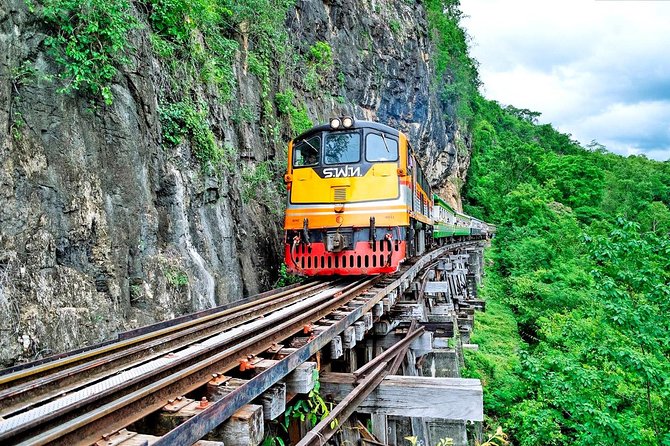
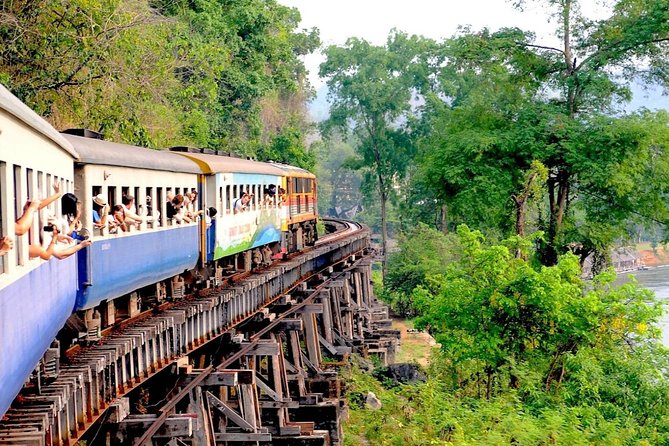
The train section is the day’s most distinctive feature. You ride along a remaining stretch of the Death Railway, passing through rural scenery and over the wooden viaduct near Tham Kra Sae. The track follows a sheer cliff beside the River Kwai, creating the best views of the day.
The listed train time is about 30 minutes, though the full sequence around boarding, waiting, and reaching Wang Po station can feel longer. The train is not a luxury carriage. Standard seating may mean hard benches, and there is no guarantee of getting a preferred seat. It can also be dusty and smoky, with local passengers and other visitors sharing the carriage.
That roughness is part of the point. You are riding a functioning railway on a surviving section of the line, not a staged attraction built only for sightseeing. Still, I would not pretend the basic seats are comfortable. If you value a better view or a double seat, ask about the optional upgrade, reported at around 500 baht.
The end of the ride near the wooden viaduct is especially memorable. The train moves slowly along the cliff, giving you time to see the timber supports and river below. Keep your camera ready, but do not spend the whole ride looking through a screen. The train provides the clearest link between the historical story and the physical railway.
The route may be affected by weather, maintenance, or safety procedures. Delays and changes are possible, so keep your schedule flexible.
Wang Po station lunch beside the river
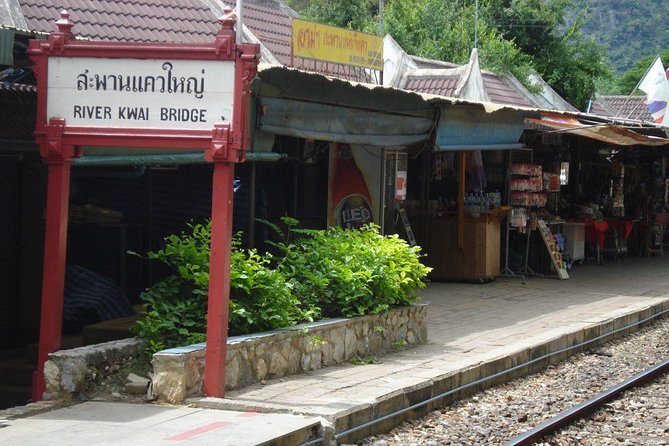
At Wang Po railway station, lunch is provided at a local restaurant. The meal is Thai-style and buffet-style, with a range of choices. Several guides have also helped make this a relaxed pause after the cemetery, museum, bridge, and train.
The setting is a major part of the appeal. The restaurant overlooks the river, and the quieter surroundings provide a welcome change from Bangkok’s traffic. There is also a small market area where you can walk around after eating.
Lunch is not fine dining, and the menu can vary. What you get is convenience, choice, and a pleasant location included in the tour rather than an extra restaurant expense. Vegetarian or dietary needs are worth raising when booking or with the guide early in the day, since the supplied information does not promise special menus.
This stop also marks the point where you leave the railway area and return to Bangkok. The tour does not continue to the Burmese border. Wang Po is close to that direction, but the day remains focused on Kanchanaburi’s memorials and the surviving railway section.
Guide quality can make or break the day
The strongest part of this experience is often the guide. Rach has been praised for extensive WWII knowledge, clear English, enthusiasm, and attention to individual needs. Oom has also been described as patient, highly informed, and willing to help people see as much as possible. Nina has provided useful explanations, water, fruit, and help with train seating, while Jira has been praised for making the day personal and memorable.
Guide assignments vary, though. Some people have found the commentary limited, with little explanation during the road journey or at the stops. One guide was described more as an escort than a history interpreter, and the English level was not considered strong enough for detailed questions.
That variation is the main uncertainty in an otherwise clearly planned day. You can improve your chances by asking questions early, telling the guide what interests you, and speaking up if you want more context at a stop. A guide who knows you are interested in a particular soldier, regiment, or railway feature may be able to make the visit more useful.
The driver also deserves credit. Bangkok traffic is demanding, and a safe, steady transfer matters on a day with so much road travel. The tour includes round-trip transport, so you do not have to manage the return from a remote railway station yourself.
Is $97.77 a fair price?
At $97.77 per person, the price is reasonable if you want a full day with transport, an English-speaking guide, lunch, museum and site admissions, and the train ride. Organizing all of that independently would require arranging transport from Bangkok to Kanchanaburi, local transfers between the cemetery, museum, bridge, and railway, train tickets, and a return journey.
The price is less attractive if you mainly want a quick photograph at the bridge. You are paying for an 11-hour day, and much of it is travel time. You are also paying for the convenience of a structured route and the chance to hear historical context along the way.
The small group improves the value. A limit of 15 means you are not moving with a huge coach crowd, and it gives the guide a better chance to answer questions. The included lunch is another practical benefit, though the optional boat ride and train-seat upgrade cost extra.
I would call it good value for a first visit from Bangkok, particularly if you have only one day available. It is not the right choice if you prefer a slow, private, deeply researched historical visit.
Who should book this River Kwai day trip?
I would recommend it to you if you:
- Have a strong interest in World War II history and memorial sites
- Want to visit Kanchanaburi without changing hotels
- Prefer a small group over a large coach
- Like combining museums with scenery and a real train journey
- Are comfortable with an early start and a long return trip
- Want lunch and transport arranged in advance
I would hesitate if you dislike long minibus journeys, basic train seating, or emotionally heavy sites. Families can participate, but the subject matter may be difficult for young children. The child pricing information is inconsistent: one note says children over 120 centimeters pay the adult rate, while another says children over 110 centimeters should use the adult price. Confirm the correct rule before booking.
The tour is suitable for most people, and it is near public transport at relevant points, but the included hotel pickup and minibus transfer are the practical features that make it easiest for a Bangkok stay.
Should you book the River Kwai tour?
Book it if you want the main Kanchanaburi sights in one demanding but meaningful day. The cemetery, bridge, Death Railway train, wooden viaduct, and river lunch create a solid introduction to the area, and the small group is a genuine plus.
Go in with realistic expectations. The museum is modest, the train is basic, the road journey is long, and your guide may be excellent or merely adequate. Ask about the train-seat upgrade, consider the optional boat ride, and protect enough time for the cemetery.
For most first-time visitors with limited time in Bangkok, I think the convenience and range of stops justify the $97.77 price. If you can spare an overnight stay in Kanchanaburi, that would offer a calmer pace. If you cannot, this tour gives you a respectful and practical way to see the key sites without wrestling with the transport yourself.
FAQ
How long does the River Kwai tour from Bangkok last?
The experience lasts approximately 11 hours. Some departures begin around 6 a.m. and return to Bangkok around 5:30 or 6 p.m., depending on traffic and the day’s conditions.
What is included in the tour price?
The price includes round-trip transfer, an English-speaking guide, lunch, an air-conditioned vehicle, and the listed admissions and train experience.
Is hotel pickup available in Bangkok?
Yes. Pickup is offered from various hotels in Bangkok, and the exact pickup details are provided with the booking information.
How many people are in the group?
The group has a maximum of 15 travelers, making it smaller than a standard large coach tour.
Is the longboat ride included?
No. The longboat ride is an optional addition available on the day, subject to its extra cost and availability.
What is the cancellation policy?
You can cancel up to 24 hours before the experience start time for a full refund. Changes or cancellations made less than 24 hours before the start time are not accepted for a refund.
Just added around Bangkok
- Kanchanaburi World War 2 Private Charter Pathway of the Past Tour★ 4.5 · 16 reviews
- 2-hour Bangkok Old City Night CHOB TUK TUK + Talat Noi Street Art★ 5.0 · 16 reviews
- Floating Market with Great Pagoda Temple and Wat Sam Phran★ 5.0 · 16 reviews
- Khao Yai National Park Hiking Day Tour: Haew Narok and Haew Suwat★ 5.0 · 16 reviews
- Shangri-La Hotel’s Salathip Thai Restaurant Experience★ 4.5 · 16 reviews
- Private Transfer Bangkok – Koh Kood Island★ 4.0 · 16 reviews
- The Best Bangkok Temples★ 4.0 · 16 reviews
- Private Half-Day Bangkok Tour Explore Grand Palace and Wat Pho★ 4.5 · 16 reviews
River Kwai & Kanchanaburi Tours, compared.

Bridge on the River Kwai and Thailand-Burma Railway Tour
Read our review →
Erawan Waterfalls and Bridge Over River Kwai Tour from Bangkok
Read our review →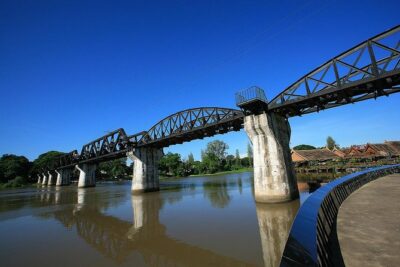
Bridge on the River Kwai and Thailand-Burma Railway Guided Tour
Read our review →
Kanchanaburi Full Day Tour: River Kwai and Erawan Falls
Read our review →
Floating Markets and Bridge on River Kwai Tour from Bangkok
Read our review →
Bridge over River Kwai and Hellfire Pass Tour with Train Ride
Read our review →Browse the lists this tour appears in