
Reviewed · FOOD & DRINK
Taste of Bangkok: A 3-Hour Chinatown Food Feast
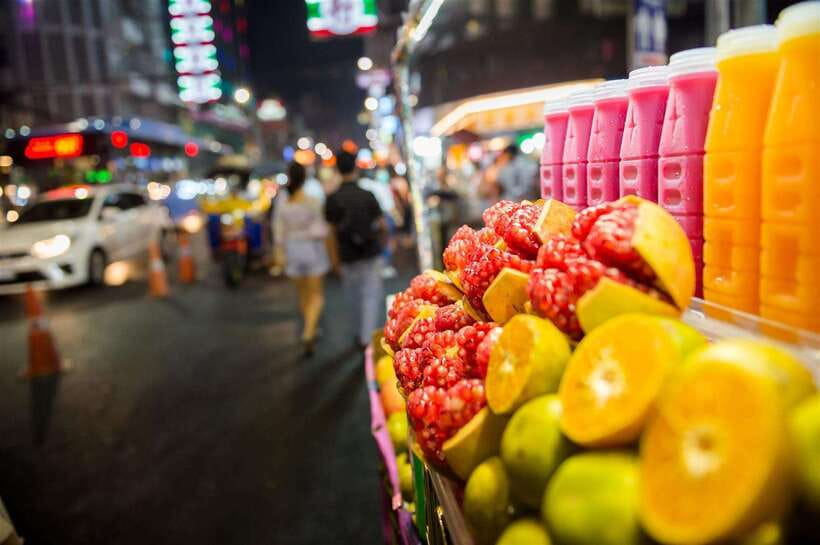
Bangkok eats best after dark. This three-hour walk through Yaowarat gives you a generous sampling of Thai-Chinese street food, from dumplings and barbecued meats to noodles, seafood, snacks, sweets, and an award-winning Michelin food-stall specialty. I especially like the small group of up to eight people, which makes a crowded neighborhood easier to handle, and the sheer amount of food included for $36.
I also like that the experience begins at Wat Mangkon Kamalawat and ends at the Chinatown Gate, so the route has a clear shape rather than feeling like a string of unrelated restaurant stops. The main consideration is that Yaowarat can be hard work on busy evenings, and this is not a good fit for vegans or vegetarians under the stated food arrangements. Some guides have managed vegetarian alternatives, but you should not count on that without confirming first.
In This Review
- Key points at a glance
- Starting at Wat Mangkon Kamalawat
- The first tastings: Thai-Chinese food in small portions
- Lesser-known stalls and family food traditions
- The Michelin food-stall stop
- Sweet snacks, drinks, and a proper finish
- What the three-hour pace feels like
- Food restrictions and who should book
- Is $36 good value?
- Practical advice before you go
- Should you book the Chinatown food feast?
- FAQ
- How long does the Chinatown food tour last?
- Where does the tour begin?
- Where does the tour finish?
- How many foods will I taste?
- Is a Michelin food stall included?
- Is hotel pickup included?
- Is the tour suitable for vegetarians?
- Is the tour suitable for people with food allergies?
- What language is the tour conducted in?
- Can I cancel for a refund?
- How large is the group?
Key points at a glance
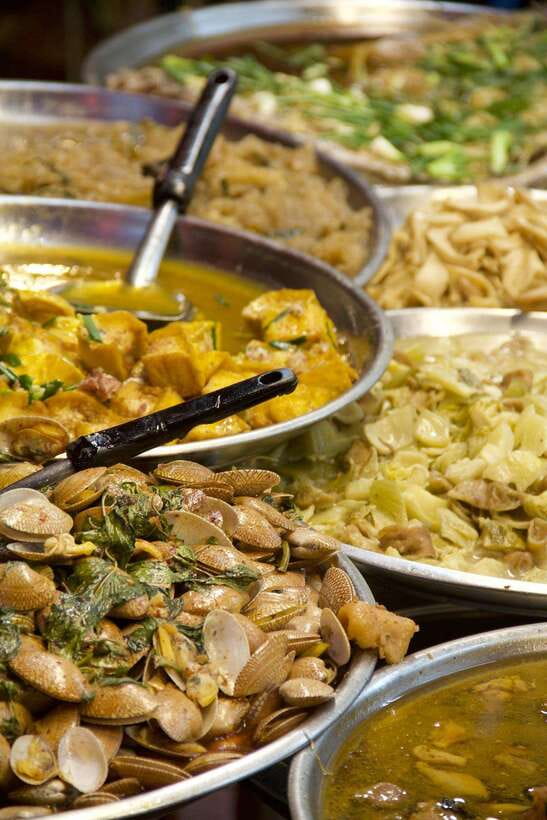
- More than 10 tastings: Expect a steady stream of savory dishes, small snacks, desserts, and drinks. Several participants have described receiving 15 or more food samples.
- Michelin-linked street food: The route includes at least one Michelin-recognized food stall, with some recent outings featuring two or more such stops.
- A guide makes Chinatown manageable: Guides such as Na, Peak, and K have been praised for explaining dishes, helping with ordering, and guiding the group through crowded streets.
- A genuine evening setting: Neon signs, food smoke, narrow lanes, and busy vendor stalls provide the backdrop.
- Good value at $36: Food, bottled water, a guide, and the walking route are included, with no separate meal bill at each stop.
- Come hungry and wear sensible shoes: The quantity is generous, and you will be walking and standing for much of the three hours.
Starting at Wat Mangkon Kamalawat
Your meeting point is Wat Mangkon Kamalawat, also known as Wat Leng Noei Yi. This is a useful place to begin because it puts you near the Chinese heart of Bangkok before the evening food crowds reach their full force.
The tour does not include hotel pickup, so you need to make your own way to the temple. Build in enough time to find the meeting point, especially if you are unfamiliar with Bangkok. One practical improvement would be an earlier guide arrival, since meeting-point coordination can matter in a crowded district.
From the temple, your guide leads you into Chinatown on foot. That first transition is part of the experience. You are not being driven from one polished dining room to another. You move through the neighborhood at street level, where food stalls, shopfronts, signs, scooters, and pedestrians all compete for space.
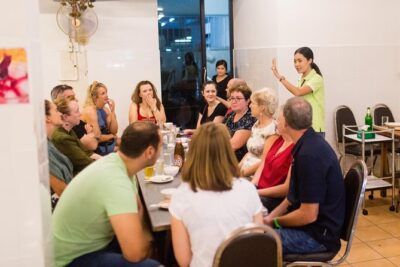
The small-group format helps here. A group capped at eight is large enough to share the evening with other food lovers, but small enough for the guide to answer questions and keep people together. It also gives you a better chance of hearing explanations than you would on a large coach-style outing.
More Food Tours in Bangkok:
- Bangkok: White Orchid Chao Phraya Dinner Cruise free Beer
★ 4.4 · 4,573 reviews - Bangkok by Night: Temples, Markets and Food Tuk-Tuk Tour
★ 5.0 · 3,752 reviews - Bangkok: Backstreets Food Tour with 15+ Tastings
★ 4.9 · 2,880 reviews
The first tastings: Thai-Chinese food in small portions
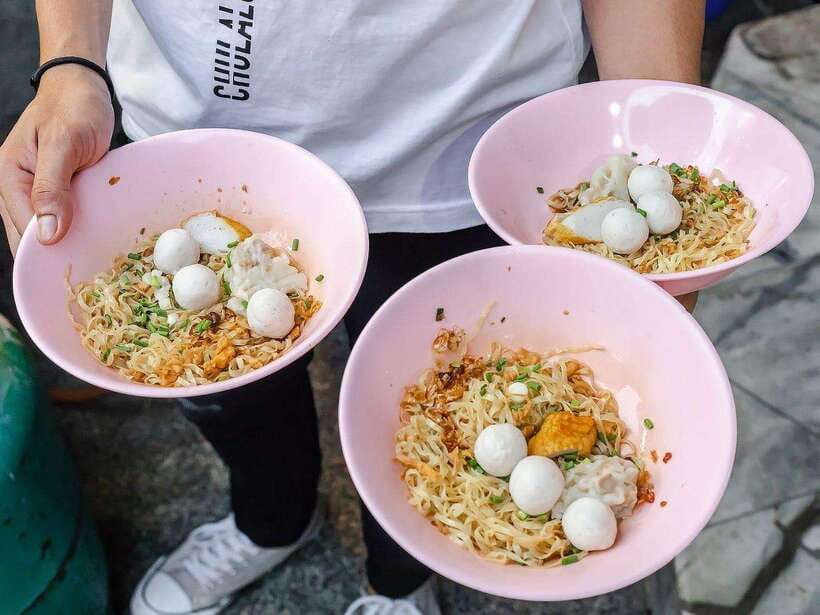
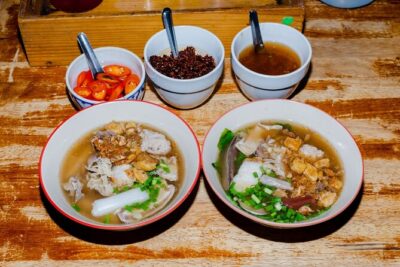
The early part of the walk introduces the broad range of Yaowarat cooking. You might taste crisp spring rolls, barbecued meats, freshly steamed dumplings, stir-fried dishes, noodle soup, or spicy seafood. The exact order and vendor selection can vary, but the point is variety rather than one oversized plate.
That format works well for Bangkok. A full bowl of noodles can be excellent, but it leaves little room for anything else. Small portions let you try foods you might otherwise pass by, including snacks and unfamiliar dishes. One guide even made a special stop for dancing shrimp after a participant expressed interest, a good example of how a flexible guide can shape the evening around the group.
I would still pace yourself. The food arrives throughout the three hours, and the portions may look modest at first. By the middle of the route, the combination of meats, noodles, dumplings, seafood, fried snacks, and drinks adds up quickly. Arriving hungry is sensible, but arriving starved may lead you to fill up too soon.
The strongest part of this approach is the local guidance. A dish that looks ordinary at a stall can be much more interesting when you know how it is traditionally eaten, which sauce to add, or how it connects to Chinese cooking in Bangkok. Guides including Na and Peak have received especially warm praise for being friendly, funny, attentive, and clear in their explanations.
Lesser-known stalls and family food traditions
Yaowarat is famous, but its food is not limited to the obvious main road. A useful guide can steer you toward less familiar vendors and food counters that are easy to miss when you are walking alone.
That matters because Bangkok Chinatown can feel confusing even when you know where you are going. The streets are full of choices, and you may not know which stall has a long local following or which one is simply in a convenient location. A guide gives you a practical filter, helping you spend your limited evening on food worth trying.
Na has also brought a personal connection to the food, drawing on her Vietnamese and Chinese heritage and taking groups to places she and her family still eat. That sort of detail gives the tour a more personal feel than a simple list of famous dishes. It helps explain how Chinese immigrant traditions have changed within Bangkok, rather than treating Thai-Chinese food as a fixed category.
The guide’s role is not only to name ingredients. You also learn about the influence of Chinese immigrants on Bangkok’s cooking and how old recipes have developed alongside Thai tastes. The food becomes a way to understand the neighborhood, not just a sequence of samples.
The Michelin food-stall stop
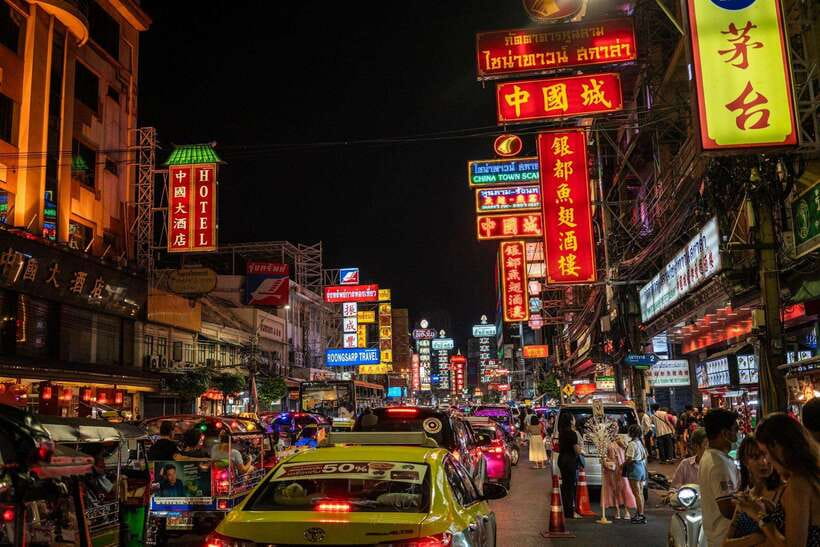
Later in the evening, the tour reaches a Michelin-recognized food stall. The activity promises a taste of an award-winning specialty, and several outings have included more than one Michelin street-food stop. Because vendor schedules and the exact route can change, I would treat one Michelin stop as the reliable promise and any additional stops as a welcome bonus.
This part adds a useful contrast. Earlier dishes introduce the everyday range of Chinatown food, while the Michelin stop shows how a humble street vendor can earn serious culinary attention. You still eat at a stall rather than in a formal restaurant, so the setting remains firmly tied to Yaowarat’s street culture.
The value is not just the label. You get to try a dish that has been recognized beyond the neighborhood, then compare it with the less-publicized foods served along the route. If you are interested in how Bangkok turns simple ingredients and long-practiced cooking methods into celebrated food, this is likely to be one of the evening’s highlights.
There is one small caveat. The available description does not identify the stall or guarantee a particular dish by name. If you have your heart set on one famous Chinatown specialty, ask the guide at the start what is planned that evening.
Something different for another day:
- Bangkok: Damnoen Saduak Market and Maeklong Railway Market
★ 4.5 · 26,723 reviews - The Old Siam: Damnoen Saduak and Maeklong Railway Market
★ 4.5 · 10,992 reviews - From Bangkok: Ayutthaya Temples Guided Tour with Lunch
★ 4.7 · 10,535 reviews - Bangkok: Train Market & Floating Market with Boat Ride
★ 4.7 · 9,547 reviews
Sweet snacks, drinks, and a proper finish
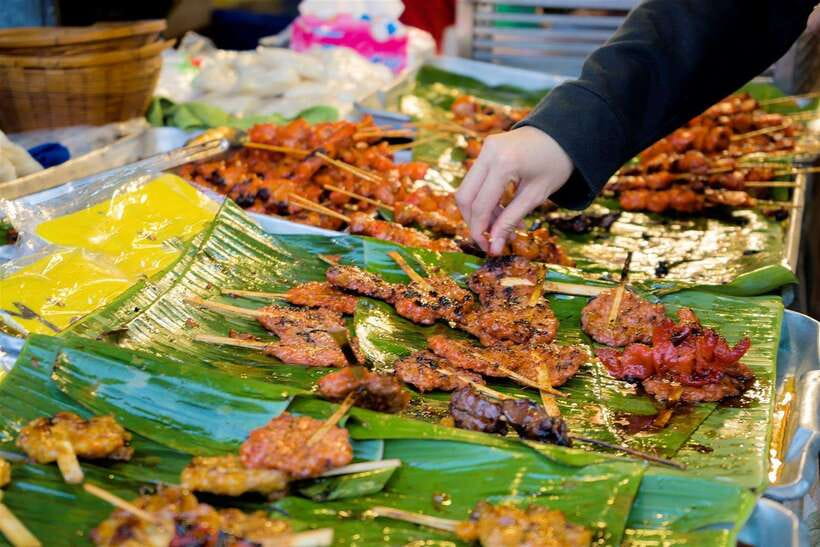
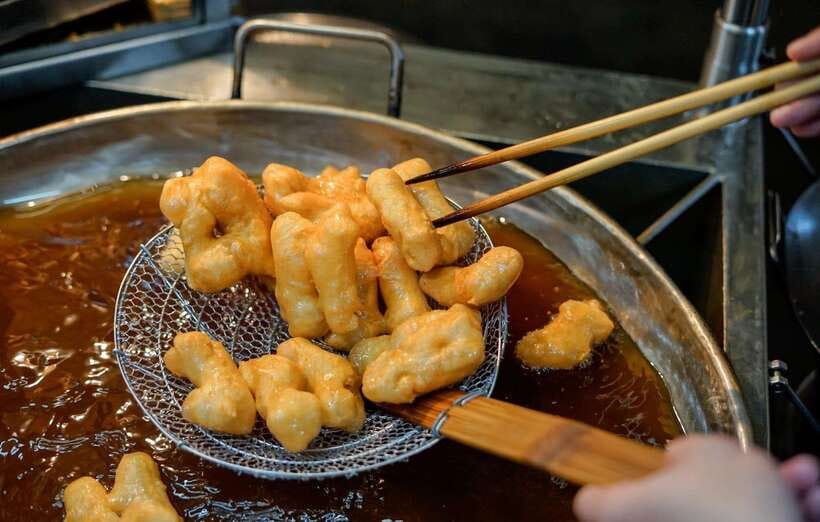
A food tour needs a sensible ending, and this one finishes with traditional Chinese desserts and snacks. You might receive freshly made buns, local-style pancakes, or another sweet bite, paired with a refreshing drink.
That change from savory to sweet is welcome after several rounds of meat, noodles, fried food, and seafood. It also shows another side of Chinatown’s food culture. The neighborhood is not only about wok smoke and grilled meat. Small sweets, filled buns, and iced drinks are part of the evening rhythm.
One outing finished with a drink at a discreet bar, and another account described a bar stop with inexpensive mixed drinks. This appears to be an occasional or flexible extra rather than a firm part of the stated itinerary, so do not book the tour solely for that stop. The official inclusions specify food samples and bottled water, not alcoholic drinks.
What the three-hour pace feels like
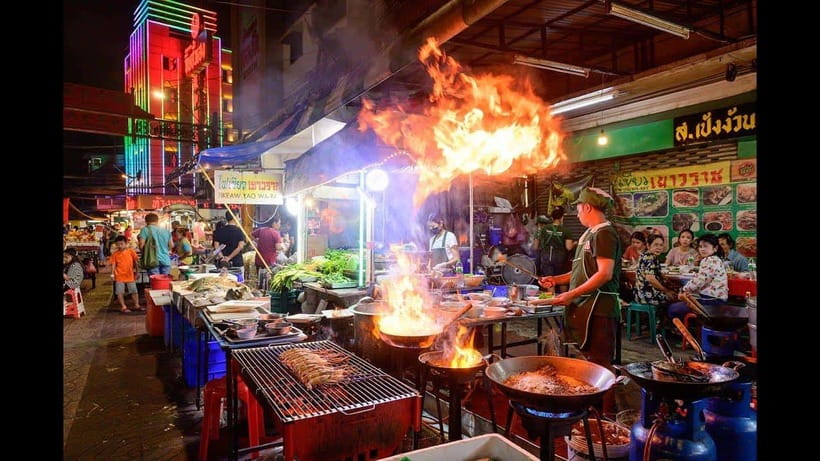
Three hours is enough time to eat widely without turning the tour into an exhausting full-day commitment. You are moving between stops, listening to stories, eating, and often standing near busy vendor areas.
The pace seems intentionally full. One participant described more than 15 foods, while the core description promises more than 10. That is excellent value for someone who wants to sample a lot, but it also means you should expect little idle time. The evening is built around constant food discovery.
Yaowarat is particularly crowded on weekends. You should be comfortable walking through dense foot traffic and sharing narrow spaces with other people. This is not a relaxed restaurant crawl with a seat at every stop. If you dislike crowds, long periods on your feet, or street-side eating, the format may wear you down.
The tour finishes at the Chinatown Gate, a convenient endpoint for continuing your evening in the district. Since hotel transport is not included, you arrange your own ride afterward. The start and finish at different locations also mean you should not leave anything at the meeting point.
Food restrictions and who should book
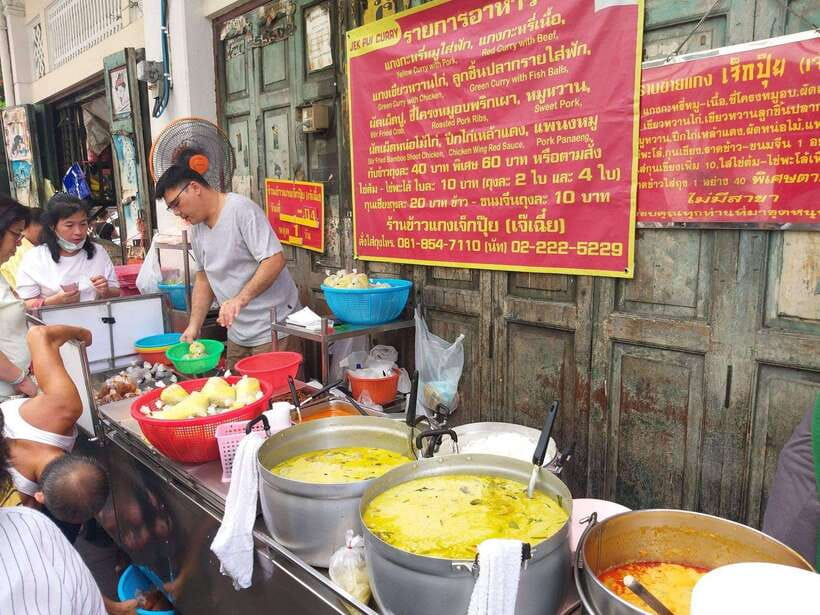
The stated conditions list the tour as unsuitable for vegans and vegetarians. That is the safest guidance to follow when booking, since Thai-Chinese street food often includes meat, seafood, fish sauce, oyster sauce, or shared cooking surfaces.
There is some evidence that a guide may be able to help in individual cases. Peak arranged vegetarian choices for one participant, and Na took careful steps to help a visitor with a nut allergy, including separate plates and written Thai phrases for future food orders. Those are thoughtful examples of guide care, but they do not replace advance confirmation.
If you have a severe allergy, tell the operator before booking and again at the meeting point. Do not assume that a dish is safe simply because it contains no obvious nuts. The available information confirms that one guide handled an allergy carefully, but it does not promise a universal allergy-free menu.
This tour suits you best if you:
- Enjoy trying many foods rather than ordering one familiar meal
- Want context about Chinatown’s Chinese influence
- Are happy walking and eating in crowded public spaces
- Prefer a small group to a large organized excursion
- Want a social evening activity as a solo visitor or couple
- Are comfortable with food choices that may include meat and seafood
Families can also fit into the experience. A guide made an effort to include three children, even when they were cautious about unfamiliar food. Still, parents should expect a long evening of walking, waiting near stalls, and tasting rather than a child-focused activity.
Is $36 good value?
At $36 per person, this is a strong food value if you make good use of the tastings. You receive more than 10 samples, a local English-speaking guide, a three-hour walking route, and bottled water. You also avoid the risk of ordering too much at a stall you do not understand, then discovering that you do not like it.
The guide is the key part of the price. Anyone can walk down Yaowarat Road and buy food, often cheaply. The paid experience earns its keep by selecting stops, explaining the neighborhood, managing the route, and helping you taste dishes you might not recognize.
The price is also lower than many organized food walks, but low cost does not mean a bare-bones experience here. The food quantity is repeatedly described as generous, and the guide quality has been a major strength. The tradeoff is that you do not receive hotel transfers, and the exact food lineup is not fixed in the information provided.
A 4.8 rating from 59 ratings suggests a consistently strong experience, though you should still pay attention to the small number of practical cautions. The clearest issues are crowd levels, limited vegetarian suitability, and the need for a clearer picture of how many sit-down stops the route includes.
Practical advice before you go
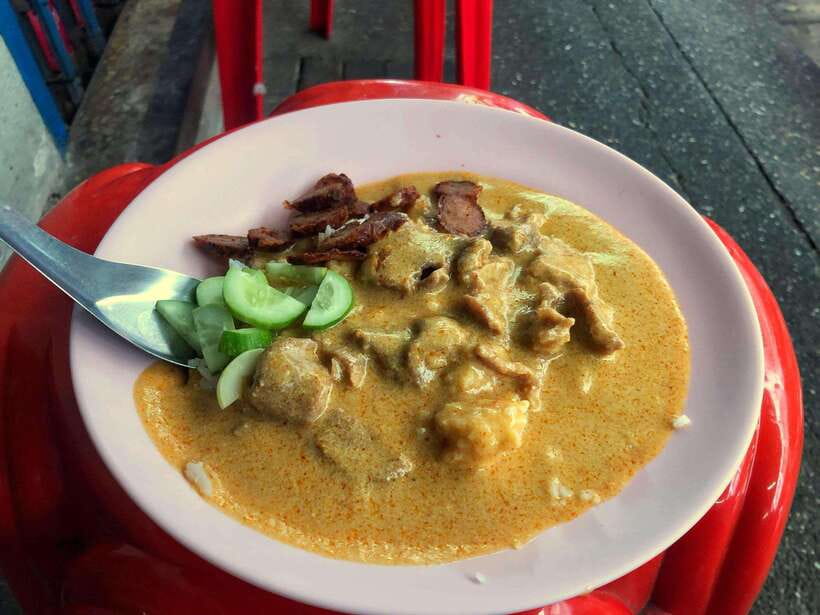
Wear shoes that are comfortable for three hours of city walking. You may also want clothing that handles Bangkok’s evening heat, though no specific dress code is provided.
Keep your appetite in reserve. Try everything in modest amounts at first, and avoid buying a separate meal before the tour. With 10 or more tastings, you will have plenty of food.
If you want normal chili strength, tell your guide. One participant found some dishes bland because the guide had asked vendors to reduce the spice for the group. That was considerate for people who dislike heat, but Thai food can lose some of its character when toned down too far.
You should also tell the guide what you do and do not eat at the start. This is especially important for allergies and for anyone who wants to avoid seafood, strong spice, or particular ingredients. The guide may be able to adjust a sample, but alternatives are not guaranteed.
The tour is offered in English and includes a live guide. Cancellation is free up to 24 hours before the start, and you can reserve now and pay later, which is useful when your Bangkok schedule is still changing.
Should you book the Chinatown food feast?
I would book this tour if you want a generous introduction to Yaowarat and prefer guidance over wandering from stall to stall on your own. The combination of more than 10 tastings, Michelin street food, neighborhood stories, and a group limited to eight gives the $36 price real value.
I would skip it if you need a fully vegetarian or vegan menu, dislike crowds, or want a slow dinner with guaranteed seating. For everyone else, especially solo visitors and first-time Bangkok food explorers, this is a practical way to make sense of a complicated food district while trying far more dishes than you could sensibly order alone.
FAQ
How long does the Chinatown food tour last?
The tour lasts three hours, including the walking route and food tastings through Yaowarat.
Where does the tour begin?
The meeting point is Wat Mangkon Kamalawat, also called Wat Leng Noei Yi.
Where does the tour finish?
The tour ends at the Chinatown Gate.
How many foods will I taste?
The experience includes more than 10 tastings. Some outings have included 15 or more different foods.
Is a Michelin food stall included?
Yes. The tour includes at least one stop at a Michelin-recognized food stall. Some outings have included two or more Michelin street-food stops.
Is hotel pickup included?
No. Hotel pickup and drop-off are not included, so you must reach Wat Mangkon Kamalawat independently and arrange your own transport afterward.
Is the tour suitable for vegetarians?
The stated information lists the tour as unsuitable for vegetarians and vegans. Some guides have provided vegetarian alternatives, but this is not guaranteed.
Is the tour suitable for people with food allergies?
Alternatives may be available, but not all dietary restrictions can be accommodated. If you have an allergy, contact the operator before booking and explain it clearly to the guide.
What language is the tour conducted in?
The tour is conducted in English with a live guide.
Can I cancel for a refund?
Yes. You can cancel up to 24 hours in advance for a full refund.
How large is the group?
The experience is limited to eight participants, making it a small-group walking tour.
Just added around Bangkok
- Kanchanaburi World War 2 Private Charter Pathway of the Past Tour★ 4.5 · 16 reviews
- 2-hour Bangkok Old City Night CHOB TUK TUK + Talat Noi Street Art★ 5.0 · 16 reviews
- Floating Market with Great Pagoda Temple and Wat Sam Phran★ 5.0 · 16 reviews
- Khao Yai National Park Hiking Day Tour: Haew Narok and Haew Suwat★ 5.0 · 16 reviews
- Shangri-La Hotel’s Salathip Thai Restaurant Experience★ 4.5 · 16 reviews
- Private Transfer Bangkok – Koh Kood Island★ 4.0 · 16 reviews
- Private Half-Day Bangkok Tour Explore Grand Palace and Wat Pho★ 4.5 · 16 reviews
- The Best Bangkok Temples★ 4.0 · 16 reviews
Food & Drink, compared.
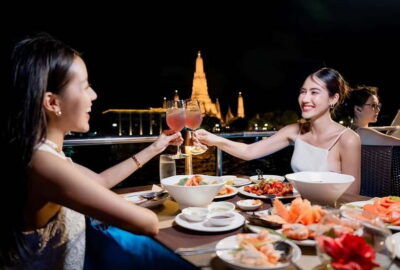
White Orchid Chao Phraya Dinner Cruise free Beer
Read our review →
Bangkok by Night: Temples, Markets and Food Tuk-Tuk Tour
Read our review →
Southern Flavors Phuket Food Tour with 15+ Tastings
Read our review →Bangkok Backstreets Food Tour with 15+ Tastings
Read our review →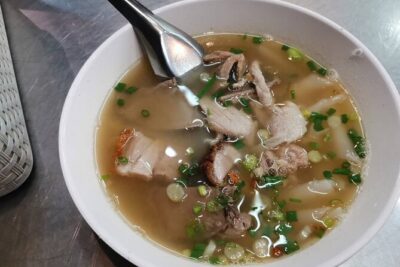
Browse the lists this tour appears in