
Reviewed · DOI SUTHEP TEMPLE TOURS
4-Hour Doi Suthep & Hmong Hill Tribe Village from Chiang Mai
The mountain makes Chiang Mai feel bigger. This four-hour outing pairs Doi Suthep Temple with Doi Pui Hmong Village, giving you sacred architecture, hill-country views, and a look at local village life without using up your whole day. I like the small nine-person minivan, and I especially like the guides, including Pae, Pookie, Tui, and Nut, who are repeatedly praised for clear English and thoughtful explanations. The main consideration is that the village includes many souvenir stalls, so the experience feels partly cultural visit and partly shopping stop.
You will also need to manage temple clothing and mountain roads. Long pants and covered shoulders are required, and the 309 steps to the temple are not ideal for anyone with mobility, heart, or back problems. If the air is smoky or foggy, the famous city view may be faint or disappear altogether.
In This Review
- Key points to know before you book
- Why this four-hour mountain trip works
- Doi Pui Hmong Village: more than a market stop
- The winding ride through Doi Suthep-Pui National Park
- Wat Phra That Doi Suthep and the 309-step choice
- The Chiang Mai view from the temple terrace
- Guides make the difference here
- Timing, pickup, and what the day feels like
- What to wear and carry
- Who should book this experience?
- Should you book the Doi Suthep and Hmong village tour?
- FAQ
- How long does the Doi Suthep and Hmong village tour last?
- What time does the tour depart?
- Is hotel pickup included?
- Is the cable car included?
- What should I wear to Doi Suthep?
- Is the tour suitable for wheelchair users?
- Is food included in the tour price?
- Can I cancel the booking?
Key points to know before you book
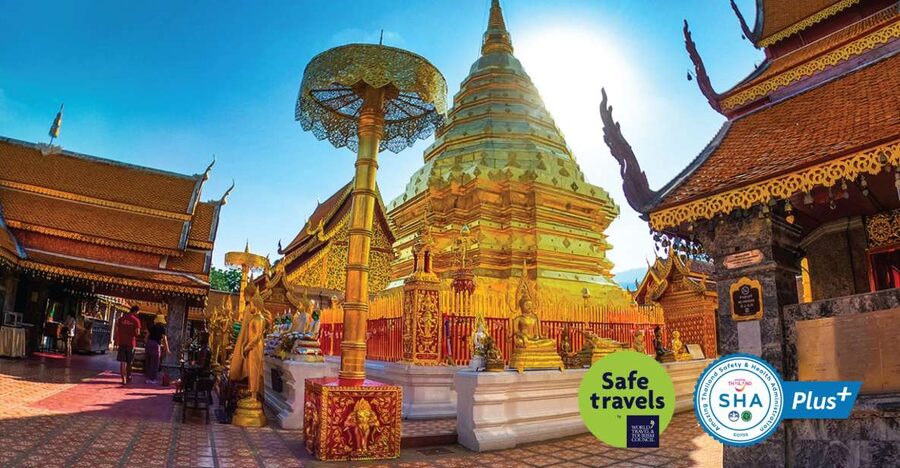
- Doi Suthep is the star of the trip: See the golden stupa, Buddhist artwork, sacred relic, and Chiang Mai views in about an hour.
- Doi Pui adds a human side: The museum, village paths, gardens, coffee, crafts, and market stalls show more than another temple can.
- You can skip the 309 steps: The included cable car helps if the stairway is too demanding.
- The guides earn much of the praise: Pae, Pookie, Tui, Nut, Kai, Lily, and others are noted for cultural knowledge, patience, and good English.
- It is a compact half-day outing: Hotel pickup, transport, entry fees, water, a refreshing towel, and insurance are included for $36 per person.
- Visibility is seasonal and weather-dependent: Fog and smoke can block the view from the terrace, especially in wet or smoky conditions.
Why this four-hour mountain trip works
Doi Suthep is one of Chiang Mai’s essential sights, but reaching it on your own involves arranging transport up a winding mountain road and working out how to combine it with Doi Pui. This tour handles the practical side and gives you a guide who can explain what you are seeing.
The format is simple. You are collected from your hotel lobby between 8:00 and 8:30 a.m. for the morning departure, or between 1:00 and 1:30 p.m. for the afternoon departure. Pickup applies to hotels within 6 kilometers of the Three Kings Monument. From there, a nine-seat air-conditioned minivan takes you up through Doi Suthep-Pui National Park.
The four hours include roughly 45 minutes of driving each way and about an hour at each main stop. That leaves little wasted time, but it also means the tour does not linger. I see that as a fair trade for visitors who want the highlights and still want an afternoon or evening free in Chiang Mai.
The price is $36 per person. That is good value when you add the hotel pickup, return transport, English-speaking guide, museum entry, temple entry, cable car, drinking water, refreshing towel, and travel accident insurance. You are not paying only for a ride up the hill. You are paying for a short cultural lesson and for someone to make sense of the temple and village.
The small-group limit is nine people. Groups can sometimes become even smaller, and on several occasions the company still operated the trip for only two people after others canceled. That can turn an advertised group excursion into something close to a private tour, though you should not book expecting that every time.
More ways to visit Doi Suthep:
- Chiang Mai: Doi Suthep and Wat Umong Enchanting Evening Tour
★ 4.6 · 1,811 reviews - Chiang Mai: Doi Suthep, Wat Umong, and Pha Lat Sunrise Tour
★ 4.7 · 1,425 reviews - Chiang Mai: Wat Pha Lat & Wat Phra That Doi Suthep Tour
★ 4.8 · 1,207 reviews
Doi Pui Hmong Village: more than a market stop
The planned first stop is Doi Pui Hmong Hill Tribe Village. You visit the museum, walk through parts of the village, and learn about Hmong life from the guide. This gives the tour a useful change of pace before the grandeur of Doi Suthep.
The museum provides the basic context. You can use it to understand local clothing, customs, and daily life before walking among homes, gardens, stalls, and small village businesses. The guides add the human detail that a display case cannot provide. Pae, Pookie, Lin, and Tui are all praised for explaining the Hmong community and northern Thailand in accessible English.
The village is also a working place, not a staged attraction with only one neat photo point. You might see local housing, craft stalls, jewelry, clothing, tapestries, and other handmade items. One visitor with Hmong heritage found the visit especially moving, because it offered a personal connection with Hmong life in Thailand.
Still, keep your expectations balanced. The village has a strong shopping element. Some goods are locally made, while others are standard souvenirs. You may be approached about silver rings, and one visitor gave a specific warning about prices around $120 to $150. That does not mean every item is overpriced, but it does mean you should ask questions and buy only what you genuinely want.
The village garden is a pleasant part of the stop. You may also hear about local coffee production, and tasting the coffee was a highlight for some people. Small food purchases can add fun to the visit too. Dried mango, sugared strawberries, and local dishes such as khao soi have all received attention from people taking this trip.
You get about an hour here. That is enough to visit the museum, walk around, browse, and ask questions, but not enough for a slow, open-ended exploration. If the village is your main reason for booking, you may wish the tour gave you more time. If you want a sample of hill-village life alongside Chiang Mai’s major temple, the hour is useful.
The winding ride through Doi Suthep-Pui National Park
The road up is part of the experience. The minivan carries you through the mountain park, and the route offers scenic views along the way. The road is narrow in places, so the driver matters. Many comments praise drivers for handling the turns carefully and confidently.
Air conditioning is a real benefit in northern Thailand, especially on a warm afternoon. The included water and chilled towel are small touches, but they are welcome after walking around the village or climbing temple stairs.
The drive takes about 45 minutes in each direction. That is a significant portion of a four-hour trip, yet the route makes it possible to reach both stops in one compact outing. Guides often talk during the journey, pointing out places along the way and explaining Thai culture, Buddhism, and the communities around Chiang Mai.
If you suffer from motion sickness, the mountain road is worth considering. The activity is also not suitable for people with back problems, heart problems, mobility impairments, or wheelchair users. That restriction matters more here than on a flat city sightseeing tour.
Wat Phra That Doi Suthep and the 309-step choice
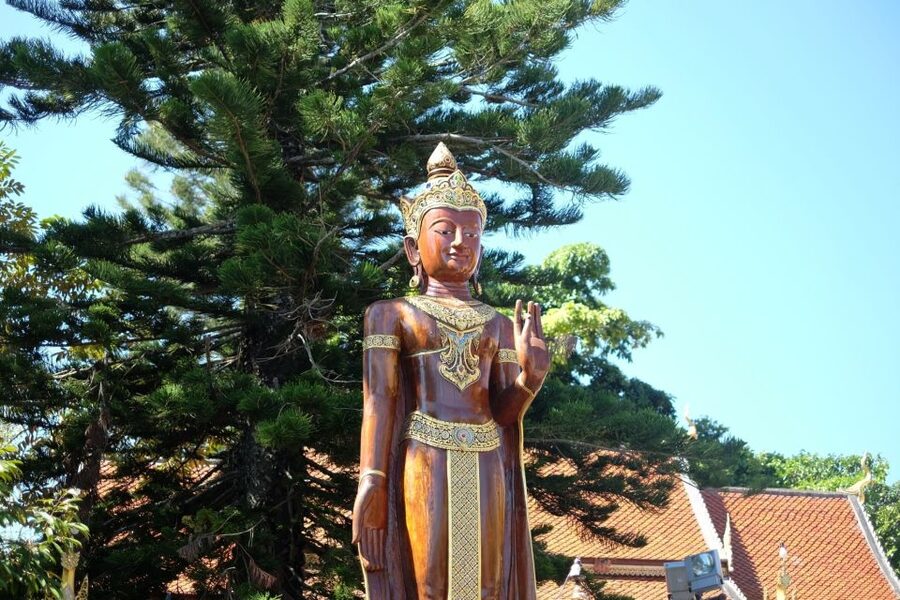
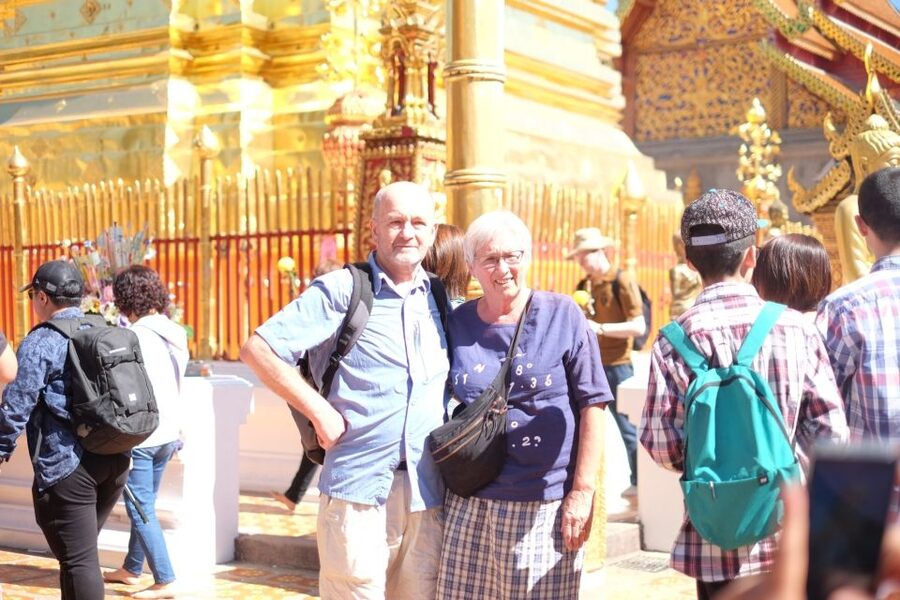
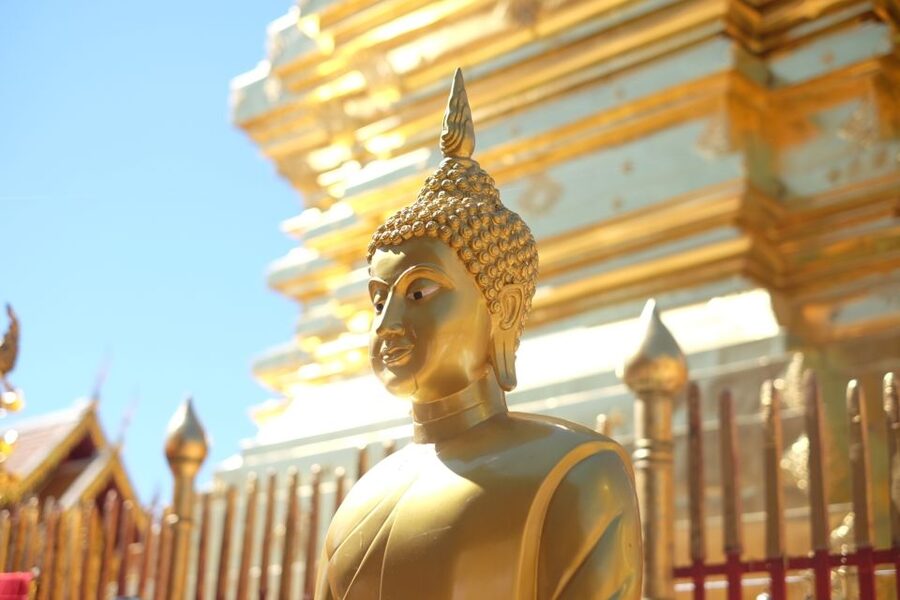
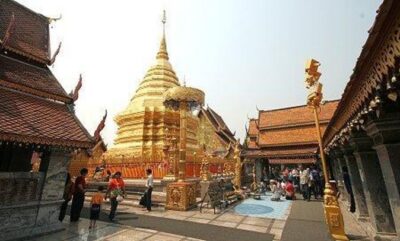
Wat Phra That Doi Suthep is the emotional high point. This sacred temple sits on the mountain above Chiang Mai and contains a holy relic of the Buddha. The guide explains the temple’s Buddhist meaning, the history connected with the site, and the symbolism in the artwork.
The traditional approach is a climb of 309 steps to the hilltop stupa. The staircase is visually appealing and gives the arrival a sense of pilgrimage, but it is not a test you need to pass. The included cable car takes you up instead, which is helpful for anyone conserving energy or avoiding a strenuous climb.
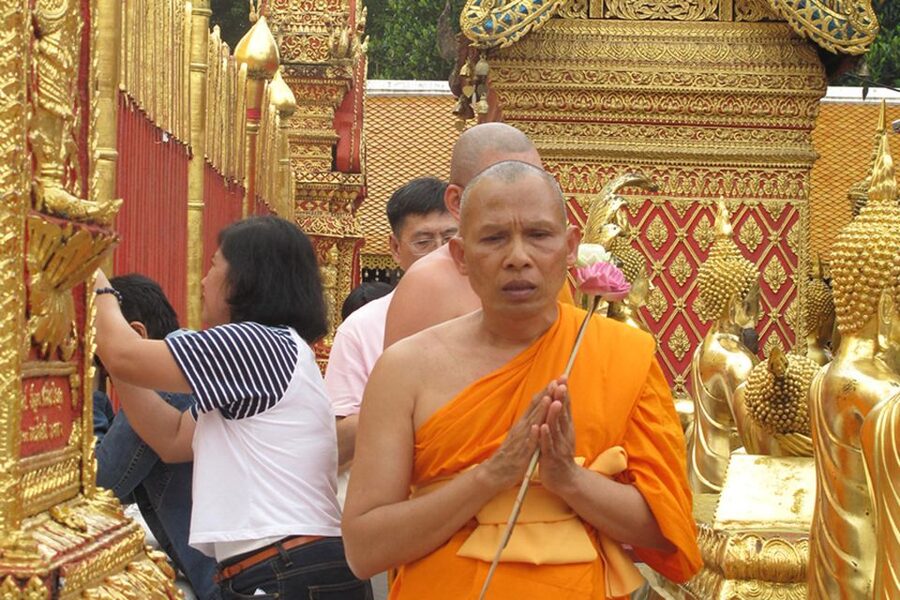
Once inside, allow time to look beyond the gold. The guide can help you read the details of the temple rather than simply walk through, take a few pictures, and leave. Several guides are praised for explaining Buddhism in a way that made the temple more meaningful, even for people who had already visited several Thai temples.
The visit lasts about an hour. That is enough for a guided walk, time around the stupa, and a look at the terrace. It is not a long meditation visit or a detailed study of every corner. You will need to stay aware of the schedule, particularly if the group has a full nine participants.
Dress rules are firm but easy to manage. Your knees and shoulders must be covered when entering the temple, so wear long pants and a long-sleeved shirt. Shorts and sleeveless shirts are not allowed. A guide may check your clothing at pickup, as one visitor appreciated when Lily made sure everyone was properly prepared.
More hill tribe village visits:
- Chiang Mai: Elephant Sanctuary, Long Neck & Sticky Waterfall
★ 4.9 · 2,262 reviews - Chiang Mai: Long Neck Village & Chiang Rai’s Iconic Temples
★ 4.3 · 338 reviews - Chiang Dao Cave & 5 Hill Tribe villages
★ 5.0 · 181 reviews - 4 in 1 Elephants Long Neck Rafting and Sticky Waterfall Tour
★ 5.0 · 126 reviews
The Chiang Mai view from the temple terrace
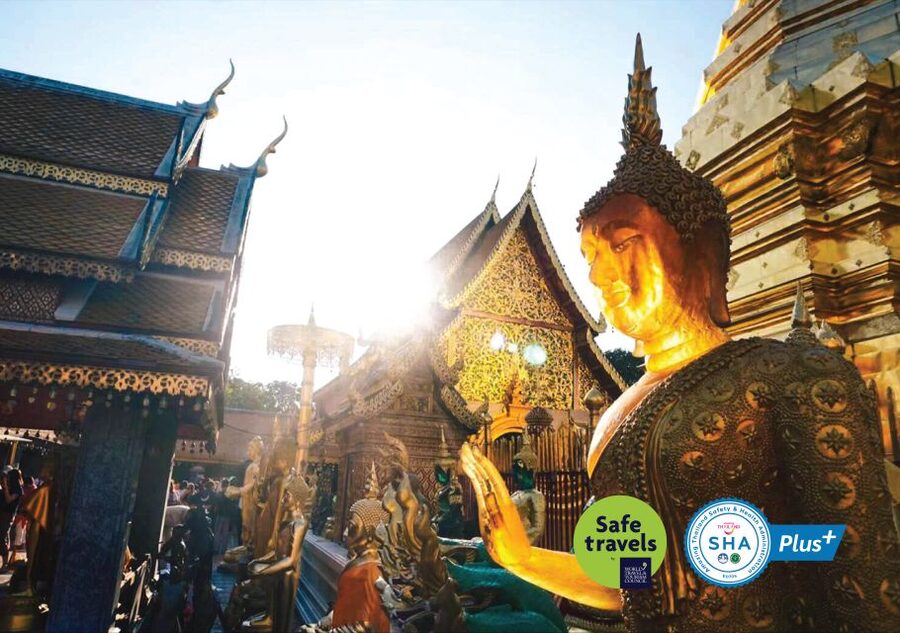
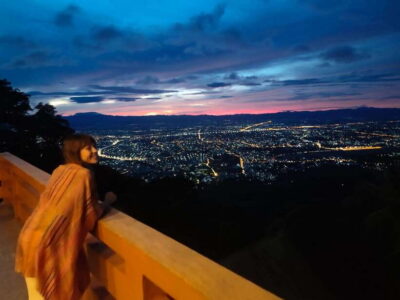
The terrace gives you a broad view over Chiang Mai and the surrounding area. On a clear day, this is one of the best reasons to make the trip up the mountain. The city appears far below, and the change from urban streets to cool mountain surroundings happens quickly.
Do not treat the view as guaranteed. Smoke and fog can block it. One visit during the rainy season lost the city panorama to mist, while another benefited from recent rain and enjoyed clear air. The burning season can also affect visibility, so keep your expectations flexible if the horizon matters greatly to you.
The guide can help with photographs. Several people praised guides for taking pictures and knowing good places to stand. That is useful when you are traveling alone or with only one other person and want more than a quick selfie.
The terrace is also a good place to pause after the temple visit. You can take in the scale of Chiang Mai, cool down, and let the guide’s explanation settle before returning to the minivan.
Guides make the difference here
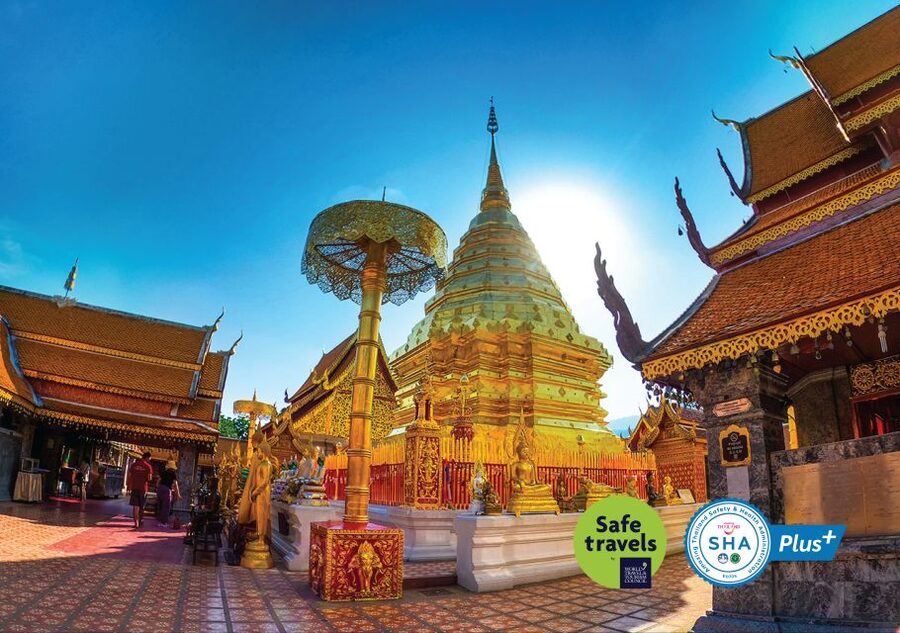
The most consistent strength of this outing is the guide. Names that receive especially warm praise include Pae, Pookie or Poonkie, Tui, Nut, Kai, Lin, Lily, Paul, Nong, Om, Bee, and Mae. You may not receive one of these exact guides, but the repeated pattern is clear: the human side of the tour is a major part of its value.
A strong guide changes the village from a row of stalls into a place with context. At Doi Suthep, the guide can explain why the temple matters, what the Buddhist images represent, and how to behave respectfully. During the drives, you can ask about northern Thailand, Hmong culture, local food, and Buddhism.
English ability is another practical point. The guides are described as fluent or easy to understand, and people appreciated being able to ask detailed questions. That matters in a short tour because you have limited time to get useful answers.
The guides also seem willing to adapt within reason. Pae gave a very small group extra time and helped take photographs, while other guides were praised for patience and personal kindness. The schedule can run late if your guide allows more time. One outing returned almost an hour after the expected drop-off because the group was enjoying the stops. If you have a fixed dinner reservation, leave some breathing room.
Timing, pickup, and what the day feels like
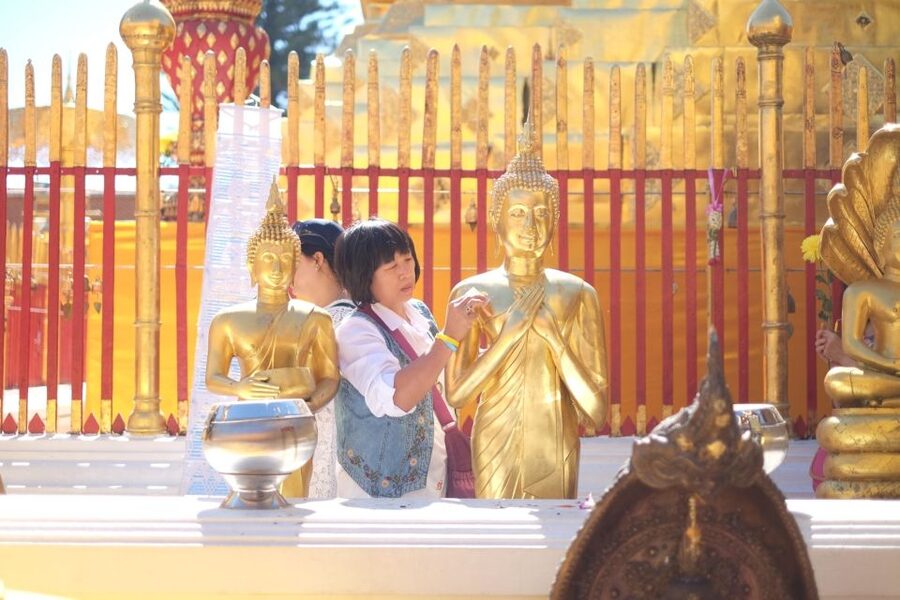
The morning version begins with hotel pickup from 8:00 to 8:30 a.m. and returns around noon. The afternoon version begins from 1:00 to 1:30 p.m. and returns around 5:00 p.m. Exact pickup timing depends on your hotel and the day’s arrangements.
This is a good first-day activity. It gives you an introduction to Thai Buddhism, northern Thai culture, and the mountain setting before you spend more time in Chiang Mai’s old city. It also fits well when you want a major sight without committing to a full-day excursion.
The tour is not designed for a slow lunch or long independent wandering. Food is not listed as included, though you may find things to taste or buy at Doi Pui. Bring your own spending money for snacks, coffee, crafts, jewelry, or personal purchases.
There is free cancellation up to 24 hours before departure, and you can reserve now while paying later. The voucher is valid only on the selected date. The provider may cancel if fewer than two people are booked, so keep that possibility in mind when arranging tightly timed plans.
What to wear and carry
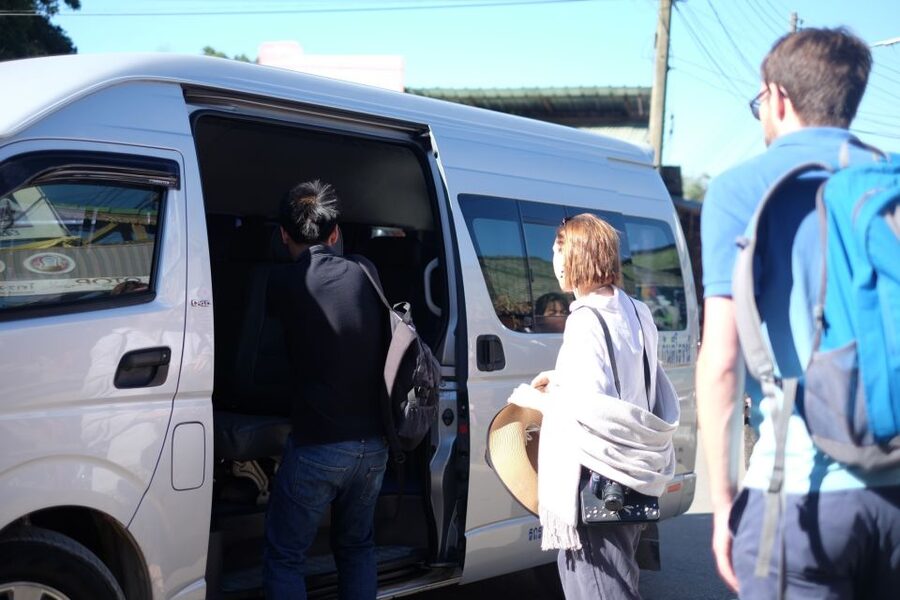
You should arrive ready for both walking and temple etiquette. Comfortable shoes will make the village paths and temple approach easier, while long pants and a long-sleeved shirt cover the required areas.
A small backpack is useful if you plan to shop. It gives you room for crafts, snacks, or coffee and keeps your hands free while walking. Bring modest clothing even for the hot months, since uncovered shoulders and knees are not accepted inside the temple.
The provider supplies drinking water and a refreshing towel. You should still carry any personal items you need, as personal expenses are not included.
Who should book this experience?
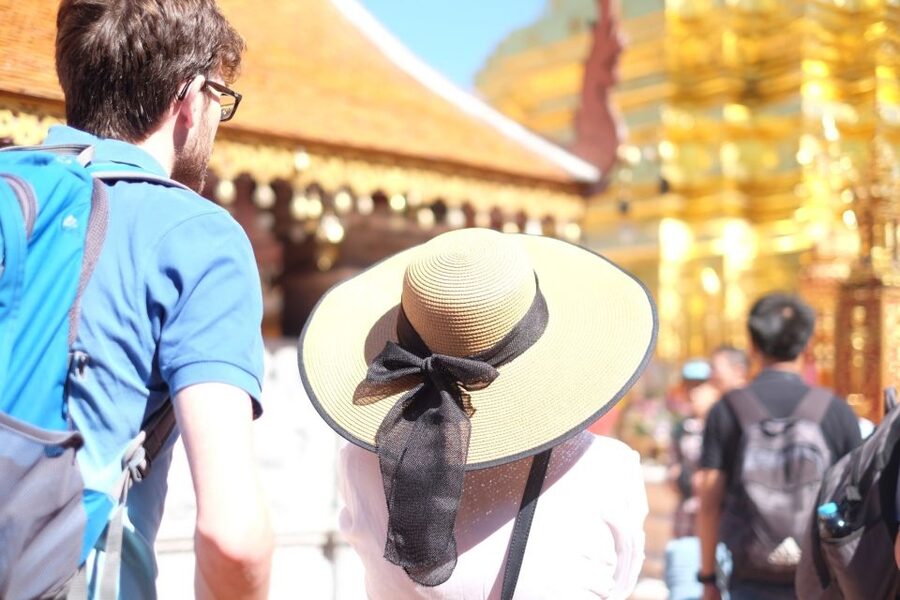
I recommend this tour to first-time visitors who want two important Chiang Mai sights in half a day. It suits solo visitors, couples, and small groups who prefer a guide rather than figuring out the mountain route and temple etiquette alone.
It is also a good match if you want cultural variety. Doi Pui offers village life, crafts, coffee, and local commerce. Doi Suthep offers Buddhist art, ceremony, history, and a city view. The contrast makes the short trip feel more complete than a temple-only outing.
You should think twice if you want an entirely quiet or independent visit. The village includes plenty of stalls, and the schedule is fairly tight. You should also skip it if stairs, winding roads, or walking are serious problems. The cable car solves the main climb, but it does not remove the need to move around the village and temple grounds.
At $36, the package is strongest for people who value explanation and convenience. If you only want transport to Doi Suthep, a cheaper independent option might appeal. If you want entry fees, a careful driver, hotel pickup, and a guide who can connect the sights to Thai culture, this is a solid deal.
Should you book the Doi Suthep and Hmong village tour?
Book it if you want an efficient, well-supported introduction to Chiang Mai’s mountain culture. The temple is essential, the village adds a different viewpoint, and the guides are the reason the experience feels more useful than a simple sightseeing shuttle.
I would book the morning departure for the best chance of a clear city view and cooler walking conditions, though the supplied information does not guarantee better visibility at that time. Bring proper clothing, leave room in your schedule for a possible late return, and treat village shopping as optional rather than the purpose of the visit.
Skip it if you want long time at either stop, dislike sales stalls, or need wheelchair access. For most visitors with four free hours, the combination offers good value, strong cultural context, and a pleasant way to see why Doi Suthep is central to a Chiang Mai visit.
FAQ
How long does the Doi Suthep and Hmong village tour last?
The tour lasts four hours. The schedule includes about 45 minutes of driving each way and roughly one hour at Doi Suthep and one hour at Doi Pui Village.
What time does the tour depart?
Morning pickup is scheduled between 8:00 and 8:30 a.m. Afternoon pickup is scheduled between 1:00 and 1:30 p.m. Pickup takes place in your hotel lobby.
Is hotel pickup included?
Yes. Hotel pickup is included for hotels within 6 kilometers of the Three Kings Monument in Chiang Mai.
Is the cable car included?
Yes. The entry fee for the Doi Suthep cable car is included. You may use it instead of climbing the 309 steps to the temple.
What should I wear to Doi Suthep?
Wear long pants and a long-sleeved shirt. Your shoulders and knees must be covered when entering the temple. Shorts and sleeveless shirts are not allowed.
Is the tour suitable for wheelchair users?
No. The activity is not suitable for wheelchair users or people with mobility impairments. It is also not suitable for people with back or heart problems.
Is food included in the tour price?
No. Personal expenses are not included. You may find food, coffee, and snacks for purchase at Doi Pui Village.
Can I cancel the booking?
Yes. You can cancel up to 24 hours in advance for a full refund. You can also reserve now and pay later.
Just added around Chiang Mai
- Chiang Mai: Chiang Rai White, Blue & Black Temples Day Tour★ 4.2 · 16 reviews
- Chiang Mai Adventure ATV Secret Waterfall and Bamboo Rafting★ 5.0 · 16 reviews
- Inthanon Small-Group with Kew Mae Pan Trail from Chiang Mai include Lunch★ 4.5 · 16 reviews
- 2-Day Best of Chiang Rai from Chiang Mai Private Package★ 4.5 · 16 reviews
- Doi Inthanon Discovery Tour: Waterfalls, Villages & Highest Peak★ 3.5 · 16 reviews
- Private-Tour Doi Suthep Temple and Khun Chang Kien Village Half-Day★ 4.5 · 16 reviews
- Chiang Mai Iconic Temples and City Tour★ 4.5 · 17 reviews
- Fantastic! Famous Doi Inthanon National park tour with 2hr trekking★ 4.5 · 17 reviews
Doi Suthep Temple Tours, compared.
Doi Suthep and Wat Umong Enchanting Evening Tour
Read our review →
Doi Suthep, Wat Umong, and Pha Lat Sunrise Tour
Read our review →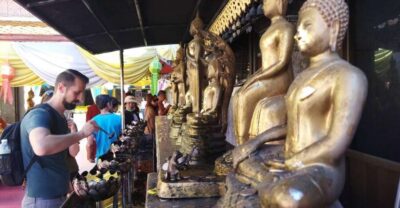
Wat Phra That Doi Suthep spiritual Sunrise Tour with an Ex-monk
Read our review →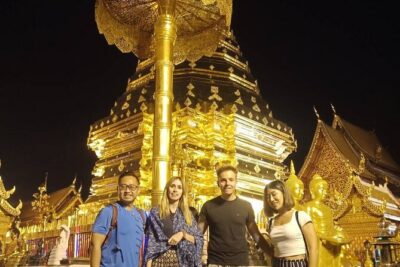
Spiritual Sunrise Wat Doi Suthep, Pha Lat, Alms & Meditation
Read our review →
Elephant Sanctuary, Monk Trail & Doi Suthep Tour
Read our review →Browse the lists this tour appears in