
Reviewed · RIVER KWAI & KANCHANABURI TOURS
Bangkok: Bridge on the River Kwai and Thailand-Burma Railway Tour
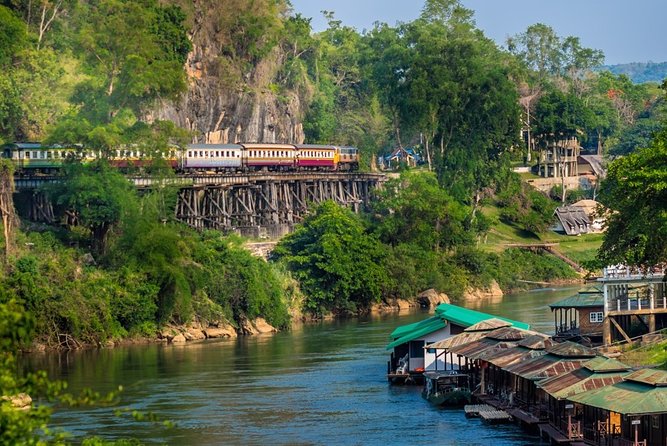
History feels different when you can walk across it. This long day from Bangkok combines the Bridge on the River Kwai, a long-tailed boat ride, a train journey on the Death Railway, lunch beside the river, the Kanchanaburi War Cemetery, and the JEATH War Museum. I especially like the thoughtful mix of transport and memorial sites, plus the strong local guides, including Rach and Oom, who have been praised for clear explanations, good humor, and helping with photographs. The main drawback is the length: you are away for about 11 hours, and Bangkok traffic can make the return even slower.
The price is $99.40 per person, which is reasonable for hotel pickup, an air-conditioned vehicle, entrance fees, lunch, a guide, a boat ride, and the train trip. But read the train detail carefully: you must pay about 300 baht extra at the station for a guaranteed seat and small extras such as drinks, a cold towel, and a certificate. The ride is included, but reserved seating is not.
In This Review
- Key points before you book
- Why the River Kwai makes a worthwhile day trip
- The morning ride from Bangkok to Kanchanaburi
- Approaching the Bridge by long-tailed boat
- Walking across the Bridge on the River Kwai
- Kanchanaburi War Cemetery and the human cost
- The JEATH War Museum in 20 minutes
- Lunch beside the River Khwae
- Riding the Death Railway train
- How the $99.40 price adds up
- The real drawback is the long return to Bangkok
- Who will enjoy this tour most
- Practical advice for a smoother day
- Should you book the River Kwai tour?
- FAQ
- What time does the tour start?
- Is hotel pickup included?
- How long does the tour last?
- Is the train ride included in the price?
- Is lunch included?
- What transport is used during the tour?
- Which historical sites are visited?
- Is the tour suitable for people with mobility problems?
- How many people can join the tour?
- What is the cancellation policy?
Key points before you book
- The day begins early: Pickup starts around 7:00 am, with some hotels collected 30 to 60 minutes earlier.
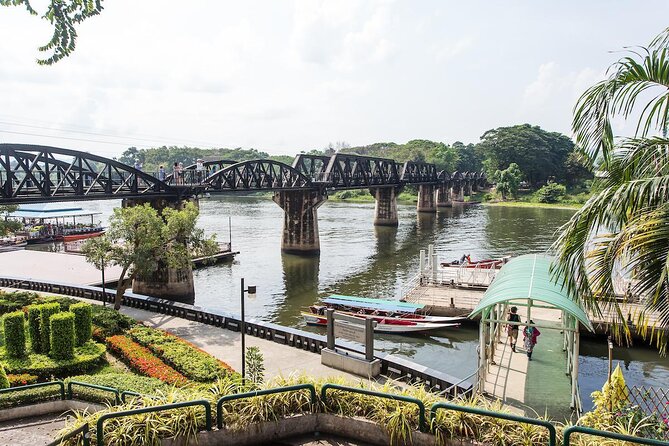
- The boat ride adds real character: You approach the bridge from the river by long-tailed speedboat rather than simply arriving by road.
- The history is serious and emotional: The cemetery and museum focus on prisoners of war and enslaved workers who suffered and died building the Burma Railway.
- The train seat costs extra: Bring about 300 baht per person if you want a guaranteed seat, refreshments, a cold towel, and a certificate.
- Expect a full day: The tour is scheduled for about 11 hours, but heavy traffic may delay your return to Bangkok.
- Small groups help: The maximum is 15 people, and some departures may be much smaller.
Why the River Kwai makes a worthwhile day trip
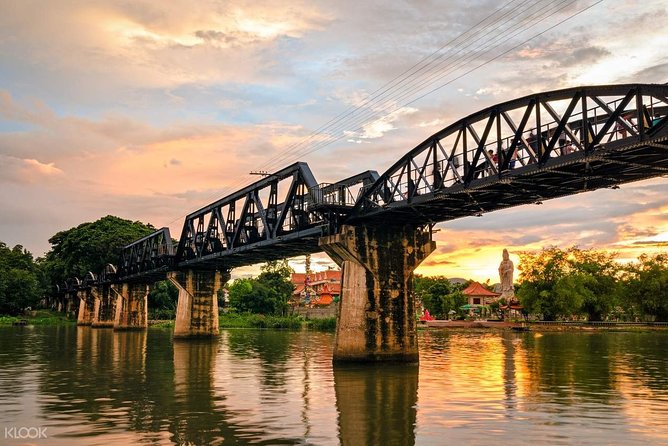
The Bridge on the River Kwai is not simply a famous film location. It is part of the railway built between Thailand and Burma during World War II, from 1942 to 1943. Japanese forces used prisoners of war and enslaved Asian laborers to construct the line under brutal conditions.
The bridge became widely known through the 1957 film and Pierre Boulle’s book. The movie created a powerful image, but the real story is far more complicated. Your guide helps separate the popular version from the actual wartime events, which is one of the best reasons to choose a guided visit instead of arranging the stops alone.
I like that this tour does not treat the bridge as a quick photo stop. You see it from the water, walk across it, hear about the railway, and then ride a section of the line. That combination gives you a physical sense of the route, while the cemetery and museum add the human cost.
Still, the bridge itself is busy and active. Trains continue to use the line, and the structure is not a silent memorial. You may need to move aside when a train approaches, so listen carefully to your guide and follow local instructions.
More River Kwai and Death Railway trips:
- From Bangkok: Erawan Park & Kanchanaburi Small-Group Tour
★ 4.5 · 1,582 reviews - From Bangkok: Historical Day Tour to River Kwai
★ 4.6 · 868 reviews - Bridge on the River Kwai and Thailand-Burma Railway Tour
★ 4.5 · 658 reviews
The morning ride from Bangkok to Kanchanaburi
Hotel pickup is offered from most centrally located Bangkok hotels. The stated start time is 7:00 am, but your actual pickup can be 30 to 60 minutes earlier depending on your hotel. You must provide accurate hotel information when booking. If you do not, the reservation may be cancelled.
Transport is by air-conditioned vehicle. That matters because the road journey is long, and an early start is the best way to make the day work. The drive to the Kanchanaburi area takes a large part of the morning, so this is not a relaxed late-start excursion.
The guides generally make the road time useful. Rach has been praised for explaining the background so well that the long journey passed quickly. Oom has also received warm comments for explaining the plan, answering questions, taking photos, and keeping the day moving. These details matter on a tour with several stops and multiple forms of transport.
The group size can reach 15 people, though some departures are far smaller. A small group gives you more room to ask questions and can make the cemetery visit feel less hurried. On the other hand, group timing can be affected when one person is late at pickup or when everyone must board the boat and train together.
Approaching the Bridge by long-tailed boat
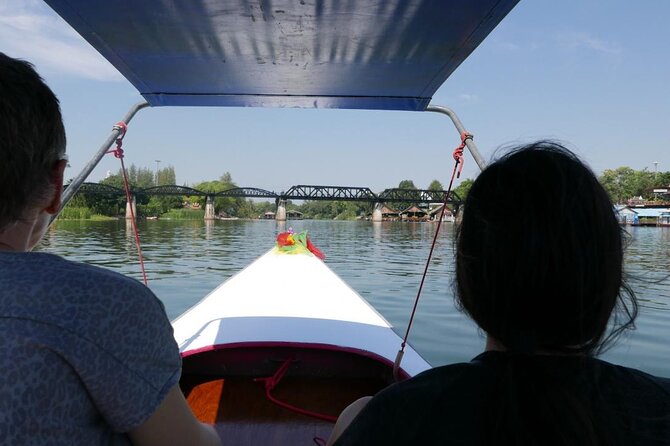
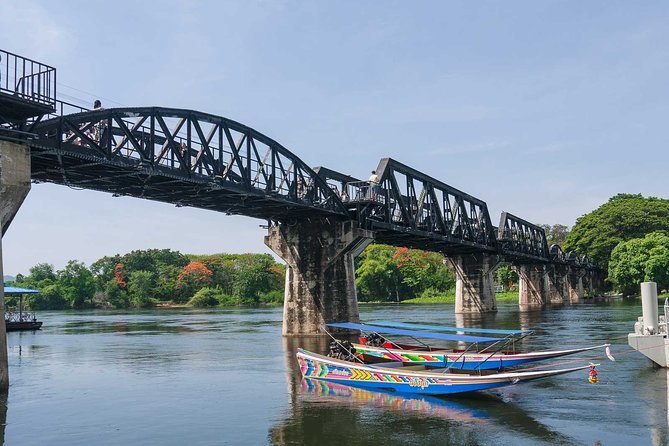
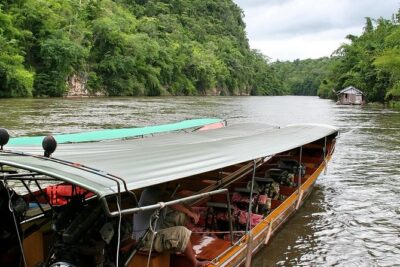
The long-tailed speedboat ride is one of the tour’s most enjoyable features. Instead of reaching the bridge only by van, you travel along the River Khwae and approach the historic structure from the water. The boat ride adds movement, views, and a welcome break from the road.
The river passes through western Thailand, with its source in the Tenasserim Hills. The route gives you a different view of the area from the one you get on the highway or railway. You see the bridge in relation to the river, which helps explain why this crossing mattered so much to the railway.
This is not the place for polished marina comfort. Getting into and out of a long-tailed boat can be difficult if you have mobility problems. Tell your guide at the start of the tour if you need assistance. The guide can arrange for the driver to take you to the bridge by road instead.
You should also expect some uneven surfaces around the bridge and nearby sites. Comfortable shoes are a sensible choice. The walk itself is not presented as a strenuous hike, but the combination of river access, bridge surfaces, museum grounds, and railway boarding requires reasonable mobility.
Walking across the Bridge on the River Kwai
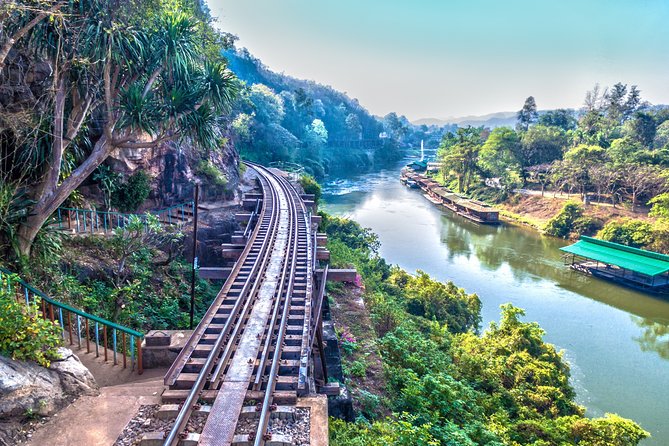
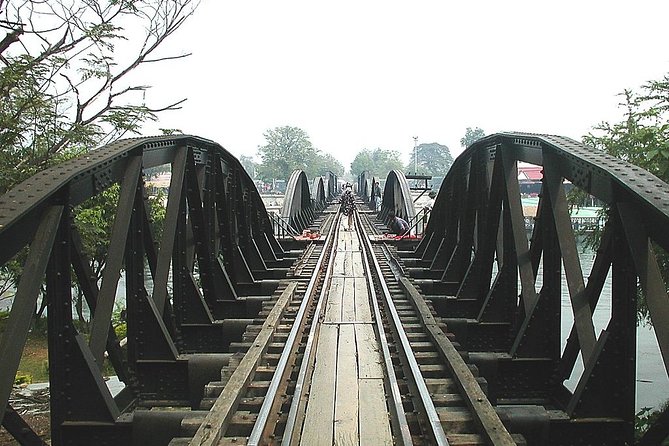
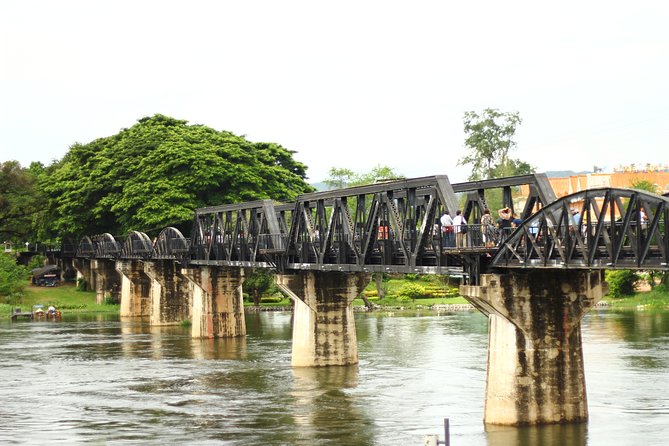
The bridge is the emotional centerpiece for many people, but it is best understood as one part of a larger story. You can walk across it and look down toward the river, while your guide explains its place in the Thailand-Burma Railway.
The setting is visually appealing, with river views and surrounding greenery, yet the subject is grim. Thousands of prisoners of war and forced laborers died during the railway’s construction. The contrast between the peaceful river and the suffering connected to it can be unsettling, and that contrast gives the visit its force.
The bridge area can feel touristy, particularly compared with the cemetery. Shops and activity surround a site that many people approach with solemn expectations. I would not judge the experience only by the atmosphere on the bridge itself. The strongest historical weight comes later, at the cemetery and museum.
A guide adds value here because the popular film can give you an incomplete picture. The tour explains that the real railway was built by people from several countries and backgrounds, including British, Australian, Dutch, and American prisoners, along with many Asian laborers. The guide’s interpretation helps you see beyond the movie image.
A few more tours and experiences worth a look
- Bangkok: Damnoen Saduak Market and Maeklong Railway Market
★ 4.5 · 26,723 reviews - The Old Siam: Damnoen Saduak and Maeklong Railway Market
★ 4.5 · 10,992 reviews - Bangkok: Train Market & Floating Market with Boat Ride
★ 4.7 · 9,547 reviews - Half-Day Railway Market and Floating Market Tour in Thailand
★ 4.5 · 3,924 reviews
Kanchanaburi War Cemetery and the human cost
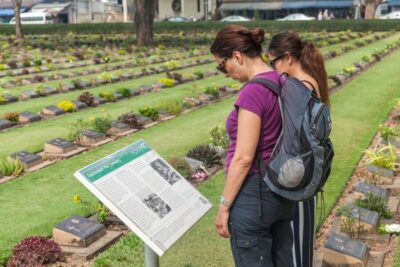
The Kanchanaburi War Cemetery is the most moving stop on the route. It is the principal cemetery for prisoners of war who died while working on the Burma Railway, and it is located on Saeng Chuto Road in Kanchanaburi town.
The grounds are carefully maintained, with rows of graves and personal inscriptions. The visit lasts about 30 minutes, which is enough time to walk quietly, read some of the names, and reflect. If you have a family connection to the railway or wartime prisoners, allow yourself emotional space. One visitor found a possible relative’s grave here, turning a historical excursion into a deeply personal moment.
I appreciate that the cemetery is not treated as background scenery between more entertaining stops. It provides the clearest reminder that this was not merely an engineering project or a cinematic setting. Young men died under terrible conditions, and the neat grounds make the loss feel even more immediate.
Your guide may explain the nationalities represented and the circumstances of imprisonment. You should also expect some quiet time without constant commentary. That balance is appropriate at a memorial site.
The JEATH War Museum in 20 minutes
The JEATH War Museum is small and focused mainly on the lives of the POWs who built the railway. Its displays include original photographs, letters, and drawings, along with material showing the harsh conditions in the prison camps.
The scheduled visit is about 20 minutes. That is enough for an introduction, but not enough for a slow museum study. Some displays are old and basic, and the museum does not have the polished presentation of a major national institution. One useful way to approach it is as a compact visual supplement to the guide’s explanation rather than the main source of information.
The photographs and letters are still powerful. They put faces and voices beside the statistics. If you want extensive wartime research, you may find the museum limited. If you want a short, direct presentation that fits into a busy day, it serves its purpose.
There has been confusion in the past about a War and Research Centre appearing in tour information. The confirmed stops for this experience are the JEATH War Museum and Kanchanaburi War Cemetery. Do not assume a separate research centre is included.
Lunch beside the River Khwae
Lunch is a buffet served in Kanchanaburi, with a riverside setting. The meal is included in the price, which makes the overall cost easier to justify. After the early start and the long road journey, sitting down for a proper meal is welcome.
Food quality can vary by departure. Some people have found the lunch very good, while another comment described the buffet as cold. I would treat it as a convenient included meal with a pleasant view, not as a restaurant destination. Beverages are not included, so carry some Thai baht for drinks.
The riverside location is part of the appeal. You get a chance to rest while still looking at the water that frames the day. The meal also helps break up the history-heavy schedule before the train ride.
Riding the Death Railway train
The train journey is the other major highlight. You ride along a section of the Death Railway and cross the bridge, seeing the river and surrounding scenery from the tracks. The trip is more than a short novelty ride, but the exact experience can vary with the train schedule and seating.
The important cost detail is easy to miss. The train ride is part of the tour, but a guaranteed seat requires an additional payment of approximately 300 baht per person at the station. This payment also includes tea or coffee, drinking water, a cold towel, and a certificate.
I recommend budgeting for it. Standing for a long train ride can be uncomfortable, and securing a seat makes the experience more pleasant, especially after several hours on the road. Some people have felt the charge was not clear enough, so ask your guide to explain exactly what the 300 baht covers before paying.
The train can feel slow, basic, and crowded rather than luxurious. That is part of the point. You are riding a working railway, not a scenic luxury train. The views are the reward, with the river and countryside passing by at a gentle pace.
The train ride has also been described as a little long. If you want nonstop sightseeing, the slower section may test your patience. If you enjoy watching daily life and scenery from a train window, it gives the day a good final chapter.
How the $99.40 price adds up
At $99.40 per person, the tour is priced fairly for a full day from Bangkok. You receive hotel pickup and return transport from central hotels, an air-conditioned vehicle, a Thai local guide, entrance fees, lunch, the long-tailed boat, and the train journey.
The value comes from logistics. Reaching Kanchanaburi, coordinating a boat, visiting two historical sites, arranging lunch, and catching a train would take planning if you did it alone. You are paying for the coordination as much as for the individual attractions.
The extra 300 baht train payment changes the calculation slightly. It is not a hidden admission fee in the strict sense because it is explained in the tour details, but it can feel unexpected if you read only that the train ride is included. Add it to your budget from the start.
Drinks are also extra. The included lunch is useful, but you should have money for water or other beverages. Overall, the price remains good for someone who wants the full combination of transport and sites in one day.
The real drawback is the long return to Bangkok
The schedule is advertised at approximately 11 hours, but traffic can stretch it. Bangkok’s return roads may be slow, particularly later in the day. One departure took longer than expected because of heavy traffic, and an early pickup can also be affected if another group member is late.
I would avoid booking an evening flight, show, or important dinner reservation after this tour. Give yourself plenty of room. The experience works best when you accept that the return is outside the operator’s full control.
The early start is another tradeoff. You lose part of your morning in Bangkok, but an early departure is needed for the distance and itinerary. This is a full excursion, not a quick half-day outing.
Who will enjoy this tour most
I recommend this experience to you if you want a strong introduction to the River Kwai area without handling several connections yourself. It suits people interested in World War II, railway history, memorials, and local transport.
It is especially good for:
- First-time visitors to Kanchanaburi
- People who want both the bridge and a train ride
- Families with children tall enough for the adult rate, which applies above 100 centimeters
- Visitors who prefer a guide to explain the historical background
- Anyone who values hotel pickup and an organized schedule
You may want a different plan if you dislike long road journeys, prefer independent travel, or have limited mobility. The boat boarding and uneven surfaces can be difficult, though the guide can arrange a road transfer to the bridge instead.
The tour is also emotionally demanding. The cemetery and museum contain reminders of imprisonment, forced labor, illness, and death. The boat and train add enjoyable movement, but the day is not simply a light sightseeing outing.
Practical advice for a smoother day
Confirm your pickup point carefully, especially if your hotel is not in central Bangkok. Be ready before the stated time because collection may begin earlier, and keep your phone available in case the meeting location changes to a nearby hotel.
Bring about 300 baht for the train seat payment, plus money for drinks. Wear shoes that are comfortable on uneven ground, and tell the guide about mobility concerns before boarding the boat.
If you want a more personal experience, ask questions during the road journey and at the historical stops. Guides such as Rach and Oom have been praised for answering questions and taking photographs, but guide style varies. One departure had a guide who spoke through a mask and was difficult for some people to understand, so politely ask for slower explanations if needed.
Free cancellation is available when you cancel at least 24 hours before the start time. Changes or cancellations made inside that window are not refunded or accepted.
Should you book the River Kwai tour?
Yes, if you have one free day in Bangkok and want the major River Kwai sights handled in a single, well-organized trip. I particularly like the boat approach, the train crossing, and the respectful progression from bridge to cemetery to museum. The strongest guides turn a long day into a useful history lesson rather than a string of disconnected stops.
Book it with realistic expectations. You will spend many hours on the road, the lunch may be ordinary, the museum is small, and the 300 baht train seat payment is extra. But for $99.40, plus that train fee, you get an efficient and meaningful introduction to one of Thailand’s most important World War II sites.
FAQ
What time does the tour start?
The stated start time is 7:00 am. Hotel pickup may begin 30 to 60 minutes earlier, depending on your hotel’s location.
Is hotel pickup included?
Yes. Pickup and drop-off are included for most centrally located Bangkok hotels. You must provide your hotel details when booking.
How long does the tour last?
The scheduled duration is approximately 11 hours. Heavy Bangkok traffic can make the return journey longer.
Is the train ride included in the price?
The train ride is included, but a payment of approximately 300 baht per person is required at the station for a guaranteed seat and included extras such as drinks, a cold towel, and a certificate.
Is lunch included?
Yes. A buffet lunch in Kanchanaburi is included. Beverages are not included.
What transport is used during the tour?
You travel by air-conditioned vehicle, long-tailed speedboat, and train on the Death Railway.
Which historical sites are visited?
The tour visits the Bridge on the River Kwai, Kanchanaburi War Cemetery, and the JEATH War Museum.
Is the tour suitable for people with mobility problems?
Most people can participate, but boarding the long-tailed speedboat and walking on uneven surfaces may be difficult. Tell your guide at the start if you have mobility concerns, and a road transfer to the bridge can be arranged.
How many people can join the tour?
The maximum group size is 15 people. A shared tour requires at least two participants and may be cancelled if that minimum is not met.
What is the cancellation policy?
You can cancel at least 24 hours before the experience for a full refund. Cancellations or changes made less than 24 hours before the start time are not accepted or refunded.
Just added around Bangkok
- 2-hour Bangkok Old City Night CHOB TUK TUK + Talat Noi Street Art★ 5.0 · 16 reviews
- Kanchanaburi World War 2 Private Charter Pathway of the Past Tour★ 4.5 · 16 reviews
- Floating Market with Great Pagoda Temple and Wat Sam Phran★ 5.0 · 16 reviews
- Khao Yai National Park Hiking Day Tour: Haew Narok and Haew Suwat★ 5.0 · 16 reviews
- Shangri-La Hotel’s Salathip Thai Restaurant Experience★ 4.5 · 16 reviews
- Private Transfer Bangkok – Koh Kood Island★ 4.0 · 16 reviews
- Private Half-Day Bangkok Tour Explore Grand Palace and Wat Pho★ 4.5 · 16 reviews
- The Best Bangkok Temples★ 4.0 · 16 reviews
River Kwai & Kanchanaburi Tours, compared.
Bridge on the River Kwai and Thailand-Burma Railway Tour
Read our review →
Erawan Waterfalls and Bridge Over River Kwai Tour from Bangkok
Read our review →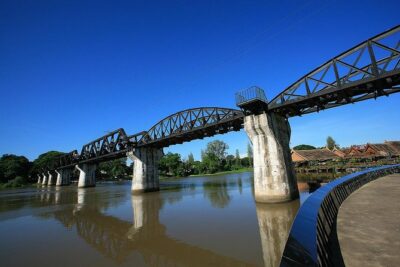
Bridge on the River Kwai and Thailand-Burma Railway Guided Tour
Read our review →
Kanchanaburi Full Day Tour: River Kwai and Erawan Falls
Read our review →
Floating Markets and Bridge on River Kwai Tour from Bangkok
Read our review →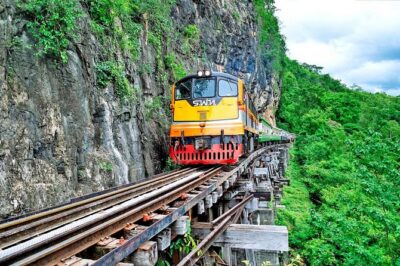
River Kwai Day Tour from Bangkok – History, Scenery & Culture
Read our review →Browse the lists this tour appears in