
Reviewed · WALKING TOURS
Bangkok: Chinatown & Taladnoi Street Art Guided Walking Tour
Bangkok tells its best stories on foot. This four-hour walk links Yaowarat’s Chinese temples and markets with Talad Noi’s old workshops, shrines, and street art, giving you a useful look at neighborhoods many visitors only pass through. The route begins at MRT Wat Mangkon and finishes beside the Chao Phraya River at River City Bangkok.
I like the way the tour joins major sights with quieter lanes. You see Wat Mangkon Kamalawat, learn the story behind the Golden Buddha, and then move into the former ironworking streets of Talad Noi. I also like the strong local focus, especially the explanations of Chinese immigration, trade, and family life. The main drawback is the walking itself: four hours in Bangkok’s heat, with markets and narrow streets underfoot, may be tiring if you need frequent breaks.
The price is $19 per person, which is fair for a licensed English-speaking guide and a bottle of water. Hotel pickup is available for an extra cost, but meeting at MRT Wat Mangkon Exit 3 is simple if you are comfortable using Bangkok’s subway. Guides including Jenny, Nok, Mai, Jib, Ploy, and Mariyah have earned especially warm praise for their patience, clear explanations, flexibility, and friendly manner.
In This Review
- Key points to know before you book
- Starting at MRT Wat Mangkon Exit 3
- Wat Mangkon Kamalawat and Chinatown’s Chinese heart
- Tian Fah Foundation Hospital and the Golden Buddha story
- Wat Pathum Khongkha offers a quieter pause
- Talad Noi’s ironwork alleys and old neighborhood character
- Community stories, shrines, and Talad Noi street art
- Finishing at River City Bangkok
- What the $19 price really covers
- Guides who add warmth to the walk
- Who should book this Chinatown walk?
- Should you book it?
- FAQ
- Where does the tour meet?
- Where does the tour finish?
- How long does the walking tour last?
- What is included in the price?
- Are meals included?
- Is hotel pickup available?
- What should I bring?
Key points to know before you book
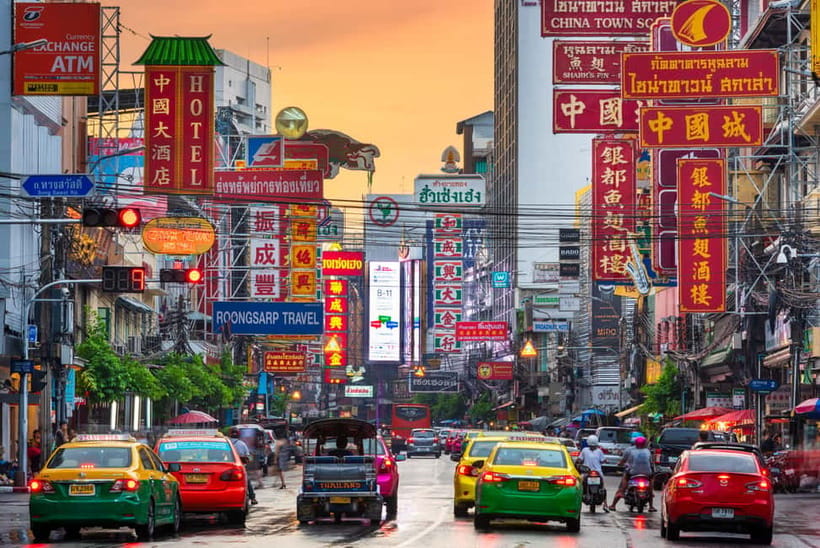
- Wat Mangkon starts the story: Begin among incense, Chinese religious symbols, and one of Bangkok’s most important Chinese Buddhist temples.
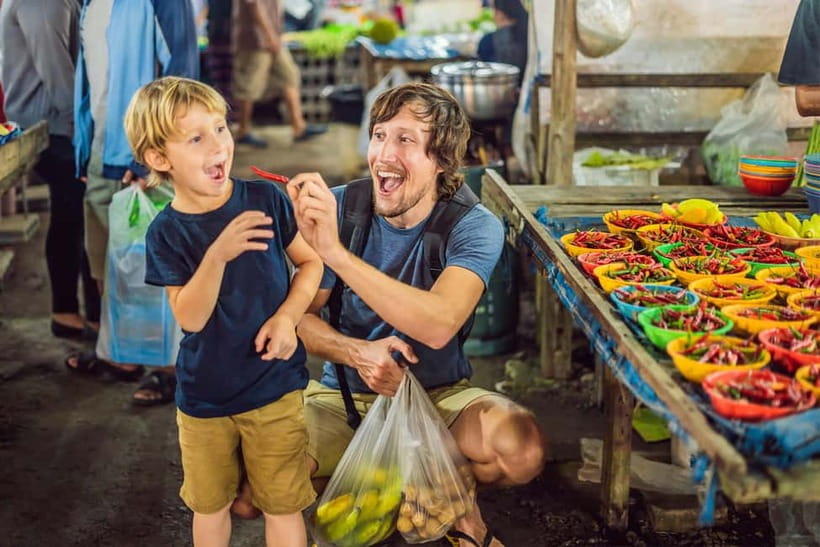
- Markets are part of the lesson: The morning market adds food, commerce, smells, and everyday local activity to the walk.
- Talad Noi feels different from Yaowarat: Old ironwork lanes, family shrines, community buildings, and painted walls create a more residential mood.
- The guide makes the difference: Jenny, Nok, Mai, Jib, Ploy, and Mariyah are praised for warmth, clear English, and adapting the walk to individual interests.
- The finish is well placed: River City Bangkok gives you a practical choice of riverside food, art, shopping, or a boat ride after the tour.
- Plan for Bangkok weather: Light clothing, comfortable shoes, a hat, sunscreen, and water will make the four hours much easier.
Starting at MRT Wat Mangkon Exit 3
The meeting point at MRT Wat Mangkon Exit 3 is one of this tour’s practical strengths. You avoid a vague hotel lobby rendezvous and start right beside the Chinatown district you came to see. If you select hotel pickup, be ready in the lobby at least five minutes early. The pickup option costs extra, and one booking had a delayed pickup, so the MRT meeting point may be the cleaner choice when you are staying near a subway station.
Once you meet your English-speaking guide, the walk heads into Yaowarat. This is not a quick photo stop followed by a bus ride. You spend roughly two and a half hours in Chinatown, walking through religious sites, food areas, commercial streets, and less familiar lanes.
The guide’s role matters here. Chinatown can feel like a wall of signs, traffic, shrines, cooking smells, and tightly packed buildings. A good guide gives those details a place in the larger story. The strongest feedback about this experience centers on that personal explanation. Jenny is praised for making history easy to follow, while Nok receives praise for explaining Thai-Chinese culture and the area’s trade and immigration story.
More Walking Tours in Bangkok
- Bangkok: City Highlights Temple and Market Walking Tour
★ 4.5 · 3,990 reviews - Bangkok: Grand Palace and Wat Phra Kaew Guided Walking Tour
★ 4.4 · 2,417 reviews - Bangkok: Wat Pho and Wat Arun Guided Walking Tour
★ 4.6 · 1,720 reviews
Wat Mangkon Kamalawat and Chinatown’s Chinese heart
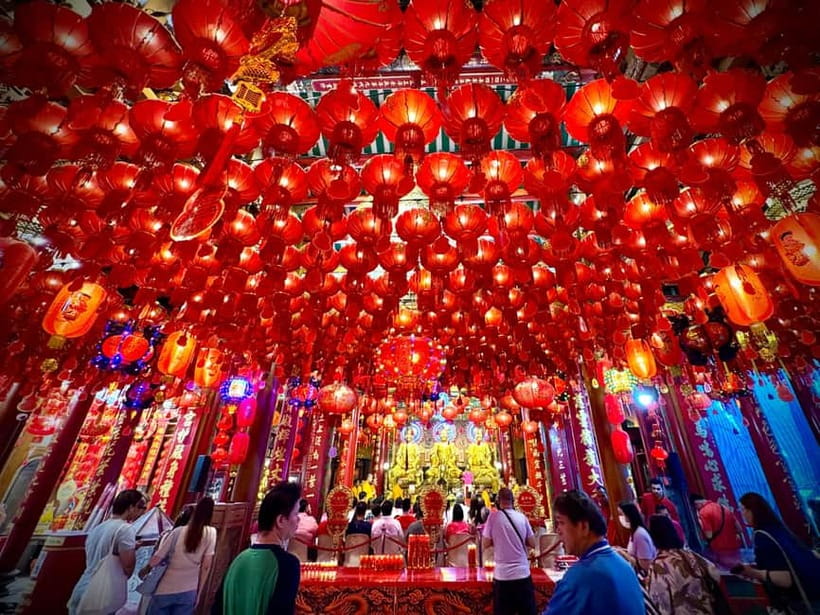
Wat Mangkon Kamalawat is an excellent first stop because it shows that Chinatown is not only a food district. It is a center of Chinese spiritual life, and the temple’s ceremonies, incense, and visual details give you an immediate sense of the community’s continuing importance.
Your guide explains what you are seeing rather than leaving you to guess. That is useful in a temple where several traditions and symbols may appear together. You should dress in light clothing for the heat, but remember that this is a religious setting. Modest clothing and respectful behavior are wise, even though the supplied tour information does not set out a formal dress code.
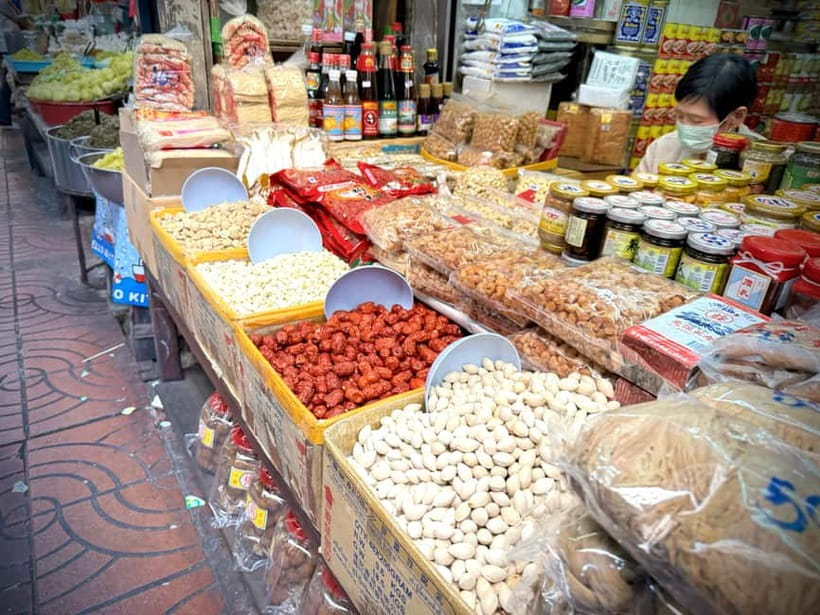
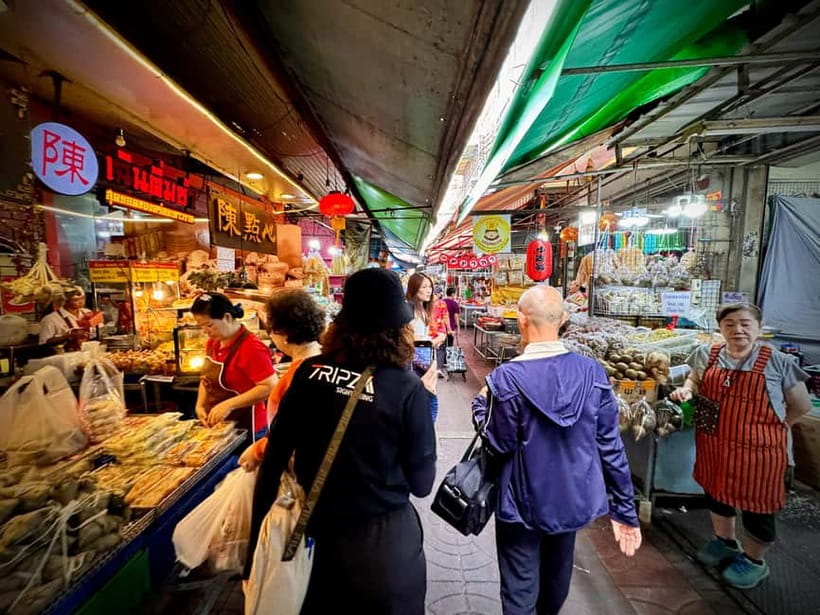
From here, the route moves through a lively morning market. Expect a stronger taste of daily Chinatown than you get from simply walking down Yaowarat Road. The market brings together street food, incense, local shopping, and the ordinary work of preparing and selling goods.
You may want to eat along the way, but meals are not included. The tour includes only the guide and a bottle of water, so carry some cash for personal purchases and food. The guide can help you understand what you are seeing, but your meals and snacks remain your own responsibility.
Tian Fah Foundation Hospital and the Golden Buddha story
The Tian Fah Foundation Hospital adds a less obvious but valuable stop. It was Thailand’s first Chinese charitable hospital, linking Chinatown to community care and organized philanthropy. This is the sort of detail that can disappear if you explore only the main shopping streets.
The stop also gives the guide a chance to explain how Chinese residents built institutions as the neighborhood developed. The walk is not just about old buildings. It connects religion, business, health care, migration, and family networks.
The Golden Buddha story at Wat Traimit is another major point on the Chinatown route. The tale concerns the famous Buddha image and the circumstances that revealed its gold construction. Your guide shares the story as part of the area’s religious and cultural background.
You should think of this portion as an introduction to the forces that shaped Chinatown, rather than a long museum visit. The experience is a walking tour, so the value comes from the guide’s explanation and the sequence of places. If you want extended time inside every temple or attraction, four hours may feel tightly planned.
Wat Pathum Khongkha offers a quieter pause
Wat Pathum Khongkha changes the pace. After the noise and commercial energy of Chinatown, this temple offers a more peaceful setting and a connection to royal history. The contrast is important. Bangkok’s old districts are not one continuous scene of markets and neon signs. Quiet religious spaces often sit only a few streets from intense commerce.
This stop can also be a welcome breathing space during a warm morning. Still, do not mistake peaceful for effortless. The tour continues on foot, and the full route lasts four hours. Comfortable shoes matter more than stylish ones, especially if you are traveling with children or are not used to Bangkok’s heat.
One family praised Jenny for being patient and clear with children, and another participant said Mai adjusted the walk to personal interests. Those details suggest that the tour can work well for families and solo visitors, particularly when the guide has room to tailor the pace or discussion.
A few more tours and experiences worth a look
- 2-hour Bangkok Old City Night CHOB TUK TUK + Talat Noi Street Art
★ 5.0 · 16 reviews
Talad Noi’s ironwork alleys and old neighborhood character
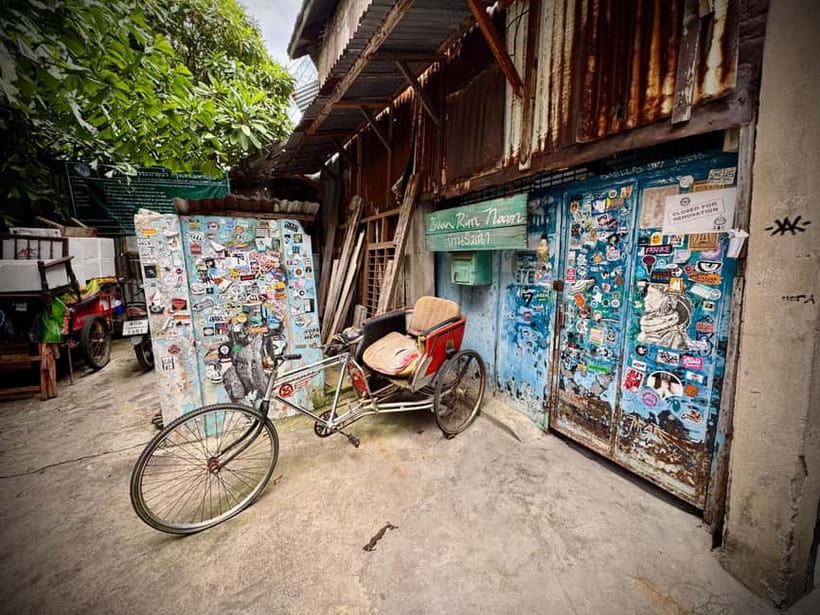
Talad Noi is where the tour becomes more distinctive. The area is linked to Chinese craftsmen who once forged metal tools, and the route passes through old ironworks alleys. You get a sense of work, repair, and small-scale industry rather than only temples and food.
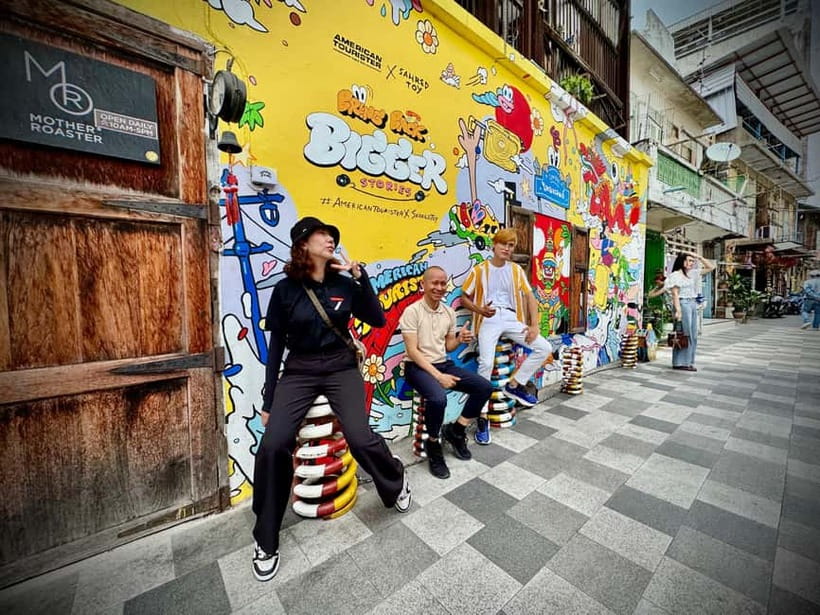
This part of Bangkok rewards attention. Look for signs of old businesses, aging walls, shrines tucked into tight spaces, and the way newer artwork sits beside older buildings. The supplied route describes Talad Noi as a place of artistic backstreets, but the appeal is not simply taking photographs. The guide explains how commerce and craftsmanship shaped the neighborhood.
The second half of the walk lasts about two and a half hours, including a break, sightseeing, guided stops, and some free time. That free time gives you a little breathing room, though the exact pace can depend on the group and guide.
Talad Noi is a good match for you if you enjoy neighborhoods that show different layers at once. It is less suitable if you want a polished sightseeing route with wide paths and constant seating. The tour information says the experience is not suitable for wheelchair users or pregnant women, and the narrow streets and extended walking help explain why.
Community stories, shrines, and Talad Noi street art
The Talad Noi Community Museum helps put the lanes into context. It offers a more direct way to understand the neighborhood’s people and development after seeing the streets themselves. The supplied information does not specify the museum’s opening arrangements or how long you spend inside, so treat it as one stop within a walking route, not as a separate museum visit with unlimited time.
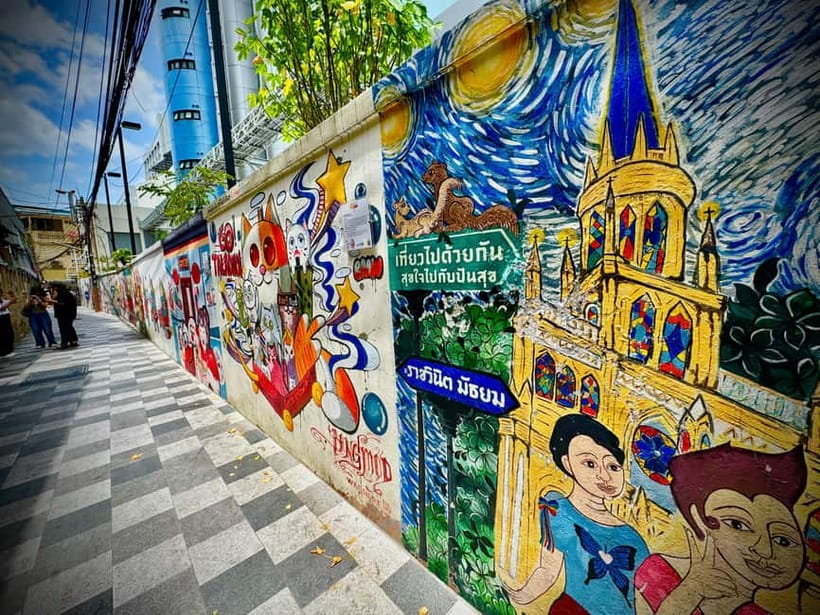
Street art adds color and energy to the old district. Painted walls can make a good photo stop, but the more useful point is the contrast between creative new work and long-established community life. Your guide can explain how the neighborhood’s identity has changed without reducing it to a backdrop for photographs.
The route also includes small shrines tucked between old buildings. These are easy to miss when you walk alone, especially if you are focused on traffic or navigation. They are valuable because they show how religious practice remains woven into the everyday street scene.
I would give the guide your interests early. If you care about food, family history, religious customs, street photography, or architecture, say so. Shariah had a customized walk with Mai, while Thomas found his guide flexible about his group’s needs. That kind of adjustment can make the difference between a pleasant walk and a memorable one.
Finishing at River City Bangkok
The walk ends at River City Bangkok, on the Chao Phraya River. This is a smart finish because you are not dropped in an unfamiliar side street. You have a recognizable place from which to continue your day.
You can stop for a riverside lunch, look around River City, or arrange your next activity. A scenic boat ride is one stated option. The tour does not include food, tickets, or personal expenses, so plan to pay separately for anything you do after arrival.
Ending here also gives the route a pleasing geographic shape. You begin at the MRT in Chinatown and gradually work toward the river, passing through religious, commercial, residential, and artistic parts of the city. You see how these districts connect rather than treating them as isolated attractions.
What the $19 price really covers
At $19 per person, this is a good-value guided walk if you want interpretation rather than simple directions. You receive four hours with a licensed English-speaking guide and a bottle of water. That works out well for a visitor who would otherwise spend time finding each temple, shrine, market, museum, and alley without understanding how they relate.
The price does not cover meals, entry costs if any apply, personal purchases, or the optional hotel pickup. Those extras are normal for a walking tour, but you should budget for them. The market is likely to tempt you, and the final riverside area gives you more opportunities to spend.
The tour seems particularly good value when the group is small or when the guide can shape the experience around you. One booking became a private tour, and another participant described a walk that felt like exploring with a friend. Group size is not stated, so you should not book assuming a private experience. Still, the guide team appears accustomed to working with different types of groups.
The overall rating is 4.7 from 36 reviews, with repeated praise for friendly guides, clear English, cultural explanations, and flexibility. The most consistent strength is not one single attraction. It is the human connection between the places.
Guides who add warmth to the walk
The guide names that appear in the feedback include Jenny, Nok, Mai, Jib, Toto, Ploy, and Mariyah. Jenny is repeatedly praised for patience, friendliness, and clear explanations. Nok receives strong praise for showing the links between Thai-Chinese culture, trade, commerce, and immigration.
Mai is described as both experienced and flexible, while Jib handled a hotel pickup and spent the morning explaining temples and the surrounding area. Ploy brought traditional snacks to one participant, a small gesture that made the walk feel more personal. Mariyah, while training on one outing, was praised for her kindness and thoughtful manner.
These details matter because Chinatown is a place where context changes what you notice. A guide can point out why a shrine matters, explain how a charitable hospital fits into the community, or connect an old workshop lane to the wider story of Chinese settlement in Bangkok.
The guides speak English, but individual speaking styles can vary. The feedback is strongly positive about communication, yet no walking tour can guarantee that every explanation will match your preferred pace or level of detail. Ask questions. The best use of this experience is conversational, not passive.
Who should book this Chinatown walk?
I would recommend it to first-time Bangkok visitors who want more than the main food street. It also suits returning visitors looking for a different side of the city, families who prefer guided discovery, solo visitors who want company, and anyone interested in migration, religion, local business, or urban photography.
It is a good choice for people who like walking through active neighborhoods rather than moving from attraction to attraction by vehicle. You will see markets, temples, alleys, community spaces, shrines, and art in one connected route.
I would hesitate if you dislike heat, uneven walking, narrow streets, or market crowds. Pregnant women and wheelchair users should not book this experience according to the stated restrictions. You should also avoid treating the tour as a food tour, since meals are not included.
Wear comfortable shoes and light clothing. Bring a hat, sunscreen, and extra water even though one bottle is supplied. Starting early may make the conditions easier, but you need to check the available starting times when booking.
Should you book it?
Book this tour if you want Bangkok explained through its neighborhoods. The $19 price is reasonable, the route covers a lot without requiring transport between stops, and the guides receive especially strong praise for kindness, clear English, patience, and personal attention.
Skip it if your ideal morning means sitting in air conditioning, avoiding markets, or spending a long time at one major temple. For everyone else, this is a practical way to connect Chinatown and Talad Noi, then finish by the river with plenty of choices for the rest of the day. Free cancellation up to 24 hours ahead and the option to reserve without paying immediately also make it an easy plan to fit into a changing Bangkok schedule.
FAQ
Where does the tour meet?
Meet your English-speaking guide at MRT Wat Mangkon Exit 3.
Where does the tour finish?
The tour finishes at River City Bangkok beside the Chao Phraya River.
How long does the walking tour last?
The experience lasts four hours. About two and a half hours are allocated to Chinatown and about two and a half hours to Talad Noi, including a break and free time.
What is included in the price?
The price includes a fully licensed English-speaking guide and a bottle of water.
Are meals included?
No. Meals and personal expenses are not included.
Is hotel pickup available?
Yes. Hotel pickup is available as an optional paid upgrade. If you choose it, wait in your hotel lobby at least five minutes before the scheduled pickup time. The guide will hold a sign with your name.
What should I bring?
Wear comfortable shoes and light clothing. Bring a hat and sunscreen, and carry a water bottle to help you stay hydrated.
Just added around Bangkok
- Kanchanaburi World War 2 Private Charter Pathway of the Past Tour★ 4.5 · 16 reviews
- 2-hour Bangkok Old City Night CHOB TUK TUK + Talat Noi Street Art★ 5.0 · 16 reviews
- Khao Yai National Park Hiking Day Tour: Haew Narok and Haew Suwat★ 5.0 · 16 reviews
- Floating Market with Great Pagoda Temple and Wat Sam Phran★ 5.0 · 16 reviews
- Shangri-La Hotel’s Salathip Thai Restaurant Experience★ 4.5 · 16 reviews
- Private Transfer Bangkok – Koh Kood Island★ 4.0 · 16 reviews
- Private Half-Day Bangkok Tour Explore Grand Palace and Wat Pho★ 4.5 · 16 reviews
- The Best Bangkok Temples★ 4.0 · 16 reviews
Walking Tours, compared.
City Highlights Temple and Market Walking Tour
Read our review →
Grand Palace and Wat Phra Kaew Guided Walking Tour
Read our review →

3 Hour Old City and Temples Guided Walking Tour
Read our review →
Beach walk with elephants, rain & care. 2.5 hours
Read our review →
Bukit Elephant Park Sanctuary Walk and Feed Tour
Read our review →
Bangkok Authentic Tasting Thai-Chinatown Walking Food Tour
Read our review →
Browse the lists this tour appears in