
Reviewed · TEMPLE TOURS
Chiang Mai: Historic Temples and City Guided Walking Tour
Old Chiang Mai is best read on foot. This three-hour walk links four important temples with the Three Kings Monument, giving you a clear introduction to Lanna design, Buddhist traditions, and the story of the old walled city. I like the small groups of no more than 10 people, and I like the way the route mixes major sights with ordinary streets, cafés, and shops along the way.
The guides are the heart of the experience. Jen, Pun, Danny, Jane, Faan, and others have earned praise for clear English, patience, humor, and useful local suggestions, including places for coffee and khao soi. My main caution is simple: the tour is on foot, temple admission costs extra, and Chiang Mai heat or rain can make three hours feel longer than it sounds.
In This Review
- Key points at a glance
- Why this three-hour route works so well
- Starting at Wat Chiang Man, Chiang Mai’s oldest temple
- The Three Kings Monument and Chiang Mai’s civic center
- Wat Phra Singh and classic Lanna architecture
- Wat Phan Tao, a teak hall with a royal past
- Wat Chedi Luang and the tour’s dramatic finish
- The guides make the difference
- Walking comfort, weather, and temple etiquette
- How much value do you get for $21?
- Who should book this walk?
- Should you book the Chiang Mai temple walking tour?
- FAQ
- How long does the Chiang Mai temple walking tour last?
- Where does the tour begin?
- Where does the tour finish?
- Which temples are visited?
- Is a guide included?
- Are temple entrance fees included?
- How many people are in the group?
- What should I wear?
Key points at a glance
- Five meaningful stops: See Wat Chiang Man, the Three Kings Monument, Wat Phra Singh, Wat Phan Tao, and Wat Chedi Luang in one compact route.
- A strong first-day activity: The tour gives you useful background before you visit more temples on your own.
- Lanna architecture in several forms: Compare an old temple, a classic northern Thai shrine, a teak hall, and a huge ruined chedi.
- Small-group attention: The group limit is 10, with some departures forming groups of only two to six people.
- Good guide support: Guides such as Jen, Pun, Danny, and Faan are praised for history, Buddhism, humor, patience, and practical help.
- Low-impact sightseeing: Walking keeps the experience simple and reduces the need for short vehicle rides around the Old City.
Why this three-hour route works so well
Chiang Mai has temples on nearly every turn, but simply looking at roofs and gold Buddha images can leave you with a blur of names. This tour gives each place a role in the larger story. You begin with the city’s foundation, move through its civic center, compare different styles of temple building, and finish beside its most dramatic ruin.
That order makes sense. Wat Chiang Man is linked to the founding of Chiang Mai in 1296. The Three Kings Monument connects the city to its rulers. Wat Phra Singh introduces you to classic Lanna architecture. Wat Phan Tao offers a close look at teak construction, while Wat Chedi Luang gives you scale and drama.
I especially like this arrangement for a first visit. You can return later to the temples that caught your eye, this time with some context. Several people also found the walking route useful because it revealed small streets, shops, cafés, and places they might not have noticed from a car or tuk-tuk.
The experience costs $21 per person, with a local English-speaking guide and a bottle of water included. You also pay 50 THB to enter Wat Phra Singh and 50 THB for Wat Chedi Luang, so remember to carry cash. At this price, it is a good value if you want interpretation rather than simply entrance to a set of buildings.
More City Tours in Chiang Mai
- Chiang Mai: 3 Hour Old City and Temples Guided Walking Tour
★ 4.6 · 1,568 reviews - Chiang Rai Day Trip from Chiang Mai City with Golden Triangle
★ 4.5 · 531 reviews - Chiang Mai: Historic Old City Bike Tour – Morning or Night
★ 4.7 · 263 reviews
Starting at Wat Chiang Man, Chiang Mai’s oldest temple
Meet your guide at Wat Chiang Man and look for the Beyond Experience sign. This meeting point is inside the Old City, but give yourself time to find the guide. One person had trouble after being dropped at the wrong spot by a taxi, while another could not see the sign right away and found the guide through WhatsApp. Arriving early and checking the exact temple grounds will save you stress.
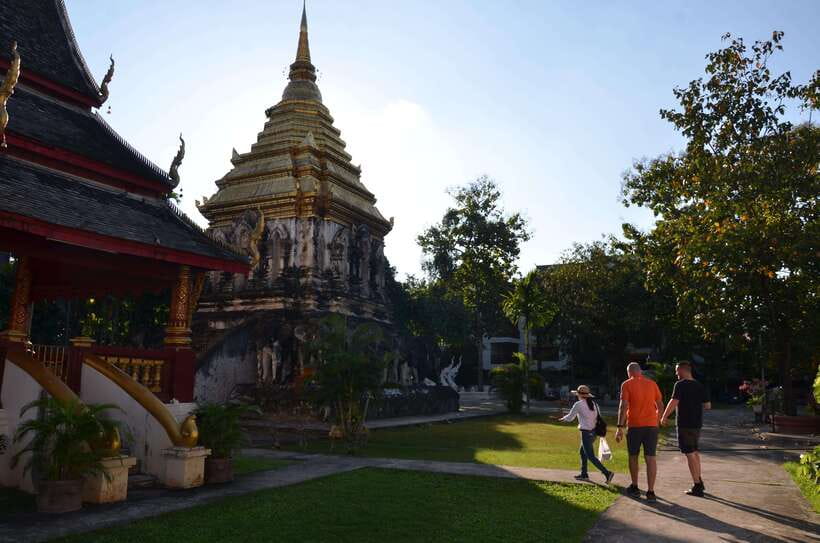
Wat Chiang Man is a fitting place to begin. Built in 1296, it is recognized as Chiang Mai’s oldest temple. The guide spends about 30 minutes here, enough time for an introduction to the city, the temple’s place in local history, and the details that make the site more than a quick photograph.
This first stop also helps you understand the idea of Lanna culture, the northern Thai tradition that shaped Chiang Mai’s religious art and buildings. A good guide can explain how temple spaces function, how Buddhist images are treated, and why certain architectural details matter.
The stop is not only about age. It sets the tone for the morning or afternoon: slow down, look carefully, and ask questions. Guides have been praised for explaining Buddhist stories and traditions in plain English, which is useful if this is your first time visiting Thai temples.
The Three Kings Monument and Chiang Mai’s civic center
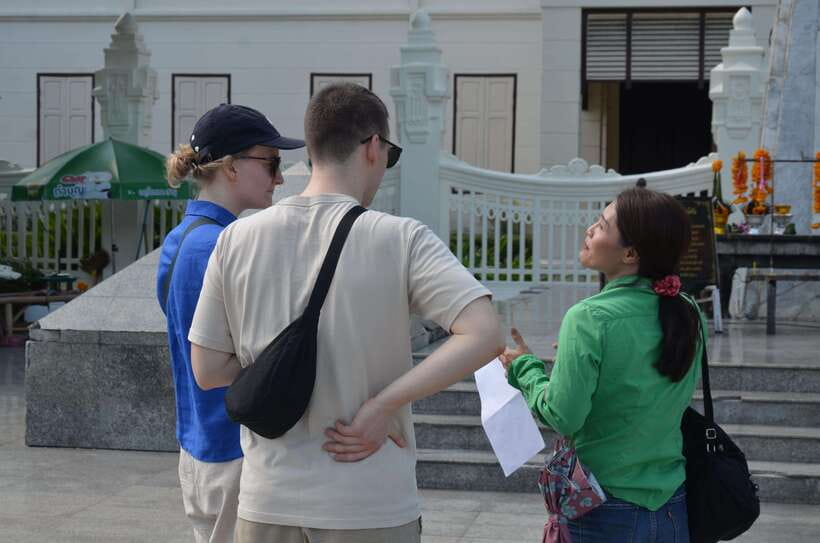
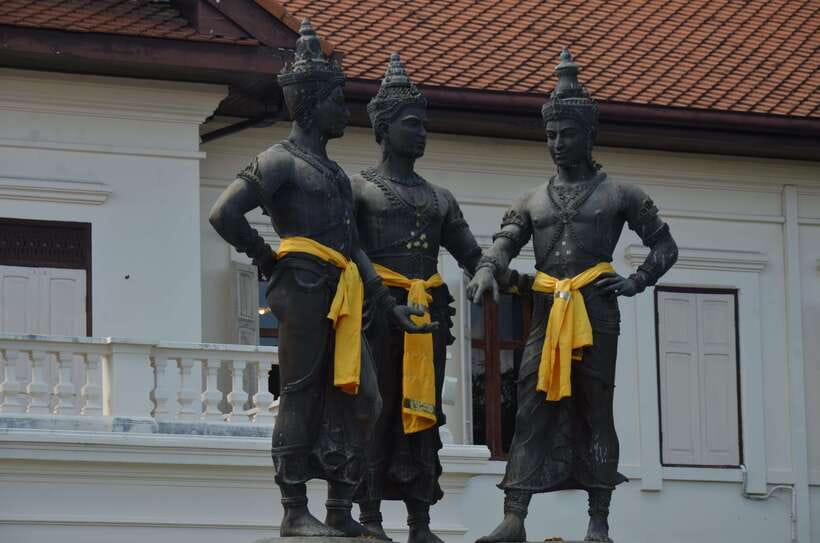
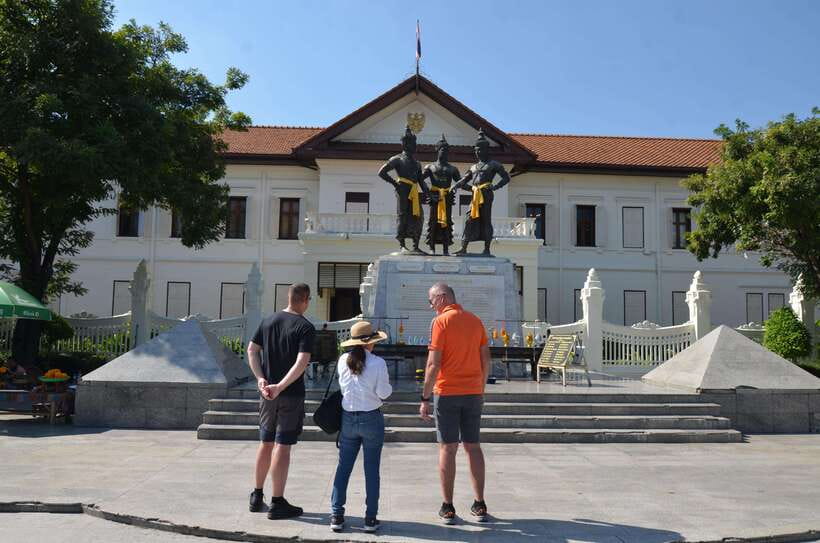
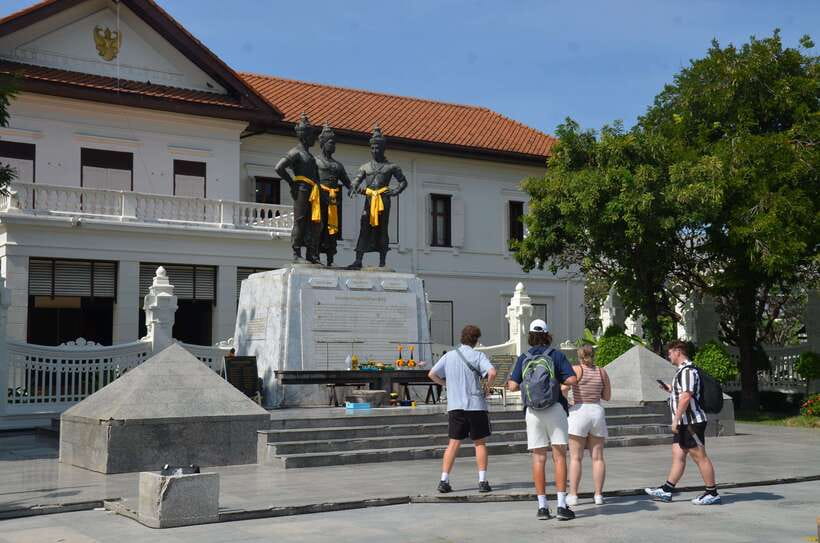
From Wat Chiang Man, the route continues west to the Three Kings Monument. The stop lasts about 10 minutes and takes place in a large open square at the heart of the walled Old City.
This is a shorter visit, but it gives the temple tour a civic and political frame. Chiang Mai is not just a collection of religious buildings. Its monuments, old walls, gates, and central spaces reflect the city’s role as a seat of regional power.
The open square also offers a change of pace. After studying temple details, you have room to step back and think about the city as a whole. Your guide can connect the monument with the rulers and foundations introduced at Wat Chiang Man.
Do not expect a long museum-style stop here. Ten minutes is enough for photographs and an explanation, but the monument is more of a context point than a major attraction. That is a sensible use of time on a short walking tour.
Wat Phra Singh and classic Lanna architecture
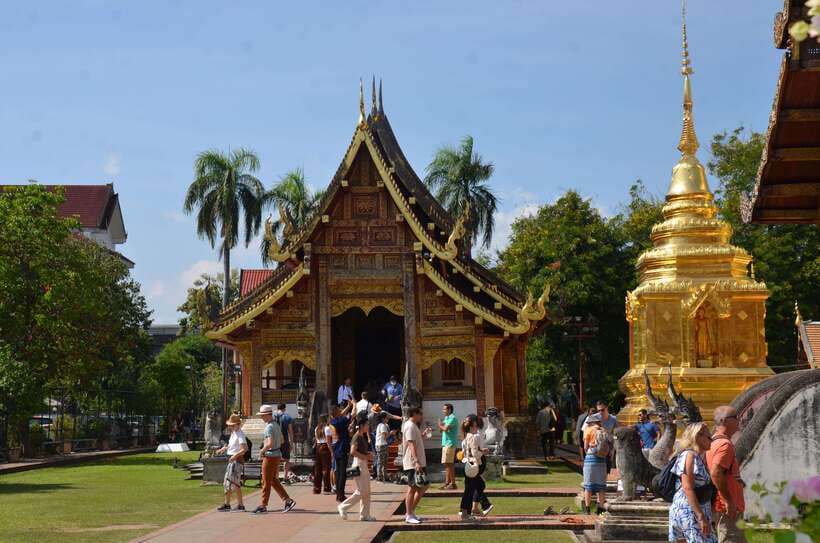
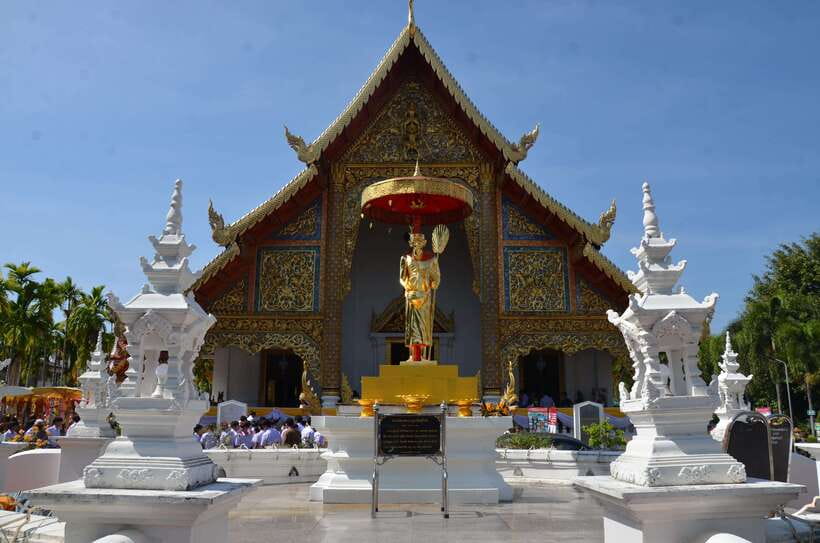
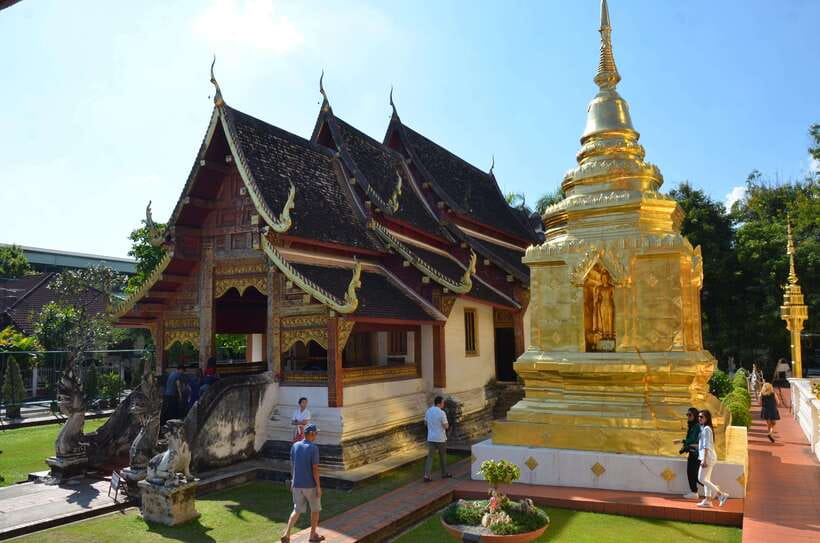
Wat Phra Singh receives about 40 minutes, making it one of the main stops. It is considered one of Thailand’s finest examples of classic Lanna-style temple architecture, and it gives you a strong visual reference for the northern Thai style.
This is where a guide adds real value. You can admire the rooflines, woodwork, decorative details, and prayer hall on your own, but the meaning behind them is less obvious. The guides explain the site’s history, Buddhist customs, and architectural features, while leaving time for photographs and a closer look.
The admission fee is 50 THB and is not included. Keep this small cost in mind when comparing the tour price. The extra payment is modest, but you should not arrive expecting every entrance to be covered.
You also need to dress properly. Shoulders and knees must be covered inside the temples, so avoid shorts, short skirts, sleeveless shirts, and other clothing that leaves too much skin exposed. A scarf can help, but comfortable, respectful clothing is the better plan.
Wat Phra Singh can be visually busy, particularly if you are trying to take in every detail at once. The guide helps you focus. Instead of racing from one photo angle to another, you get a clearer sense of what you are seeing and why it matters.
More Temple Tours in Chiang Mai
- Chiang Mai: Chiang Rai Temples, Karen Tribe and Hot Springs
★ 4.7 · 5,401 reviews - Chiang Rai White Temple and Blue Temple Day Tour
★ 4.6 · 3,366 reviews - Chiang Mai: White, Red/Black & Blue Temples Tour with Lunch
★ 4.2 · 2,017 reviews - Chiang Mai: Doi Suthep and Wat Umong Enchanting Evening Tour
★ 4.6 · 1,811 reviews
Wat Phan Tao, a teak hall with a royal past
Wat Phan Tao is a smaller stop, lasting about 15 minutes, but it provides one of the route’s most distinctive changes in style. The ordination hall, or viharn, is built almost entirely from teak wood.
The building was originally part of a royal palace, and its large teak throne was once used by Chiang Mai’s rulers. That detail gives the hall a human connection to the city’s royal past. You are not only looking at a beautiful wooden structure. You are seeing a building tied to changing political and religious use.
I like this stop because it prevents the tour from becoming a procession of similar temple compounds. Wat Phra Singh shows you classic Lanna temple architecture in a grand setting, while Wat Phan Tao lets you focus on wood, craftsmanship, and the reuse of a royal building.
Fifteen minutes is brief, so this is an overview rather than a slow study. Still, it is enough to understand why the hall is different and to take photographs before moving toward the final stop.
Wat Chedi Luang and the tour’s dramatic finish
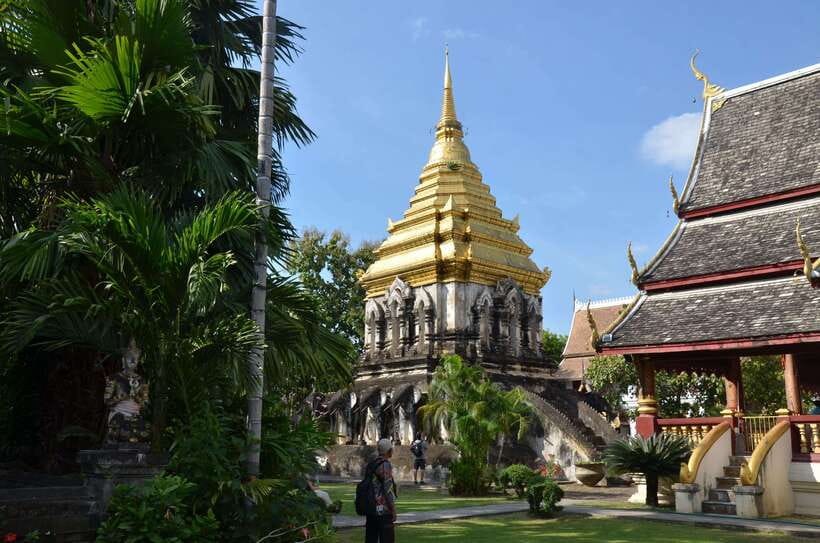
The tour ends at Wat Chedi Luang, with roughly 40 minutes for a guided visit. The ruined chedi is the visual climax of the walk. Its size and damaged form give you a very different impression from the intact wooden and plaster structures earlier in the route.
The word ruined should not suggest that the site lacks beauty. The weathered chedi shows the passage of time in a direct way, and its scale helps you picture the importance of the temple in Chiang Mai’s past. Your guide can explain the site’s significance while you take in the structure from different points around the compound.
The main prayer hall adds another strong image: a majestic standing Buddha. It is an excellent place to end because the tour finishes with both architecture and religious art, not just a final historical explanation.
Admission to Wat Chedi Luang costs 50 THB and is also separate. The tour ends at Watchediluang Varaviharn, so you can continue exploring from there after saying goodbye. There is no return transport included, which is not a serious problem in the central Old City, but you should plan your next stop rather than assuming the guide will take you back to your hotel.
The guides make the difference
The clearest pattern across the experience is the quality of the guiding. Jen is repeatedly praised for her warmth, clear explanations, enthusiasm, humor, and strong knowledge of Thai history and Buddhism. Pun is noted for patience, careful answers, and making sure people had time for photographs.
Danny receives special praise for his background as a monk for 12 years. That kind of experience can provide useful insight into Buddhist practice and the way temples function, although your assigned guide may be someone else. Faan, Jane, Jackie, John, Gin, Ponky, and Twotwo are also singled out for friendly, helpful, or engaging guiding.
The style seems to be informative without turning into a lecture. One older couple appreciated that Danny gave the right amount of detail and pointed out restrooms. Other participants valued coffee and food recommendations, including a khao soi suggestion that one person returned to try after the walk.
That local help is one of the best reasons to choose a guided tour instead of walking alone. You can ask about temple etiquette, Buddhist symbols, food, cafés, and the city’s past as you go. A guide can also help keep the group together near busy roads and make sure nobody gets left behind.
Still, the guide assignment matters. The experience is consistently described as strong, but different guides may have different personalities and presentation styles. The common thread is friendly English-language instruction, not a scripted performance with exactly the same delivery every time.
Walking comfort, weather, and temple etiquette
Three hours is manageable for most people who are comfortable walking, but this is not a vehicle tour with long seated breaks. Wear comfortable shoes and light, respectful clothing. Bring sunscreen, a hat, and cash for the two temple fees.
Rain is a real planning issue from July through mid-October. Carry an umbrella or raincoat, since the walk continues between sites and the activity does not promise weather protection. An umbrella is also listed among the recommended items, so take that advice seriously during the wet season.
You can expect a relaxed pace rather than a race. Several people praised the tour for not feeling rushed, and one early start was appreciated because it avoided the worst of the heat. If starting times are available, an earlier departure may be the most comfortable choice in hot weather.
Large bags and luggage are not allowed. Leave suitcases at your accommodation and bring only what you need. Pregnant people and those with back problems are advised not to book, and the walking format may not suit anyone who needs frequent seated rest.
Temple etiquette is part of the experience, not an annoying extra rule. Cover your shoulders and knees, follow instructions about where to stand, and keep your voice low in prayer areas. A scarf can help cover your shoulders, but it should not replace planning suitable clothes.
How much value do you get for $21?
At $21, this is priced as an affordable orientation tour rather than a luxury private experience. The fee includes a local guide and bottled water, while the two main entrance fees add 100 THB in total.
The strongest value comes from the guide’s explanations. Four temples can look like a lot on paper, but the sites are valuable because they show different parts of Chiang Mai’s identity. You get the city’s oldest temple, its central monument, a leading example of Lanna architecture, a teak royal hall, and a huge historic chedi.
A small group improves that value. With a maximum of 10 participants, you have a better chance to hear the guide and ask questions than you would on a large coach excursion. Some departures have had only two, four, or six people, creating an almost private feel without a private-tour price.
The tour also makes sense as a low-impact way to see the Old City. Walking reduces short vehicle journeys and lets you notice the streets between the temples. It is not a wilderness activity or a major conservation program, but it is a practical choice if you want to keep local sightseeing simple and reduce unnecessary transport.
Free cancellation up to 24 hours before the start and the option to reserve now and pay later add useful flexibility. The voucher is valid only on the specified date, so check your booking carefully before setting out.
Who should book this walk?
I would choose this tour for a first visit to Chiang Mai, especially if you want a basic grasp of Lanna culture, Buddhism, and Old City history before exploring independently. It also suits solo visitors, couples, and small groups who prefer conversation and questions over a large organized outing.
It is a good fit for people who enjoy architecture and local stories but do not want a full-day activity. The route is short enough to leave room for lunch, a massage, a market, or more temple visits afterward.
It may not suit you if you dislike walking in heat, need a fully accessible route, or want every entrance included in the headline price. People with back problems and pregnant women should choose another way to see the Old City. Families should also check their children’s tolerance for a three-hour cultural walk, since the focus is explanation rather than entertainment.
Should you book the Chiang Mai temple walking tour?
Book it if you want an affordable, well-paced introduction to Chiang Mai’s central temples with a local English-speaking guide. The mix of Wat Chiang Man, Wat Phra Singh, Wat Phan Tao, and Wat Chedi Luang is well chosen, and the Three Kings Monument adds helpful civic context.
I would especially recommend booking early in your stay. You will learn enough to recognize architectural details later, ask better questions, and make smarter choices about which temples deserve a second visit. Choose comfortable clothes, carry cash and rain protection, and aim for a cooler starting time if possible.
Skip it only if walking is difficult or you prefer exploring silently and independently. For most first-time visitors, $21 plus the two modest entrance fees buys three useful hours and a much clearer understanding of Chiang Mai.
FAQ
How long does the Chiang Mai temple walking tour last?
The tour lasts three hours.
Where does the tour begin?
It begins at Wat Chiang Man. Look for the Beyond Experience sign.
Where does the tour finish?
The tour finishes at Watchediluang Varaviharn, at Wat Chedi Luang.
Which temples are visited?
The route includes Wat Chiang Man, Wat Phra Singh, Wat Phan Tao, and Wat Chedi Luang. It also stops at the Three Kings Monument.
Is a guide included?
Yes. A local English-speaking guide is included.
Are temple entrance fees included?
No. Wat Phra Singh costs 50 THB and Wat Chedi Luang costs 50 THB. Food is also not included.
How many people are in the group?
The group is limited to 10 participants.
What should I wear?
Your shoulders and knees must be covered when entering the temples. Do not wear shorts, short skirts, or sleeveless shirts. Comfortable shoes and clothing are recommended.
More Historical Tours
- Chiang Mai: Historic Old City Bike Tour – Morning or Night
★ 5.0 · 202 reviews - Chiang Mai: Private Historic Old City Bike Tour – Night
★ 4.7 · 143 reviews - 1 Day Sukhothai Historical Park from Chiang Mai Private Tour
★ 5.0 · 29 reviews - From Bangkok: Ayutthaya Historical Park Guided Day Trip
★ 4.6 · 3,020 reviews
More Walking Tours in Chiang Mai
- Chiang Mai: Temple And City Walking Tour Part I
★ 4.7 · 244 reviews - Chiang Mai: Local Food and Markets Guided Walking Tour
★ 4.3 · 175 reviews - Chiang Mai Untouched Elephant: Nature Walk & Waterfall Trek
★ 4.7 · 77 reviews - Chiang Mai: Historical and Culture Exploration Walking Tour
★ 4.6 · 40 reviews
Just added around Chiang Mai
- Chiang Mai: Chiang Rai White, Blue & Black Temples Day Tour★ 4.2 · 16 reviews
- Chiang Mai Adventure ATV Secret Waterfall and Bamboo Rafting★ 5.0 · 16 reviews
- Inthanon Small-Group with Kew Mae Pan Trail from Chiang Mai include Lunch★ 4.5 · 16 reviews
- 2-Day Best of Chiang Rai from Chiang Mai Private Package★ 4.5 · 16 reviews
- Private-Tour Doi Suthep Temple and Khun Chang Kien Village Half-Day★ 4.5 · 16 reviews
- Doi Inthanon Discovery Tour: Waterfalls, Villages & Highest Peak★ 3.5 · 16 reviews
- Chiang Mai Iconic Temples and City Tour★ 4.5 · 17 reviews
- Fantastic! Famous Doi Inthanon National park tour with 2hr trekking★ 4.5 · 17 reviews
Temple Tours, compared.
Chiang Rai Temples, Karen Tribe and Hot Springs
Read our review →
City Highlights Temple and Market Walking Tour
Read our review →
Bangkok by Night: Temples, Markets and Food Tuk-Tuk Tour
Read our review →
Grand Palace, Wat Pho, and Wat Arun Guided Tour
Read our review →
Tiger Cave Temple, Emerald Pool and Hot Springs Tour
Read our review →
Chiang Rai White Temple and Blue Temple Day Tour
Read our review →Browse the lists this tour appears in