
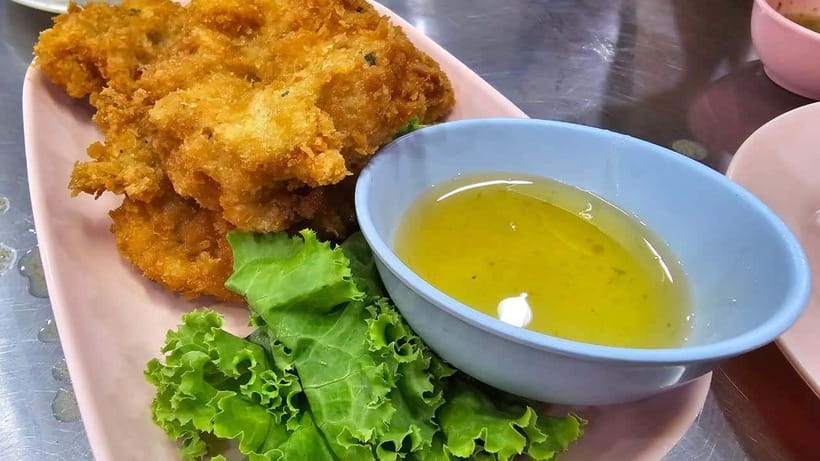
Reviewed · STREET FOOD TOURS
Bangkok: Street Food Tasting Tour at Night
Come hungry, leave with a new food map. This 150-minute walk through Bangkok Chinatown combines six tasting stops with stories about the neighborhood and its Thai-Chinese cooking traditions. I like the focus on local best sellers rather than a formal restaurant meal, and I like that the guide adds cultural context as you move through the streets. The main drawback is the limited food flexibility, especially for anyone avoiding shrimp, peanuts, pork, dairy, gluten, or animal products.
The meeting point outside Wat Mangkon MRT station, Exit 3 is a smart choice. Traffic around Yaowarat can be slow, so the metro is much easier than a taxi. You should also expect plenty of walking, narrow lanes, and close street conditions, which may be difficult if you have limited mobility or feel uncomfortable in confined spaces.
In This Review
- Key points at a glance
- Starting at Wat Mangkon MRT station
- Why Chinatown is the right setting for a food tour
- Six stops, six chances to taste the neighborhood
- Savory dumplings and local favorites
- Sweet pastries for a change of pace
- A Thai-Chinese best seller
- The homemade menu with a secret ingredient
- What Sophie adds to the evening
- Walking through Yaowarat after dark
- Is $49 a fair price?
- The important dietary warning
- Who should book this Chinatown walk?
- Practical planning before you arrive
- Should you book the Bangkok Chinatown food tour?
- FAQ
- How long does the Bangkok Chinatown food tour last?
- Where does the tour begin?
- Where does the tour finish?
- How many food stops are included?
- What language is the tour conducted in?
- Is hotel pickup included?
- What is the best way to reach the meeting point?
- Is the tour suitable for vegans or vegetarians?
- Can people with food allergies or gluten intolerance join?
- What should I bring?
Key points at a glance
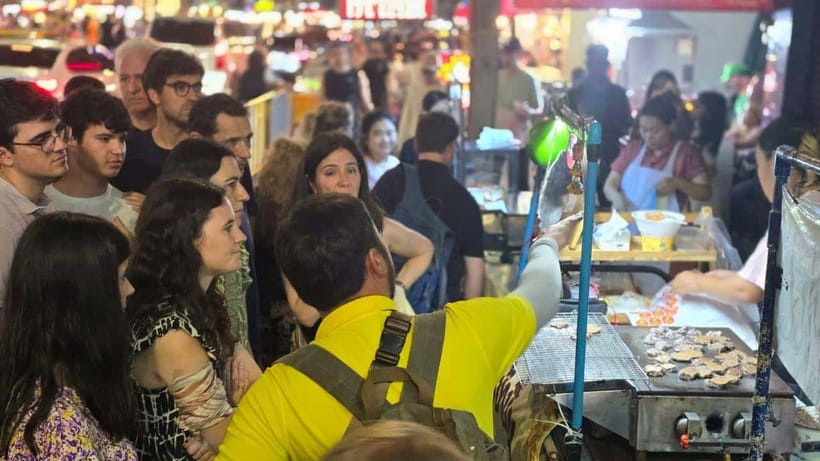
- Six food stops in Chinatown: The tour is built around repeated tastings rather than one large meal, so you get a broad look at Thai-Chinese street food.
- Thai-Chinese menus: You will try dishes associated with the local Chinatown food scene, including savory dumplings and sweet pastries.
- A homemade specialty: One tasting is promoted as a house menu with a secret ingredient, adding a little mystery to the route.
- Nighttime Yaowarat atmosphere: The tour takes place among the illuminated food streets and narrow lanes of Bangkok’s Chinatown.
- English-speaking guide: The guide explains food, neighborhood customs, and Bangkok history while leading the walk.
- Strong guide feedback: Sophie has been praised for her warmth, food explanations, and fun facts about Thailand and Bangkok.
Starting at Wat Mangkon MRT station
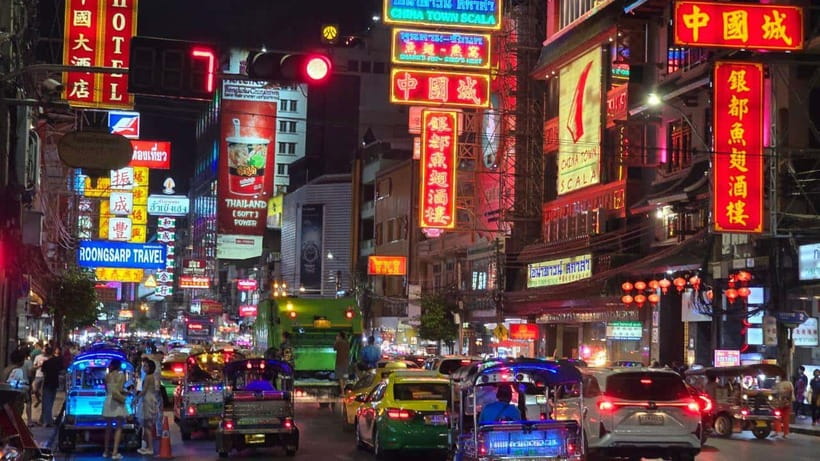
Your evening begins outside Wat Mangkon MRT station at Exit 3, at 449 Charoen Krung Road. This is one of the most useful details to get right because Chinatown traffic can be heavy, especially at night. Taking the MRT removes much of the guesswork and puts you near the action.
Give yourself enough time to find the correct exit. The tour does not include hotel pickup, so you are responsible for reaching the station. Bangkok’s metro is the sensible option from many parts of the city, but you should still check your route and allow a few extra minutes for the station and street crossing.
Wear shoes you can walk in for at least two and a half hours. The route passes through streets and alleys rather than air-conditioned dining rooms. You may be stopping beside food stalls, standing while eating, and moving through compact spaces.
The advertised duration is 150 minutes. The route description also refers to about three hours in Chinatown, so allow a little flexibility rather than scheduling a tightly timed evening immediately afterward.
More Street Food Tours in Bangkok
- Bangkok: Michelin Guide Street Food Tour by Tuk Tuk
★ 4.4 · 1,274 reviews - Bangkok Tuk-Tuk Tour by Night with Chinatown Street Food Meal
★ 5.0 · 635 reviews - Bangkok: E-Scooter Night Tour with Local Street Food
★ 4.8 · 488 reviews
Why Chinatown is the right setting for a food tour
Bangkok Chinatown is not simply a place where Chinese food happens to be sold. Its food culture reflects the long connection between Thai and Chinese communities, and the tour uses that setting to explain how dishes fit into local life.
That context matters. A food tasting can otherwise become a quick series of bites with no sense of place. Here, the guide connects the dishes with Chinatown’s streets, traditions, and local popularity. You are not just sampling food. You are learning why certain menus have become neighborhood favorites.
The route is described as a street-crawling walk through narrow alleys and less obvious corners. That gives the experience a different feel from a restaurant-hopping evening on a main road. At the same time, street food is not polished or predictable. You should expect noise, crowds, changing stall conditions, and simple eating arrangements.
Six stops, six chances to taste the neighborhood
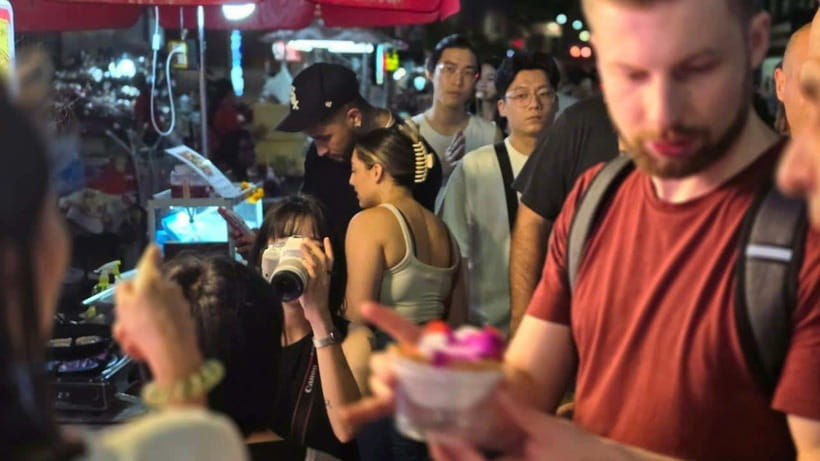
The central promise is six different places for food tastings. The exact vendors and dishes can change, since some menus may not be available during public holidays or after a seasonal item ends. That flexibility is normal for a street food tour, but it means you should not book with a fixed six-dish menu in mind.
The value comes from the range. Instead of spending your whole food budget on one plate, you get small portions from several locations. This lets you compare flavors and styles while keeping the evening active.
Savory dumplings and local favorites
Savory dumplings are specifically mentioned among the foods you may try. Dumplings are a useful introduction to Chinatown’s Thai-Chinese character because they show the influence of Chinese cooking within Bangkok’s wider food culture.
Your guide should help explain what you are eating and how the dish is normally enjoyed. That is particularly helpful if you are unfamiliar with the sauces, fillings, or textures. You can focus on tasting rather than trying to work out every ingredient alone.
The practical catch is that individual dishes may not suit everyone. Pork, shrimp, peanuts, and gluten are all possible concerns, and the tour does not promise substitutions for strict diets.
Something different for another day:
- Bangkok: Damnoen Saduak Market and Maeklong Railway Market
★ 4.5 · 26,723 reviews - The Old Siam: Damnoen Saduak and Maeklong Railway Market
★ 4.5 · 10,992 reviews - From Bangkok: Ayutthaya Temples Guided Tour with Lunch
★ 4.7 · 10,535 reviews - Bangkok: Train Market & Floating Market with Boat Ride
★ 4.7 · 9,547 reviews
Sweet pastries for a change of pace
A street food route needs contrast, and sweet pastries provide it. Moving from savory food to something sweet helps keep the tasting sequence from feeling repetitive.
This also gives you a look at the lighter side of Chinatown’s food stalls. You might find the pastry stop especially useful if you enjoy trying local sweets but would not know which stall to choose on your own.
Still, dairy and gluten may be present. If you have a serious allergy or intolerance, this is not a situation for guesswork. The tour information specifically advises people with food allergies and gluten intolerance not to book.
A Thai-Chinese best seller
The experience focuses on local best-selling Thai-Chinese-style menus. That phrase is more useful than a vague promise of the best food in Bangkok because it points you toward dishes with a connection to the neighborhood.
A best seller is not automatically your personal favorite, of course. But it gives you a reasonable starting point, particularly if you have only one evening in Chinatown and do not want to choose randomly from dozens of stalls.
The guide’s role is important here. Food becomes more memorable when you know what makes a dish popular and how it fits into local eating habits. The most positive feedback about the tour centers on explanations of food, Bangkok, Thailand, and Chinatown’s past.
The homemade menu with a secret ingredient
One highlighted tasting is a homemade menu with a secret ingredient. The description does not reveal what it is, so you should treat this as a small surprise rather than a guaranteed signature dish with a fixed recipe.
That element adds personality to the route. Commercial street stalls show you what the wider neighborhood sells, while a homemade specialty can offer something more personal. It may be the tasting you remember most, even if you cannot identify every ingredient.
Again, ask about contents if you have dietary concerns. The mystery is fun only when it is safe for you to eat.
What Sophie adds to the evening
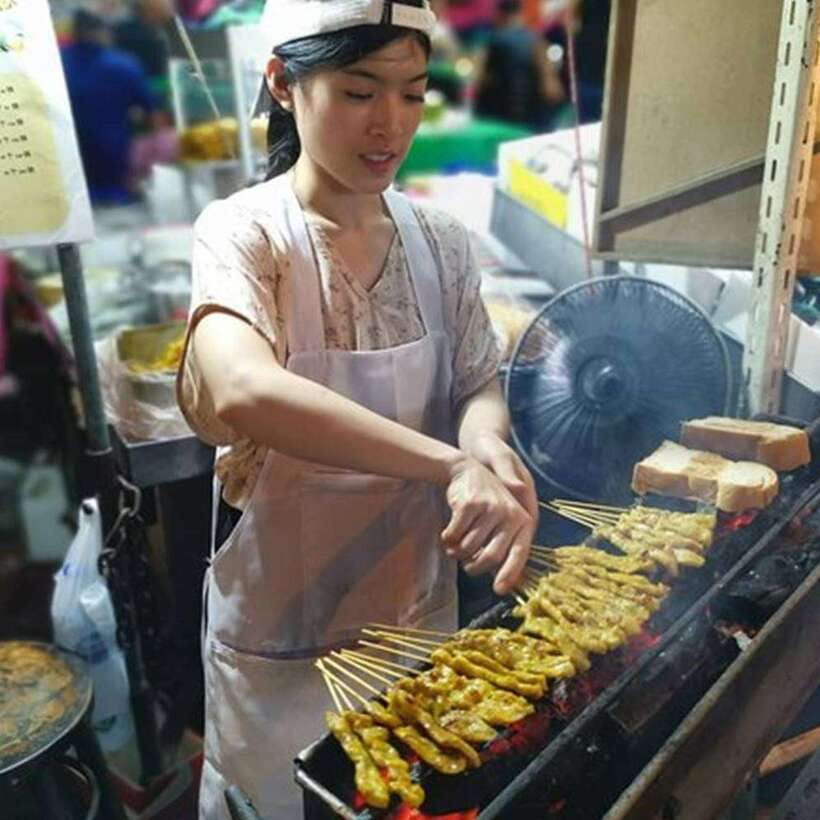
The guide can make or break a food walk. A route through Chinatown is easy to find on a map, but understanding what you are eating and why it matters requires a good escort.
Sophie has received especially warm praise for explaining the food, sharing fun facts, and discussing Bangkok and Thai history. One booking described the experience as feeling almost like a private visit, while another said the guide made the food and neighborhood especially enjoyable.
That suggests the tour may feel personal when the group is small, but group size is not specified, so you should not book expecting a private guide. What you can reasonably expect is an English-speaking guide who leads the route and provides background along the way.
The guide also helps with the practical side of street food. You can ask about unfamiliar items, learn which flavors are typical, and avoid wandering past the best stops without noticing them.
Walking through Yaowarat after dark
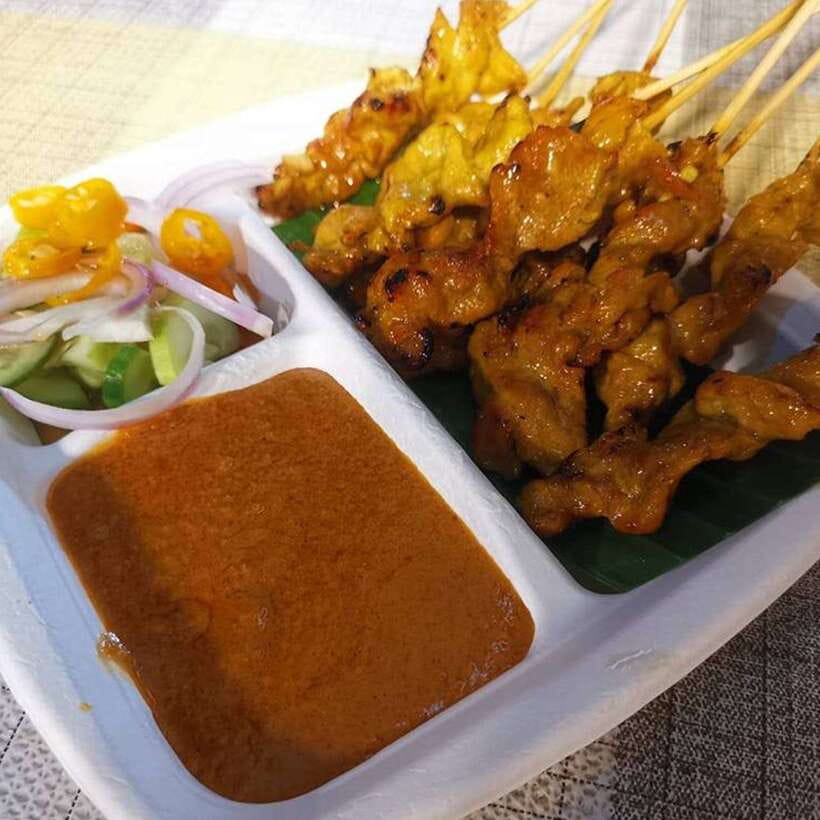
The nighttime setting is a major part of the experience. Chinatown’s food streets take on a different character after dark, with stalls, signs, pedestrians, and cooking activity creating a lively urban scene.
This is sightseeing as much as eating. You will walk through the Chinatown area from Charoen Krung Road toward the Yaowarat finish at 491 to 493 Yaowarat Road. The route gives you a reason to pay attention to the streets between tastings.
Do not expect a quiet walk. Narrow alleys and active food streets can feel crowded, and the tour may involve standing close to other people. That is part of the setting, but it can be tiring if you prefer slow, spacious sightseeing.
You should also keep your belongings secure and watch your footing. The tour information does not provide detailed conditions for every stop, so treat the walk like any busy Bangkok evening excursion.
Is $49 a fair price?
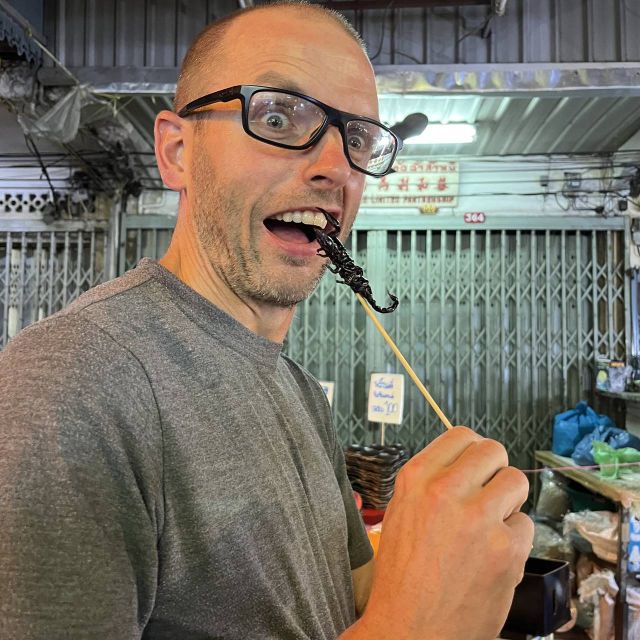
At $49 per person, this tour is not the cheapest way to eat in Chinatown. You can certainly buy individual snacks for less if you are comfortable choosing stalls on your own.
The price makes more sense when you count the guide, six tasting locations, route planning, and food background. You are paying for selection and interpretation, not just calories. For a first visit to Bangkok, that can be worthwhile because the guide reduces the pressure of deciding where to eat.
It is also a sensible choice if you have only one night available for Chinatown. You get an organized introduction without committing to a long dinner. The 150-minute length leaves room for another evening plan, though you should allow extra time in case the route takes closer to three hours.
The value is weaker if you already know Yaowarat well, speak with vendors comfortably, or have no interest in guided food explanations. It is also a poor buy if many of the included foods are off-limits to you.
The important dietary warning
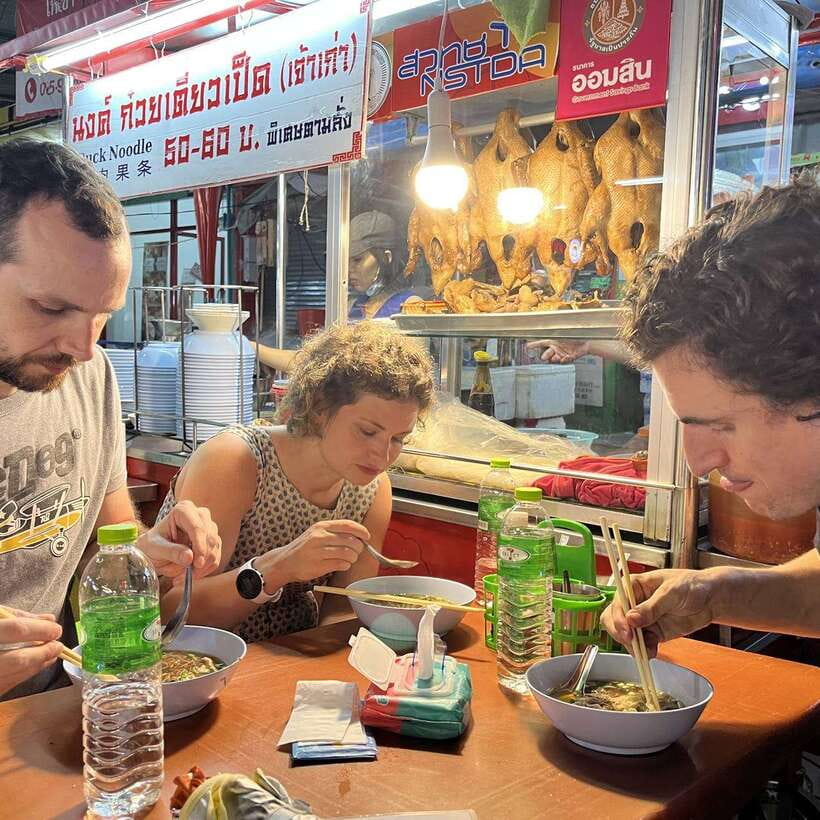
This is not a flexible vegetarian or allergy-friendly tour. The operator specifically says it may not suit vegetarians, vegans, people avoiding gluten, or anyone allergic to shrimp, peanuts, pork, or dairy.
The tour is also listed as unsuitable for people with food allergies, nut allergies, and gluten intolerance. That broad warning should be taken seriously. Do not assume you can simply skip one item and receive an equivalent replacement.
If you eat meat and have no listed allergies, the food focus should be much easier. Even then, you may want to tell the guide about preferences before the first stop, though the supplied information does not promise menu changes.
One negative account raised a basic hygiene concern involving food being handled directly by hand while assembling a plate. That is worth keeping in mind. Street food standards and preparation methods can differ from what you are used to, so people who need tightly controlled food handling may prefer a different type of culinary tour.
Who should book this Chinatown walk?
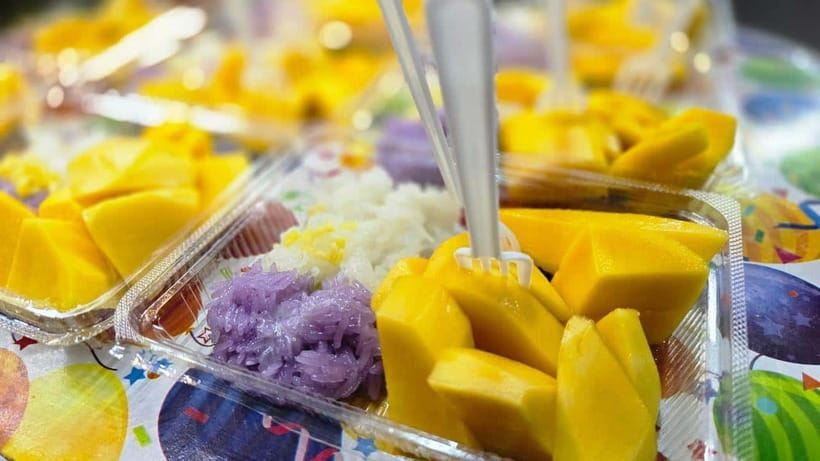
I would recommend it most strongly to first-time Bangkok visitors who want an easy introduction to Yaowarat’s food scene. It suits curious eaters who enjoy trying several small portions and hearing stories while walking.
It is also a good match for couples or small groups who want an evening activity with both food and sightseeing. The positive comments about Sophie suggest that the guide’s personality adds real value, especially for people who enjoy conversation rather than a silent list of stops.
You should think twice if you dislike street conditions, cannot walk comfortably, or feel uneasy in narrow spaces. The experience is not suitable for wheelchair users, people with mobility impairments, people with claustrophobia, or visually impaired people according to the stated restrictions.
Electronic devices are listed among the prohibited items, along with alcohol and drugs. Since that rule is unusual for a food walk, read the operator’s instructions carefully before you arrive and do not assume you can use your phone throughout the experience.
Practical planning before you arrive
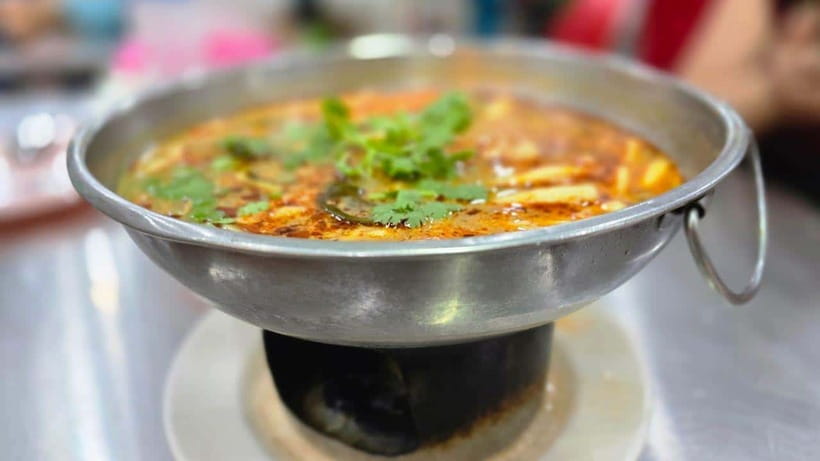
Book the MRT route first, not a taxi. The meeting point is outside Wat Mangkon station, Exit 3, and heavy traffic makes road transport a poor choice for getting there on time.
Eat lightly beforehand, but do not arrive starving. Six tastings can add up, and some portions may be more filling than expected. A small meal earlier gives you a little control without spoiling the point of the tour.
Bring comfortable shoes and keep your evening schedule loose. The route is listed as 150 minutes, with the Chinatown sightseeing portion also described as about three hours.
The tour offers free cancellation up to 24 hours before departure and allows you to reserve now and pay later. Those terms are useful if your Bangkok plans are still shifting, but check the available starting times before booking.
Should you book the Bangkok Chinatown food tour?
Book it if you want a guided first taste of Yaowarat, enjoy meat and seafood-based Thai-Chinese food, and like combining street scenes with local stories. The strongest reasons to choose it are the six-stop format, the nighttime route, and the guide’s well-praised explanations, especially with Sophie.
Skip it if you need vegetarian, vegan, gluten-free, or allergy-safe food, or if walking through crowded narrow streets sounds unpleasant. The $49 price is fair for a guided sampler with six stops, but only when you can eat most of what is offered.
For the right eater, this is a practical way to get oriented in Bangkok Chinatown without spending the entire evening guessing where to stop. Just arrive by MRT, wear good shoes, and keep room for the unexpected.
FAQ
How long does the Bangkok Chinatown food tour last?
The stated duration is 150 minutes. The Chinatown sightseeing portion is also described as lasting about three hours, so allow some flexibility in your schedule.
Where does the tour begin?
It begins outside Wat Mangkon MRT station at Exit 3 in Chinatown, near 449 Charoen Krung Road.
Where does the tour finish?
The tour finishes at 491 to 493 Yaowarat Road, in Samphanthawong, Bangkok.
How many food stops are included?
The tour includes tastings at six different places.
What language is the tour conducted in?
The live tour guide speaks English.
Is hotel pickup included?
No. Hotel pickup and drop-off services are not included.
What is the best way to reach the meeting point?
The tour information recommends taking the MRT because traffic around Chinatown can be heavy. You should go to Wat Mangkon station and use Exit 3.
Is the tour suitable for vegans or vegetarians?
No. The experience is specifically listed as unsuitable for vegans, and the food may not suit vegetarians.
Can people with food allergies or gluten intolerance join?
The tour is listed as unsuitable for people with food allergies, nut allergies, and gluten intolerance. Shrimp, peanuts, pork, dairy, and gluten are specifically identified as possible concerns.
What should I bring?
Bring comfortable shoes. Alcohol, drugs, bare feet, and electronic devices are not allowed according to the stated rules.
More Food Tours in Bangkok
- Bangkok: White Orchid Chao Phraya Dinner Cruise free Beer
★ 4.4 · 4,573 reviews - Bangkok by Night: Temples, Markets and Food Tuk-Tuk Tour
★ 5.0 · 3,752 reviews - Bangkok: Backstreets Food Tour with 15+ Tastings
★ 4.9 · 2,880 reviews - Bangkok Midnight Food Tuk Tuk Tour
★ 5.0 · 2,542 reviews
Just added around Bangkok
- Kanchanaburi World War 2 Private Charter Pathway of the Past Tour★ 4.5 · 16 reviews
- 2-hour Bangkok Old City Night CHOB TUK TUK + Talat Noi Street Art★ 5.0 · 16 reviews
- Floating Market with Great Pagoda Temple and Wat Sam Phran★ 5.0 · 16 reviews
- Khao Yai National Park Hiking Day Tour: Haew Narok and Haew Suwat★ 5.0 · 16 reviews
- Shangri-La Hotel’s Salathip Thai Restaurant Experience★ 4.5 · 16 reviews
- Private Transfer Bangkok – Koh Kood Island★ 4.0 · 16 reviews
- Private Half-Day Bangkok Tour Explore Grand Palace and Wat Pho★ 4.5 · 16 reviews
- The Best Bangkok Temples★ 4.0 · 16 reviews
Street Food Tours, compared.
Small-Group Chiang Mai Evening Street Food Tour
Read our review →
Bangkok Tuk-Tuk Tour by Night with Chinatown Street Food Meal
Read our review →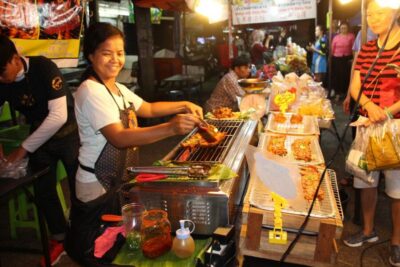
Hands-on Learn to Cook 3 Popular Thai’s street food
Read our review →
Bangkok Tuk-Tuk by Night with Chinatown Street Food Meal
Read our review →
The 10 Tastings of Chiang Mai With Locals: Private Street Food Tour
Read our review →Browse the lists this tour appears in