
Reviewed · STREET FOOD TOURS
Bangkok: Talad Noi Hidden Gems & Street Food Adventure
Old Bangkok tastes best on foot. This Talad Noi walk brings together Chinese and Thai street food, old religious sites, painted lanes, and a riverside café stop in a compact 2-kilometer route. I especially like the chance to try turnip cake, chwee kueh, duck noodle soup, and Uncle Pom’s pad Thai while a local guide explains the neighborhood around you.
The small group, capped at 12 people, is another strong point. Guides such as PK, Bebe, and Nana have earned praise for friendly conversation and clear English. The main consideration is focus: this is first and foremost a food walk, not a long Chinatown temple tour. If you arrive expecting hours inside historic buildings, the 150 to 270-minute route may feel light on formal sightseeing.
In This Review
- Key points before you book
- Why Talad Noi makes a good food walk
- Starting at River City Bangkok
- Holy Rosary Church and Talad Noi’s mixed identity
- Street art, cafés, and the slower side of the route
- The Chinese food stops: turnip cake and chwee kueh
- Chow Sue Kong Shrine and the old Chinese quarter
- Crossing toward Chinatown
- How the small group changes the experience
- Price, food value, and what is included
- Who should book this experience
- Should you book the Talad Noi food walk?
- FAQ
- Where does the Talad Noi tour begin?
- Where does the tour finish?
- How long does the experience last?
- How far do you walk?
- What language is the tour conducted in?
- What food is included?
- Are drinks included?
- Can vegetarians join the tour?
- Are other dietary requirements supported?
- Is the tour suitable for young children?
Key points before you book
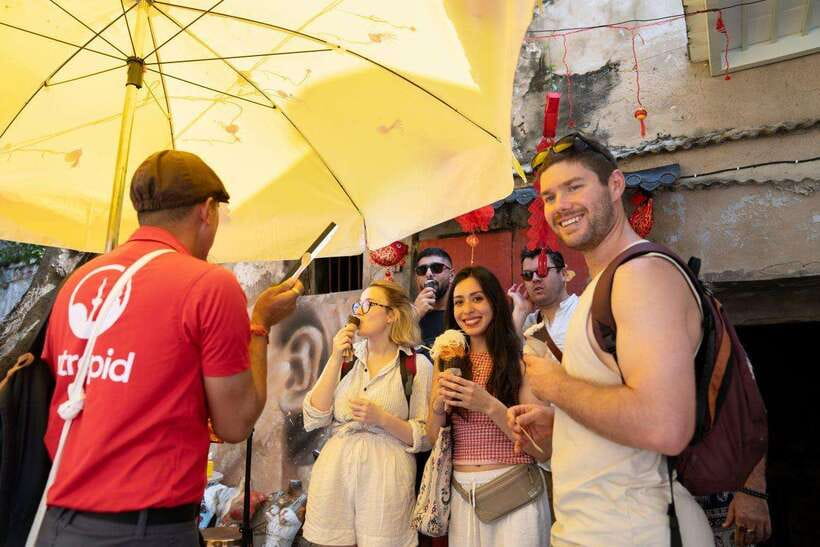
- A food walk with real local variety: Taste Chinese snacks, Thai noodles, pad Thai, and drinks rather than settling for one standard meal.
- Holy Rosary Church dates to 1787: This early Bangkok church adds a surprising Christian chapter to a neighborhood shaped by Chinese and Thai communities.
- Chow Sue Kong Shrine is about 200 years old: Its detailed design gives the walk an important cultural stop beyond the food stalls.
- The group stays small: With up to 12 people, your guide can answer questions and respond to food preferences more easily.
- The route covers 2 kilometers: It is a manageable urban walk, but narrow lanes, street surfaces, and Bangkok heat still call for sensible shoes and water.
- You finish near Si Phraya: The walk begins at River City Bangkok and ends after reaching Chinatown and the Si Phraya area.
Why Talad Noi makes a good food walk
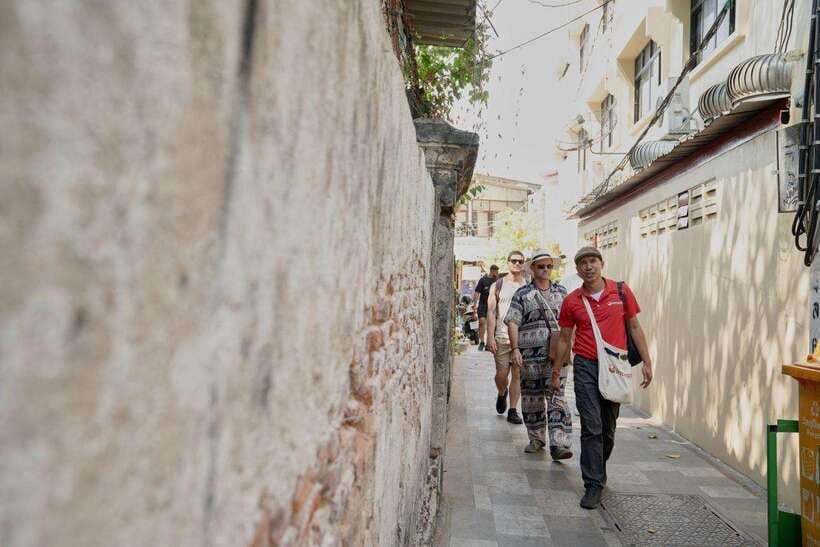
Talad Noi is a useful introduction to Bangkok because it does not present the city as one single culture. Chinese and Thai influences sit side by side here, and the food reflects that blend. A short walk can move from a church to a Chinese shrine, then from painted walls to a noodle shop or café.
I like this kind of tour because the food gives the neighborhood a reason to unfold slowly. You are not simply being marched from one famous building to another. A turnip cake or bowl of duck noodles becomes a small lesson in the people who shaped the area.
The route is only about 2 kilometers, so the physical demand is modest. The total time varies from 150 to 270 minutes, which means the pace and amount of conversation can change. Allow the longer end of that range when planning the rest of your day, especially if your group stops often for food and drinks.
More Street Food Tours in Bangkok
- Bangkok: Michelin Guide Street Food Tour by Tuk Tuk
★ 4.4 · 1,274 reviews - Bangkok Tuk-Tuk Tour by Night with Chinatown Street Food Meal
★ 5.0 · 635 reviews - Bangkok: E-Scooter Night Tour with Local Street Food
★ 4.8 · 488 reviews
Starting at River City Bangkok
The meeting point is River City Gate 1, in front of Starbucks on the first floor. This is a useful landmark, but give yourself enough time to find the correct entrance. Starting here puts you near the river and gives the walk a clear beginning before the route enters Talad Noi’s narrower streets.
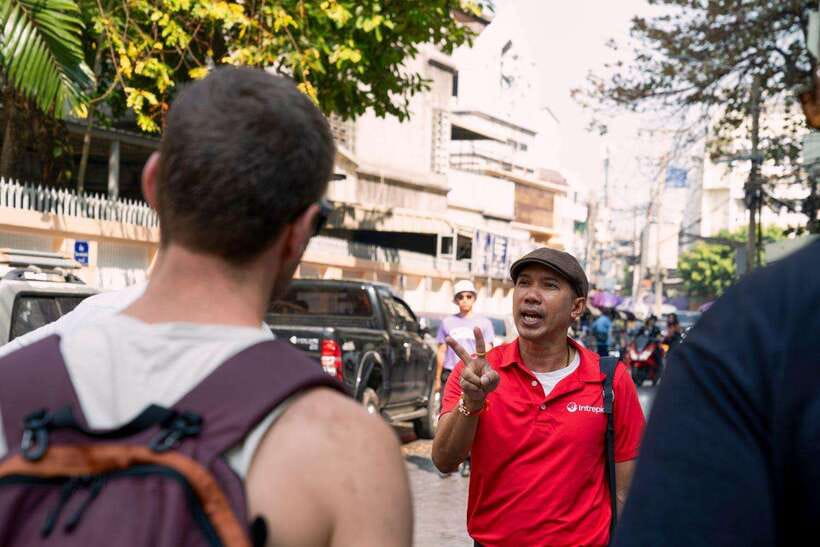
Your English-speaking guide leads the outing from this point. The small-group format matters more than it might on a standard sightseeing route. In tight lanes, a group of 12 is easier to keep together, and your guide has more room to explain details or answer questions.
The experience is also available as a private group. That can be worth considering if you want the guide to adjust the pace or spend more time discussing the food and religious sites.
Holy Rosary Church and Talad Noi’s mixed identity
Holy Rosary Church is one of the walk’s most unexpected stops. Built in 1787, it offers a reminder that Bangkok’s old communities included more than Buddhist temples and Chinese shrines.
The visit gives your guide a chance to explain the area through its different religious and cultural threads. You will not see Talad Noi as just a food district. The church helps establish a wider sense of place before the walk turns back toward Chinese heritage and local street life.
I would keep your expectations measured. The supplied details promise a visit and guided tour, but not an extended architectural program or a long interior lecture. The value here is the contrast. A historic church appearing within a Chinese and Thai neighborhood is precisely what makes the stop memorable.
Street art, cafés, and the slower side of the route
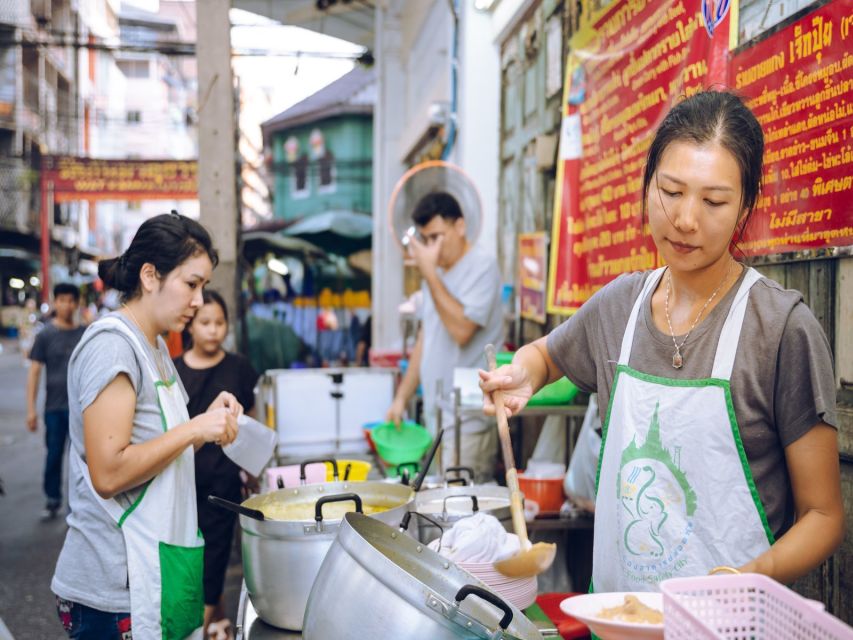
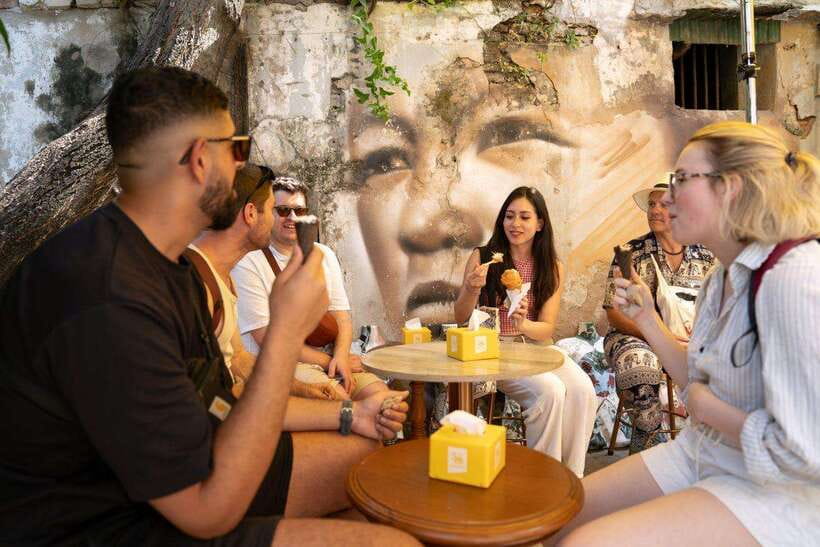
After the church, the route takes you through Talad Noi’s lanes, where street art adds color to old walls and working streets. The art makes the walk more visually varied, but the point is not a formal gallery visit. You are seeing creative work in the same neighborhood as cafés, shrines, homes, and food stops.
Hong Sieng Kong is included as a guided stop, along with time around riverside cafés. This is where the tour changes tempo. Instead of moving from one tasting to the next, you get a chance to sit down with a drink such as coffee, tea, or boba tea.
That café break is useful in Bangkok’s heat. It also gives you time to ask your guide about what you have eaten and what you are seeing. I like that the itinerary includes this pause, since a food walk can become tiring when every stop demands attention.
Something different for another day:
- Bangkok: Damnoen Saduak Market and Maeklong Railway Market
★ 4.5 · 26,723 reviews - The Old Siam: Damnoen Saduak and Maeklong Railway Market
★ 4.5 · 10,992 reviews - From Bangkok: Ayutthaya Temples Guided Tour with Lunch
★ 4.7 · 10,535 reviews - Bangkok: Train Market & Floating Market with Boat Ride
★ 4.7 · 9,547 reviews
The Chinese food stops: turnip cake and chwee kueh
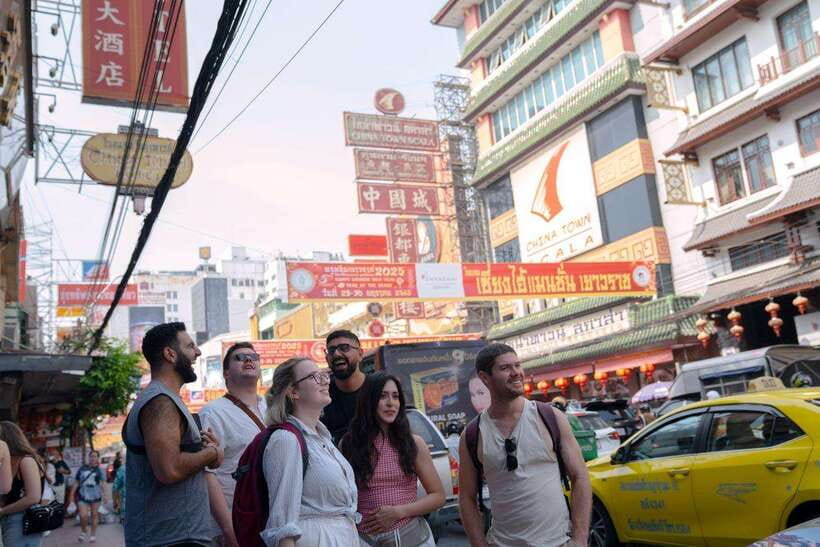
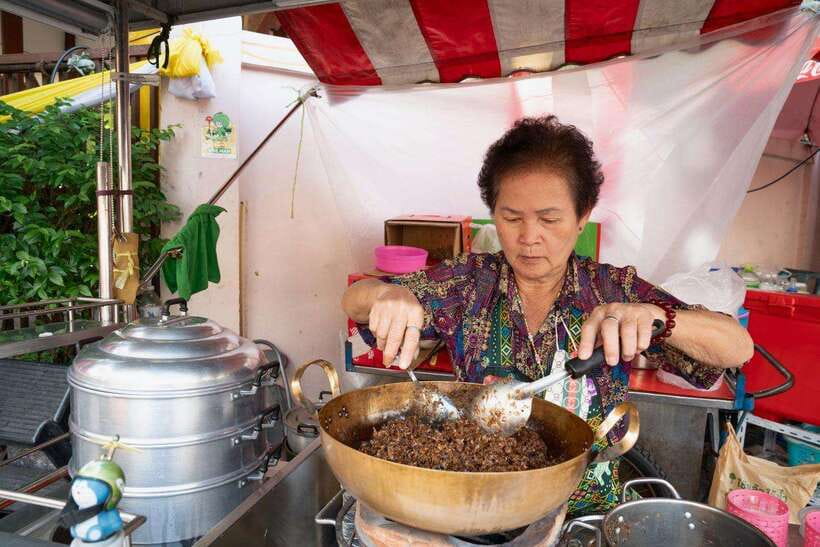
The tasting menu is one of the strongest reasons to book this outing. You may sample turnip cake, a Chinese dim sum dish, and chwee kueh, steamed rice cakes served with preserved radish. These are not the predictable pad Thai and mango sticky rice choices many first-time visitors already know.
Chwee kueh is especially useful for understanding the Chinese side of Bangkok’s food culture. Its soft rice cake and preserved radish topping make it simple but distinctive. Turnip cake offers another texture and flavor, and both dishes work well as small tastings rather than a full meal.
The experience also includes chao tha, described as duck noodle soup, and pad Thai from Uncle Pom. Together, the dishes give you a broader spread: Chinese snacks, a noodle soup, and a familiar Thai classic prepared at a local stop.
One practical tip is to arrive hungry. At least one person misunderstood the experience as mainly a Chinatown sightseeing walk with a few snacks and ate beforehand. That was the wrong strategy. This tour is chiefly a food tour, so plan your morning or afternoon meal accordingly.
Chow Sue Kong Shrine and the old Chinese quarter
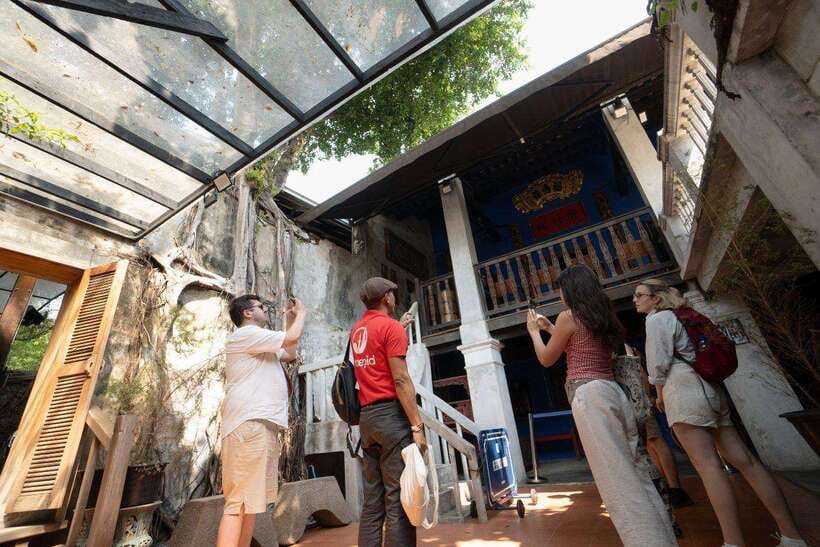
The approximately 200-year-old Chow Sue Kong Shrine, also known as Shun Hing Gong, is the cultural center of the walk. Its intricate architecture gives you a chance to pause and look closely rather than simply passing through another lane.
A guide is particularly helpful here because the visual details may not explain themselves. The stop adds context to the Chinese influence you have already tasted in the food. The church and shrine also create a useful contrast between two forms of worship within the same urban area.
You should dress and behave respectfully at the shrine. The supplied information does not promise a lengthy ritual explanation, so think of this as a guided cultural visit rather than a specialized religious tour.
For some people, this stop will be a highlight. For others, it may feel too brief. One piece of direct feedback was that the walk did not go far enough into old Chinatown. That is fair. The route touches Chinatown after Talad Noi, but it is not designed as a full exploration of every historic lane or temple in that district.
Crossing toward Chinatown
The final part of the route moves into Bangkok’s Chinatown, where older streets meet newer cafés, shops, and food businesses. This transition helps you see Talad Noi as part of a larger district rather than an isolated pocket.
The Chinatown portion is best treated as an introduction. You get a guided look at the area after seeing its quieter Talad Noi side, but the experience does not promise a long Chinatown circuit or multiple temple interiors.
That distinction matters when you compare tours. If you want street food plus a compact dose of history, this route is well balanced. If your main goal is to spend several hours in Chinatown, photographing temples and exploring market streets, you may want a separate visit on another day.
The walk finishes at Si Phraya. Since it does not return you to River City Bangkok, think about your next destination before setting out.
How the small group changes the experience
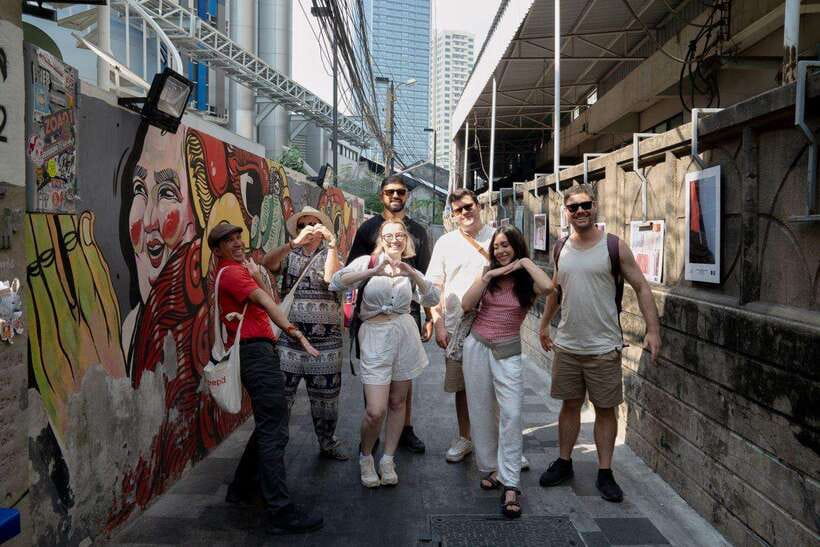
A maximum of 12 people is a useful limit for this route. Talad Noi’s narrow lanes are not suited to a large procession, and a smaller group makes it easier to hear your guide without constant stopping.
The strongest guide comments center on warmth, clear English, and personal attention. Nana was praised for being friendly and for handling questions and food preferences well. Bebe was described as an excellent companion during a private-feeling outing, with time for good conversation. PK received especially strong praise for connecting the cultural and food portions of the walk.
The guide quality can shape the whole experience. The buildings and dishes are worthwhile on their own, but the stories connect them. When the guide is engaged, a shrine, snack, or painted wall becomes part of a larger explanation of Talad Noi.
A private group is available if you want even more control. The standard small group should suit most people, though, especially since the route has already been kept short.
Price, food value, and what is included
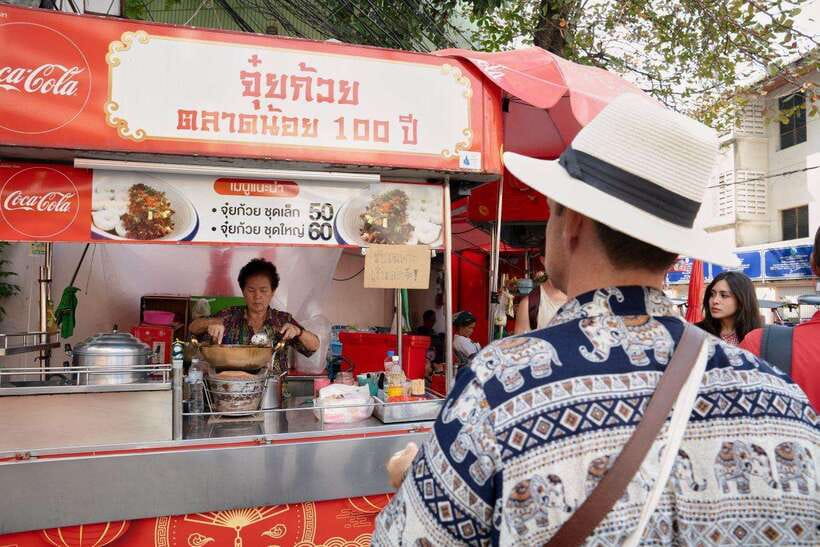
At $41 per person, the tour is priced above a simple self-guided snack crawl but below many private city tours. The value depends on how much food you receive and how much you value the guide’s cultural explanation.
The price includes the local English-speaking guide, the Talad Noi walking tour, samples of Chinese and Thai food, and drinks. The included items listed are turnip cake, chwee kueh, duck noodle soup, Uncle Pom’s pad Thai, and drinks such as coffee, tea, or boba tea.
Additional food and drinks cost extra. I would not treat the included tastings as an unlimited lunch, but they should give you several distinct flavors and enough food to make the price feel reasonable if you arrive with an appetite.
The real value is the combination. Buying each item yourself would not provide the same neighborhood context, and visiting the church and shrine without a guide could leave you with little explanation. Still, if you are happy eating independently and researching Talad Noi on your phone, a self-guided visit will cost less.
Who should book this experience
I would recommend this walk to first-time Bangkok visitors who want a manageable introduction to Talad Noi. It suits you especially well if you like food, local stories, old religious sites, and walking through neighborhoods rather than moving only between major attractions.
It is also a good fit for people who prefer small groups. Solo visitors and couples may appreciate the chance to ask questions without competing with a large crowd.
The tour is less suitable for children under 8, who are specifically excluded. It may also disappoint anyone seeking a full Chinatown history tour, a temple-heavy itinerary, or a long formal architecture tour.
Vegetarians can be accommodated if you provide that information at least 24 hours before the tour. Other dietary requirements are not supported according to the available details, so you should not book on the assumption that allergies or special diets can be handled.
Wear comfortable walking shoes. Two kilometers is not a marathon, but the route moves through narrow urban lanes and includes several food and sightseeing stops. The duration can reach four and a half hours, so keep the rest of your schedule flexible.
The company describes the tour as carbon neutral and operated by a B Corp certified provider committed to responsible tourism. That will not change the route or food, but it may matter if you prefer booking with a company that measures its social and environmental effects.
Should you book the Talad Noi food walk?
Book it if you want a small-group food experience with cultural stops, not a traditional Chinatown sightseeing marathon. The turnip cake, chwee kueh, duck noodles, and pad Thai give the tour a clear purpose, while Holy Rosary Church and Chow Sue Kong Shrine keep it from becoming a meal with random commentary.
I would book this early in a Bangkok stay, when you are still learning how the city’s Chinese and Thai influences fit together. Arrive hungry, expect a walking-and-eating experience, and allow up to 270 minutes.
Skip it if you want a deeper tour of old Chinatown or need dietary arrangements beyond vegetarian food. For everyone else, $41 is a fair price for the combination of tastings, drinks, guide service, and access to a part of Bangkok that is easier to understand with local help.
FAQ
Where does the Talad Noi tour begin?
It begins at River City Bangkok, at Gate 1 in front of Starbucks on the first floor.
Where does the tour finish?
The walking tour finishes in the Si Phraya area after the Chinatown portion.
How long does the experience last?
The stated duration is between 150 and 270 minutes. Starting times vary, so you need to check availability for your chosen date.
How far do you walk?
The route covers about 2 kilometers, or 1.2 miles, through Talad Noi and nearby areas.
What language is the tour conducted in?
The live tour guide speaks English.
What food is included?
Included samples can include turnip cake, chwee kueh, duck noodle soup called chao tha, and pad Thai from Uncle Pom.
Are drinks included?
Yes. Drinks can include coffee, tea, or boba tea.
Can vegetarians join the tour?
Yes. Vegetarian requirements can be accommodated if you provide the information at least 24 hours before the tour.
Are other dietary requirements supported?
The available information says that dietary requirements other than vegetarian needs cannot be accommodated.
Is the tour suitable for young children?
No. The experience is not suitable for children under 8 years old.
More Food Tours in Bangkok
- Bangkok: White Orchid Chao Phraya Dinner Cruise free Beer
★ 4.4 · 4,573 reviews - Bangkok by Night: Temples, Markets and Food Tuk-Tuk Tour
★ 5.0 · 3,752 reviews - Bangkok: Backstreets Food Tour with 15+ Tastings
★ 4.9 · 2,880 reviews - Bangkok Midnight Food Tuk Tuk Tour
★ 5.0 · 2,542 reviews
Just added around Bangkok
- Kanchanaburi World War 2 Private Charter Pathway of the Past Tour★ 4.5 · 16 reviews
- 2-hour Bangkok Old City Night CHOB TUK TUK + Talat Noi Street Art★ 5.0 · 16 reviews
- Floating Market with Great Pagoda Temple and Wat Sam Phran★ 5.0 · 16 reviews
- Khao Yai National Park Hiking Day Tour: Haew Narok and Haew Suwat★ 5.0 · 16 reviews
- Shangri-La Hotel’s Salathip Thai Restaurant Experience★ 4.5 · 16 reviews
- Private Transfer Bangkok – Koh Kood Island★ 4.0 · 16 reviews
- Private Half-Day Bangkok Tour Explore Grand Palace and Wat Pho★ 4.5 · 16 reviews
- The Best Bangkok Temples★ 4.0 · 16 reviews
Street Food Tours, compared.
Small-Group Chiang Mai Evening Street Food Tour
Read our review →
Bangkok Tuk-Tuk Tour by Night with Chinatown Street Food Meal
Read our review →
Hands-on Learn to Cook 3 Popular Thai’s street food
Read our review →
Bangkok Tuk-Tuk by Night with Chinatown Street Food Meal
Read our review →
The 10 Tastings of Chiang Mai With Locals: Private Street Food Tour
Read our review →Browse the lists this tour appears in