
Reviewed · SCUBA DIVING
Become certified diver in 3 days – PADI Open Water Diver course on Koh Tao
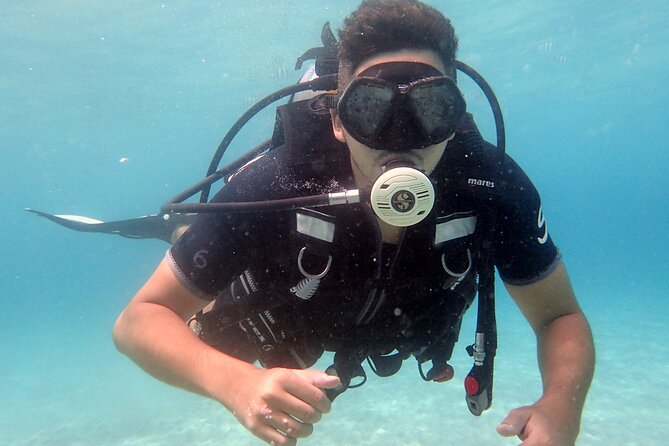
Three days can open a new world. This Koh Tao course combines classroom study, pool-style practice, and four open-water sessions around Nang Yuan Island, giving beginners a clear path toward a PADI Open Water Diver certificate. I like that the course includes scuba equipment and a logbook, so you do not need to arrange the main gear or start tracking your progress separately.
I also like the small maximum group size of 10 and the convenient Mae Haad location, which is within easy walking distance of the pier. Instructor Dominik Maier is praised for balancing humor with firm instruction, a useful mix when a new student feels nervous underwater. The main consideration is time: this is an intensive three-day course, with study, quizzes, early starts, boat trips, and four practical sessions packed into a short schedule.
In This Review
- Key points before you book
- Why this three-day course works for beginners
- Day one: study, equipment, and shallow-water practice
- Day two: two sessions to 12 meters
- Day three: the final exam and 18-meter sessions
- What the $375.70 price includes
- Meeting point, timing, and daily planning
- Who should choose this Koh Tao course?
- The practical drawbacks to weigh
- Booking, cancellation, and final advice
- FAQ
- How long is the PADI Open Water course?
- Where does the course begin?
- Where does the course end?
- How much does the course cost?
- How many open-water sessions are included?
- What are the maximum depths?
- Is scuba equipment provided?
- Do I receive a certificate and logbook?
- What happens if bad weather cancels the course?
Key points before you book
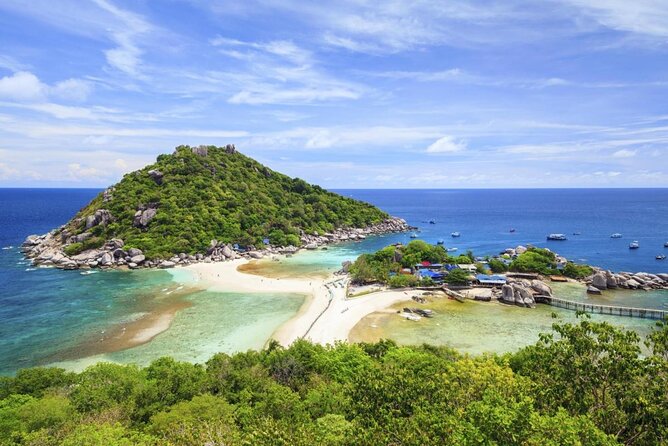
- Four sea sessions around Nang Yuan Island: You complete two sessions on the second day and two more on the third day.
- Certification at the end: The course finishes with a PADI Open Water Diver certificate for use around the world.
- Maximum of 10 people: A small group can make it easier to ask questions and receive attention.
- Study begins before the underwater work: Expect five manual chapters, five knowledge reviews, videos, quizzes, and a final written exam.
- Maximum depths increase gradually: The second-day sessions reach 12 meters, while the third-day sessions reach 18 meters.
- Walking-distance meeting point: Scuba Birds PADI Dive Center is at 24 Mae Haad, close to Koh Tao’s pier.
Why this three-day course works for beginners
A first scuba course can feel like a lot to absorb. You are learning equipment, breathing techniques, safety procedures, hand signals, buddy work, and basic underwater skills at the same time. This program breaks those tasks into classroom study, shallow-water practice, and then open-water sessions.
That progression matters. You do not begin with the deepest session or get pushed straight into the sea without preparation. The first day introduces the equipment and procedures in shallow water. The second day lets you repeat those skills at a maximum depth of 12 meters. The third day takes you as deep as 18 meters, followed by the certification steps.
I like this structure because repetition is more useful than rushing. You have a chance to make mistakes in a controlled setting, correct them, and try again before the final sessions.
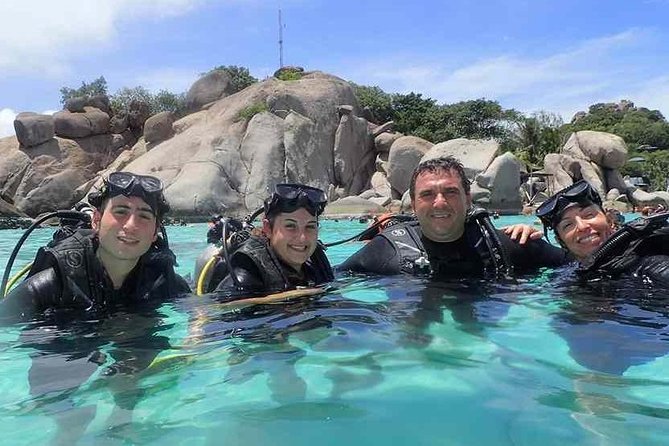
The course is offered through Scuba Birds PADI Dive Center, a PADI 5 Star IDC Diving Center. The maximum group size is 10, though the exact number in your group may be smaller. For a beginner, that limit is important. You will still need to pay attention and practice independently, but a smaller class usually makes it easier to get help with equipment and ask questions.
The tone also seems well suited to nervous beginners. Dominik Maier is described as funny when the mood allows it and serious when safety requires it. That balance can make a real difference. A good instructor should help you relax without treating safety rules casually.
More Diving Trips in Koh Samui
- Open Water Course – Become certified diver in 3 days
★ 5.0 · 1,137 reviews - Advanced Adventurer – 2 days ( Advanced Open Water)
★ 5.0 · 206 reviews - Basic Diver ( One Day Experience)
★ 5.0 · 205 reviews
Day one: study, equipment, and shallow-water practice
The first day begins with the academic side of the PADI course. You read five chapters of the Open Water Diver manual. Each section can be supported by five parts of the training video, followed by five knowledge reviews and additional quizzes.
This is not filler. The theory explains why you equalize your ears, how to respond to common equipment problems, and why underwater decisions need to be calm and deliberate. If you have never used scuba equipment, the classroom work gives meaning to what you will later practice in the water.
Set aside more mental energy than the two-hour classroom estimate might suggest. The course schedule lists about two hours at the dive center, but reading the five chapters and completing the associated work takes concentration. It may be possible to study at your own pace, but you should not treat the theory as something to skim while thinking about the beach.
The practical portion takes place around Nang Yuan Island. The first session is in shallow water and covers basic skills, assembling equipment, and buddy procedures. The description also refers to confined-water practice, which is a sensible first step for anyone who feels uneasy about breathing through a regulator.
Nang Yuan Island gives the course a scenic setting, but the real value on day one is not sightseeing. You are there to become comfortable with the equipment and learn the habits that will keep you safe. Expect to focus on tasks such as assembling your kit, checking your buddy’s equipment, and repeating basic underwater skills.
The first day is also where you can judge whether the course feels right for you. If you are anxious, tell the instructor early. The praise for Dominik’s calm but firm approach suggests that students receive reassurance, but you still need to speak up when something feels unclear.
Day two: two sessions to 12 meters
Day two returns to theory at Scuba Birds. You continue with the knowledge reviews and quizzes, reinforcing the material from the first day. This classroom time may seem less exciting than heading straight to the boat, but it helps connect the rules to the skills you have already practiced.
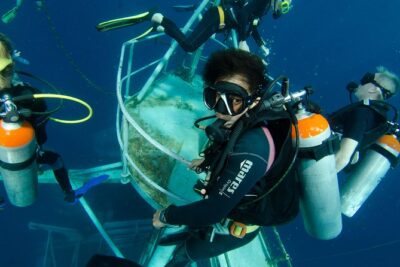
The two open-water sessions are scheduled from 10 a.m. to 3 p.m. Both reach a maximum depth of 12 meters. These are not simply scenic swims. You repeat skills in open water, where conditions feel different from a shallow practice area and where you must work with your buddy and equipment in a larger setting.
The gradual depth limit is a useful feature for a beginner course. Twelve meters is deep enough to feel like a genuine sea session, but it keeps the early open-water work within a controlled range. You should expect to repeat the basic procedures rather than spend every minute looking at marine life.
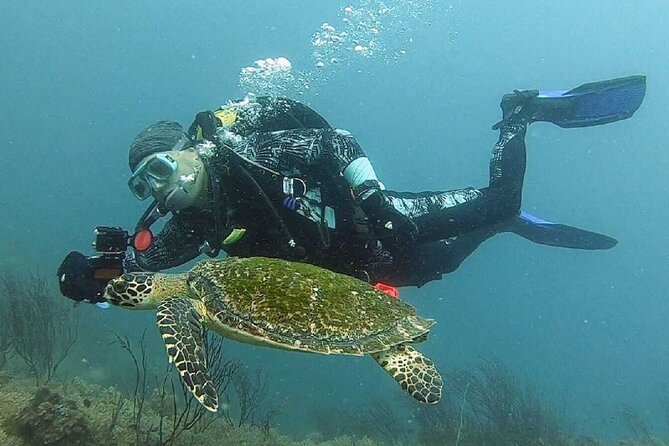
Nang Yuan Island is the main setting for the practical work. The area provides the backdrop of the Gulf of Thailand, coral, and marine life, but visibility and weather can affect what you see. The course requires good weather, so a rough sea can change the plan. If poor weather cancels the activity, you are offered another date or a full refund.
The five-hour block includes travel, preparation, equipment checks, the two sessions, and breaks. Plan your day around the course rather than trying to squeeze another major activity into the same window. You return to the Mae Haad meeting point at the end of the program, but the exact timing can vary with conditions.
Day three: the final exam and 18-meter sessions
The third day begins at 8 a.m. with the final theory work and written exam. This early start is one reason I would avoid booking the course immediately after a late night or a long transfer. You need to arrive rested and ready to concentrate.
The final two sea sessions are scheduled from 9 a.m. to 2 p.m. The maximum depth increases to 18 meters. By this point, you have already practiced the core skills in shallow water and at 12 meters, so the deeper sessions are intended to help you master those skills in open water.
A maximum depth is not a promise that every student will reach it. Your instructor decides what is suitable based on training progress, conditions, and comfort. That is a positive point, not a shortcoming. Certification should depend on safe performance, not on forcing a particular depth.
The day ends with certification procedures. Once you complete the required academic and practical work, the included PADI certificate lets you seek scuba opportunities around the world under the conditions set by your certification and future operators.
You also receive a logbook to take home. That small item has lasting value. It gives you a place to record your sessions and build a personal record as you gain experience. For a beginner, writing down the location, date, depth, and other details can make future training easier.
Something different for another day:
- Koh Samui: Pig Island & Koh Tan Snorkeling by Speed boat
★ 4.5 · 4,149 reviews - Koh Tao: Islands Snorkeling Highlights Day Tour & Lunch
★ 4.7 · 3,742 reviews - Koh Samui: Mu Ko Ang Thong Park Cruise with Kayaking Option
★ 4.3 · 3,728 reviews - Koh Samui: Half-Day Island Highlights Tour with Hotel Pickup
★ 4.6 · 3,556 reviews
What the $375.70 price includes
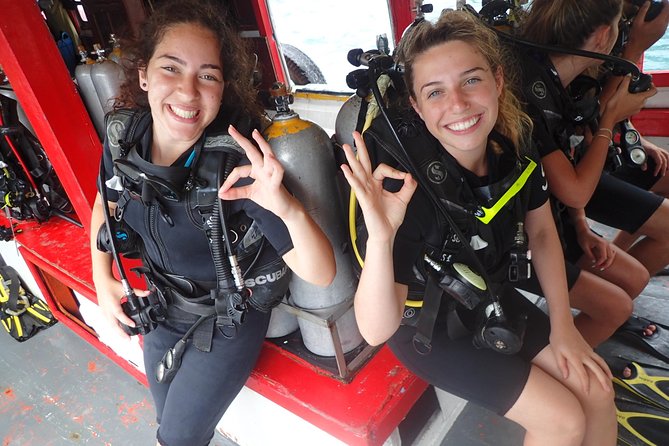
At $375.70 per person, this is not a cheap island activity. It is a three-day professional certification course, so comparing it with a single sightseeing boat trip would be misleading.
The value comes from the package. You receive instruction, theory work, practical training, provided scuba equipment, four open-water sessions, the PADI certificate, and a logbook. You also avoid the time and expense of arranging separate equipment rental for the course.
The price makes the most sense if you already want a recognized beginner certification. If you only want to try scuba once, a shorter introductory session may be a better fit, though that alternative is not part of this experience. Here, you are paying for a qualification and structured training, not just an hour underwater.
The included equipment also matters. Beginners often do not own a mask, regulator, buoyancy device, tank, or other scuba gear. Having the main equipment supplied removes a major barrier, although you should confirm any personal requirements with the center before arrival because the supplied information does not list every item included.
The group limit of 10 adds value as well. A large class can make instruction feel hurried. A capped group gives the instructor a better chance to monitor skills and answer questions, though the exact instructor-to-student ratio is not stated.
Meeting point, timing, and daily planning
The course starts and ends at Scuba Birds PADI Dive Center, 24 Mae Haad, 21, Tambon Ko Tao, Amphoe Ko Pha-ngan, Surat Thani 84280, Thailand. The center is within easy walking distance of the pier and near public transportation, which is helpful if you arrive on Koh Tao by boat.
The listed start time is 9 a.m., but the daily program includes an 8 a.m. theory session on the third day and earlier practical timings. Treat the daily schedule as more important than the general start-time label. Confirm the exact meeting time for your booking so you do not arrive late.
A sensible plan looks like this:
- Keep day one open for classroom work and shallow-water training.
- Keep day two open from roughly 10 a.m. to 3 p.m. for the two sea sessions.
- Keep day three open from 8 a.m. to 2 p.m. for the exam, two sessions, and certification.
- Avoid scheduling ferries, flights, or major excursions immediately after the final session.
The course lasts about three days, but the mental workload is spread across the full period. You should be prepared to study between sessions and follow the instructor’s schedule rather than expecting a relaxed beach holiday.
Who should choose this Koh Tao course?
This course suits you if you are a beginner who wants a full PADI qualification rather than a one-time introduction. It is also a good match if you like learning by doing, since the program moves quickly from reading and quizzes to equipment practice and four sea sessions.
It may suit nervous first-timers particularly well if you value patient instruction and a small group. The mention of Dominik Maier’s ability to calm students while remaining firm about safety is encouraging, especially for anyone who worries about breathing underwater.
You should think twice if you have only one free day on Koh Tao. Three days are required, and the course cannot be compressed simply because you have other plans. You should also be comfortable with the academic side. Five manual chapters, five knowledge reviews, quizzes, and a final written exam are part of the process.
The course is not described as private or one-to-one, so do not book expecting personal instruction throughout the day. The maximum is 10 people. That is reasonably small, but it remains a group course.
The practical drawbacks to weigh
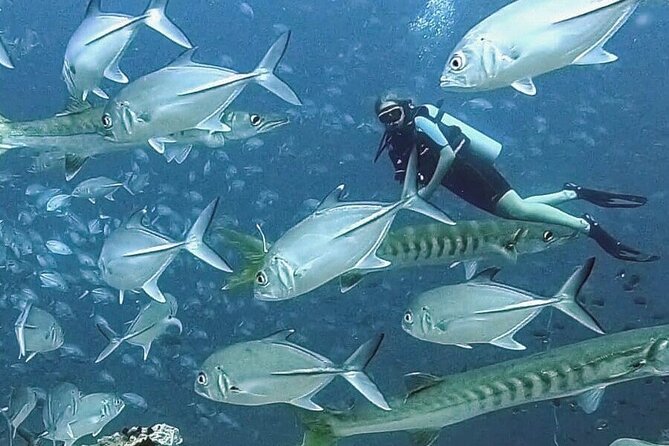
The biggest drawback is the packed schedule. You study, practice, repeat skills, take an exam, and complete four sea sessions in three days. That is efficient, but it leaves little room for a slow holiday rhythm.
Weather is another factor. The activity requires good conditions, and sea plans can change when weather is poor. You receive the option of another date or a full refund if the provider cancels for that reason, but a weather delay can still affect your wider Koh Tao plans.
The schedule also includes several long blocks. Day one and day two each list about five hours for the island portion, while day three lists four hours. Add classroom time, preparation, and travel, and you have full days.
Finally, marine life and coral are part of the setting, but no exact species, reef, or guaranteed sightings are given. Book this for the training and certification first. Treat underwater wildlife as an added benefit, not a promise.
Booking, cancellation, and final advice
Confirmation is provided when you book, and free cancellation is available until at least 24 hours before the scheduled start. Changes or cancellations inside that 24-hour window are not accepted for a refund. The cut-off follows local time in Thailand.
I would book this course if you can spare three full days on Koh Tao and genuinely want a PADI qualification. The included equipment, logbook, four practical sessions, and small maximum group make the $375.70 price easier to justify than a simple recreational boat outing.
I would skip it if your itinerary is tight, you dislike classroom study, or you only want a quick first taste of scuba. For the right beginner, though, this is a focused way to learn in the Gulf of Thailand, with a clear progression from theory to certification.
FAQ
How long is the PADI Open Water course?
The course lasts approximately three days.
Where does the course begin?
It begins at Scuba Birds PADI Dive Center, 24 Mae Haad, 21, Tambon Ko Tao, Amphoe Ko Pha-ngan, Surat Thani 84280, Thailand.
Where does the course end?
The activity ends back at the Scuba Birds meeting point.
How much does the course cost?
The listed price is $375.70 per person.
How many open-water sessions are included?
Four open-water sessions are included. There are two on day two and two on day three.
What are the maximum depths?
The two day-two sessions have a maximum depth of 12 meters. The two day-three sessions have a maximum depth of 18 meters.
Is scuba equipment provided?
Yes. The course includes provided scuba equipment for the open-water sessions.
Do I receive a certificate and logbook?
Yes. You receive an included PADI diver certificate after completing the course and a logbook to take home.
What happens if bad weather cancels the course?
You are offered another date or a full refund if the activity is canceled because of poor weather.
Just added around Koh Samui
- MuayThai Advanced class★ 5.0 · 17 reviews
- X Quad Beginner Waterfall ATV Tour (1 Driver)★ 5.0 · 17 reviews
- Koh Tao & Koh Nangyuan Snorkeling Trip By Speedboat From Koh Phangan★ 3.5 · 18 reviews
- Ko Tao: Morning Trip to Ko Nangyuan’s Serene Oasis by Oxygen★ 4.9 · 18 reviews
- 2 Hour ATV Jungle Tour In Koh Samui★ 4.5 · 19 reviews
- X Quad Beginner Waterfall ATV Tour (Driver+Passenger)★ 5.0 · 19 reviews
- From Koh Samui: Koh Tao & Koh Nang Yuan Snorkeling (by Speedboat)★ 4.0 · 20 reviews
- Zipline in Koh Samui Adventure activity tour★ 5.0 · 20 reviews
Scuba Diving, compared.
Open Water Course – Become certified diver in 3 days
Read our review →
Full-Day Beginner Scuba Course with Private Tuition, Racha Yai
Read our review →
Advanced Adventurer – 2 days ( Advanced Open Water)
Read our review →
Browse the lists this tour appears in