
Reviewed · TEMPLE TOURS
Chiang Mai City and Temples Half-Day Tour
Chiang Mai’s best introduction may begin on a mountain. This three-hour temple tour links Wat Phrathat Doi Suthep with two important city wats, giving you a quick look at northern Thailand’s religious traditions without spending a full day in a van. I especially like the air-conditioned pickup service and the chance to learn from guides with strong personal insight, including former novice monk experience. The main drawback is time: afternoon traffic can eat into your temple visits, and three hours leaves little room to linger.
I also like the thoughtful mix of places. You see one temple high above the city, one with white memorial chedi, and one famous for its damaged but powerful brick monument. Doi Suthep’s 306-step Naga staircase is the visual high point, though the climb, heat, dress rules, and busy conditions may be less appealing if you want a slow, quiet temple visit.
In This Review
- Key points to know before booking
- Why this short Chiang Mai tour works
- Wat Phrathat Doi Suthep and the 306-step climb
- Wat Suan Dok and its white memorial chedi
- Wat Phra That Chedi Luang in the old city
- What the guides add to the experience
- Timing, traffic, and the three-hour schedule
- Temple clothing and useful preparation
- Is $38.13 good value?
- Who should book this half-day outing?
- Should you book it?
- FAQ
- How long does the Chiang Mai City and Temples Half-Day Tour last?
- Which temples are included?
- Is hotel pickup included?
- Is the entrance fee included?
- What should I wear?
- Can I cancel for a full refund?
Key points to know before booking
- Doi Suthep takes the longest visit: Allow about 90 minutes for the mountain temple, stairs, shrine, and city views.
- The tour covers three different wats: Wat Suan Dok, Wat Phra That Chedi Luang, and Wat Phrathat Doi Suthep each offer a different setting and story.
- Former monk insight may be available: Guides such as Arrow and other former novice monks have added useful detail about Buddhist customs and daily temple life.
- Morning is the smarter choice: Afternoon traffic between the city and mountain can make the tour feel rushed.
- Pickup and air conditioning add real value: Hotel collection, transport, entrance fees, and return service are included.
- Modest clothing is essential: Cover shoulders and knees, and wear socks with sandals or flip-flops.
Why this short Chiang Mai tour works
Chiang Mai has 36 Buddhist wats, and choosing which ones to visit can be a nuisance when you have only a few days. This tour solves that problem with a compact route covering two city temples and the famous mountain shrine at Doi Suthep.
At $38.13 per person, the price is reasonable for a three-hour guided outing. You are paying not only for entry to Doi Suthep, but also for hotel pickup and drop-off, an air-conditioned vehicle, a local guide, and the convenience of moving between sites without arranging separate taxis. That matters in Chiang Mai’s heat, especially when the route climbs into the hills.
The tour is best viewed as an introduction, not a full study of Chiang Mai’s temples. You will see the main features, hear the key stories, take photographs, and decide which places deserve a longer return visit. If you want hours of quiet observation at each wat, choose a private or full-day experience instead.
The group can include up to 20 people, although some departures are much smaller. One group had about six people, and another departure ended up with only one booking party. A smaller group makes questions and movement easier, but you should not assume every departure will feel private.
More City Tours in Chiang Mai
- Chiang Mai: 3 Hour Old City and Temples Guided Walking Tour
★ 4.6 · 1,568 reviews - Chiang Mai: Historic Temples and City Guided Walking Tour
★ 4.7 · 650 reviews - Chiang Rai Day Trip from Chiang Mai City with Golden Triangle
★ 4.5 · 531 reviews
Wat Phrathat Doi Suthep and the 306-step climb
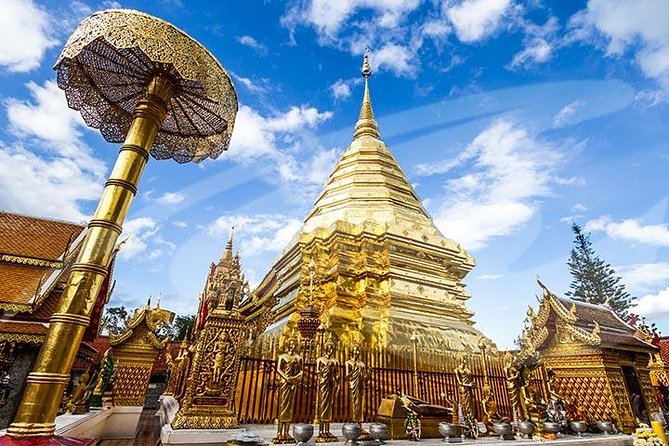
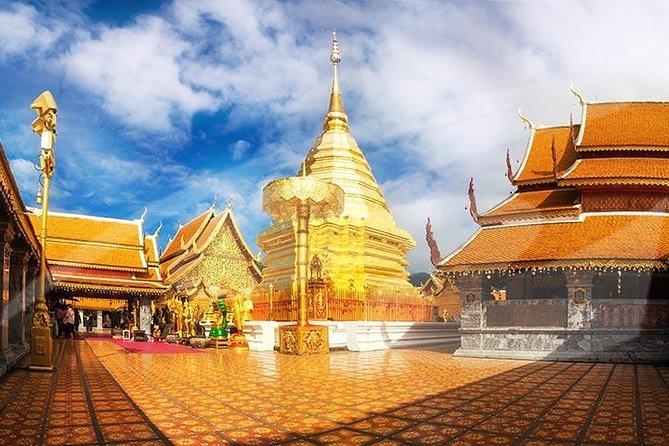
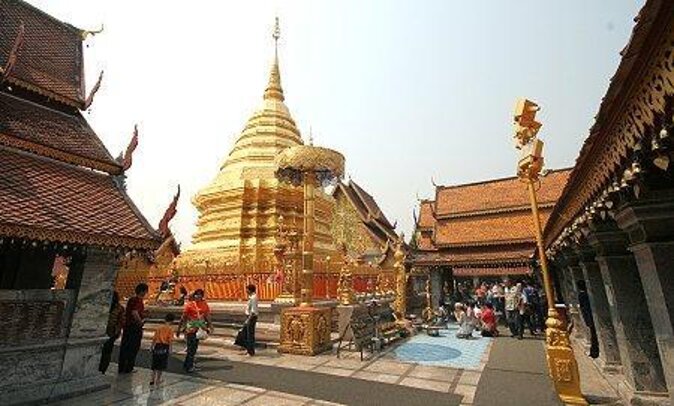
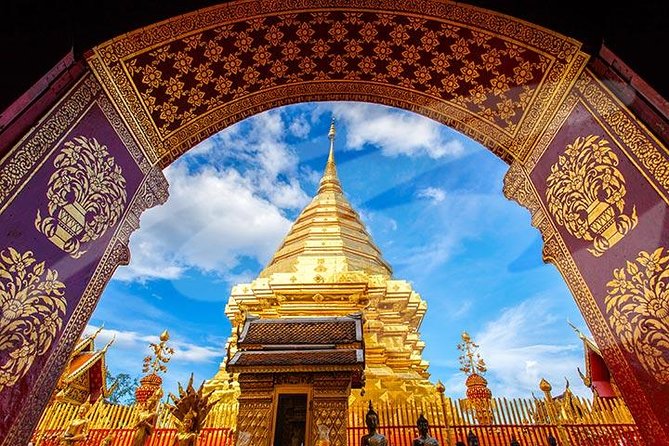
The tour usually gives Wat Phrathat Doi Suthep the largest block of time, about 90 minutes. That is sensible. The temple sits around 15 kilometers from central Chiang Mai, at an elevation of about 1,050 meters on Doi Suthep, with the summit listed at roughly 1,615 meters.
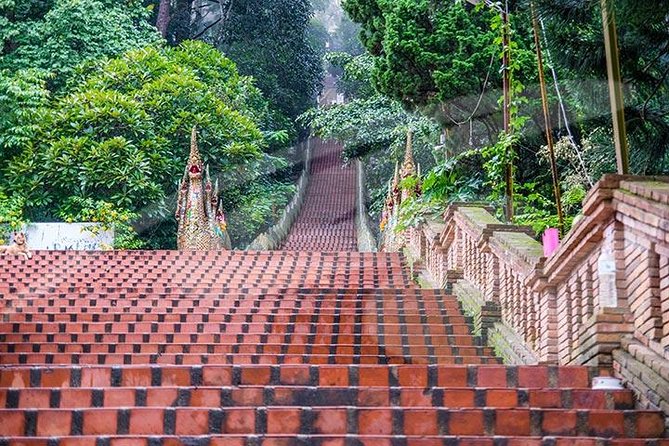
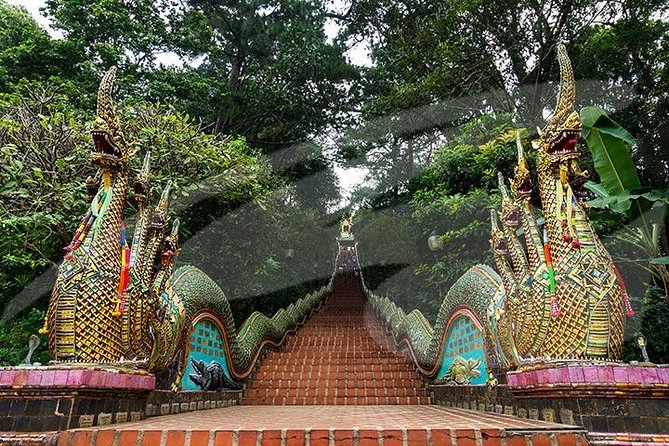
The approach is part of the experience. The final stairway has 306 steps, lined by the long body of a Naga, the mythical dragon-headed serpent found in Thai religious art. The staircase is photogenic before you even reach the main temple area, but it is also a real climb. The air-conditioned vehicle helps you save energy for the steps, though the heat can still be strong once you are outside.
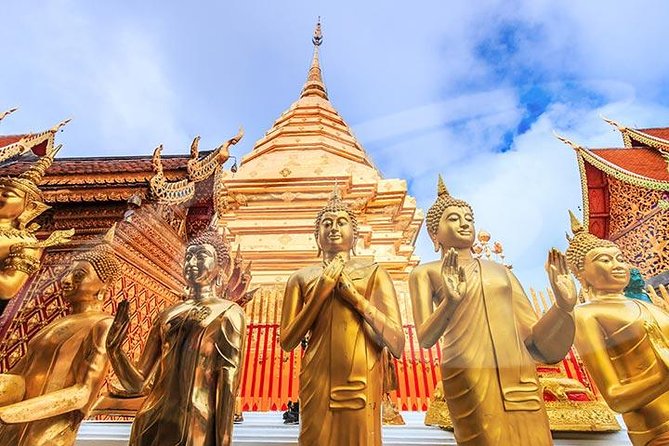
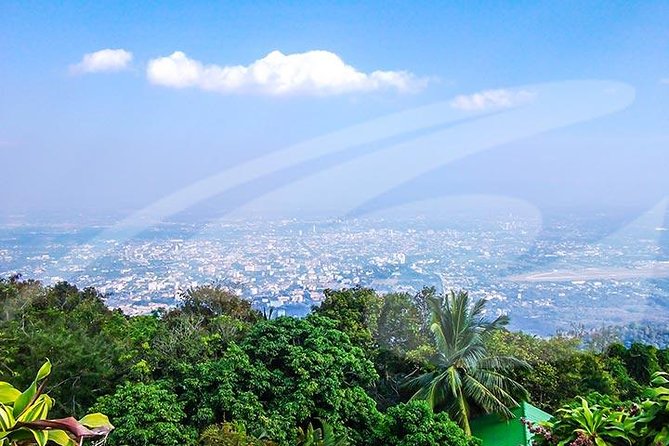
At the top, you can expect a major Buddhist shrine with ornate details, religious images, and broad views toward Chiang Mai. The city appears far below from the mountain, making this the tour’s clearest sense of place. You are not simply visiting another wat. You are seeing how Chiang Mai sits between its urban center and the forested hills around it.
Your guide can help explain what you are seeing, including Buddhist customs, temple behavior, and the daily routines of monks. Several guides have received particular praise for their English and personal background. Arrow was noted for patience and detailed explanations, while one guide who had trained as a novice monk offered extra insight into spiritual life and temple practice. Guides named Van, Peo, Pien, Owen, Games, Frankie, and Khun Oom have also been singled out for friendly, clear presentations.
The schedule gives you time to wander and take pictures after the explanation. That balance is important. A temple tour can become a string of lectures if you never get a moment to look around, but this outing generally allows some independent time at each stop.
There are two things to plan for here. First, Doi Suthep is a popular place, so it may not feel peaceful at busy times. Second, the climb may be uncomfortable for anyone with limited mobility or a low tolerance for heat. The supplied information says most people can participate, but it does not promise a lift, alternate route, or special assistance. Ask the operator directly if the staircase is a concern.
And yes, the ice cream near the top sounds like a useful reward after the stairs. It is a small detail, but a practical one.
Wat Suan Dok and its white memorial chedi
Wat Suan Dok receives about 30 minutes, and this is the briefest stop. The temple is west of Chiang Mai’s old city and is known for its collection of small white memorial chedi connected with the former royal family of Chiang Mai.
The white structures give the site a different mood from the towering brick monument at Chedi Luang and the mountain shrine at Doi Suthep. Their pale forms photograph well, particularly as a group, and your guide can explain their connection to Chiang Mai’s royal past and Buddhist tradition.
Thirty minutes is enough for an introduction and photographs, but not for a slow visit. If you enjoy architectural detail, you may find yourself wanting more time here. That is one of the trade-offs built into a half-day route: you gain variety, but every stop has a firm clock.
This visit also shows why the guide adds value. A cluster of white chedi can look beautiful without being easy to understand. A clear explanation helps you see that the site is not merely decorative. It connects remembrance, family, status, and religious practice.
The tour does not promise a broad city sightseeing circuit beyond the temples. One useful criticism of the format is that it focuses almost entirely on wats. If you hoped for markets, neighborhood streets, civic buildings, or a wider look at Chiang Mai, you will need to arrange those separately.
Wat Phra That Chedi Luang in the old city
The final listed stop is Wat Phra That Chedi Luang, with about 45 minutes. The central structure was first built in 1411 and once rose more than 85 meters above Chiang Mai. An earthquake in 1545 damaged it, and the chedi now reaches about 60 meters.
That damage is part of its character. Instead of a perfectly restored monument, you see a massive historic structure marked by time and disaster. The scale still impresses, especially when you consider how high it once stood over the city.
The temple complex also contains the city pillar, an important civic and religious feature. Your guide’s explanation can help connect the monument to Chiang Mai’s identity rather than treating it as just another old building.
Inside the temple, you may see guardian spirit statues said to protect the site. This is a good example of how northern Thai religious life combines formal Buddhist practice with older local beliefs. The tour’s strongest guides explain those layers in plain language, helping you understand why particular images, pillars, and rituals matter.
Forty-five minutes is a useful amount of time for the main chedi, the city pillar, and some photographs. You will probably not inspect every corner of the complex. Still, the stop works well as the city counterpart to Doi Suthep: one monument rises above Chiang Mai on a mountain, while Chedi Luang anchors the historic center.
More Temple Tours in Chiang Mai
- Chiang Mai: Chiang Rai Temples, Karen Tribe and Hot Springs
★ 4.7 · 5,401 reviews - Chiang Rai White Temple and Blue Temple Day Tour
★ 4.6 · 3,366 reviews - Chiang Mai: White, Red/Black & Blue Temples Tour with Lunch
★ 4.2 · 2,017 reviews - Chiang Mai: Doi Suthep and Wat Umong Enchanting Evening Tour
★ 4.6 · 1,811 reviews
What the guides add to the experience
The guide is the most important variable on this tour. The temples are worth seeing on their own, but a good explanation turns a pleasant sightseeing trip into a cultural lesson.
The strongest feedback centers on guides who explain more than dates and names. You can expect discussion of temple customs, Buddhist beliefs, Thai culture, local history, and the routines of monks. A former monk or novice monk can offer a personal connection to the subject that a standard script cannot match.
English ability appears generally strong, with repeated praise for clear and friendly communication. Van was praised for explaining history, culture, and religion. Peo was described as engaging and warm, while Pien helped make Buddhism and Thai culture accessible. Arrow was especially valued for patience and detail.
The experience is not perfect for everyone. One guide was described as young and less polished, and an accent made some explanations difficult to follow. That is a fair caution. Guide quality can vary, and a good temple route cannot fully compensate if you miss the spoken information.
Your best approach is to stay close during the explanations, ask questions when something is unclear, and then use the free time for your own photographs. The tour works best when you treat the guide as an interpreter of the place, not simply as someone who walks you from one building to the next.
Timing, traffic, and the three-hour schedule
The tour itself lasts about three hours, but pickup begins roughly 30 to 60 minutes before the start time. The exact pickup period depends on your hotel and route, so do not schedule a tight appointment immediately afterward.
Morning departures deserve serious consideration. One afternoon outing spent a good deal of time sitting in traffic between stops. Chiang Mai traffic can turn a short drive into lost temple time, especially when the route includes the road up Doi Suthep.
A morning tour also gives you more flexibility later. You can use the afternoon for lunch, a market, a massage, or a longer independent visit to whichever temple impressed you most. This is one reason the format suits people with limited time, families, and anyone who wants to keep the evening open for dinner.
The schedule is efficient, but not leisurely. You should expect the guide to keep the group moving so all three temples fit into the morning or afternoon. That can feel brisk if you like to sit quietly, study murals, or wait for ideal photographs.
The vehicle is a practical advantage. Chiang Mai’s heat makes walking between distant sites tiring, and the air conditioning offers a break between stops. It also avoids the hassle of negotiating separate rides to a mountain temple outside the central city.
Temple clothing and useful preparation
Dress properly before pickup. Men need long pants and a shirt with sleeves, and sleeveless tops are not acceptable. Women should cover their shoulders and avoid see-through clothing. If you wear sandals or flip-flops, bring socks because bare feet are not allowed with that footwear.
The guidance also recommends avoiding bright colors. At minimum, choose modest, comfortable clothing that covers your knees and shoulders. This is not just a formality. Appropriate dress shows respect and prevents you from being turned away at the entrance.
Wear shoes suitable for 306 steps. Bring water, sun protection, and a phone or camera for the views and architecture. The information provided does not list drinks or meals as inclusions, so plan to buy anything you need separately.
October can be very hot, according to one account, and Chiang Mai’s warmth is worth taking seriously in any season. The air-conditioned van helps, but the temple areas are outdoors and the Doi Suthep climb is exposed to the weather.
Is $38.13 good value?
For $38.13, I consider this good value if you want an organized introduction to Chiang Mai. The fee includes hotel pickup and drop-off, air-conditioned transport, a local guide, and the entrance fee at Doi Suthep. You also avoid the time and uncertainty of arranging a mountain ride on your own.
The value improves if you are staying in central Chiang Mai and have only a few days. You get three distinct wats, historical context, photographs, and a city view in about half a day. A guide can also explain details you might otherwise miss, especially at Chedi Luang and Wat Suan Dok.
The value is weaker if you prefer to travel slowly or already know the temples well. You may want more time at each site, and the group schedule limits how long you can stay. The tour also does not include a wider city tour, food, or a full-day cultural program.
Demand appears steady, with bookings made an average of 35 days ahead. That does not mean you must reserve that early, but it suggests you should not leave this popular short tour until the last minute during a busy visit.
Who should book this half-day outing?
I would choose this tour if you are visiting Chiang Mai for the first time, want the main temple sights explained, and value easy transport. It is also a sensible option for families or people who want cultural sightseeing without committing an entire day.
It suits photographers who want varied settings: mountain views, a Naga staircase, white memorial chedi, and a huge damaged brick monument. You get enough free time for pictures, though serious photographers may want to return independently.
I would hesitate if you dislike group schedules, struggle with stairs, or want a quiet spiritual visit. In that case, a private tour or self-guided morning at one or two wats may fit better. Also think twice about an afternoon departure if you have a fixed evening plan.
Confirmation is provided at booking, but minimum numbers apply. The operator can cancel after confirmation if too few people book, offering an alternative or full refund. Free cancellation is available up to 24 hours before the start time, while later cancellations and changes are not accepted.
Should you book it?
Book it if you want a well-priced first look at Chiang Mai’s temples with transport, a guide, and a major mountain viewpoint handled for you. The best part is the contrast between Doi Suthep above the city and the older monuments within it.
Choose a morning departure when possible, dress modestly, bring socks with sandals, and allow extra time around the pickup window. If you remember that this is a brisk introduction rather than a slow temple retreat, the three-hour format makes good sense.
FAQ
How long does the Chiang Mai City and Temples Half-Day Tour last?
The tour lasts approximately three hours. Hotel pickup usually begins about 30 to 60 minutes before the tour start time.
Which temples are included?
The route includes Wat Phrathat Doi Suthep, Wat Suan Dok, and Wat Phra That Chedi Luang.
Is hotel pickup included?
Yes. Pickup and drop-off are included for hotels in central Chiang Mai.
Is the entrance fee included?
The entrance fee for Wat Phrathat Doi Suthep is included. The listed admission for Wat Suan Dok and Wat Phra That Chedi Luang is free.
What should I wear?
Men should wear long pants and shirts with sleeves. Women should wear modest clothing that covers the shoulders and is not see-through. If you wear sandals or flip-flops, you must wear socks.
Can I cancel for a full refund?
Yes, if you cancel at least 24 hours before the experience start time. Cancellations or changes made less than 24 hours beforehand are not refunded or accepted.
Just added around Chiang Mai
- Chiang Mai: Chiang Rai White, Blue & Black Temples Day Tour★ 4.2 · 16 reviews
- Chiang Mai Adventure ATV Secret Waterfall and Bamboo Rafting★ 5.0 · 16 reviews
- Inthanon Small-Group with Kew Mae Pan Trail from Chiang Mai include Lunch★ 4.5 · 16 reviews
- 2-Day Best of Chiang Rai from Chiang Mai Private Package★ 4.5 · 16 reviews
- Private-Tour Doi Suthep Temple and Khun Chang Kien Village Half-Day★ 4.5 · 16 reviews
- Doi Inthanon Discovery Tour: Waterfalls, Villages & Highest Peak★ 3.5 · 16 reviews
- Chiang Mai Iconic Temples and City Tour★ 4.5 · 17 reviews
- Fantastic! Famous Doi Inthanon National park tour with 2hr trekking★ 4.5 · 17 reviews
Temple Tours, compared.
Chiang Rai Temples, Karen Tribe and Hot Springs
Read our review →
City Highlights Temple and Market Walking Tour
Read our review →
Bangkok by Night: Temples, Markets and Food Tuk-Tuk Tour
Read our review →
Grand Palace, Wat Pho, and Wat Arun Guided Tour
Read our review →
Tiger Cave Temple, Emerald Pool and Hot Springs Tour
Read our review →

Chiang Rai White Temple and Blue Temple Day Tour
Read our review →Browse the lists this tour appears in