Reviewed · CHIANG MAI TOURS
Chiang Mai: Thai Buffalo and Rice Planting Experience
Rice fields are better when your feet get muddy. This 150-minute farm visit gives you a close look at rural life near Chiang Mai, with hands-on work instead of a quick photo stop. I like the chance to cut grass with a sickle and feed Riam, the Thai buffalo, and I also like that rice planting is explained through actual work in the field. The meal of green chicken curry, herbal drink, and mango sticky rice adds a welcome local finish.
The main consideration is price. At $57 per person, this is not a cheap farm visit, especially since pickup and drop-off are provided from the activity meeting point rather than clearly promised from every hotel. Still, the small group size, farm clothing, boots, instruction, transport by red taxi, lunch, and practical teaching make the cost easier to justify for families and curious food-and-culture travelers.
In This Review
- Key points at a glance
- What this Chiang Mai farm experience is really like
- Riding the red taxi to Hang Tueng farm
- Meeting Riam, the Thai buffalo
- From rice nursery to muddy paddy
- What you eat after the fieldwork
- Why the small group size helps
- Cost, timing, and overall value
- Who should book this farm visit
- Practical tips for a smoother visit
- Should you book the Chiang Mai buffalo and rice experience?
- FAQ
- Where does the experience meet?
- How long does the experience last?
- Is transportation included?
- What languages are available?
- What food is included?
- Can I cancel for a refund?
Key points at a glance
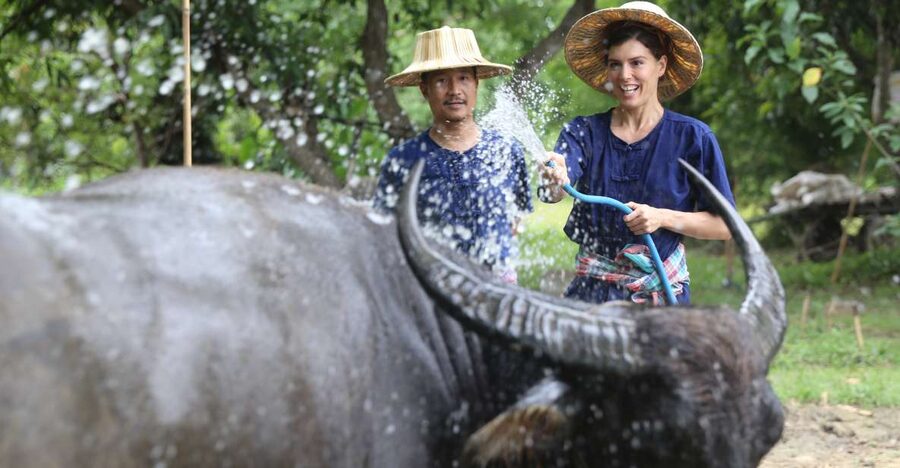
- Feed Riam the Thai buffalo: Cut and gather grass, offer food, and help cool the animal with water.
- Plant rice the traditional way: Uproot seedlings from a nursery, clean mud from the roots, and work barefoot in the paddy.
- A working educational farm: Hang Tueng farm functions as a farmstay and workshop, not just a staged animal encounter.
- Small groups matter: The experience is limited to 10 people, allowing time for questions and personal instruction.
- Lunch is part of the lesson: Green chicken curry, rice, an herbal drink, and mango sticky rice complete the visit.
- Plan for mud: Farm clothes and boots are supplied, but bring sandals for the rinse afterward and wear clothing that is easy to change.
What this Chiang Mai farm experience is really like
Hang Tueng farm lies in Chiang Mai Province, about 20 minutes by car from the historic center according to the activity details. You meet at Hang Tueng farmstay and workshop, then travel out to the traditional farm area in a red taxi, the familiar local pickup truck used for short group rides.
This is not a sightseeing circuit with a string of unrelated stops. The experience follows the basic rhythm of farm work: prepare food for the buffalo, learn how rice seedlings are handled, step into the paddy, and sit down for a meal. That simple order gives the visit a clear purpose.
I like this kind of activity because it explains work that is easy to romanticize from a road or hotel window. Rice planting is not only a pretty green-field scene. It involves nursery seedlings, hand tools, mud, water, and repetitive physical effort. You get a small but useful sense of that process here.
The farm also serves as an educational center. That makes the visit especially useful for children, since the explanations connect animals, tools, crops, and food in one place. The amount of fieldwork is limited enough that younger children can take part without being worn out.
Other Chiang Mai trips people book alongside this one:
- Half-Day Thai Cooking Class at Organic Farm in Chiang Mai
★ 5.0 · 19,087 reviews - Chiang Mai: Elephant Sanctuary, Waterfall & Bamboo Rafting
★ 4.9 · 9,160 reviews - Chiang Mai: Doi Inthanon National Park Eco-Friendly Tour
★ 4.6 · 6,667 reviews
Riding the red taxi to Hang Tueng farm
The included transport takes you to and from the farm, using the local red taxi service. Your stated meeting point is Hang Tueng farmstay and workshop in Chiang Mai, so check the exact pickup arrangement when booking. One important detail: the supplied information confirms pickup and drop-off, but a hotel pickup is not clearly included for every address.
The ride is part of the transition from city sightseeing to country work. You leave the old center behind and reach a farm setting where buffalo, rice work, and traditional tools become the focus. The drive is described as roughly 20 minutes from the historic center, though your actual time depends on traffic and your starting point.
The experience has a listed duration of 150 minutes. One schedule description also refers to a three-hour visit, so allow some flexibility rather than arranging a tight connection immediately afterward. Farm activities can run a little long when children need help changing or when the group has questions.
The group is limited to 10 participants, with instruction in English and Thai. That is a useful size for hands-on work. You are less likely to wait long for a turn with the animals or the tools, and the guide can adjust explanations for adults and children.
Meeting Riam, the Thai buffalo
The buffalo portion begins with the food. You learn how to harvest grass with a sickle, gather it, and prepare it for Riam, the farm’s Thai buffalo. This is more engaging than simply standing beside an animal while someone else feeds it.
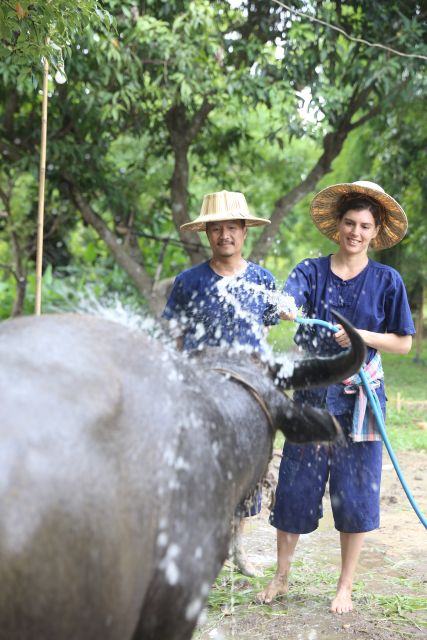
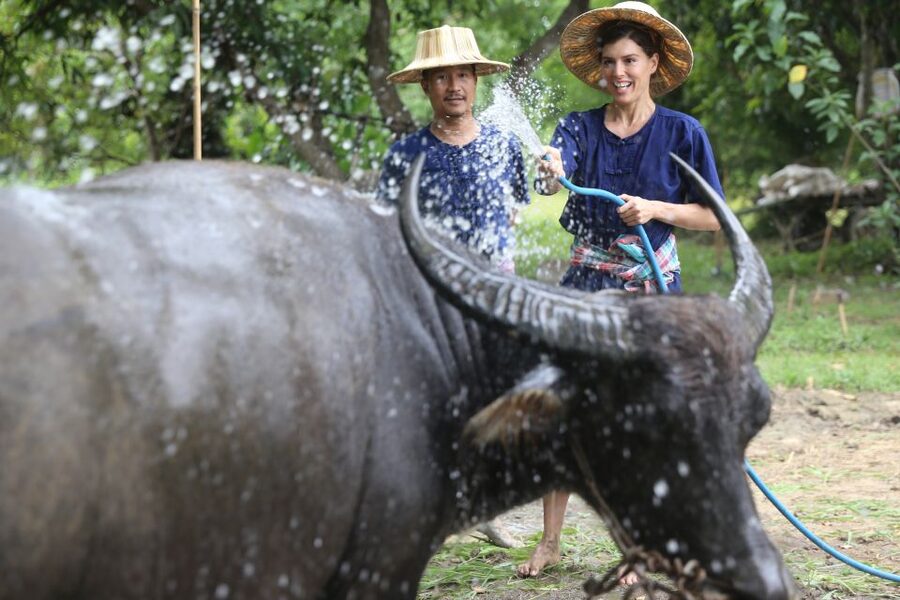
The activity also explains how to care for buffalo and what they eat. In addition to grass, the buffalo may eat fruit. You can offer food directly, then help pour water over the animal. The water is a particularly memorable part because the buffalo may lie down and appear to enjoy the cooling bath.
I appreciate the calm pace here. You are not being pushed through an animal photo opportunity. The point is to understand the daily connection between the farm family, the buffalo, and the work of growing food. A guide is present to explain what to do, which matters when you are handling a large animal.
For children, this is likely the strongest part of the morning. Cutting grass, collecting it, feeding the buffalo, and giving it water provide several small tasks, so children do not need to stand still for a long lecture. Adults get a better sense of why buffalo have traditionally been important to rice farming.
You should still follow the guide closely. The information provided does not promise a particular amount of direct contact, so think of this as supervised care and feeding rather than a petting zoo. The buffalo is a working farm animal, not a performance.
From rice nursery to muddy paddy
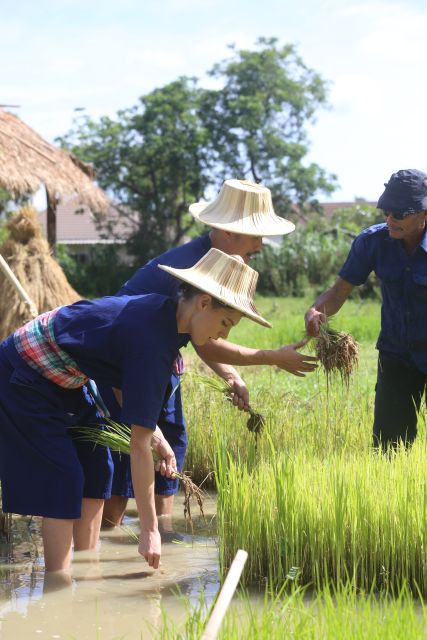
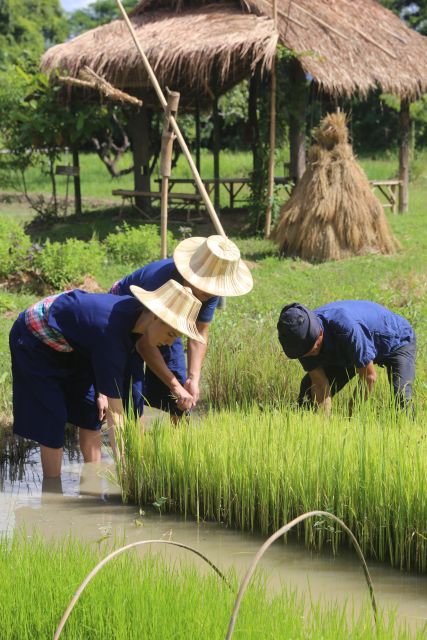
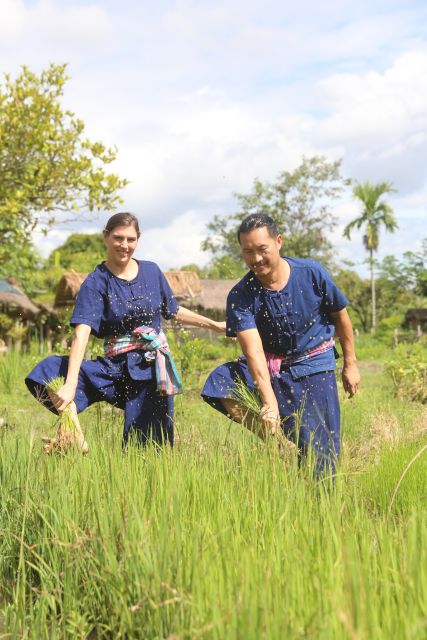
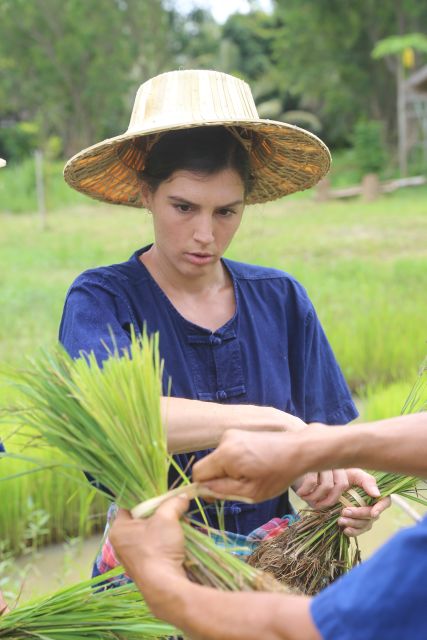
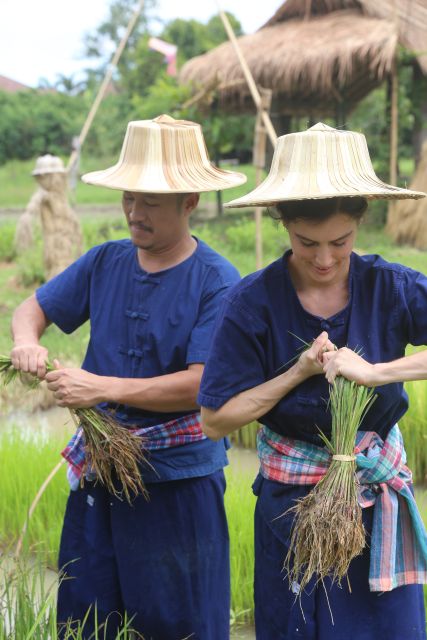
The rice lesson begins in the nursery, where you learn to uproot rice seedlings. These young plants are then prepared for planting. You also learn how to remove mud from their roots in the traditional way before placing them in the field.
This is where the visit becomes properly hands-on. You enter the rice paddy barefoot and plant seedlings in the mud. It is fun, but it is also a useful reminder that rice farming requires balance, patience, and repeated bending. The work period is short enough to remain enjoyable, including for small children.
The mud is part of the appeal, though it creates a little practical work at the end. Farm clothes and boots are provided, and you can change at the farm. In the paddy, however, you go barefoot. A shower is available for washing mud from your lower legs.
I would wear something easy to remove and put back on. Avoid clothing that becomes awkward when wet or muddy. Sandals are useful after the rinse, and the most practical arrival outfit is one you can change without fuss.
The farm supplies traditional farmer costumes and boots. That helps in two ways: you do not need to sacrifice your sightseeing clothes, and the clothing adds context to the activity. It also makes the experience more comfortable for people who did not plan to do farm work that day.
Do not expect a full lesson in every stage of Thailand’s rice industry in 150 minutes. You get a clear introduction to nursery seedlings, traditional tools, and planting technique. The value is in trying the work and asking questions, not in covering every farming region or rice variety.
Something different for another day:
- Chiang Mai: Elephant Sanctuary & Waterfall Group Tour
★ 4.9 · 5,780 reviews - Chiang Mai: Chiang Rai Temples, Karen Tribe and Hot Springs
★ 4.7 · 5,401 reviews - Chiang Mai: Cooking Class, Market & Thai Herbs Garden Tour
★ 4.9 · 4,824 reviews - Chiang Mai: Authentic Cooking Class with Market & Farm Visit
★ 4.9 · 4,546 reviews
What you eat after the fieldwork
Lunch is one of the best-planned parts of the visit. You sit down to rice with green chicken curry, a herbal drink, and mango sticky rice. The food gives the farm lesson a natural ending: you have just handled one of the country’s key crops, and now rice is on your plate.
The green curry has received especially strong praise, and it is easy to see why it would be welcome after time in the field. The herbal drink provides a lighter counterpoint, while mango sticky rice supplies a sweet finish.
If you are visiting with children, tell the farm about their food needs. A child-friendly fried rice meal has been prepared for at least one family, so the kitchen appears able to make a simple adjustment when arranged in advance. Do not assume every dietary request is covered unless you confirm it before arrival.
The meal is not a separate restaurant stop. It is part of the farm visit, which saves you from finding food afterward and keeps the experience focused. It also adds value to the $57 price, particularly for families who would otherwise pay separately for transport, a meal, and a short cultural activity.
Why the small group size helps
A maximum of 10 participants is a real advantage here. Farm work is easier to explain when the guide can see what each person is doing. You can ask about the buffalo, the rice cycle, or the tools without trying to catch a guide’s attention across a large crowd.
The visit may sometimes feel almost private. One January visit had only a single participating group, allowing plenty of time for detailed explanations about farm animals, buffalo care, rice planting, and traditional tools. You cannot count on having the farm to yourself, but the 10-person limit keeps the setting manageable.
The activity is guided in English and Thai. The guide’s role is important because the tasks alone would not explain why they matter. Good instruction turns cutting grass and moving seedlings into a lesson about rural routines, rather than a collection of muddy snapshots.
The pace is also well suited to mixed ages. Children can focus on the buffalo and planting, while adults can ask about the farming process. The work is enough to feel real, but not so extensive that the whole group must spend hours in the paddy.
Cost, timing, and overall value
At $57 per person, this sits in the paid-experience category rather than the casual farm visit category. You are paying for a small group, a guide, red taxi transport to and from the farm, clothing, boots, rice planting, buffalo care, and lunch.
That package has solid value if you want an activity with several parts. You are not only watching a demonstration. You cut grass, feed the buffalo, help bathe it, handle rice seedlings, plant in the mud, clean up, and eat a local meal.
The price may feel high if your main goal is simply to see a buffalo or take a few rice-field photographs. The activity becomes more worthwhile when you value instruction and participation. It is also a reasonable choice when you want a half-day plan that works for adults and children without arranging separate transport and meals.
One important price note comes from the transport setup. Pickup and drop-off are included, but the meeting point is Hang Tueng farmstay and workshop. A hotel transfer may not be included in the quoted amount, so factor in your own cost and time getting to the meeting point if needed.
Cancellation is flexible up to 24 hours before the activity for a full refund, and you can reserve now and pay later. Those terms help if your Chiang Mai schedule is still shifting. Starting times vary, so check availability for the day you want.
Who should book this farm visit
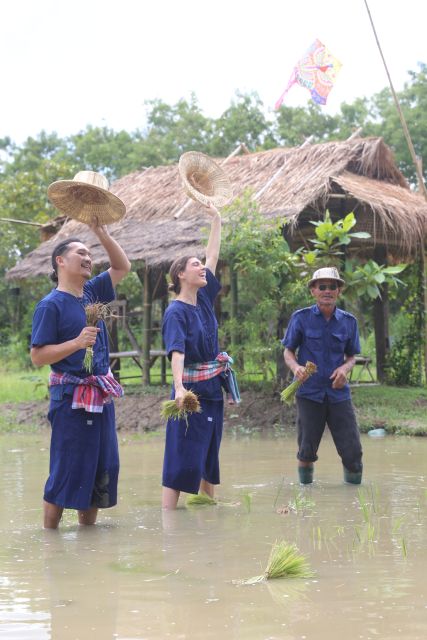
I would recommend this for families, first-time visitors who want local context, and adults who prefer a practical cultural activity to a staged show. Children receive clear, manageable tasks, and the buffalo feeding gives the morning an immediate focus.
It also suits anyone interested in food systems. You see rice in the nursery, plant it in the paddy, and eat it at lunch. That connection is simple but effective.
This may not suit you if you dislike mud, changing clothes, barefoot activities, or close contact with farm animals. The boots and supplied clothing reduce the mess, but they do not remove it. You will still need to wash your legs and deal with damp or dirty clothes.
The visit is also not ideal for someone seeking a long, demanding farming session. The activity is intentionally short, and the fieldwork is limited. That is a benefit for young children and a drawback for anyone hoping to spend a full day working in the rice fields.
Practical tips for a smoother visit
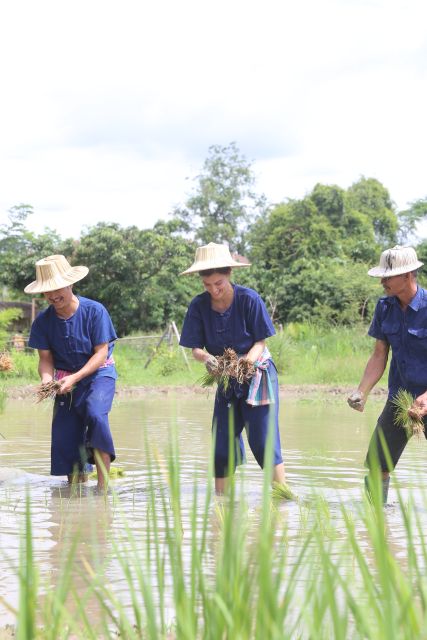
- Wear clothing that is easy to change out of and back into.
- Bring sandals for the shower and the walk after washing off.
- Expect to work barefoot in the rice paddy, even though boots are supplied for other parts of the farm.
- Allow extra time beyond the listed 150 minutes if you are traveling onward.
- Confirm how pickup works if you are staying outside the stated meeting point.
- If a child needs a simpler meal, ask about fried rice before the visit.
- Bring curiosity, not expensive footwear. Mud has no respect for either.
Should you book the Chiang Mai buffalo and rice experience?
Book it if you want a small, friendly, hands-on introduction to Thai farm life. The strongest reasons are the direct work with Riam the buffalo, the chance to plant rice in real mud, the careful explanations, and the included meal. Families get an activity that is educational without feeling like school.
Think twice if $57 feels high for a short outing, or if you want a quiet sightseeing stop with no changing or cleanup. The hotel transfer question also deserves attention before you pay.
For most people who enjoy food, animals, and practical cultural experiences, I think the package earns its price. You leave with more than a buffalo photograph. You have handled the grass, touched the seedlings, felt the paddy mud, and tasted rice as part of the same story.
FAQ
Where does the experience meet?
The meeting point is Hang Tueng farmstay and workshop Chiang Mai. You can search Google Maps for Hang Tueng farm stay and workshop Chiang Mai.
How long does the experience last?
The listed duration is 150 minutes. Another schedule detail describes the visit as three hours, so allow some flexibility in case the farm schedule takes longer.
Is transportation included?
Pickup and drop-off are included, with transport provided by local red taxi service. The meeting point is the farmstay and workshop, and hotel pickup is not clearly included for every location.
What languages are available?
Instruction is available in English and Thai.
What food is included?
Lunch includes rice with green chicken curry, a herbal drink, and mango sticky rice. Fried rice may be prepared for children when arranged with the farm.
Can I cancel for a refund?
You can cancel up to 24 hours in advance for a full refund. The activity also offers a reserve-now, pay-later option.
Just added around Chiang Mai
- Chiang Mai: Chiang Rai White, Blue & Black Temples Day Tour★ 4.2 · 16 reviews
- Chiang Mai Adventure ATV Secret Waterfall and Bamboo Rafting★ 5.0 · 16 reviews
- Inthanon Small-Group with Kew Mae Pan Trail from Chiang Mai include Lunch★ 4.5 · 16 reviews
- 2-Day Best of Chiang Rai from Chiang Mai Private Package★ 4.5 · 16 reviews
- Doi Inthanon Discovery Tour: Waterfalls, Villages & Highest Peak★ 3.5 · 16 reviews
- Private-Tour Doi Suthep Temple and Khun Chang Kien Village Half-Day★ 4.5 · 16 reviews
- Chiang Mai Iconic Temples and City Tour★ 4.5 · 17 reviews
- Fantastic! Famous Doi Inthanon National park tour with 2hr trekking★ 4.5 · 17 reviews
Chiang Mai Tours, compared.
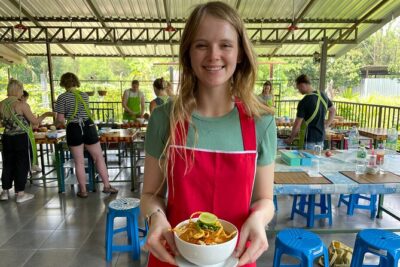
Half-Day Thai Cooking Class at Organic Farm in Chiang Mai
Read our review →
Elephant Sanctuary, Waterfall & Bamboo Rafting
Read our review →
Chiang Rai Temples, Karen Tribe and Hot Springs
Read our review →
Cooking Class, Market & Thai Herbs Garden Tour
Read our review →
Authentic Cooking Class with Market & Farm Visit
Read our review →