

Reviewed · GOLDEN TRIANGLE TOURS
Chiang Rai Guide: Popular 7places 3Colors ,Golden Triangle
See Chiang Rai’s big sights in one sweep. This full-day tour links the White Temple, Blue Temple, Black House, Karen village, tea plantation, Golden Triangle, and Opium Museum, making it a useful choice if your time in northern Thailand is short. The route runs roughly from 8 a.m. until 6:30 or 7 p.m.
I especially like the local Northern Thai guides, who add context instead of simply pointing at buildings. Guides named Mew, M, Fido, Gab, Bank, and Em have been praised for clear English, humor, careful timing, and help with photographs. I also like that the day allows real time at major stops rather than turning every visit into a rushed photo break.
The main catch is the long route and the extra entrance fees. The advertised price is $43 per person, but the White Temple, Black House, Karen village, and Opium Museum cost another 530 baht in total if you enter all four. One review also raised a concern about lunch, although the tour information says a Thai buffet is included, so I would confirm that detail before paying.
In This Review
- Six useful things to know before booking
- Why this route works for a first Chiang Rai visit
- White Temple: Chiang Rai’s dazzling opening act
- Blue Temple: A shorter stop with bold color
- Black House: An unexpected counterpoint
- The Karen village: A sensitive cultural stop
- Tea country: Green views and a quiet change of pace
- Golden Triangle: Three countries from one viewpoint
- Opium Museum: The context behind the border
- Guides, drivers, and the feel of the day
- Lunch, tickets, and the real cost
- Who should book this day trip?
- Should you book the Chiang Rai seven-place tour?
- FAQ
- How long does the tour last?
- What places does the tour visit?
- Are entrance fees included?
- Is lunch included?
- What type of transport is used?
- What should I wear?
- Can I skip an attraction?
- Is hotel pickup and drop-off included?
Six useful things to know before booking
- Seven major stops in one day: You visit Chiang Rai’s best-known art sites, a tea plantation, the Golden Triangle, and the Opium Museum.
- About 8 a.m. to 6:30 or 7 p.m.: This is a full day, with roughly an hour returning to Chiang Rai after the museum.
- Four attraction fees are extra: Budget 530 baht if you enter the White Temple, Black House, Karen village, and Opium Museum.
- A guide makes a real difference: Mew, M, Fido, Gab, Bank, and Em have all been praised for strong English, warmth, humor, and useful explanations.
- Transport depends on group size: You travel by nine-seat minibus, or by car if fewer than four people are booked that day.
- Dress for temple visits: Cover your shoulders and legs below the knees, and bring water-friendly patience for a long day on the road.
Why this route works for a first Chiang Rai visit
Chiang Rai rewards a slower visit, but many people have only one free day. This tour solves that problem by grouping the city’s art landmarks with the far northern border area. You get a quick education in modern Thai art, a glimpse of minority life, tea-growing scenery, and the political history of the Golden Triangle.
The route is ambitious. You will spend substantial time in the vehicle, especially on the way to and from the border. Still, the schedule appears carefully arranged. Several people found the day full but not frantic, with enough time at each stop to look around, listen to the guide, and take photographs.
I would choose this trip if I wanted an overview before deciding where to return independently. I would not choose it if I wanted long museum visits, quiet temple time, or a leisurely lunch.
More Golden Triangle trips:
- Chiang Rai: 7 Major Sites, Golden Triangle & Tea Plantation
★ 4.9 · 141 reviews - From Chiang Rai: Famous Temples and Golden Triangle Day Tour
★ 4.7 · 115 reviews - Chiang Rai: Northern Thailand Tour with Golden Triangle
★ 4.9 · 78 reviews
White Temple: Chiang Rai’s dazzling opening act
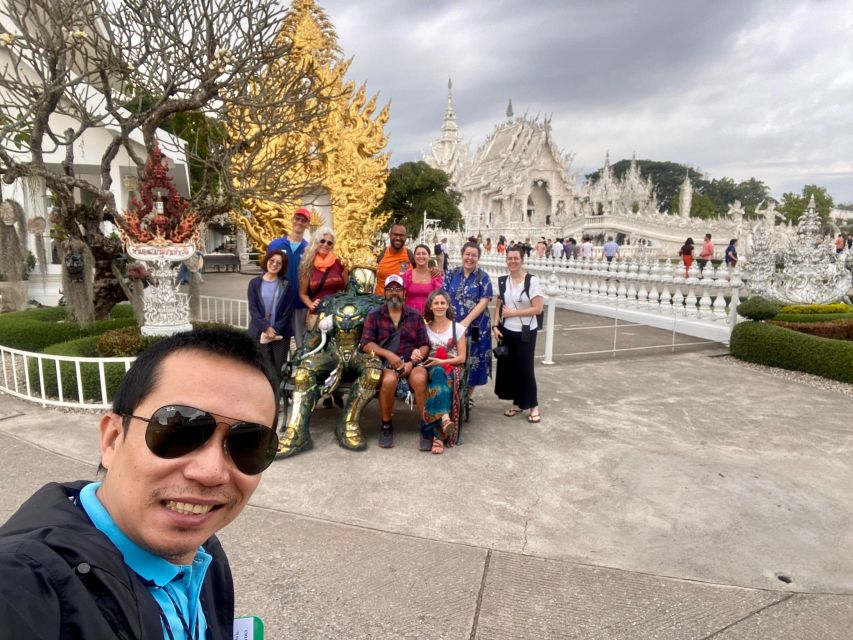
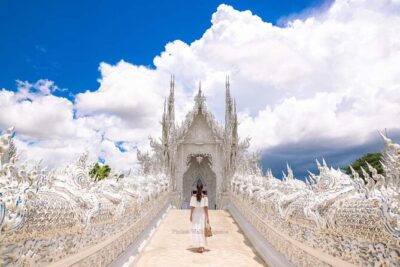
Wat Rong Khun, usually called the White Temple, is the first major stop and one of Thailand’s most striking modern religious buildings. Its white surfaces and detailed ornament create an almost icy appearance, but the symbolism is more complicated than a pretty photograph suggests.
The site was designed and built by a famous Thai artist, and the guide provides background that helps you read the building rather than simply admire it. Allow at least an hour after the explanation. That extra time matters because the temple grounds contain details that are easy to miss if you hurry.
Entry costs 100 baht and is not included in the tour price. You should wear clothing that covers your shoulders and reaches below your knees. This is a functioning religious site as well as an art attraction, so respectful dress is part of the experience, not just a rule to remember at the last minute.
The White Temple is also the stop most likely to feel crowded and heavily photographed. The guide’s explanation and the allotted time help, but you will still be sharing the space with other visitors.
Blue Temple: A shorter stop with bold color
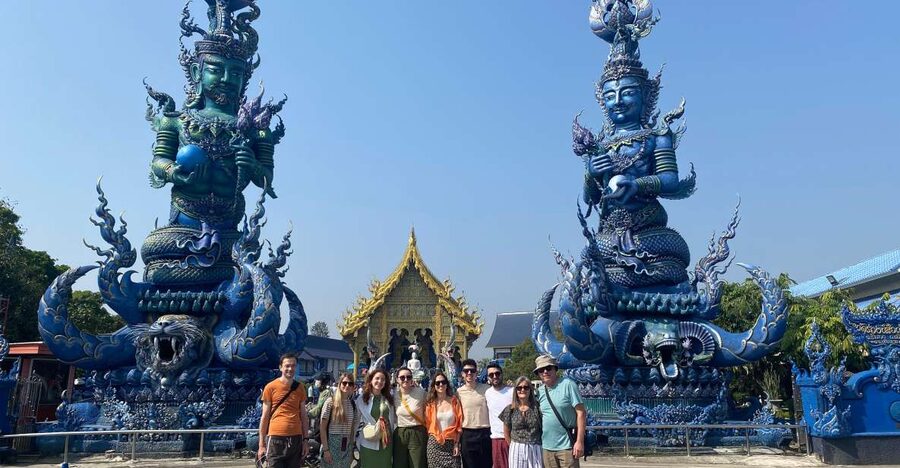
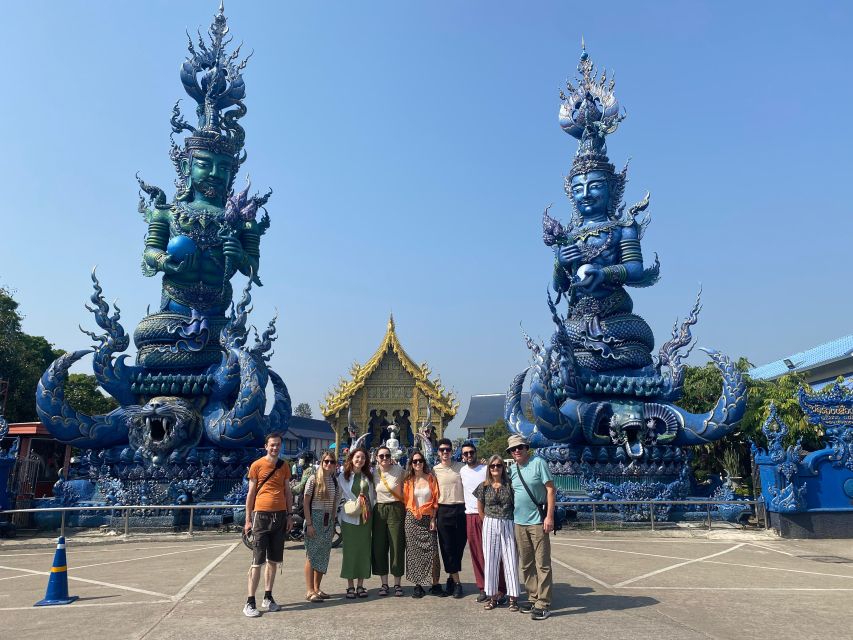
Wat Rong Suea Ten, known as the Blue Temple, offers a sharp visual contrast to the White Temple. Its rich blue color and modern design make it another example of Chiang Rai’s unusual blend of worship and contemporary art.
The artist behind the Blue Temple previously worked at the White Temple, which gives the two sites a useful connection. Your guide can explain that link and point out how the artistic treatment differs.
There is no entry fee, and the visit lasts about 25 to 30 minutes. That is enough for a look around and photographs, but not a long, reflective stop. One person suggested replacing this visit with Wat Huay Pla Kang, also called the Yuan Yin Temple. That is a matter of taste: the Blue Temple fits the modern-art theme of the day, while another temple might offer a different style.
For me, this stop works because it is brief and visually strong. After the detailed White Temple, a shorter visit keeps the morning moving.
Black House: An unexpected counterpoint
Baan Dam Museum, or the Black House, was created by another Thai national artist from Chiang Rai. Its dark buildings and private collection offer a clear contrast to the White Temple’s bright, polished appearance.
This is not simply another temple. It feels more like a museum and collection of art, with the artist’s work and objects arranged across the property. The darker mood may not suit everyone, but it gives the day more depth than a string of similar religious monuments.
Plan on 50 minutes to an hour. Entry is 80 baht. That is enough time to take in the main buildings and hear the story behind the collection without turning the stop into a lengthy museum visit.
I would not skip this place just because the name sounds gloomy. It was one of the stops that exceeded expectations for at least one person on the tour, and it provides the strongest artistic contrast of the morning.
A few more tours and experiences worth a look
- Chiang Rai: Guided Highlights Guided Tour with Buffet Lunch
★ 4.9 · 1,532 reviews - Chiang Rai: Guided Full-Day Highlights tour with Lunch
★ 5.0 · 30 reviews - Chiang Rai:Guided Highlights Full-Day Tour-FREE LUNCH BUFFET
★ 5.0 · 17 reviews - From Bangkok: Ayutthaya Temples Guided Tour with Lunch
★ 4.7 · 10,535 reviews
The Karen village: A sensitive cultural stop
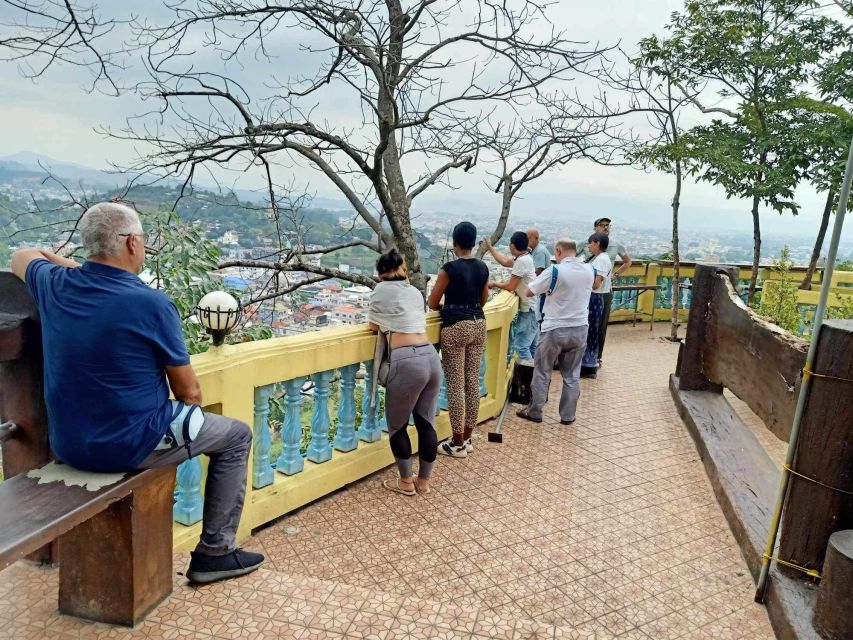
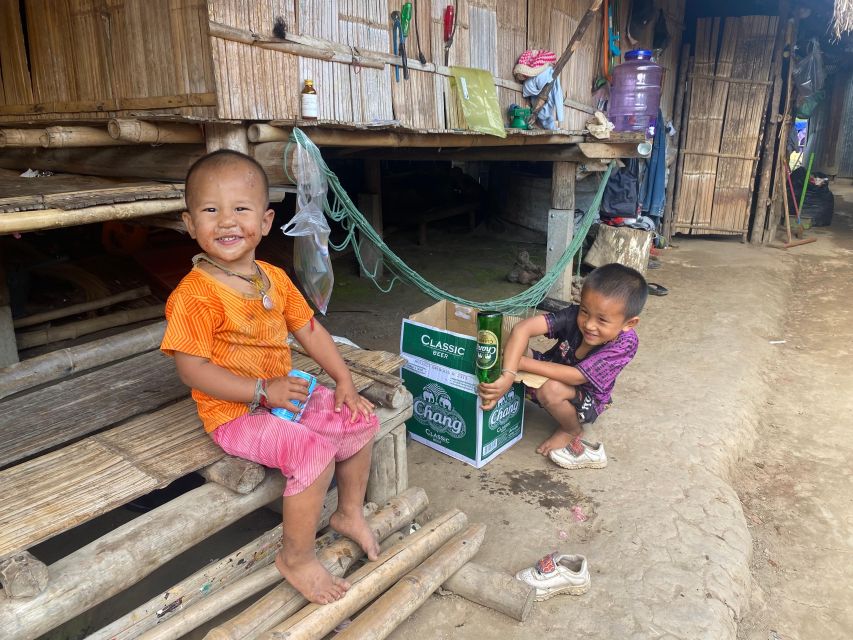
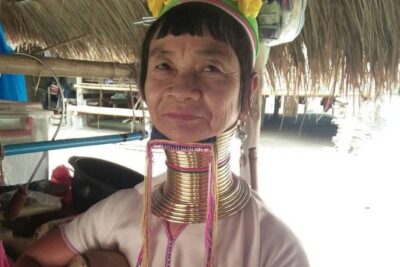
The long-neck Karen village is presented as a Burmese refugee community where you can learn about traditional life. The tour describes the group as a minority community facing the risk of disappearing, making this more than a quick cultural photo stop.
Entry costs 300 baht, the highest individual fee on the route, and the visit lasts about 40 to 50 minutes. That price makes it worth asking yourself what you want from the stop. If you approach it with curiosity and respect, the guide’s explanation can add useful context about the people and their traditions.
I would avoid treating the village as a stage set. Listen to the guide, observe politely, and remember that you are visiting a community connected to displacement and difficult border politics. The tour can introduce you to local and traditional ways of life, but a short scheduled visit cannot explain every part of the community’s story.
The village is optional in practice. If you prefer not to pay the entrance fee or enter, you can wait nearby while the rest of the group visits. That flexibility is helpful for people who feel unsure about this type of attraction.
Tea country: Green views and a quiet change of pace
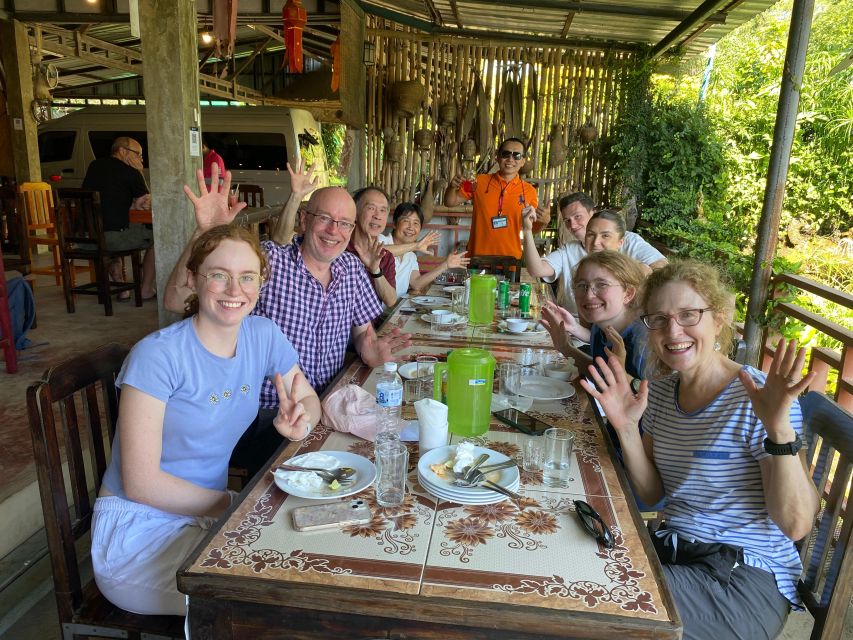
The tea plantation offers a welcome pause between cultural sights and the long drive north. Chiang Rai is Thailand’s biggest tea-producing area, and the guide explains the local tea industry before you have time to enjoy the scenery and sample tea.
The visit takes about 20 to 30 minutes. One person chose this tour partly for the plantation and considered it a highlight. Another felt it was less impressive and involved a long extra drive toward the Golden Triangle. Both reactions make sense: tea lovers and anyone who enjoys open countryside will likely value the stop, while people focused only on temples may find it modest.
I like the change of rhythm. You are not moving from one building to another. You get a brief chance to look over the tea fields, learn something connected to the region, and have a drink before continuing.
Do not expect a full tea-farm visit. The information provided describes scenery, an explanation, and a tasting, not a long production tour.
Golden Triangle: Three countries from one viewpoint
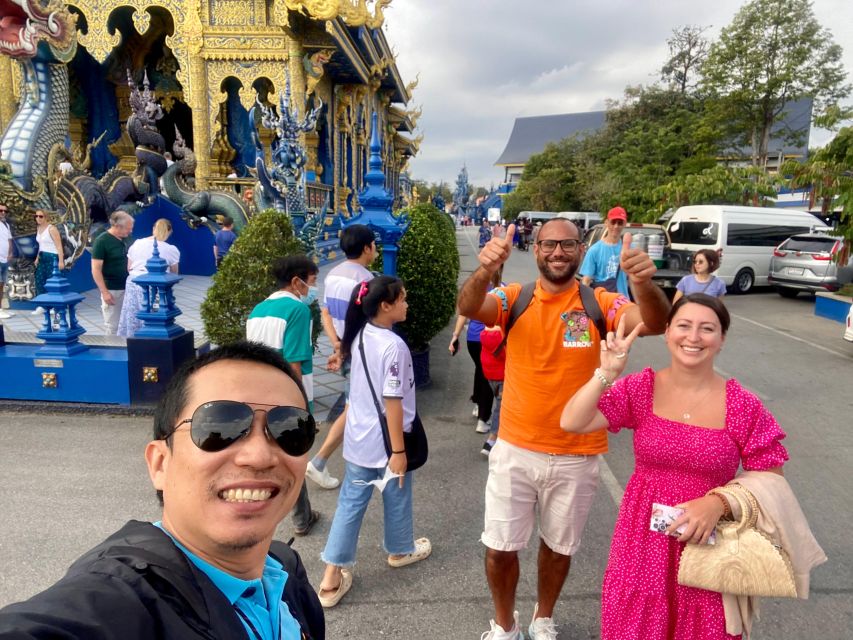
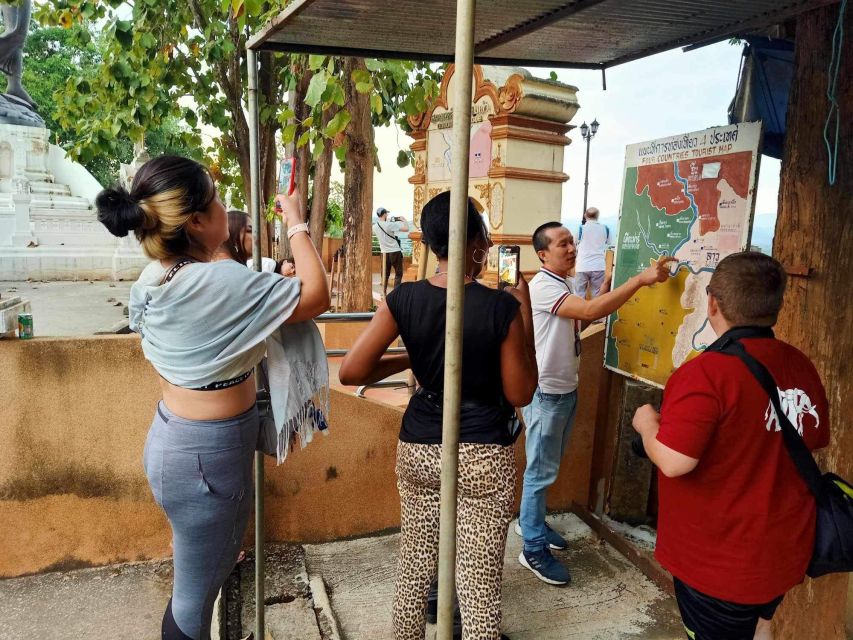
The Golden Triangle is the geographical centerpiece of the trip. From the viewpoint, you can see the meeting area of Thailand, Laos, and Myanmar. The Ruak River and Mekong River form the borders, separating the three countries.
The view is interesting because it turns a map into something visible. You are not crossing three nations on foot, but you can look toward all three from one border area. The guide also explains the region’s connection with opium production and trade, which prepares you for the museum that follows.
Allow an hour or more here. That is enough to take in the viewpoint, hear the explanation, and understand how the rivers divide the countries. The stop may feel less thrilling if you expect a dramatic monument. Its appeal is geographical and historical rather than theatrical.
Some tours to the Golden Triangle leave from Chiang Mai, but this experience begins in Chiang Rai and gives the border area proper time. That is an important value point. You are still facing a long ride, but you are not reducing the Golden Triangle to a rushed roadside photograph.
A boat trip to Laos may be available locally for 300 baht, according to one account, but it is not part of the advertised tour inclusions. Treat it as an optional extra and confirm the arrangement with the guide on the day.
Opium Museum: The context behind the border
The Opium Museum brings the Golden Triangle story into focus. You learn about opium, its production and trade, the region’s past, and the equipment used in the trade.
Entry costs 50 baht. The stop is included because it gives meaning to the border viewpoint. Without it, you might see three countries and two rivers but miss why this particular area became famous around the world.
The museum is not just an add-on for filling time. It connects geography with economics, politics, and the lives affected by the opium trade. If you have limited interest in museums, the visit still offers useful background in a manageable format.
Afterward, the group makes the roughly one-hour return to Chiang Rai town. Drop-off is available at your hotel or another location in town, which is useful if you have an evening plan.
Guides, drivers, and the feel of the day
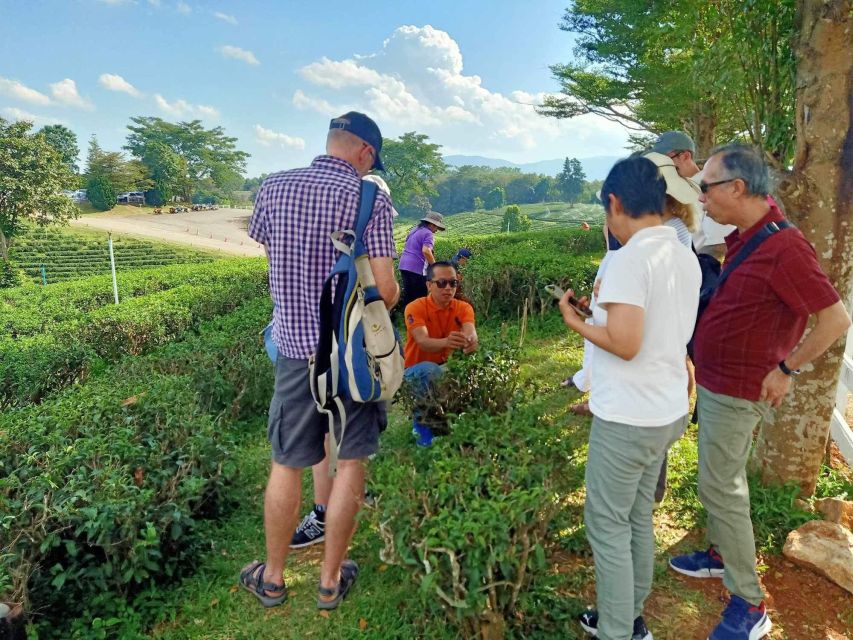
The strongest part of this experience is the human service. Mew has been praised for being warm, attentive, and reassuring. M and Em are described as funny and well-informed, while Fido is praised for keeping everyone involved and explaining local stories and history. Gab, Bank, Charly, and other guides also received strong marks for clear English and friendly help.
Several guides took photographs for the group and explained what would happen at the next stop. That small effort matters on a long day. You spend less time wondering about the schedule and more time looking at the place in front of you.
Drivers also receive frequent praise. Names such as Tony, Big, And, and N came up with comments about safe driving and smooth service. The minibus is practical rather than luxurious, but it has air-conditioning and drinking water throughout the day.
The vehicle holds nine people, or you may travel by car if fewer than four participants are booked. The exact group size can affect how personal the day feels, so ask if this matters to you.
Lunch, tickets, and the real cost
At $43 per person, the tour offers solid value if you plan to enter most of the paid attractions. The included transport, hotel pickup and drop-off, English-speaking guide, drinking water, travel insurance, and stated Thai buffet lunch cover services that would be awkward to arrange separately.
The published entrance fees total:
- White Temple: 100 baht
- Black House: 80 baht
- Karen village: 300 baht
- Opium Museum: 50 baht
That makes 530 baht for all four. The Blue Temple and tea plantation do not list an entry charge.
There is a small inconsistency worth clearing up: the tour details say a buffet lunch is included, while one person reported that lunch was not included and felt the restaurant was expensive. I would ask the operator exactly what lunch covers before departure. That is the only practical cost issue that could change the value calculation.
Who should book this day trip?
I would recommend it to first-time visitors with one free day in Chiang Rai, especially if you want temples, art, border scenery, and cultural stops in one package. It also suits you if you prefer a guide who explains local context and keeps the day organized.
It is a good match for independent-minded people who still want transport handled. You can listen closely at some stops, browse on your own at others, and skip an attraction if it does not appeal to you.
The schedule is less suitable if you dislike long drives, need a slow pace, or want to spend half a day at one temple. Babies under one year, people over 95, people over 140 kilograms, and people with hearing impairments are listed as unsuitable for the experience. Temple clothing rules apply, and bicycles, alcohol, drugs, and fireworks are not allowed.
Cancellation is available up to 24 hours before departure for a full refund, and the reserve-now, pay-later option helps if your plans are still moving.
Should you book the Chiang Rai seven-place tour?
Book it if you want a big-picture day in Chiang Rai and accept that the route is long. The combination of modern temples, the Black House, a tea plantation, the Golden Triangle, and the Opium Museum gives you far more variety than a temple-only outing.
I would pay the extra entrance fees for the White Temple, Black House, Karen village, and Opium Museum, but I would confirm lunch first. If tea fields are your priority, this tour gives you a taste rather than a full plantation visit. If the border area matters most, the Golden Triangle and museum make the long drive worthwhile.
The excellent guide reports are not a minor detail here. On a packed schedule, a warm guide with clear English, good timing, and a sense of humor can turn a tiring day into a rewarding one. At $43, this is a sensible choice for seeing a lot of northern Thailand without arranging every transfer yourself.
FAQ
How long does the tour last?
The tour starts at about 8 a.m. and generally returns to Chiang Rai between 6:30 and 7 p.m. The drive back from the Opium Museum takes about one hour.
What places does the tour visit?
The stops are the White Temple, Blue Temple, Black House, long-neck Karen village, tea plantation, Golden Triangle viewpoint, and Opium Museum.
Are entrance fees included?
No. The listed extra fees are 100 baht for the White Temple, 80 baht for the Black House, 300 baht for the Karen village, and 50 baht for the Opium Museum. The total is 530 baht if you visit all four.
Is lunch included?
The tour information says a Thai buffet lunch is included. One account reported that lunch was not included, so confirm the exact lunch arrangement with Chiang Rai Lanna Tours before booking.
What type of transport is used?
You travel in an air-conditioned nine-seat minibus. If fewer than four people participate that day, the provider may use a car instead. Drinking water is provided throughout the day.
What should I wear?
Bring clothing that covers your shoulders and legs below the knees for temple visits. Bikes, alcohol, drugs, and fireworks are not allowed.
Can I skip an attraction?
Yes. You can choose not to enter some attractions and wait nearby while the rest of the group visits. This is particularly useful for the paid stops.
Is hotel pickup and drop-off included?
Yes. Pickup and drop-off at hotels are included, and you can also be dropped at another location in Chiang Rai town.
Just added around Chiang Rai
- Private Chiang Rai Day Trip with Golden Triangle from Chiang Mai★ 5.0 · 16 reviews
- Chiang Rai:Guided Highlights Full-Day Tour-FREE LUNCH BUFFET★ 5.0 · 17 reviews
- From Chiang Mai : 3 Temples & Golden Triangle with Lunch★ 4.5 · 17 reviews
- Explore the Chiang Rai and the Golden Triangle★ 4.6 · 18 reviews
- 1 Day trekking : Chiang Rai popular activity,Fun in Nature.★ 4.8 · 18 reviews
- One Day Group Tour Experience in Chiangrai★ 5.0 · 22 reviews
- Chiang Mai to Chiang Rai: 3 Temples & Hot Springs & Pickup★ 4.0 · 22 reviews
- Chiang Rai: Discover 7 Must-See Spots & Lunch Included★ 4.7 · 26 reviews
Golden Triangle Tours, compared.
Chiang Rai Day Trip from Chiang Mai City with Golden Triangle
Read our review →
Chiang Rai Temples, Golden Triangle & Boat Tour
Read our review →
7 Major Sites, Golden Triangle & Tea Plantation
Read our review →
Chiang Rai:White-Black-Blue Temple-Golden Triangle-Keren-Boat Trip
Read our review →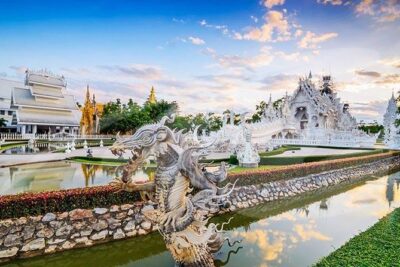
Chiang Rai and Golden Triangle Day Tour from Chiang Mai
Read our review →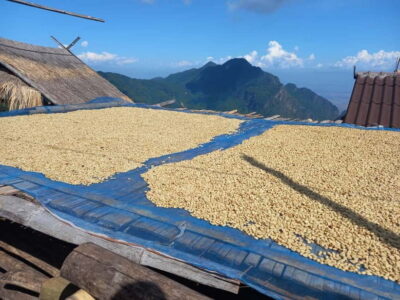
Chiang Rai Private Tour With Golden Triangle Option
Read our review →Browse the lists this tour appears in