
Reviewed · TEMPLE TOURS
Chiang Rai: Iconic Temples & 7 Major Sites—River View Buffet
See Chiang Rai’s big sights in one long day. This 10-hour small-group tour links the White Temple, Blue Temple, Black House, Karen village, tea plantation, Golden Triangle, and Opium Museum for $37 per person. I like the excellent mix of temples, art, local culture, and border-country history. I also like the warm guides, with names such as Mai, Big, Gap, Poppy, and John repeatedly praised for clear explanations, humor, and help with photos.
The main drawback is the pace. You cover a lot of ground, and the White Temple and Black House could easily fill much more time on their own. You should also think carefully about the Longneck Karen Village visit before booking, since its cultural and ethical questions are not as simple as a quick photo stop.
In This Review
- Five things to know before you book
- What the $37 price really covers
- A careful start from Chiang Rai
- Wat Rong Khun, the White Temple
- Wat Rong Suea Ten, the Blue Temple
- Baan Dam and the Black House Museum
- Buffet lunch and a useful mid-day pause
- The Longneck Karen Village
- Choui Fong Tea Plantation
- The Golden Triangle viewpoint
- The House of Opium Museum
- Why the guides receive so much praise
- Who should book this Chiang Rai tour?
- Final verdict: a very good first day in Chiang Rai
- FAQ
- How long does the Chiang Rai tour last?
- What attractions are included?
- Are entrance fees included in the $37 price?
- Is lunch included?
- How many people are in the group?
- Where can I be dropped off after the tour?
Five things to know before you book
- Seven major stops in one day: You get a broad introduction to Chiang Rai and its northern surroundings rather than a slow, single-site visit.
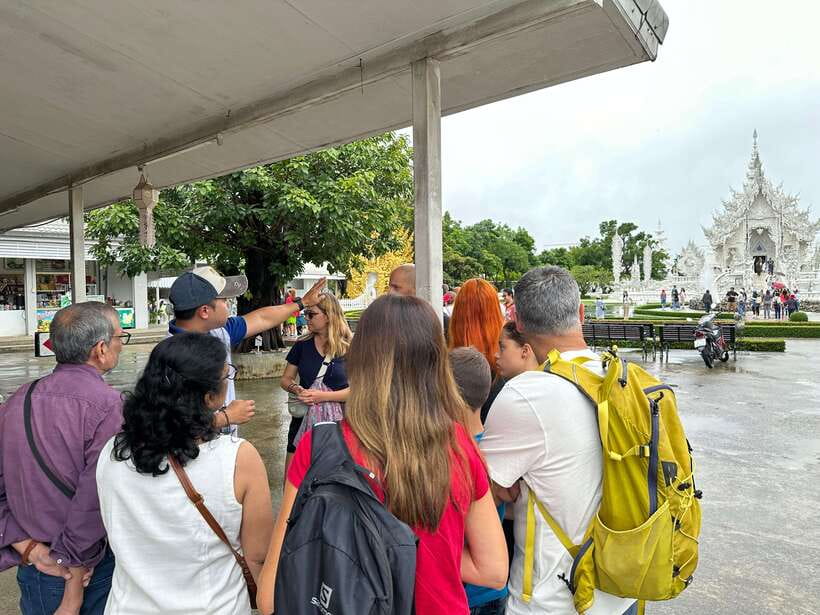
- A genuinely small group: The air-conditioned van holds no more than nine participants, which makes questions, photo help, and quick adjustments easier.
- The temple contrast is superb: The White Temple is bright and surreal, while the Blue Temple uses strong blue and gold decoration for a very different mood.
- Lunch and water are included: A Thai buffet at a local restaurant breaks up the day, and vegetarian and vegan meals can be accommodated.
- The extra admission costs add up: The White Temple, Black House, Karen village, and Opium Museum cost 630 THB total per person, paid separately.
What the $37 price really covers
At $37, this is a strong-value introduction to Chiang Rai. You receive transportation in an air-conditioned vehicle, an English-speaking guide, buffet lunch, drinking water, and insurance. You also avoid arranging several separate taxis or trying to connect remote northern sites by public transport.
The separate entrance fees are the key detail. Add 200 THB for the White Temple, 80 THB for the Black House, 300 THB for the Longneck Karen Village, and 50 THB for the Opium Museum. That makes 630 THB in additional admission fees, so bring cash and budget for them from the start.
The cost is especially fair if you want to see the Golden Triangle as well as Chiang Rai’s famous temples. A temple-only tour could be less tiring, but this experience gives you a much wider sense of the province. You see art, religion, tea production, minority culture, and the modern presentation of the opium trade all in the same day.
The group limit matters, too. With up to nine people, the day feels more personal than a large coach outing. Guides such as Big and Mai were praised for remembering names, checking that everyone was comfortable, and offering to take photos. Solo visitors should find that particularly useful.
More Temple Tours in Chiang Rai
- Chiang Rai: White, Blue, Red Temples, Long Neck Tour
★ 4.8 · 652 reviews - From Chiang Rai: Famous Temples and Golden Triangle Day Tour
★ 4.7 · 115 reviews - Chiang Rai: Half Day Tour – 3 Famous Temples & Lalita Cafe’
★ 5.0 · 79 reviews
A careful start from Chiang Rai
Pickup is in the Chiang Rai, Mueang Chiang Rai area, between 8:00 and 8:30 in the morning. The guide aims to collect everyone by 8:30, so you need to be ready early and keep your phone available for pickup communication.
The tour ends around 6:00 to 6:30 pm. You can return to your hotel or finish at the Chiang Rai Night Market. The market option is handy if you still want dinner and an evening stroll rather than going straight back to your room.
Most of the day is spent in a comfortable van. The journey between stops often runs around 30 to 45 minutes, with a longer stretch as you head toward the Golden Triangle. That driving time is not dead time. It gives the guide room to explain northern Thai culture, local geography, and the history behind the places ahead.
Still, this is a full day. I would not pair it with a late-night journey immediately afterward unless your plans are flexible. One useful advantage is that the guide and driver can sometimes help with practical problems. One person even received an emergency pharmacy stop, which says something good about the attention given to the group.
Wat Rong Khun, the White Temple
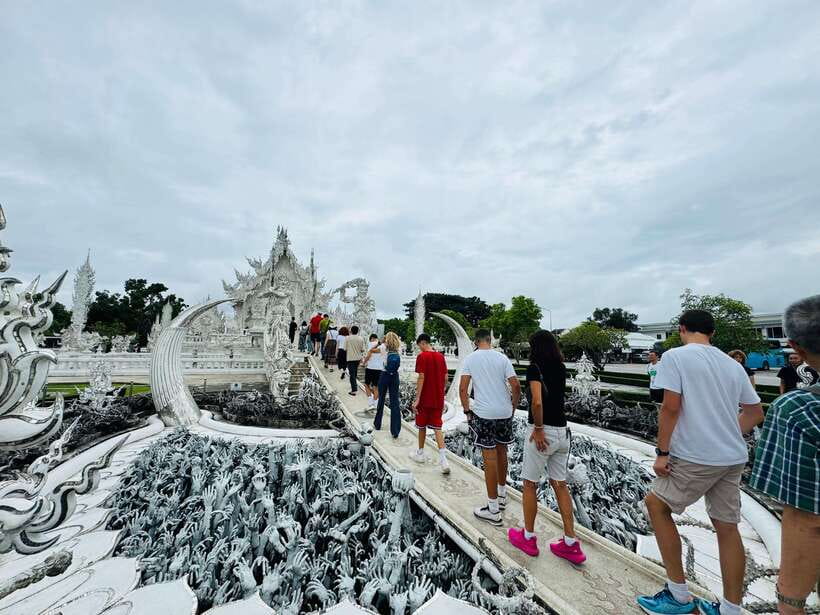
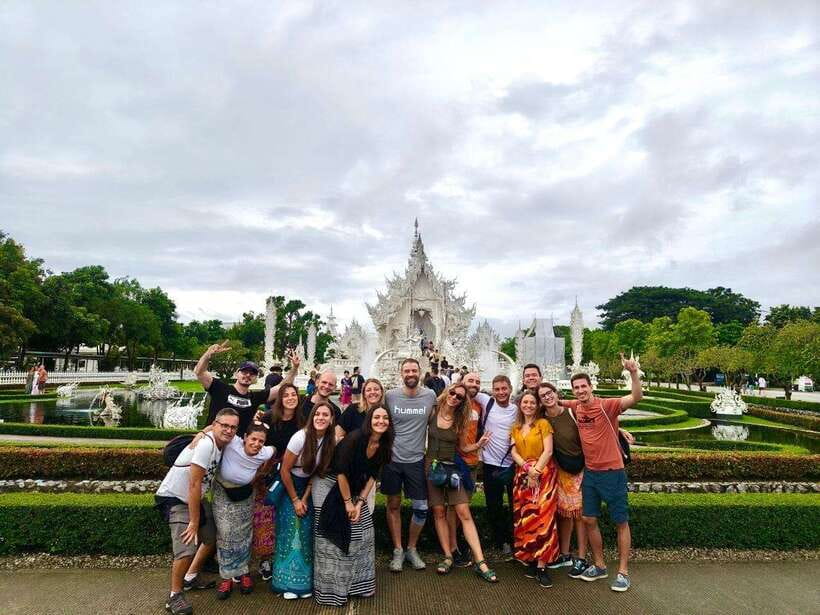
The White Temple is the visual star of the day. Designed by Thai national artist Chalermchai Kositpipat from 1997 onward, Wat Rong Khun looks unlike a traditional temple complex. White surfaces, mirrored details, unusual sculptures, and elaborate decorative work create an almost dreamlike setting.
You have about an hour here, including a guided introduction, walking, and free time. Your guide explains the design and meaning before giving you room to look around. That order works well. Without context, the temple can seem like a striking collection of odd shapes. With an explanation, the details become easier to read.
Inside, wall paintings combine religious themes with modern imagery. The exterior is just as important, with carefully made sculptures and symbolic details that reward a slower look.
This is also the first place where the fixed schedule can feel tight. Several people found the White Temple so interesting that they wanted more time there. If you enjoy art and photography, use your free period carefully and do not spend the whole visit in the first courtyard.
Dress respectfully for the temple. Comfortable shoes are important because the day involves repeated walking, and the sun can be strong. A hat, sunscreen, sunglasses, and a camera are sensible additions.
Wat Rong Suea Ten, the Blue Temple
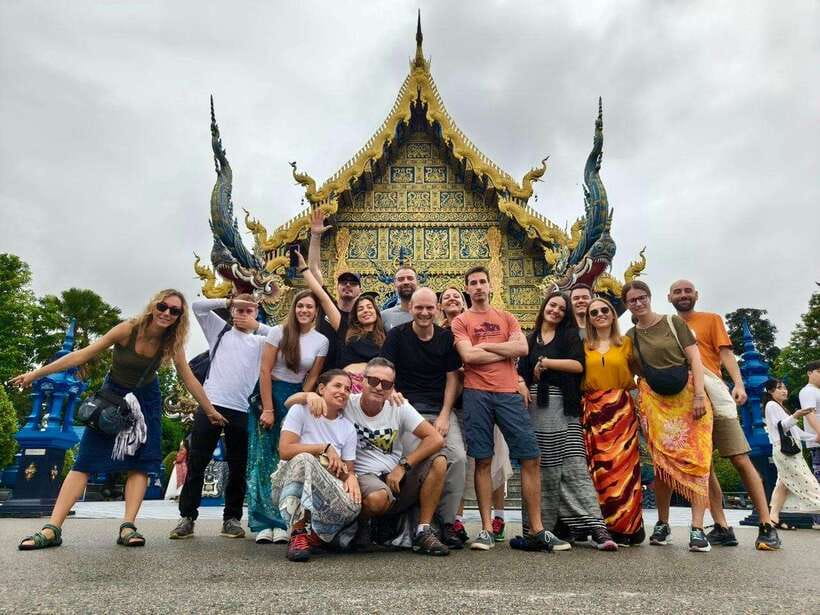
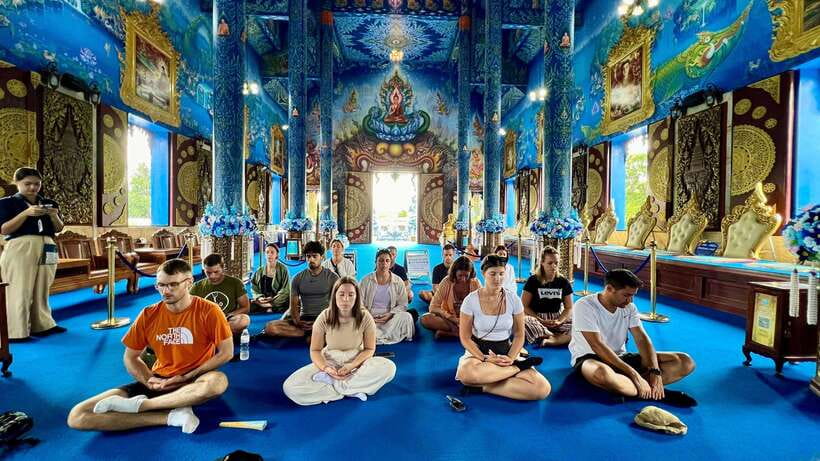
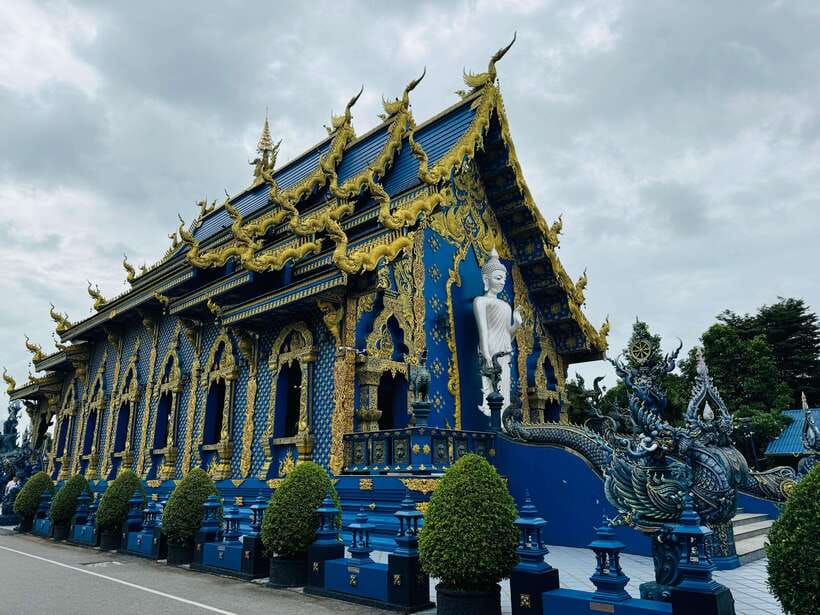
The Blue Temple, or Wat Rong Suea Ten, provides a sharp change of tone. Its nickname, the Tiger Dance Temple, hints at local stories and artistic traditions. Blue and gold cover much of the building, and the effect is bold without being similar to the White Temple.
You spend about 30 minutes here. That is enough for the guide’s explanation, the main interior, and a short walk around the grounds. Inside, a large Buddha image is framed by detailed wall art. The color scheme gives the interior a calm but powerful feel.
I like this stop because it prevents the temple portion of the day from becoming repetitive. The White Temple is highly individual and modern in its visual language. The Blue Temple feels more focused on color, religious imagery, and the work of local artists.
There may be small food and drink opportunities nearby. One guide suggested blue coconut ice cream, a fun little detail if it is available during your visit. It is not the reason to come, but it adds a light break before the next art stop.
Something different for another day:
- Chiang Rai: Guided Highlights Guided Tour with Buffet Lunch
★ 4.9 · 1,532 reviews - Sightseeing Join Tour Chiang Rai / PICK UP ONLY IN CHIANG RAI
★ 4.5 · 398 reviews - Chiang Rai Must-See Tour – 7 Icons, Lunch & Small Group(9pp)
★ 4.7 · 395 reviews - Chiang Rai Guide: Popular 7places 3Colors ,Golden Triangle
★ 4.9 · 285 reviews
Baan Dam and the Black House Museum
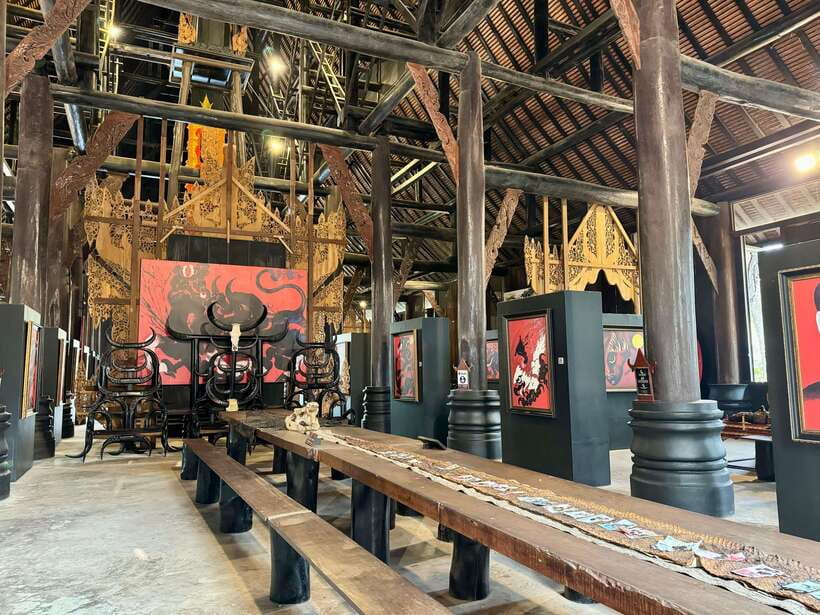
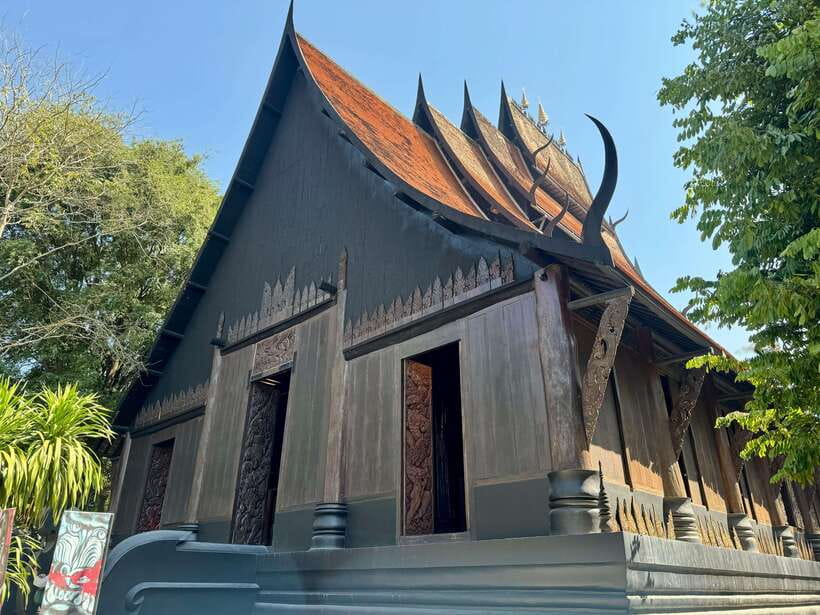
Baan Dam, often called the Black House Museum, is not simply the dark counterpart to the White Temple. It is a collection of Lanna-style houses filled with antiques, wood carvings, animal skins, and unusual objects. Modern art appears alongside older forms, including striking three-dimensional paintings.
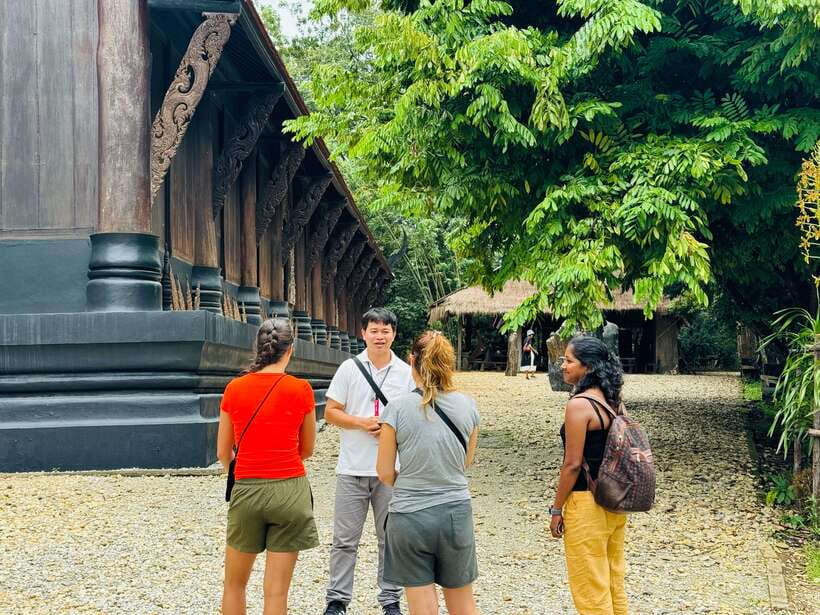
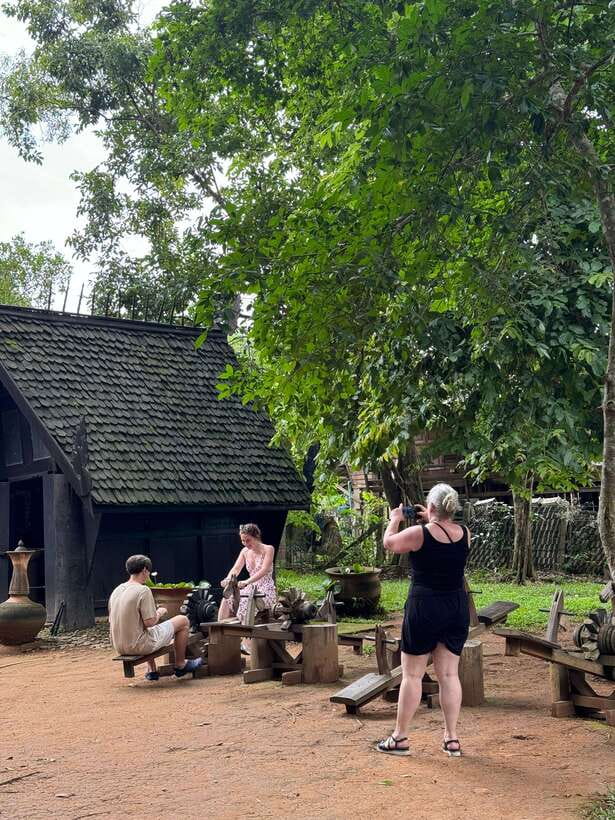
The visit lasts around 50 minutes and includes a guided walk plus free time. The site is spread across several structures, so comfortable footwear pays off. I would give your attention to the buildings themselves, not only the objects displayed inside. The design creates a mood that is more mysterious and challenging than pretty.
The animal skins and other materials may not appeal to everyone. This is an art museum with a strong personal style, not a conventional temple or historical museum. If you prefer clear labels and a simple chronological story, you may find the presentation unusual.
The 80 THB admission fee is not included. In practical terms, this stop earns its place because it adds a completely different artistic voice to the day. The White Temple reaches for light and spiritual symbolism. Baan Dam uses shadow, texture, and discomfort.
Buffet lunch and a useful mid-day pause
Lunch takes about 45 minutes at a local restaurant. The buffet includes Thai food, so you can try several dishes instead of choosing one meal from a menu. Vegetarian and vegan diners can be accommodated, which is useful if you state your needs clearly.
A buffet also works well for a mixed group. You can choose familiar food, try something new, and control how much you eat before the afternoon drive. Several people singled out the food as tasty and satisfying.
The lunch stop is not a long cultural workshop, and it should not be viewed that way. Its real value is practical: you receive a proper meal, refill your energy, and avoid losing time searching for food between remote attractions.
Water is included throughout the day. Even so, bring cash for extra snacks, drinks, and admissions. The schedule is active, and the northern sun can make a short walk feel longer than expected.
The Longneck Karen Village
The Longneck Karen Village is the most sensitive stop on the route. The Karen people represented here migrated from Myanmar because of political circumstances. The visit offers an introduction to their traditions and daily life, but it also raises a serious question: does tourism support the community, or turn people into a display?
You spend about 40 minutes walking through the village with a guide. The entrance fee is 300 THB per person, the largest single admission charge on the tour. That fee makes it worth learning about the community and the way the village operates before you go.
I would treat this as a place for respectful observation, not casual portrait hunting. Ask permission before taking photographs, listen to the guide, and remember that the people you see are not exhibits. If you are uncomfortable with this kind of cultural visit, you can research the site’s current practices before booking or ask the operator about alternatives.
For readers who want to understand more of northern Thailand’s links with neighboring Myanmar, the stop can be meaningful. It is not as polished or visually dramatic as the temples, but it brings a human dimension to the day. Go with curiosity and care.
Choui Fong Tea Plantation
Choui Fong Tea Plantation offers a slower visual change after the village. Rolling tea fields cover the hills, and you can sample fresh Oolong tea while enjoying the views. The visit lasts around 35 minutes and includes time for tea, photos, and shopping.
This is a pleasant stop, but it is also the one I would keep in proportion. Some people loved the views, tea, and local cheesecake. Others felt the plantation was less interesting than the temples and museums, and suggested giving that time to the White Temple or Black House instead.
That difference comes down to what you want from the day. If you enjoy food products, mountain views, and a short shopping break, Choui Fong will fit nicely. If your priority is art and religious architecture, the limited time may feel better spent elsewhere.
The plantation also gives the guide a chance to explain tea production and local agriculture. You are not there long enough for a full farm visit, so think of it as a scenic tasting stop rather than a detailed lesson in tea making.
The Golden Triangle viewpoint
The Golden Triangle is the geographic high point of the tour. From the viewpoint, you can see the meeting area of Thailand, Laos, and Myanmar. The location is tied to the region’s former opium trade, making it more than a border photo stop.
You have about 30 minutes for sightseeing, walking, and the guide’s explanation. The views are the main attraction, but the larger value comes from understanding why this corner of Southeast Asia became so important. Your guide can place the border region, trade routes, and opium production into a clearer context.
Do not expect a boat trip as part of this schedule. One person suggested adding one, but it is not included. The stop is built around the viewpoint and surrounding sights, so you should book this tour for the land-based visit.
The drive to this part of the province is longer than the short hops between the temples. That makes the comfortable van and careful driver important. Several guides, including Big, Gap, and Mai, were praised for keeping the ride informative and the group in good spirits.
The House of Opium Museum
The House of Opium Museum finishes the historical side of the day. Unlike the viewpoint, which shows where the three countries meet, the museum gives you a more focused account of opium production and its effects on the region.
You have around 30 minutes for a self-guided visit. The 50 THB entrance fee is extra. Since this is the final stop, it works as a quiet counterpoint to the busy temples and scenic plantation.
I would not rush through the displays. The Golden Triangle can seem picturesque at first glance, but the museum adds difficult context. Together, the two stops explain both the attraction and the cost of the area’s past opium economy.
The final stop also avoids ending the tour with another grand photo location. You finish with information, not just scenery, which gives the day a stronger shape.
Why the guides receive so much praise
The guide can make or break a 10-hour tour. Here, that role appears to be a real strength. Mai was repeatedly praised for her care, clear explanations, and habit of asking how much time people needed. Big was remembered for humor, energy, photo help, and his ability to keep the group engaged.
Gap, Poppy, John, Ayu, and other guides also earned praise for explaining each location in good English and answering questions. The exact guide varies, so you should not book expecting one particular person. Still, the pattern is clear: the company places considerable value on an involved, friendly guide.
That matters because this route contains several places that need context. The temples are easy to photograph, but the guide helps you understand the artists and symbols. The Karen village needs sensitivity. The Golden Triangle and Opium Museum benefit from historical explanation.
The drivers also receive strong praise. Careful driving, clean vans, and a comfortable ride are not glamorous details, but they matter on a long northern Thailand route. A safe driver lets you enjoy the scenery instead of watching the road.
Who should book this Chiang Rai tour?
I would choose this experience if you have only one full day in Chiang Rai and want to cover the province’s major sights without arranging transport yourself. It suits first-time visitors, couples, solo visitors, and small groups who want a guided overview with a relaxed social feel.
It is also a good fit if you value variety. In one day, you move from contemporary temple art to Lanna buildings, a Karen community, tea fields, international borders, and an opium museum. Few shorter excursions offer that range.
I would hesitate if you want long, quiet visits at each temple. The White Temple and Black House both deserve more than their scheduled time for some art lovers. I would also think carefully about the Karen village and decide if that visit fits your values.
Bring comfortable shoes, sunglasses, a hat, sunscreen, camera, and cash. The tour is not suitable for babies under one year, people over 95, people with altitude sickness, or anyone using an electric wheelchair. Weapons, sharp objects, alcohol, and drugs are not allowed.
Free cancellation is available up to 24 hours before departure, and you can reserve now and pay later. That gives you some flexibility, but the practical decision is simple: book this for breadth and convenience, not for a slow, specialist study of one attraction.
Final verdict: a very good first day in Chiang Rai
I would recommend this tour to most people who want Chiang Rai’s headline sights in a single day. The small van, helpful guides, buffet lunch, drinking water, and careful drivers make the long schedule easier to manage.
The strongest parts are the White Temple, Blue Temple, Black House, and the Golden Triangle. The tea plantation is pleasant but less essential, and the Karen village deserves advance thought rather than an automatic yes.
At $37 before 630 THB in admission fees, the tour offers good value for a full day of transport, guiding, food, and sightseeing. Choose it if you want an efficient introduction to Chiang Rai, appreciate a fun guide, and are willing to accept a busy schedule. Skip it only if you prefer setting your own pace or want to spend an entire morning exploring one remarkable temple.
FAQ
How long does the Chiang Rai tour last?
The tour lasts about 10 hours. Pickup takes place between 8:00 and 8:30 am, and the day usually ends around 6:00 to 6:30 pm.
What attractions are included?
The route includes Wat Rong Khun, Wat Rong Suea Ten, Baan Dam Museum, the Longneck Karen Village, Choui Fong Tea Plantation, the Golden Triangle, and the House of Opium Museum.
Are entrance fees included in the $37 price?
No. The White Temple costs 200 THB, the Black House costs 80 THB, the Longneck Karen Village costs 300 THB, and the Opium Museum costs 50 THB. The total additional admission cost is 630 THB per person.
Is lunch included?
Yes. A Thai buffet lunch at a local restaurant is included, along with water. Vegetarian and vegan meals can be accommodated.
How many people are in the group?
The group is limited to nine participants and travels in an air-conditioned vehicle.
Where can I be dropped off after the tour?
You can be dropped off in the Chiang Rai, Mueang Chiang Rai area, either at your hotel or at the Chiang Rai Night Market.
More Buffet Experiences
- Chiang Rai: Discover 7 Must-See Spots & Lunch Buffet
★ 5.0 · 47 reviews - Chiang Rai:Guided Highlights Full-Day Tour-FREE LUNCH BUFFET
★ 5.0 · 17 reviews - Krabi: 7 Islands Sunset Tour with Buffet Dinner & Snorkeling
★ 4.3 · 2,916 reviews - Bangkok: Alangka Luxury Buffet Dinner Cruise With Live Music
★ 4.1 · 1,811 reviews
Just added around Chiang Rai
- Private Chiang Rai Day Trip with Golden Triangle from Chiang Mai★ 5.0 · 16 reviews
- Chiang Rai:Guided Highlights Full-Day Tour-FREE LUNCH BUFFET★ 5.0 · 17 reviews
- From Chiang Mai : 3 Temples & Golden Triangle with Lunch★ 4.5 · 17 reviews
- Explore the Chiang Rai and the Golden Triangle★ 4.6 · 18 reviews
- 1 Day trekking : Chiang Rai popular activity,Fun in Nature.★ 4.8 · 18 reviews
- One Day Group Tour Experience in Chiangrai★ 5.0 · 22 reviews
- Chiang Mai to Chiang Rai: 3 Temples & Hot Springs & Pickup★ 4.0 · 22 reviews
- Chiang Rai: Discover 7 Must-See Spots & Lunch Included★ 4.7 · 26 reviews
Temple Tours, compared.
Chiang Rai Temples, Karen Tribe and Hot Springs
Read our review →
City Highlights Temple and Market Walking Tour
Read our review →
Bangkok by Night: Temples, Markets and Food Tuk-Tuk Tour
Read our review →
Grand Palace, Wat Pho, and Wat Arun Guided Tour
Read our review →
Tiger Cave Temple, Emerald Pool and Hot Springs Tour
Read our review →
Chiang Rai White Temple and Blue Temple Day Tour
Read our review →Browse the lists this tour appears in