

Reviewed · TEMPLE TOURS
Long Neck Village, Silver Temple & Chiang Mai Top Sites
Three temples, one village, four useful hours. This compact Chiang Mai tour combines Wat Chedi Luang, Wat Phra Singh, and Wat Sri Suphan with a visit to a Karen Long Neck Village, giving you a quick look at religion, art, and living traditions. I like the local feel of traveling by red songthaew, and I like that the route includes both famous temples and a cultural stop beyond the old city.
The main consideration is extra cost and access. Recent experience indicates that the three temples may require about 50 baht each, and women cannot enter the inner area of two temples, including Wat Sri Suphan. That is not a major expense, but you should know about it before booking.
In This Review
- Key points to know before booking
- Why this four-hour route works in Chiang Mai
- Wat Chedi Luang and the great brick stupa
- Wat Phra Singh and Chiang Mai’s sacred image
- Wat Sri Suphan, Chiang Mai’s Silver Temple
- The Karen Long Neck Village visit
- What the guide adds to the experience
- Price, extra fees, and what you receive
- Pickup, clothing, and physical comfort
- Who will enjoy this Chiang Mai tour most
- Should you book it?
- FAQ
- How long does the tour last?
- What language is the tour conducted in?
- What transport is used?
- Where is pickup available?
- Where do I meet the tour if my accommodation is outside the pickup area?
- Which temples are included on the route?
- Is the Karen Long Neck Village entrance included?
- Are meals and drinks included?
- What should I wear to the temples?
- Is the tour suitable for wheelchair users or people with back problems?
- Should I bring cash?
- Can I cancel the booking?
Key points to know before booking
- Red songthaew transport: You travel in Chiang Mai’s familiar shared taxi, adding a local touch to a short sightseeing route.
- Three distinct temples: Wat Chedi Luang, Wat Phra Singh, and Wat Sri Suphan each show a different side of Lanna religious art.
- A clear cultural contrast: The final stop at Karen Long Neck Village shifts the focus from temple architecture to community traditions, weaving, and local crafts.
- Short but full itinerary: Four hours gives you a useful introduction, but each temple visit is necessarily fairly brief.
- Friendly guide service: Guides named Mosquito and Magie received especially warm praise for their information and personal manner.
- Plan for temple fees: Bring cash, since recent experience places the added cost at roughly 50 baht per temple.
Why this four-hour route works in Chiang Mai
Chiang Mai can feel easy to explore until you try to fit several important sites into one day. The old city has temples on nearly every other corner, while cultural attractions outside the center take more effort to reach. This tour solves part of that problem by linking three major temples with a Karen village in a single four-hour outing.
I see this as an orientation tour rather than a slow, scholarly examination of every site. You get the broad picture: Lanna architecture, Northern Thai Buddhism, silver craftsmanship, and the traditions of the Karen Padaung people. If you have only a short stay in Chiang Mai, that range is useful.
The price is $22 per person, which is reasonable for four hours of transport, an English-speaking guide, and the Karen village admission. The value depends on how much you would otherwise spend arranging transport between separate stops. You should still carry cash for possible temple fees, drinks, souvenirs, and personal purchases.
The route uses a traditional red songthaew. These covered pickup trucks are one of Chiang Mai’s signature forms of transport. They are practical rather than luxurious, so expect a simple local ride, not an air-conditioned sightseeing bus. For me, that is part of the appeal, though anyone with back problems should take the vehicle type seriously.
More Temple Tours in Chiang Mai
- Chiang Mai: Chiang Rai Temples, Karen Tribe and Hot Springs
★ 4.7 · 5,401 reviews - Chiang Rai White Temple and Blue Temple Day Tour
★ 4.6 · 3,366 reviews - Chiang Mai: White, Red/Black & Blue Temples Tour with Lunch
★ 4.2 · 2,017 reviews
Wat Chedi Luang and the great brick stupa
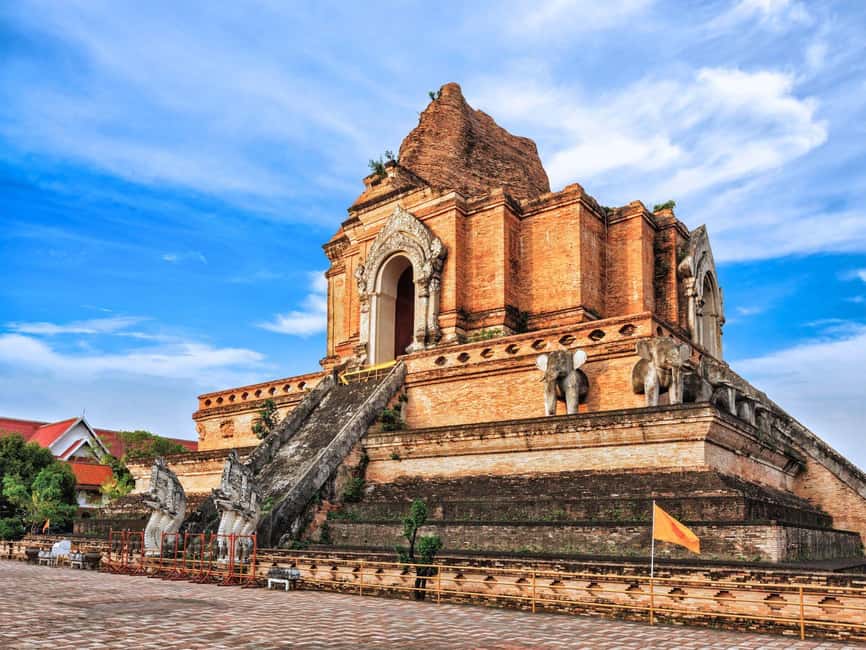
The first major stop is Wat Chedi Luang, often called the Temple of the Great Stupa. Its huge, partly ruined chedi gives the site a strong sense of age and scale. Even in its damaged form, the structure dominates the temple grounds.
The chedi once housed the revered Emerald Buddha, one of Thailand’s most important religious images. That detail helps explain why Wat Chedi Luang matters beyond its size. You are not simply looking at an old monument. You are seeing a place tied to Northern Thailand’s spiritual and royal past.
Look closely at the broad base, the heavy Lanna form, and the way the remaining structure rises above the surrounding buildings. The worn surfaces are part of the appeal. This is not a polished modern reconstruction designed to look perfect. The incomplete chedi lets you see the effects of time and gives the visit a more serious mood.
Your guide can help connect the architecture with Buddhist practice and local history. That context matters because temple details can otherwise blur together, especially if you visit several wat in one day. At Wat Chedi Luang, focus on the chedi first, then give yourself a moment to take in the wider compound.
Dress matters from the moment you arrive. Shoulders and knees must be covered at the temples, so wear comfortable clothing that is also respectful. You will be walking and standing, and practical clothes are more useful than anything elaborate.
Wat Phra Singh and Chiang Mai’s sacred image
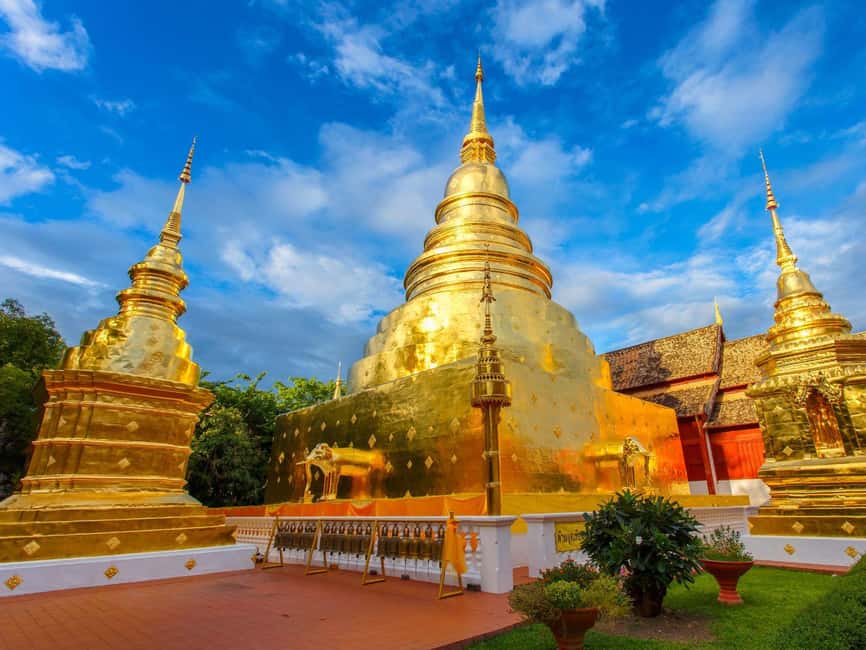
Wat Phra Singh brings a different mood. It is one of Chiang Mai’s most sacred temples, known for golden pagodas, old murals, and the Phra Buddha Sihing statue. That statue is an important symbol of Northern Thai Buddhism and gives the temple a central focus.
I like this stop because it shows how a temple can work as both a religious center and an art space. The gold details catch your eye first, but the murals reward a slower look. You might find that your guide points out elements you would otherwise pass without noticing.
The temple’s beauty is more refined than the massive presence of Wat Chedi Luang. Here, you can pay attention to decorative details, the pagodas, and the sacred image. The two temples work well together because they do not offer exactly the same visual experience.
Time is the tradeoff. The entire tour lasts four hours, and you still have another temple and the Karen village ahead. You will not have unlimited time to sit, sketch, or study every mural. If Wat Phra Singh is your personal priority, tell your guide early that you would appreciate a little time to look carefully.
It also helps to approach the temple with the right attitude. This is an active sacred place, not only a photo stop. Move quietly, follow local instructions, and avoid treating the Buddha image as a prop. Simple respect makes the visit better for you and for the people who come here to worship.
Wat Sri Suphan, Chiang Mai’s Silver Temple
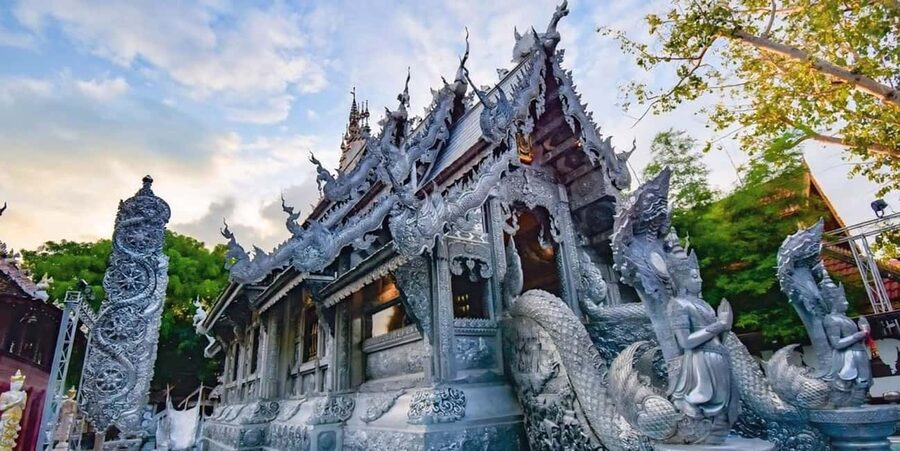
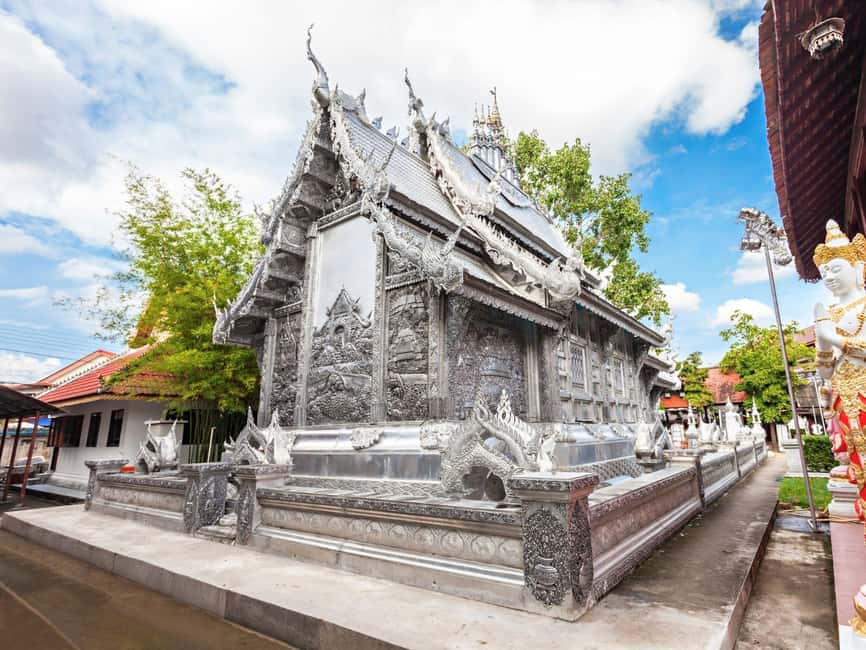
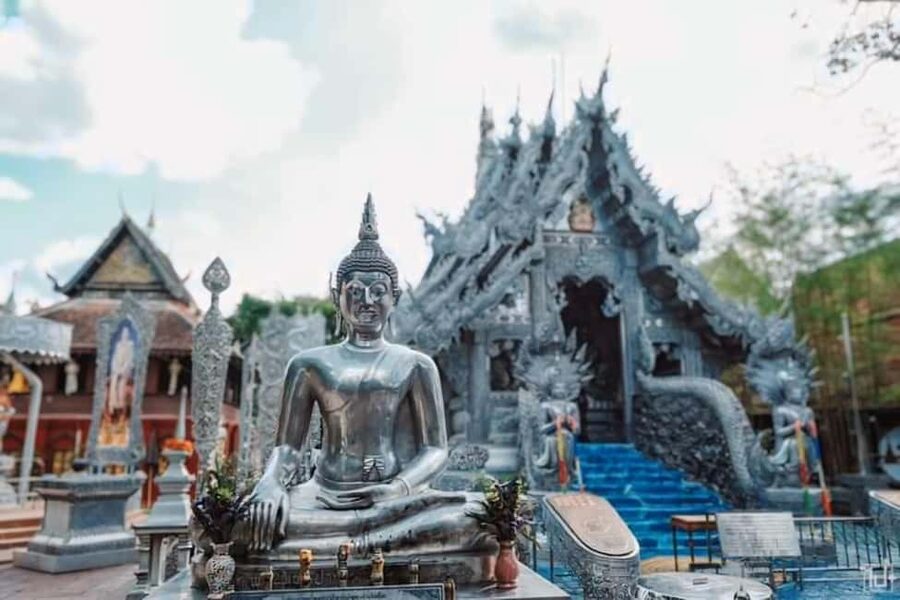
Wat Sri Suphan is the tour’s most visually unusual temple. Known as the Silver Temple, it is decorated with detailed handcrafted silverwork that reflects traditional Lanna artistry and Buddhist symbolism.
The exterior is the main attraction. Silver-toned panels cover the structure with intricate patterns, giving it a look unlike the more familiar gold-heavy temples in Chiang Mai. You can spend your time studying the craftsmanship, repeated motifs, and religious images worked into the decoration.
This stop is especially worthwhile if you enjoy handmade art. The silverwork gives you a direct link to local craft traditions rather than only a grand architectural view. It also makes a useful contrast with Wat Phra Singh, where gold and painted murals set the visual tone.
There is an important access restriction. Women cannot enter the inner area of Wat Sri Suphan, so female visitors should expect to admire the exterior rather than see every part of the temple. One recent account also notes that women are unable to enter another temple interior on the route. The guide should help explain the boundaries, but it is wise to treat the restriction as part of the visit rather than an unpleasant surprise.
If you are a woman, you can still get a strong impression of Wat Sri Suphan from outside. The silver decoration is the reason to come, and much of it can be appreciated from the exterior. Still, if interior access is essential to your idea of a temple visit, this tour may not fully meet your expectations.
More hill tribe village visits:
- Chiang Mai: Elephant Sanctuary, Long Neck & Sticky Waterfall
★ 4.9 · 2,262 reviews - 4-Hour Doi Suthep & Hmong Hill Tribe Village from Chiang Mai
★ 4.7 · 696 reviews - Chiang Mai: Long Neck Village & Chiang Rai’s Iconic Temples
★ 4.3 · 338 reviews - Chiang Dao Cave & 5 Hill Tribe villages
★ 5.0 · 181 reviews
The Karen Long Neck Village visit
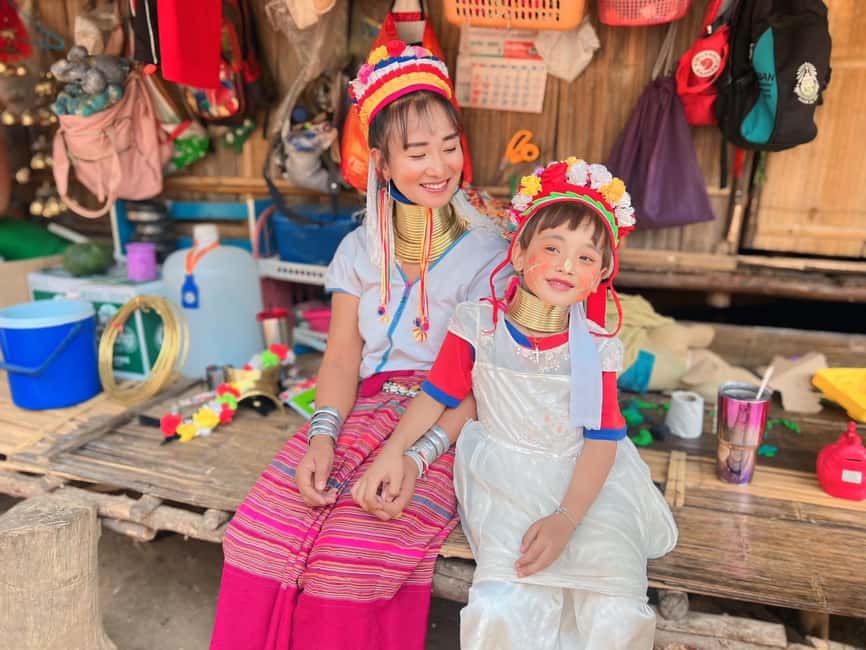
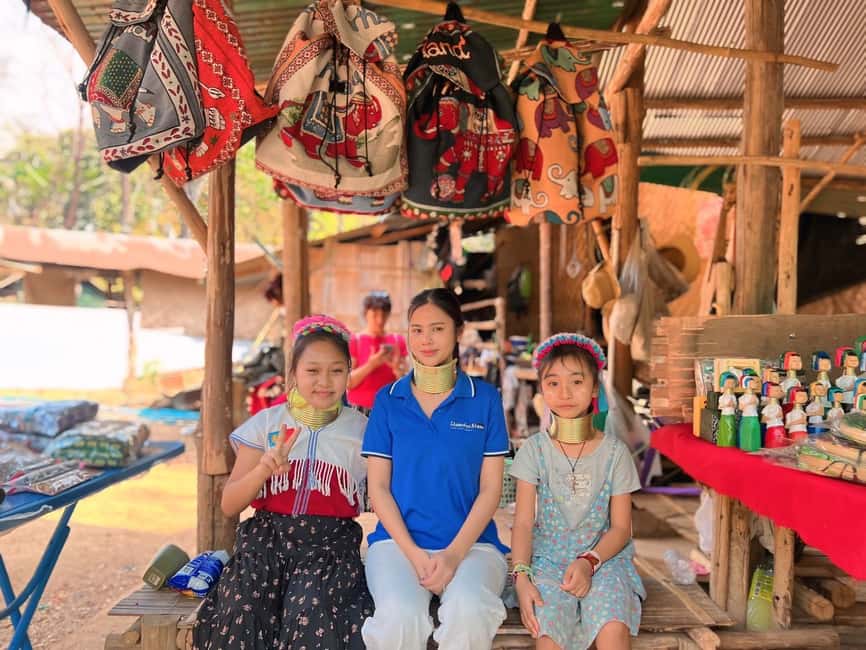
The final stop changes the subject from sacred buildings to human traditions. At the Karen Long Neck Village, you learn about the history and culture of the Karen Padaung people, see traditional weaving, and have the chance to support local artisans.
This part of the tour needs a thoughtful approach. The long neck tradition often attracts attention because of the brass coils worn by some women, but the people you meet should not be reduced to a spectacle. Use the visit to learn about their background, observe the weaving, and buy something only if you genuinely value it.
The opportunity to purchase traditional clothing and souvenirs can make the stop more personal. It also gives you a direct way to support local craftspeople. You do not need to buy anything, but you should bring cash if you want to purchase handmade goods or other items.
I appreciate that the village visit includes more than a quick photo opportunity. The stated focus includes cultural traditions, history, weaving, and local artisans. Those elements give you a better reason to visit than simply seeing a distinctive form of dress.
At the same time, cultural village visits can feel complicated. Your experience will depend heavily on how the guide frames the stop and how you behave there. Ask questions politely, request permission before taking photographs, and remember that this is a community setting. A respectful visit is more rewarding than rushing from one display to the next.
What the guide adds to the experience
The quality of a short sightseeing tour often depends on the guide. Four hours does not leave much room for confusion, poor timing, or vague explanations. A good guide helps you understand what you are seeing and keeps the route moving.
Mosquito received especially warm praise for giving excellent information, knowing the temples well, and treating the group kindly. Magie, also called Margareth, was singled out for making the tour pleasant. Those comments suggest that the guide can be an important part of the experience, particularly at the temples where symbols and customs may not be obvious.
The tour is conducted in English. If you want more from the route, ask direct questions. You might ask why the chedi at Wat Chedi Luang is partly ruined, what makes Phra Buddha Sihing important, or how the silver decoration at Wat Sri Suphan reflects Lanna design.
You should also keep your expectations realistic. The available information does not specify group size, so I would not assume a private or small-group outing. The guide can provide interpretation, but the pace still needs to suit several stops in one morning or afternoon.
Price, extra fees, and what you receive
At $22, this is a low-cost way to connect several Chiang Mai sights. You receive red songthaew transport, an English-speaking guide, and admission to the Karen Long Neck Village. For someone staying in or near the old city, that can be good value.
The important detail is the temple entrance fees. Recent experience indicates that the three temples are not included in the initial price and may cost 50 baht per temple. That adds about 150 baht in total, though you should confirm the current arrangements when booking because admission policies can change.
This extra amount is small compared with the convenience of moving between four different stops. Still, clear pricing matters, especially when the headline cost is low. Bring enough Thai baht for the temples, food, drinks, souvenirs, and any personal expenses. Not every place accepts cards.
Meals and beverages are not included. Four hours is short enough that you may not need a full meal during the tour, but you should eat beforehand if you are sensitive to heat or long periods without food.
Pickup, clothing, and physical comfort

Pickup is included only for hotels and accommodations in Chiang Mai’s old city or just outside the city center. If you stay beyond that area, you need to meet the group in front of the Burger King at Thapae Gate.
That meeting point is straightforward, but allow enough time to find it. Thapae Gate is a familiar central location, and arriving early is better than trying to locate the songthaew at the last moment.
Wear comfortable clothing that covers your shoulders and knees. This is both a temple requirement and a practical choice for a route involving several stops. Comfortable shoes are also sensible, although the supplied information does not specify how much walking is involved.
The experience is not suitable for pregnant women, people with back problems, or wheelchair users. The red songthaew and multiple stops may be difficult for anyone who needs step-free access or extra back support. If mobility is a concern, you should contact the provider before paying rather than assume accommodations are available.
Who will enjoy this Chiang Mai tour most
I would recommend this tour to a first-time Chiang Mai visitor who wants a broad introduction without spending a full day on sightseeing. It suits you if you want temples, local transport, traditional art, and a cultural stop in one compact outing.
It also works well for visitors who prefer a guide at religious sites. The English commentary can help you understand why the buildings matter instead of simply collecting photographs.
You may want a different plan if you prefer slow temple visits, independent exploration, or long stretches of quiet time. Three temples in four hours, followed by the village, means the schedule is active. It is a sampler, not a leisurely study of one neighborhood.
Women should also consider the interior restrictions at two temples. You can still see the outside of Wat Sri Suphan and enjoy its silver decoration, but the experience is not identical for everyone.
Should you book it?
Book this tour if you want an affordable, well-packed introduction to Chiang Mai’s major temples and a chance to learn about Karen Padaung traditions. The red songthaew, the striking Silver Temple, and the contrast between Buddhist sites and local craft culture give the route more character than a basic temple transfer.
Before booking, budget roughly 150 baht for possible temple admissions, bring cash, dress properly, and confirm the pickup point. Choose it with the understanding that the pace is brisk and access is restricted in two temple interiors for women.
For a short stay, I think the combination is worthwhile. You get strong visual variety, useful cultural context, and guides such as Mosquito or Magie who can make the temples easier to understand. If you want a calm, deeply detailed temple day, choose a slower private visit instead.
FAQ
How long does the tour last?
The tour lasts four hours.
What language is the tour conducted in?
The tour includes a live English-speaking guide.
What transport is used?
You travel by traditional red songthaew, Chiang Mai’s familiar shared taxi.
Where is pickup available?
Pickup is available from hotels and accommodations in Chiang Mai’s old city or just outside the city center.
Where do I meet the tour if my accommodation is outside the pickup area?
You meet in front of the Burger King at Thapae Gate in Chiang Mai.
Which temples are included on the route?
The route visits Wat Chedi Luang, Wat Phra Singh, and Wat Sri Suphan, also known as the Silver Temple.
Is the Karen Long Neck Village entrance included?
Yes. Entrance to the Karen Long Neck Village is included.
Are meals and drinks included?
No. Meals and beverages are not included.
What should I wear to the temples?
Your shoulders and knees must be covered. Comfortable clothing is recommended.
Is the tour suitable for wheelchair users or people with back problems?
No. The experience is not suitable for wheelchair users or people with back problems. It is also not suitable for pregnant women.
Should I bring cash?
Yes. Cash is recommended for personal expenses, and recent experience indicates that the three temple visits may involve fees of about 50 baht each. Not all places accept credit cards.
Can I cancel the booking?
You can cancel up to 24 hours in advance for a full refund. A reserve-now, pay-later option is also available.
Just added around Chiang Mai
- Chiang Mai: Chiang Rai White, Blue & Black Temples Day Tour★ 4.2 · 16 reviews
- Chiang Mai Adventure ATV Secret Waterfall and Bamboo Rafting★ 5.0 · 16 reviews
- Inthanon Small-Group with Kew Mae Pan Trail from Chiang Mai include Lunch★ 4.5 · 16 reviews
- 2-Day Best of Chiang Rai from Chiang Mai Private Package★ 4.5 · 16 reviews
- Doi Inthanon Discovery Tour: Waterfalls, Villages & Highest Peak★ 3.5 · 16 reviews
- Private-Tour Doi Suthep Temple and Khun Chang Kien Village Half-Day★ 4.5 · 16 reviews
- Chiang Mai Iconic Temples and City Tour★ 4.5 · 17 reviews
- Fantastic! Famous Doi Inthanon National park tour with 2hr trekking★ 4.5 · 17 reviews
Temple Tours, compared.

Chiang Rai Temples, Karen Tribe and Hot Springs
Read our review →
City Highlights Temple and Market Walking Tour
Read our review →
Bangkok by Night: Temples, Markets and Food Tuk-Tuk Tour
Read our review →
Grand Palace, Wat Pho, and Wat Arun Guided Tour
Read our review →
Tiger Cave Temple, Emerald Pool and Hot Springs Tour
Read our review →
Chiang Rai White Temple and Blue Temple Day Tour
Read our review →Browse the lists this tour appears in