
Reviewed · FARMS
Old Phuket Farm Ticket – Countryside Local Life Culture
A farm can explain Phuket better than a beach bar. Old Phuket Farm offers a practical look at southern Thai life, with rubber tapping and rice farming shown in ways you can try yourself. I like the hands-on approach, and I also like the setting, where rice fields, pineapple plants, coconut trees, and old farm methods replace the usual resort scenery. The main drawback is time: two hours gives you a good introduction, but not a slow, full-day visit.
I especially like that this is a small-scale cultural outing rather than a staged show with a packed crowd. Groups may be as small as ten people, and guides such as Bernie have earned strong praise for clear English, patience, and a cheerful way of explaining each task. You should also know that meals are not included, even though food and the farm restaurant receive warm praise, so budget separately if you plan to eat.
In This Review
- Key points at a glance
- Why Old Phuket Farm makes a useful break from beach Phuket
- Meeting the buffaloes and seeing old farm work
- Rubber trees and the skill behind a sheet of rubber
- Rice fields where the lesson becomes hands-on
- Tin panning connects the farm to Phuket’s past
- Pineapples, fresh produce, and the taste of the island
- Inside the traditional Thai house
- What the guide and group size add
- Timing, price, and who will get the most from it
- Practical tips before you go
- Should you book Old Phuket Farm?
- FAQ
- Where is Old Phuket Farm located?
- How long does the experience last?
- What activities are included?
- Is the tour guided?
- Is admission included in the price?
- Is insurance included?
- Are meals included?
- Can children join the experience?
- Can I cancel the booking?
- Do I have to pay when I book?
Key points at a glance
- Rubber tapping in real farm surroundings: See how sap is collected and turned into sheets.
- Rice farming you can try: Learn old planting and harvesting methods instead of only watching from a path.
- Phuket’s tin-mining past: Test your patience with hands-on tin panning.
- Traditional kitchen skills: Watch coconut grating and curry paste-making in a Thai house.
- Small-group feel: Some sessions have around ten people, making questions and demonstrations easier.
- Good value for a short outing: At $36 per person, admission, an English guide, and insurance are included.
Why Old Phuket Farm makes a useful break from beach Phuket
Phuket is easy to reduce to beaches, boat trips, nightlife, and hotel pools. Old Phuket Farm gives you another piece of the island: the work that fed families and shaped local life before tourism took over.
The experience is not a museum visit where you stand behind a rope and read labels. You move around the farm, watch demonstrations, and take part in simple tasks. That matters because farming techniques make more sense when you handle the tools, feel the rhythm of the work, and see the raw materials before they become food or useful products.
I would describe the visit as an introduction rather than a full history lesson. You will not spend hours studying Phuket’s past, but you will connect several familiar items, rice, rubber, coconut, pineapple, curry, and tin, with the people and work behind them.
The $36 price is reasonable if you value a guided cultural activity and want admission, an English guide, and full insurance bundled together. It is less compelling if you only want a quick photo stop or are looking for a long rural excursion. The two-hour length keeps the visit manageable, but it also limits how much detail the guide can cover.
A few more tours and experiences worth a look
- Phuket Lookouts Tour with Lunch at Organic Farm
★ 5.0 · 17 reviews - Half-Day Thai Cooking Class at Organic Farm in Chiang Mai
★ 5.0 · 19,087 reviews - Chiang Mai: Authentic Cooking Class with Market & Farm Visit
★ 4.9 · 4,546 reviews
Meeting the buffaloes and seeing old farm work
The visit begins at Old Phuket Farm, where you meet the buffaloes that once played a central part in Thai agriculture. This is a useful opening because it puts farming in human terms. Before machines took over much of the heavy work, buffaloes helped prepare fields and made rice cultivation possible on a larger scale.
You can expect the guide to explain the animal’s role rather than simply point it out as a photo subject. That gives the first stop some purpose. It introduces the idea that traditional farming depended on a close partnership between people, animals, soil, and seasons.
Families with children may find this part especially appealing because the subject is easy to understand. Adults who already know something about Thai agriculture may find it brief, but the buffalo stop works well as a starting point for the rest of the tour.
Keep your expectations sensible. This is not advertised as an animal-care program, and the supplied details do not promise feeding or riding. Treat the buffalo encounter as a cultural and farm-life presentation.
Rubber trees and the skill behind a sheet of rubber
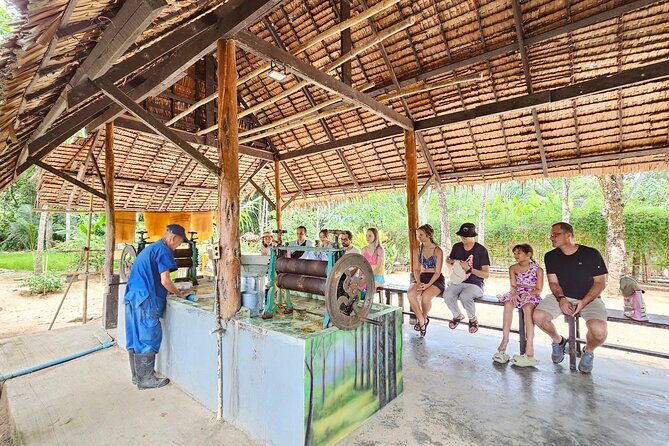
Next comes the rubber section, one of the more distinctive parts of the visit. Phuket and southern Thailand are closely linked with rubber production, but many people only encounter rubber as a finished product. Here, you can watch sap being collected from a tree and learn how it becomes a rubber sheet.
The process is simple to describe but easier to understand in person. A small cut in the bark allows the milky sap to run into a container. The tree must be handled with care, and the work depends on repeated attention rather than one dramatic moment.
I like this stop because it shows the gap between a plantation crop and the products you use every day. It also gives you a better sense of rural work. The task may look modest, but it relies on timing, repetition, and careful treatment of the trees.
Your guide may invite you to take part in the process, though the exact level of participation can depend on the session. Guides are available in English and Thai, and the English explanations have been praised as easy to follow, even for people who do not speak English perfectly.
Rice fields where the lesson becomes hands-on
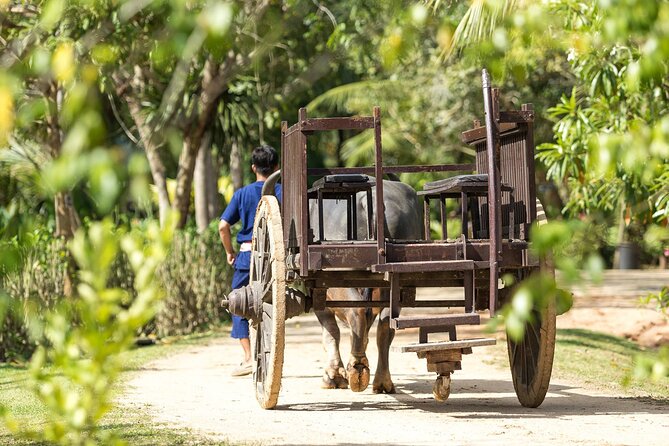
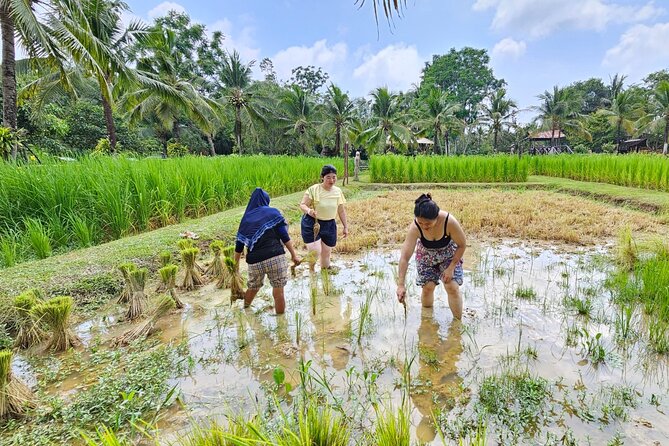
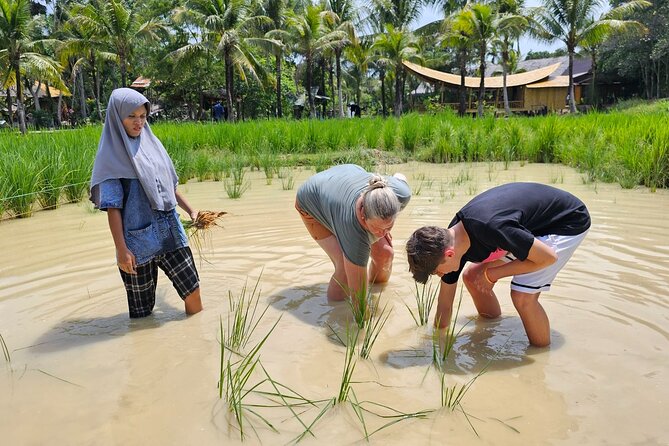
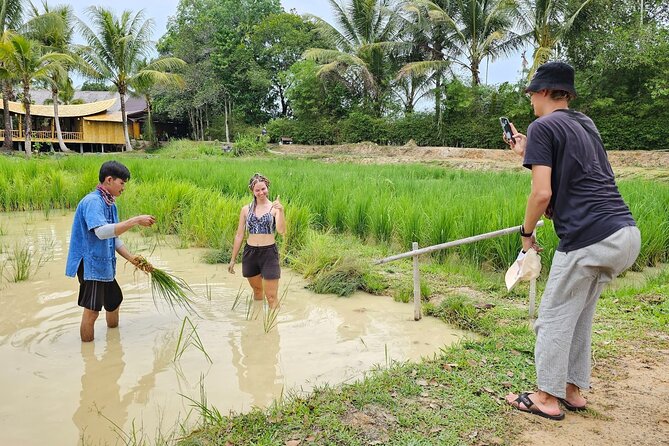
Rice is the heart of the farm visit. You will see fields and learn about traditional planting and harvesting methods, both of which help explain why rice is so important across Thailand and Asia.
The value here is not only the view. Rice farming involves a chain of jobs that can seem invisible when rice arrives neatly packaged in a shop. At Old Phuket Farm, planting and harvesting are presented as physical tasks, and you may get a chance to try the methods yourself.
This is one of the reasons I would choose the tour over a simple countryside drive. A drive gives you a glance at fields. A guided demonstration gives you a reason to look closely at how the fields are worked.
The rice section may not suit anyone hoping for a polished performance. Traditional farm work is muddy, repetitive, and practical. That is part of its appeal, but it also means you should come ready for an active demonstration rather than a formal indoor talk. The information provided does not specify clothing rules or facilities, so wear something comfortable for walking and participation.
Something different for another day:
- Phang Nga Bay Sea Cave Canoeing & James Bond Island by Big Boat
★ 5.0 · 4,666 reviews - Phuket: Elephant Jungle Sanctuary Ethical Feeding Experience
★ 4.8 · 4,359 reviews - From Phuket: Phang Nga Bay and Canoeing Tour by Big Boat
★ 4.7 · 3,528 reviews - Phi Phi Islands Adventure Day Trip w/ Seaview Lunch by V. Marine
★ 5.0 · 3,295 reviews
Tin panning connects the farm to Phuket’s past
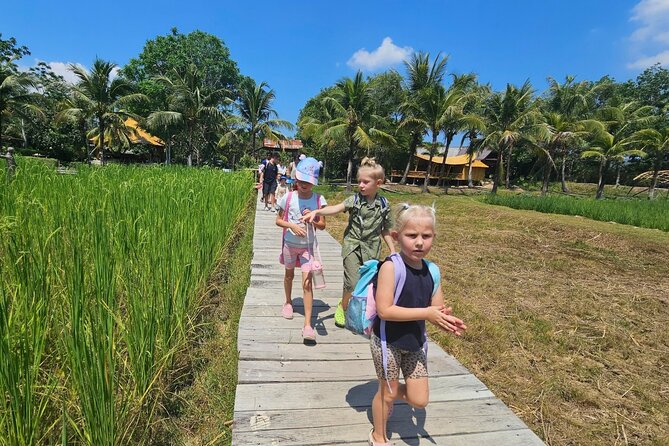
Tin panning adds a welcome change of subject. Phuket is known not only for agriculture but also for its former tin-mining industry, and this activity gives you a physical link to that part of the island’s past.
You will try to separate tin from other material using a pan. It sounds easy until you attempt it. The movement requires patience and a light touch, which makes it a good group activity and an amusing test of coordination.
This stop is valuable because it broadens the picture of Phuket. The island’s story is not only about crops and cooking. Mining also helped shape local work and trade, and tin panning shows that in a direct, memorable way.
I would not expect a serious mining lesson or a large industrial display. The appeal lies in the activity itself and in the short explanation of why tin matters locally. For many people, it may become the most unexpected part of the farm visit.
Pineapples, fresh produce, and the taste of the island
The farm also introduces you to Phuket’s pineapples and other local produce. You can see how pineapples are grown and enjoy fresh fruit during the visit.
This is a small detail with real value. Fruit tastes different when you have just learned where it comes from and how it is cultivated. The pineapple stop gives the tour a pleasant sensory finish after the more work-focused demonstrations.
The farm setting, with rice fields, rubber trees, and pineapple plants, makes the walk feel varied. You are not looking at one crop repeated across a huge plantation. Instead, you get a compact picture of several parts of rural life in one place.
Do not expect a produce market or a major tasting menu. The stated experience includes fresh pineapples and local produce, while meals are separate. If you are hungry, the farm restaurant may be worth considering, but food should be treated as an extra cost rather than part of the $36 ticket.
Inside the traditional Thai house
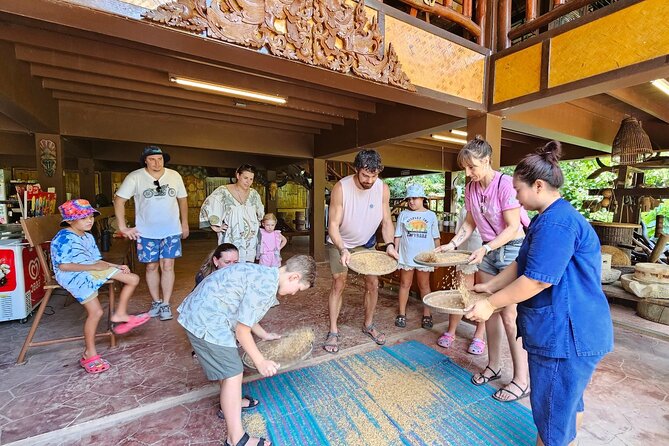
The traditional Thai house is where farming turns into cooking. You can watch coconut grating and curry paste-making using fresh ingredients from the farm.
Coconut grating is an old kitchen task that many people know only through the finished ingredient. Seeing the method helps you understand the labor behind coconut milk, desserts, and many southern Thai dishes. Curry paste-making offers another useful lesson: Thai cooking begins with fresh herbs and spices ground together, not with a ready-made sauce poured from a jar.
The hands-on element is important here. You may be allowed to help with the preparation, giving you something concrete to remember after the tour. The exact activity can vary, but the experience information specifically highlights coconut grating and curry paste-making as participatory demonstrations.
Several strong comments about the outing focus on the food and the friendliness of the staff. That should encourage you to consider eating on site, but keep the cost distinction clear: meals are not included in the ticket. The tour can still be worthwhile without a meal, particularly if you are using it as a cultural stop between other plans.
What the guide and group size add
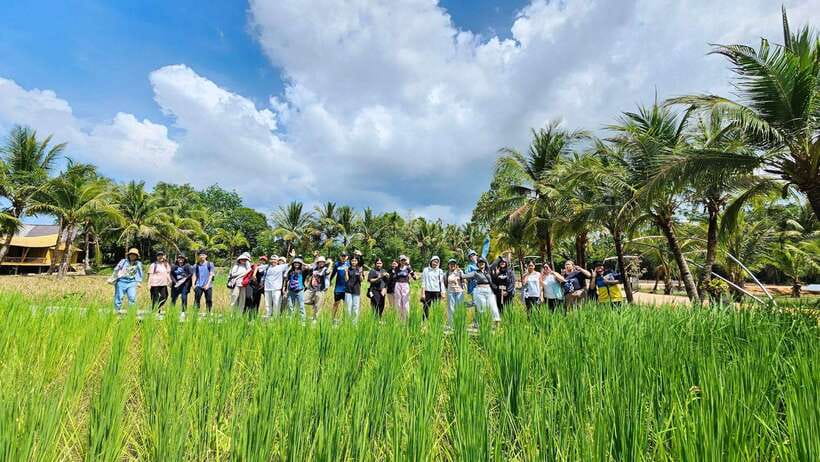
A farm tour depends heavily on the person leading it. The strongest detail here is the praise for Bernie, who has been described as friendly, fluent in English, enthusiastic, and able to answer many questions.
That combination matters more than a long list of activities. Rubber tapping, tin panning, and curry making can all become forgettable if the guide rushes through them. A guide who explains the reason behind each task helps you connect the separate stops into a clear picture of local life.
The activity is available with live guides in English and Thai. English may not be perfectly polished in every session, but the available feedback points to clear explanations that are easy to understand, including for people who are not fully comfortable speaking English.
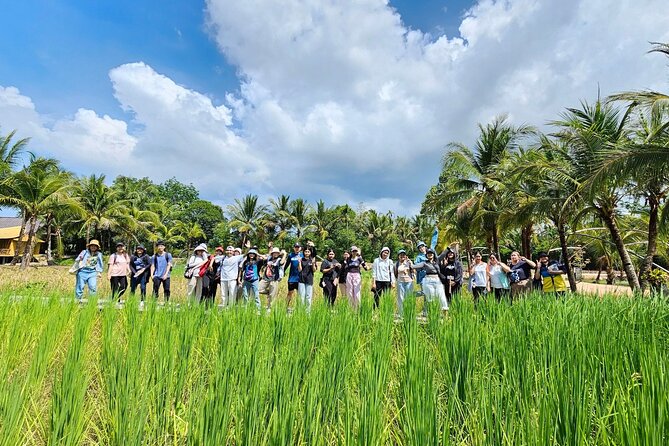
Group size also affects the experience. A group of about ten people gives you a better chance to hear the guide and take a turn with each activity. It also makes the farm feel less like a conveyor belt of tour groups. Group size can change, so do not treat ten as a guarantee, but the small-group format is one of the tour’s strongest practical features.
Timing, price, and who will get the most from it
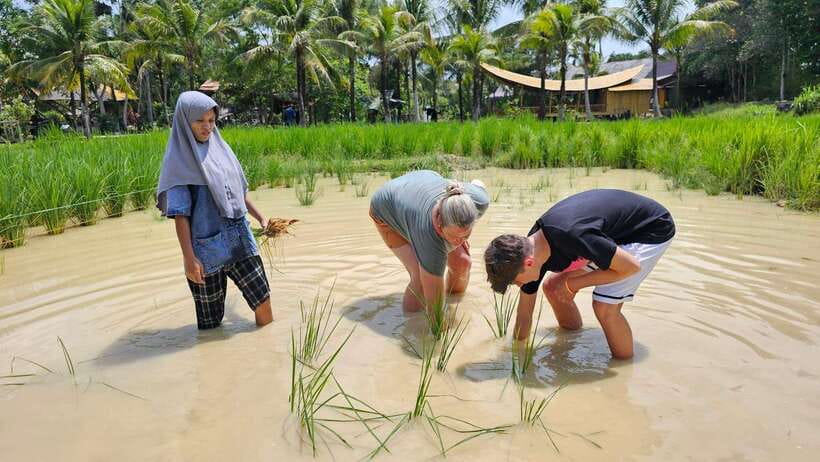
Two hours is a smart length for this activity. You get several subjects without giving up an entire day, and the tour finishes at the farm so you can continue on your own schedule.
That short duration does mean the pace may feel brisk. You will move from buffaloes to rubber, rice, tin, pineapples, and the Thai house in one visit. If you want long conversations at every stop, you may leave wishing for more time.
At $36 per person, I see the price as fair for visitors who want context and participation. Admission, an English guide, and full insurance are included. You are paying for a guided cultural experience, not simply entry to a patch of farmland.
I would recommend it most strongly to:
- Families looking for an activity children can touch and try.
- First-time visitors who want to see more than Phuket’s beaches.
- Food lovers curious about coconut and curry preparation.
- Anyone interested in farming, local produce, or traditional work.
- People with a spare two-hour window who prefer a small group to a large coach tour.
It may be less suitable if you dislike outdoor walking, hands-on tasks, or demonstrations of basic farm labor. It may also feel too short for anyone seeking a serious study of Phuket’s agricultural or mining past.
You can come independently to the meeting point, which gives you control over the rest of the day. Transport from your hotel is not listed as part of the activity, so you should plan your own way to Old Phuket Farm.
Practical tips before you go
Book this when you want a cultural break from Phuket’s main attractions, not when you want a full meal or an all-day countryside trip. The flexible booking terms also help: you can cancel up to 24 hours in advance for a full refund, and you can reserve now and pay later.
Children aged 4 to 11 use the child ticket category. The farm includes active demonstrations, so comfortable clothing is a sensible choice, although the supplied details do not set a specific dress code.
Allow time to ask questions. The best part of the visit is not rushing from one photo stop to the next. A good guide can explain why rubber is collected in a certain way, how rice work is organized, or what makes southern curry paste different in the kitchen.
The tour ends on site. That is useful if you want to eat at the farm restaurant, spend a little more time in the area, or continue to another Phuket attraction without being tied to a return group transfer.
Should you book Old Phuket Farm?
I would book it if you want real activities rather than passive sightseeing. The combination of rice, rubber, tin, pineapple, buffaloes, and traditional cooking gives you a compact but thoughtful look at Phuket beyond the resorts.
The strongest reasons to go are the small-group feel, the chance to try several tasks, and the quality of the guide, especially if Bernie is leading your session. The main limits are the two-hour schedule and the fact that food costs extra.
For $36, this is a good choice for families, curious first-time visitors, and anyone who wants to understand the island through work and food. Skip it only if your Phuket plans are already packed with outdoor excursions or if you would rather spend your time at the beach. For a short, practical lesson in local life, Old Phuket Farm earns its place on your itinerary.
FAQ
Where is Old Phuket Farm located?
Old Phuket Farm is in Phuket, Thailand, in the Gulf of Thailand region. The meeting point is at the farm itself.
How long does the experience last?
The visit lasts two hours.
What activities are included?
The experience includes buffalo viewing, rubber tapping, rice planting and harvesting methods, tin panning, pineapple cultivation, coconut grating, and curry paste-making.
Is the tour guided?
Yes. A live guide is provided in English or Thai.
Is admission included in the price?
Yes. The admission fee is included.
Is insurance included?
Yes. Full insurance is included.
Are meals included?
No. Meals are not included in the ticket price.
Can children join the experience?
Yes. The child ticket applies to children aged 4 to 11.
Can I cancel the booking?
Yes. You can cancel up to 24 hours in advance for a full refund.
Do I have to pay when I book?
No. The reserve-now, pay-later option lets you book without paying immediately.
Just added around Phuket
- Phuket: Private Surfing Lessons at Beautiful Kata Beach★ 4.7 · 16 reviews
- Banana Beach Snorkeling Adventure: A Day in Paradise★ 4.0 · 16 reviews
- ️ Phuket Sunset Chaser Tour (Private & All-Inclusive)★ 5.0 · 16 reviews
- Hanuman World Zipline & Skywalk Phuket★ 4.5 · 17 reviews
- Phi Phi Islands One Day Tour by Speedboat From Phuket★ 4.0 · 17 reviews
- Phuket: Day Trip to Coral and Racha Island by Speedboat★ 4.4 · 17 reviews
- Muay Thai Boxing Class for Beginners★ 4.9 · 17 reviews
- Phuket City Half-Day Guided Tour with Lunch and Pick-up★ 4.5 · 17 reviews
Farms, compared.
Half-Day Thai Cooking Class at Organic Farm in Chiang Mai
Read our review →
Authentic Cooking Class with Market & Farm Visit
Read our review →
![Floating & Railway Market and Coconut Farm Tour [Optional Luxury]](https://1.introducingthailand.com/wp-content/uploads/floating-railway-market-and-coconut-farm-tour-optional-luxury-400x267.jpg)
Floating & Railway Market and Coconut Farm Tour [Optional Luxury]
Read our review →
Cooking Class with Organic Farm in Chiang Mai at Mama Noi
Read our review →Browse the lists this tour appears in