
Reviewed · ELEPHANT TOURS
Phuket: Elephant Jungle Sanctuary Ethical Feeding Experience
Big ears, soft trunks, and no elephant rides. This Phuket experience keeps things simple: you feed rescued elephants, hear about their lives, and watch them in a natural setting. I like the clear no-riding, no-show approach, and I like that the $28 price gives you a meaningful encounter without taking up your whole day.
The main drawback is the short running time. The activity lasts about one hour, and the educational talk may be brief depending on your guide. Still, for a quick, low-cost introduction to ethical elephant care, this is a sensible choice, especially if you want time for the beach or another Phuket activity afterward.
In This Review
- Key points at a glance
- Why this Phuket elephant visit feels different
- Arriving at Elephant Jungle Cafe
- The opening talk sets the rules
- Feeding fruit, grass, and banana leaves
- Walking around the feeding area
- What ethical means here
- Is $28 good value?
- Best times and useful preparation
- Who should book this experience?
- Should you book the Phuket Feed Me program?
- FAQ
- How long does the Elephant Jungle Sanctuary Phuket experience last?
- What is included in the $28 price?
- Is transportation included?
- Can I ride the elephants?
- Can I bathe or wash the elephants?
- What food will I give the elephants?
- What languages are available, and is the site wheelchair accessible?
Key points at a glance
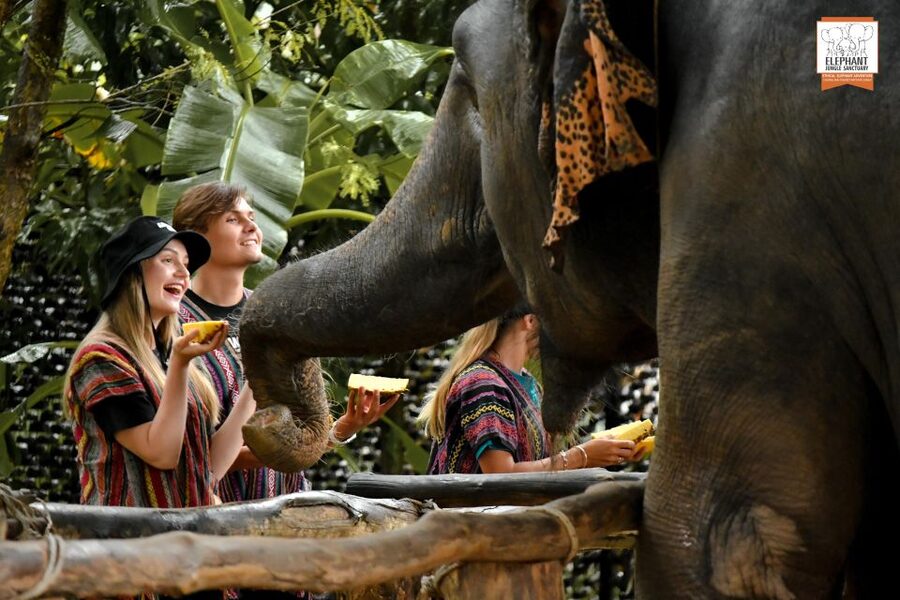
- Feed elephants by hand: Fruit or grass is provided by the elephant vet, with the exact food depending on the time of day.
- No riding or bathing: The program focuses on feeding and observation rather than performance or forced contact.
- Learn each elephant’s story: Guides explain behavior, temperament, age, rescue background, and safe ways to act around the animals.
- One hour is all you need: The visit covers feeding and a walk around the feeding area, making it easy to fit into a busy Phuket schedule.
- Meet at Elephant Jungle Cafe: Transportation is not included, so plan your own way to the sanctuary.
- Finish with a cold soft drink: It is a small touch, but welcome after standing outdoors with a pile of bananas or grass.
Why this Phuket elephant visit feels different
Thailand has a complicated relationship with elephant tourism. Elephants have long been used in logging, circus acts, riding camps, and other forms of entertainment. A sanctuary visit can help support rescued animals, but the word ethical is not enough by itself. You need to look at what the animals are asked to do.
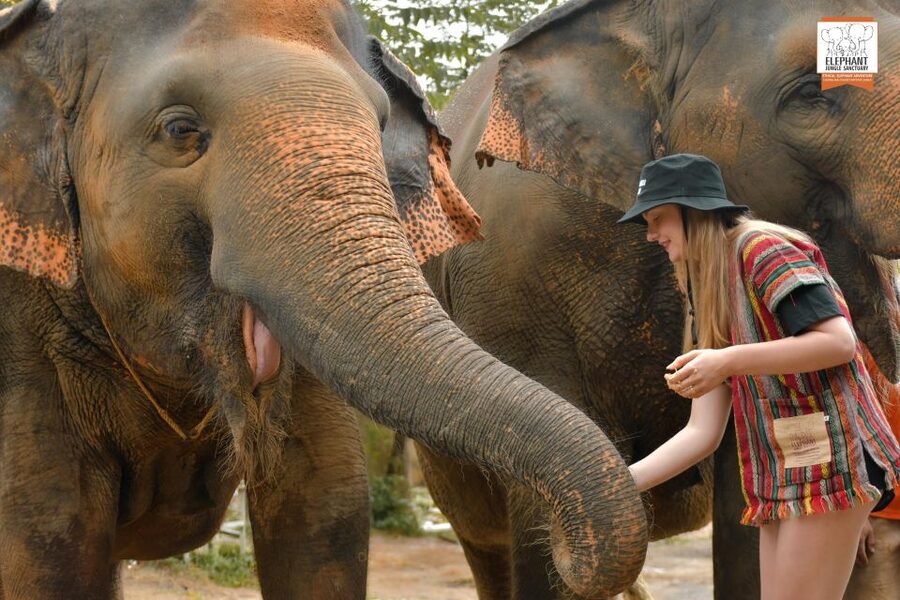
Here, the advertised program is limited to feeding, observing, and walking around the feeding area. There are no rides, shows, or bathing sessions included. That matters because the elephants are not being asked to perform for the group.
The sanctuary’s Phuket program is built around rescued elephants. Several accounts describe the animals as coming from circus, logging, riding, and captivity backgrounds. One account refers to 29 female elephants, while another describes the property as giving them more than 60 acres to roam. The supplied details do not provide a full profile for every animal, so I would treat those numbers as information shared during the visit rather than a complete official history.
What you get is not a long safari-style outing through the jungle. It is a close-range feeding session with some education attached. That honest description helps set expectations. You are buying a short encounter, not a full-day conservation course.
More Elephant Tours in Phuket
- Phuket: Elephant Sanctuary Guided Tour with Hotel Transfers
★ 4.8 · 2,020 reviews - A Morning with the Elephants at Phuket Elephant Sanctuary
★ 5.0 · 1,693 reviews - Phuket: Elephant Experience with Lunch or Dinner and Pickup
★ 4.7 · 1,387 reviews
Arriving at Elephant Jungle Cafe
Your meeting point is Elephant Jungle Cafe. Since transportation is not included, you must arrange your own route to the sanctuary. That can be an important cost factor if you are staying far away, especially since the advertised price covers entry, a guide, elephant food, and one soft drink, but not a hotel pickup.
Once you arrive, you enter a natural setting and wait for the group to begin. The waiting area has been described as comfortable and well maintained, with drinks available at the end of the visit. The site is also listed as wheelchair accessible, which gives the experience a wider reach than some rougher animal facilities.
Try to arrive on time. The schedule has several starting times, and the activity is only an hour. A few people were accommodated in another time slot after arriving early or late, but that should be treated as a courtesy, not a promise. If your day is tightly planned, allow enough time to reach the cafe without relying on a last-minute change.
A hat, sunscreen, insect repellent, and a camera are useful. You will be outdoors near vegetation and animals, so practical clothing and sun protection make sense. Bring your passport, or a copy, as this is listed among the required items.
The opening talk sets the rules
Before you approach the elephants, your guide explains how to behave around them. This is one of the most important parts of the activity, even though it may not be the most exciting at first.
You learn about elephant behavior, their personalities, and their individual limits. Guides also explain which elephants are comfortable with contact and which should be left alone. That distinction is a good sign. A responsible encounter does not treat every animal as a photo prop.
The guidance may cover simple points such as how to offer food, where to stand, and when not to touch. Some elephants have past trauma, age-related needs, or a temperament that makes close interaction unsuitable. You should follow the guide’s instructions even if the elephant beside you looks friendly.
The quality of this talk depends partly on your guide. Some guides give a warm, funny introduction and answer questions throughout the visit. Others keep the talk short. If learning about elephant welfare is a major reason for booking, ask questions while you have the chance.
Guides speak English and Thai. Specific guide names appearing in the experience feedback include Hannah, Michael, Eddie, and an English-speaking guide described as especially friendly. The guide assigned to your group will vary, but the overall pattern is clear: staff are expected to manage the contact carefully and explain the animals’ needs.
Feeding fruit, grass, and banana leaves
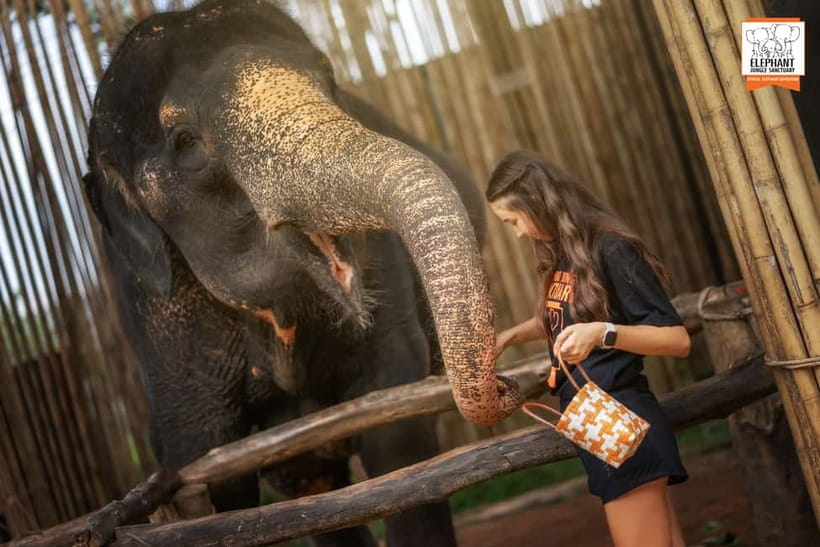
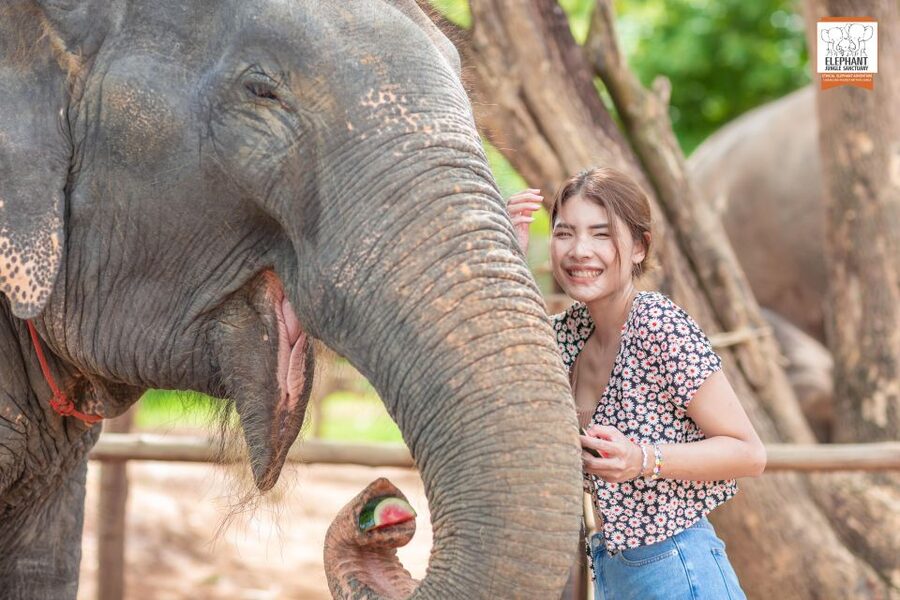
The feeding itself is the star of the hour. Elephant food is provided by the elephant vet, and it can vary with the time of day. At one morning session, the food was watermelon. At another time, the elephants received large banana leaves. The description also lists fruit or grass.
This variation is useful because it reflects the animals’ feeding needs rather than giving every group the same theatrical routine. Elephants eat large amounts, and watching them handle food with their trunks gives you a quick lesson in their strength and precision.
You may feed several elephants during the session. The animals come close, reach with their trunks, and take the food directly from your hand. That is a thrilling moment, but keep your movements calm. An elephant’s trunk may feel gentle, yet it is strong and surprisingly agile.
The encounter is designed to be close, but not careless. The guide controls the pace and helps you understand when contact is appropriate. Some accounts describe hand-feeding and gentle touching, while others stress that not every elephant wants to engage. Respecting that choice is central to the experience.
I like that you are not encouraged to make the elephants dance or perform. One account specifically praised the staff for telling people not to encourage elephants that display behavior linked to former captivity. This is a subtle point many visitors miss. A trained-looking trick may not mean a happy animal.
Bring your camera, but do not let photography take over. The staff may help take photos, and the setting gives you plenty of memorable subjects. Still, the best part is watching the elephant eat, breathe, and move without asking it to pose.
More Jungle Tours in Phuket
- Phuket: Paradise Trip ATV Jungle Adventure
★ 4.8 · 3,250 reviews - From Phuket: Elephant Jungle Sanctuary Feed and Shower Trip
★ 4.8 · 1,056 reviews - Phuket Ultimate Combo: Jungle ATV & Zipline Adventure
★ 4.7 · 264 reviews - Big Buddha Jungle Trekking and Temple tour with Lunch
★ 5.0 · 171 reviews
Walking around the feeding area
After feeding, you walk around the feeding area and observe the elephants. This portion is less structured than the hand-feeding, but it is where you can notice differences between individual animals.
One elephant may be eager to approach. Another may keep its distance. An older or more nervous animal may receive a quieter space. The guide can explain these differences and tell you more about each elephant’s age, background, and temperament.
The walking area is not presented as a long trek. You will not spend hours crossing Phuket’s interior. Instead, you move around the place where the elephants feed and watch them at close range. For families, first-time elephant visitors, and people with limited time, that is a useful format.
The short duration also has a practical benefit. You can visit in the morning and still have most of the day available. One person described the length as just right because it allowed time with the elephants without taking over the rest of the schedule. If you are staying in Phuket for only a few days, that efficiency has real value.
The tradeoff is that the hour can pass quickly. If you hope to study elephant care in depth, see a large part of the property, or spend a long time observing natural behavior, this program may feel introductory. It gives you a taste, not a full day of field observation.
What ethical means here
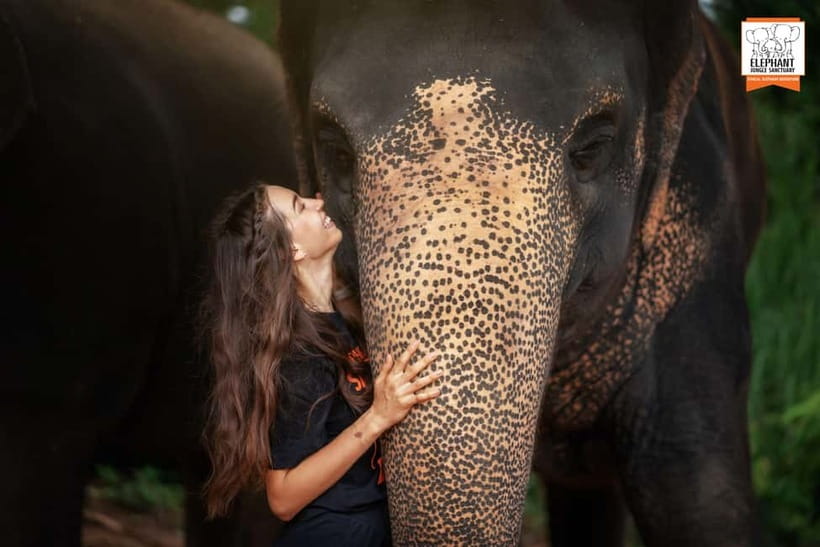
The strongest part of the program is its clear boundary around contact. You feed the elephants and observe them. Riding, shows, and bathing are not part of this activity.
That does not mean you should switch off your judgment. Ethical tourism is not a label you accept without thought. Pay attention to how staff manage the animals, whether elephants can move away, and whether visitors are told to respect individual limits. The information provided here points to several positive practices: rescued animals, no rides, no performances, no bathing, and guidance about which elephants should not be touched.
The sanctuary is described as non-governmental and self-sustaining through visitor support. That means the entry fee helps keep the operation going, though the exact distribution of the $28 is not specified. You should not assume that every dollar goes directly to food or veterinary care.
Some people also choose to buy gifts from the shop, with money described as going toward the elephants. That is optional. You do not need to spend beyond the ticket to have the experience, but small purchases may be another way to support the operation if you like what you see.
The best attitude is respectful curiosity. You are not visiting a petting zoo. These are large, rescued animals with complex histories. Feed them when instructed, keep your hands to yourself when asked, and let the elephants set the limits.
Is $28 good value?
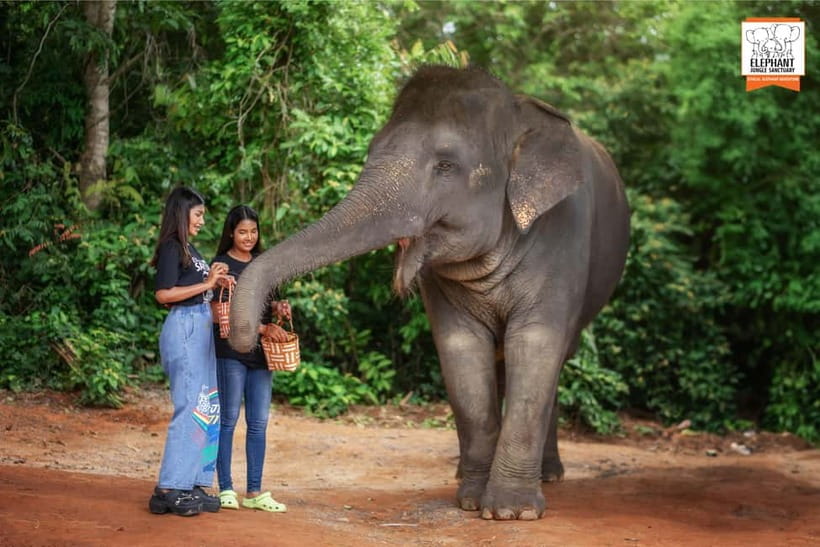
At $28 per person, the program is priced as an accessible short activity rather than a premium full-day excursion. You receive entry, a live guide, elephant food, and one soft drink. For an hour of structured contact with rescued elephants, I consider that a fair price.
The value improves if you want a compact activity. There is no included transportation, so your final cost depends on where you are staying and how you reach Elephant Jungle Cafe. If you need a taxi or ride service, include that expense before comparing this program with longer sanctuary visits.
The price may feel less attractive if you want extensive education or several hours with the animals. The talk can be brief, and the walking portion is limited to the feeding area. You are paying for a focused encounter, not a large itinerary.
Still, the low price can be a strength. It lets you support an elephant sanctuary without committing to an entire day or paying for activities you do not want, such as riding, bathing, or staged shows.
Best times and useful preparation
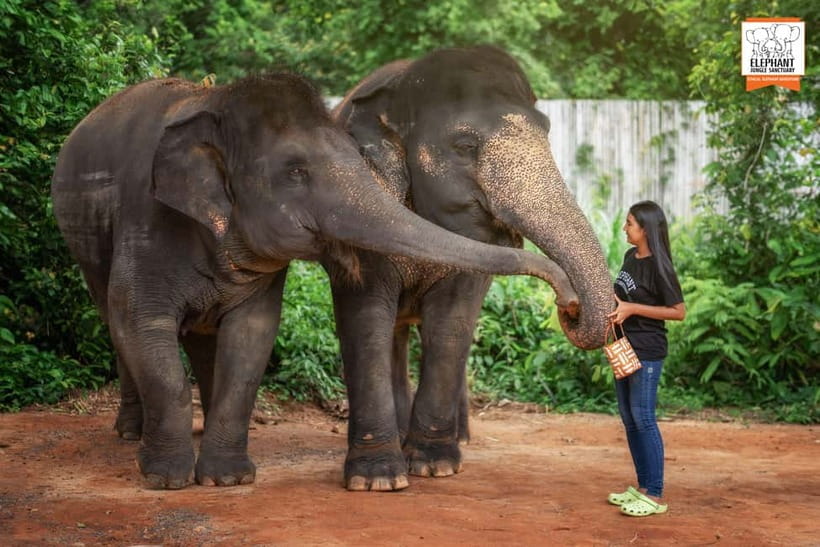
The activity is valid for one day, with starting times available according to the schedule. Food can change by time of day, so you may see watermelon, banana leaves, grass, or another fruit offering. If a particular feeding time appeals to you, check the available start times before booking.
Wear clothes suitable for warm outdoor conditions. A hat, sunscreen, and insect repellent are specifically recommended. Keep your camera ready, but protect it from sudden trunk movements and do not stand in a position the guide has marked as unsafe.
A soft drink is included at the end. It is not a meal, so plan food separately if the visit falls between breakfast and lunch. The one-hour format makes this easy.
The program is listed as wheelchair accessible. If you have specific mobility needs, you should still confirm the current route and access arrangements before arrival, since the exact feeding-area conditions are not detailed.
Free cancellation is available up to 24 hours before the activity for a full refund. You can also reserve now and pay later, which is helpful when Phuket plans are still shifting.
Who should book this experience?
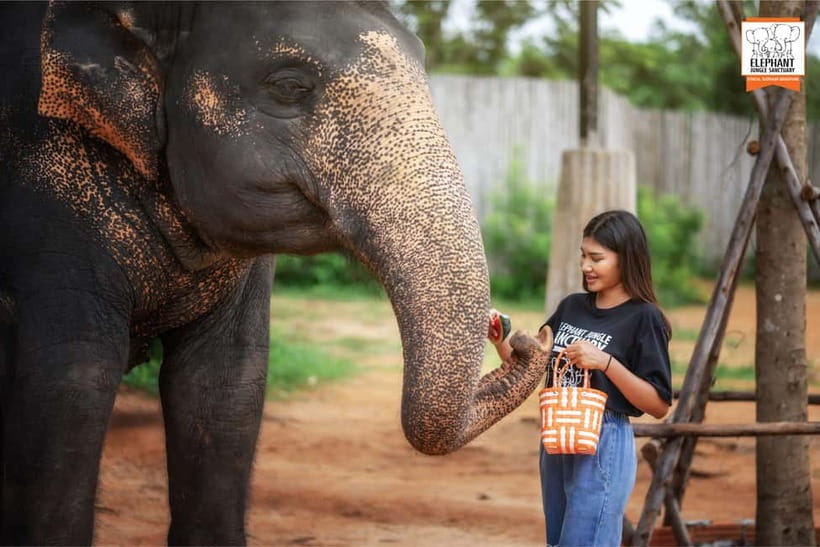
I would recommend it to you if you want:
- A short and affordable elephant encounter
- Hand-feeding without riding or shows
- A family-friendly activity with clear safety guidance
- A chance to hear rescue stories and ask questions
- A morning or midday outing that leaves time for other plans
- An accessible experience with English or Thai guidance
It may not suit you if you want a long visit, a detailed conservation lecture, or a remote wilderness experience. The program is organized and close to the feeding area, not a silent observation session far from other people.
It is also not ideal if you expect every elephant to welcome touching. The guide may allow contact with some animals and prohibit it with others. That is part of responsible care, even if it limits your photo opportunities.
Should you book the Phuket Feed Me program?
Yes, if your priority is a brief, respectful, and reasonably priced meeting with rescued elephants. The program gets its best value from what it refuses to include: no riding, no bathing, and no animal performances.
Book it knowing that the core experience lasts about one hour. You will feed elephants, hear about their lives, walk around the feeding area, take photos, and finish with a soft drink. That is enough for a memorable Phuket activity, but not enough for a full study of elephant welfare.
I would choose this program if I had limited time and wanted an ethical option with straightforward pricing. Arrive prepared, follow the guide’s rules, and let the elephants remain elephants rather than entertainers. That is the right reason to go.
FAQ
How long does the Elephant Jungle Sanctuary Phuket experience last?
The activity lasts about one hour. It includes feeding the elephants and walking around the feeding area.
What is included in the $28 price?
The price includes entry to Elephant Jungle Sanctuary Phuket, a guide, elephant food, and one soft drink.
Is transportation included?
No. You must arrange your own transportation to the meeting point at Elephant Jungle Cafe.
Can I ride the elephants?
No. Elephant riding is not included. The program focuses on feeding and observing the elephants.
Can I bathe or wash the elephants?
No. Bathing is not part of this activity. The encounter is based on feeding and walking around the feeding area.
What food will I give the elephants?
The elephant vet provides the food. It may be fruit or grass, and examples from different times include watermelon and large banana leaves.
What languages are available, and is the site wheelchair accessible?
Live guidance is available in English and Thai, and the activity is listed as wheelchair accessible.
Just added around Phuket
- Phuket: Private Surfing Lessons at Beautiful Kata Beach★ 4.7 · 16 reviews
- Banana Beach Snorkeling Adventure: A Day in Paradise★ 4.0 · 16 reviews
- ️ Phuket Sunset Chaser Tour (Private & All-Inclusive)★ 5.0 · 16 reviews
- Hanuman World Zipline & Skywalk Phuket★ 4.5 · 17 reviews
- Phi Phi Islands One Day Tour by Speedboat From Phuket★ 4.0 · 17 reviews
- Phuket: Day Trip to Coral and Racha Island by Speedboat★ 4.4 · 17 reviews
- Muay Thai Boxing Class for Beginners★ 4.9 · 17 reviews
- Phuket City Half-Day Guided Tour with Lunch and Pick-up★ 4.5 · 17 reviews
Elephant Tours, compared.
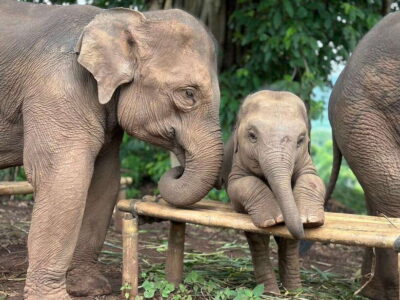
Elephant Sanctuary, Waterfall & Bamboo Rafting
Read our review →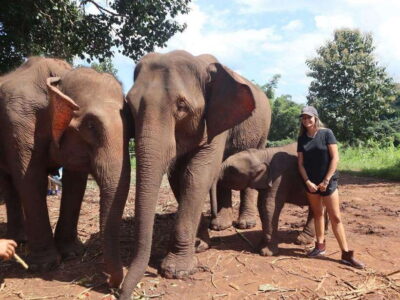
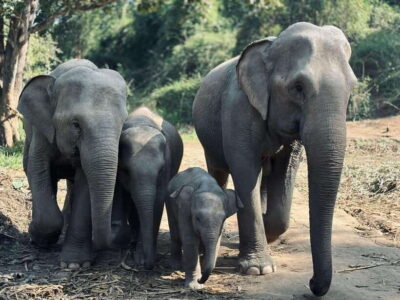
Elephant Sanctuary Feeding Program Half-Day Tour
Read our review →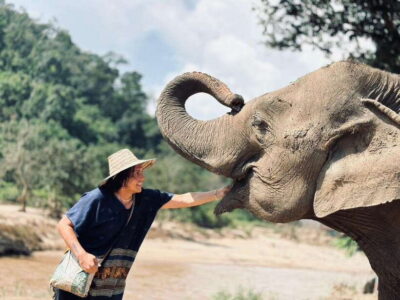
Elephant Sanctuary, Long Neck & Sticky Waterfall
Read our review →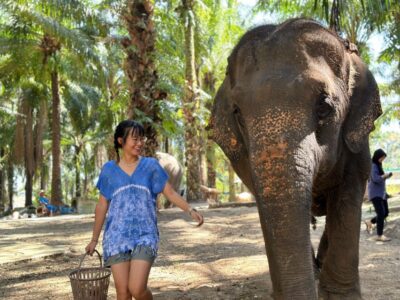
Elephant Bathing Session at Krabi Elephant Shelter
Read our review →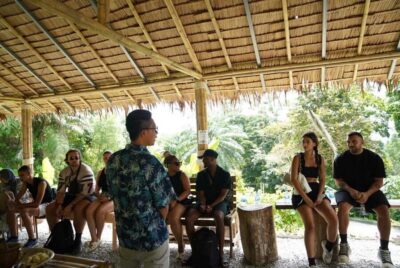
Elephant Sanctuary Guided Tour with Hotel Transfers
Read our review →
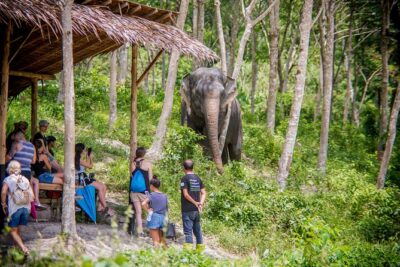
A Morning with the Elephants at Phuket Elephant Sanctuary
Read our review →Browse the lists this tour appears in