
Reviewed · RIVER KWAI & KANCHANABURI TOURS
Private Tour: Thai–Burma Death Railway Bridge on the River Kwai from Bangkok
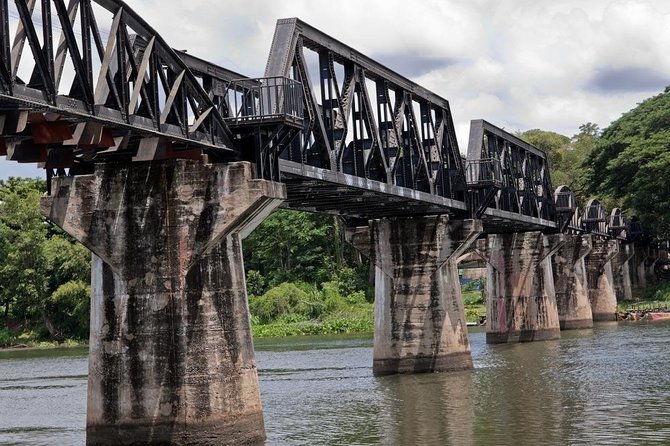
History takes the front seat here. This private Thai-Burma Death Railway tour combines a war cemetery, two museums, a long-tail boat ride, and a train journey from Bangkok to Kanchanaburi. I like the personal guide service and the chance to approach the bridge from the water, but you should prepare for a very long day in the van.
I also like that the $168.69 price includes transport, admissions, lunch, bottled water, the boat, and the train ride. The main drawback is the distance: the drive can take about 2.5 to 3 hours each way, and Bangkok traffic may stretch the return even longer.
In This Review
- Key points to know before booking
- Why this nine-hour journey matters
- The early hotel pickup and drive to Kanchanaburi
- Kanchanaburi War Cemetery: begin with silence
- JEATH War Museum and the story of the railway
- Approaching the bridge by long-tail boat
- Walking across the River Kwai Bridge
- Riding the Death Railway through the region
- Lunch after the train ride
- The guide and driver can shape the whole day
- Is $168.69 per person fair?
- Who should book this private River Kwai trip?
- Booking, cancellation, and practical planning
- Should you book it?
- FAQ
- Where does this River Kwai tour start?
- What time does the tour begin?
- How long does the experience last?
- Is this a private tour?
- Is hotel pickup included?
- What transport is provided?
- Is lunch included?
- Are admission fees included?
- Does the tour include a train ride?
- Can I cancel for a full refund?
Key points to know before booking
- The day begins at 6:30 am, which helps you get out of Bangkok before traffic becomes even worse.
- The private format gives you room to ask questions, with only your own group taking part.
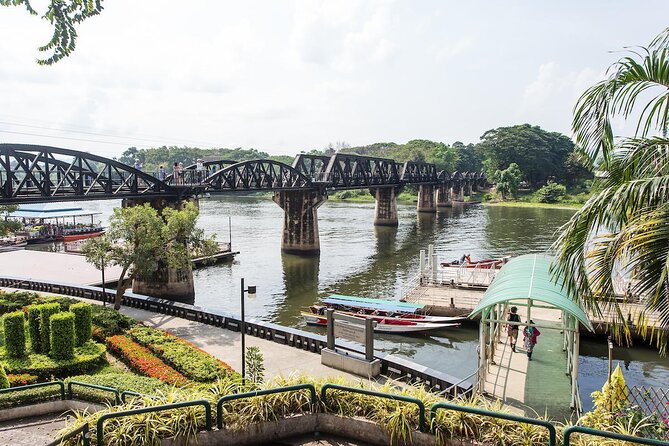
- The long-tail boat ride is one of the most memorable moments, bringing you beneath the River Kwai Bridge by water.
- You get both a historical visit and a scenic train ride, with the Death Railway train passing along the river and through the jungle region.
- Lunch and all listed admission fees are included, making the price easier to judge.
- The tour suits history-minded visitors best, but anyone who dislikes long road journeys may find the day tiring.
Why this nine-hour journey matters
The River Kwai Bridge is not just a photo stop. It represents one part of the Burma Railway, a Japanese wartime project built during World War II with the forced labor of prisoners of war and other laborers. Thousands died during the railway’s construction and imprisonment.
That context changes the mood of the day. You are not simply checking off a famous bridge. You are moving through places linked to captivity, disease, forced labor, and loss, while also seeing the ordinary Thai countryside around Kanchanaburi.
The tour covers roughly 80 miles, or 130 kilometers, west of Bangkok. That distance is the central practical fact. You spend many hours on the road, but a private vehicle lets you travel directly, stop when needed, and avoid collecting other groups from several hotels.
I would think of this as a full historical excursion rather than a quick sightseeing trip. The best parts require patience, and the early departure is not optional if you want a reasonable chance of getting clear of central Bangkok traffic.
More River Kwai and Death Railway trips:
- From Bangkok: Erawan Park & Kanchanaburi Small-Group Tour
★ 4.5 · 1,582 reviews - From Bangkok: Historical Day Tour to River Kwai
★ 4.6 · 868 reviews - Bridge on the River Kwai and Thailand-Burma Railway Tour
★ 4.5 · 658 reviews
The early hotel pickup and drive to Kanchanaburi
Pickup begins around 6:30 am from selected Bangkok hotels. The exact pickup area matters, so check that your hotel qualifies before booking. Confirmation is provided at booking, and the vehicle is air-conditioned.
The drive gives you a look at the countryside west of Bangkok. Around Kanchanaburi, sugar cane, rice paddies, and pineapple plantations form much of the rural scenery. It is a useful change from Bangkok’s dense streets, though you should not expect a sightseeing program during every minute of the drive.
The transport itself received strong praise for comfort and safe driving, but the journey can still feel long. One account described a 2.5-hour ride out and a 3.5-hour return. Another pointed out that much of the day can be spent in the vehicle, especially when Bangkok traffic is heavy.
That is why I would book this as a private outing for people who value convenience and historical access. You can use the drive to rest, watch the countryside, or talk with your guide. If you want a short trip with constant activity, this is not the right choice.
Kanchanaburi War Cemetery: begin with silence
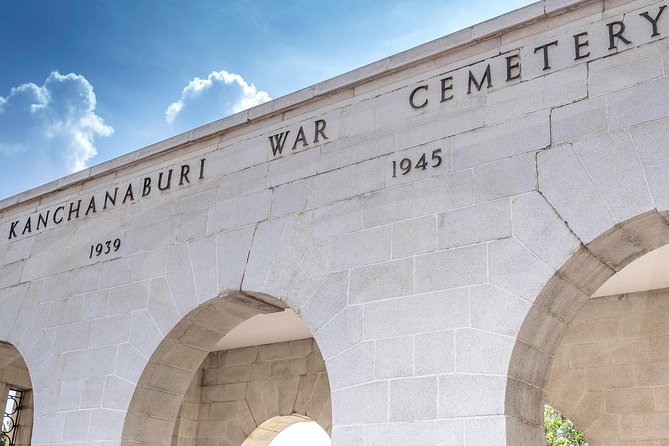
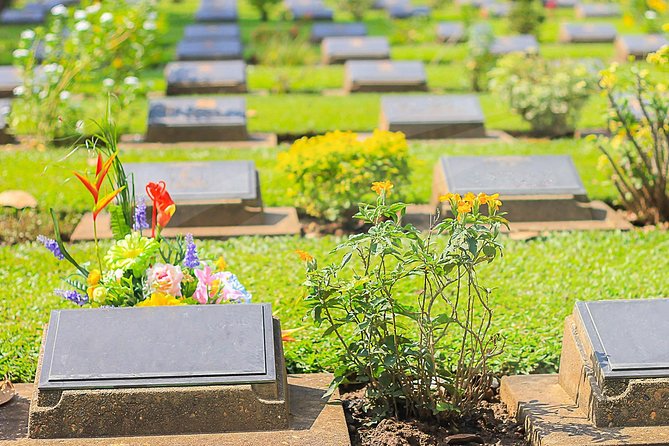
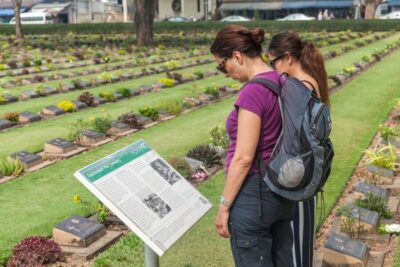
The first stop is Kanchanaburi War Cemetery, with about 30 minutes set aside. This is the main prisoner of war cemetery for people who died during Japanese imprisonment while the Burma Railway was being built.
The cemetery is a serious beginning to the day. Rather than starting with the bridge’s fame, you first confront the human cost connected to it. The neat rows of graves and the quiet setting make this a place for slowing down and paying attention.
Your guide can help explain the role of the cemetery and connect it to the later museum visits. Guides named Betty and Pearl were especially praised for giving clear background during the journey and at the sites, while other experiences depended more heavily on the guide’s command of English.
Thirty minutes is enough for a respectful visit, but it is not a long guided study. If you want time to read every marker and reflect at your own pace, you may feel the schedule is tight. I would use this stop to focus on the overall meaning of the cemetery rather than trying to absorb every detail.
JEATH War Museum and the story of the railway
Next comes the JEATH War Museum, also for about 30 minutes. Its purpose is to explain how the Death Railway was constructed by prisoners of war during World War II.
The museum is small, but it adds essential context before you reach the bridge. Photographs and displays help show the conditions inside the camps and the scale of the work demanded from those held there. The visit is sobering rather than entertaining, and you should give it the attention it deserves.
The limited time is both a benefit and a weakness. You get a clear introduction without spending the entire morning indoors, but you may want longer if wartime history is your main interest. The later Death Railway Museum and Research Centre adds another layer, so these stops work best together.
The quality of explanation can vary by guide. Several guides were praised for clear, informed commentary, including Betty, Pearl, Jenny, and Luk. One experience found the guide’s English difficult to follow. Since the tour is private, you can politely ask for clarification or request more explanation when a point is important to you.
A few more tours and experiences worth a look
- Bangkok: Damnoen Saduak Market and Maeklong Railway Market
★ 4.5 · 26,723 reviews - The Old Siam: Damnoen Saduak and Maeklong Railway Market
★ 4.5 · 10,992 reviews - Bangkok: Train Market & Floating Market with Boat Ride
★ 4.7 · 9,547 reviews - Half-Day Railway Market and Floating Market Tour in Thailand
★ 4.5 · 3,924 reviews
Approaching the bridge by long-tail boat
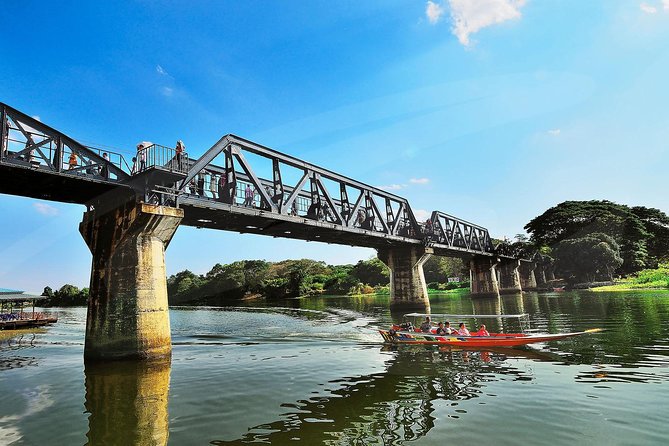
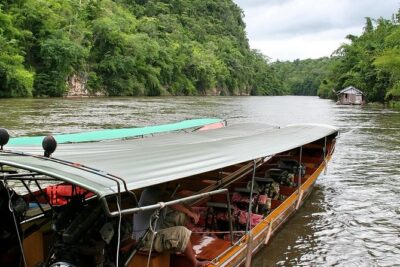
The 15-minute long-tail boat ride is a smart part of the route. Instead of arriving at the River Kwai Bridge by road and immediately joining the foot traffic, you approach from the water.
You cruise beneath the bridge, seeing its structure from a low angle as it comes into view. This was one of the most frequently praised parts of the day, and I can see why. The water approach gives the bridge a sense of place and makes the visit feel more like a journey than a roadside stop.
The ride is short, so keep your expectations in check. It is not a long river cruise or a major wildlife outing. Its value is the approach itself, especially when the bridge appears ahead of you and you begin to connect the scenery with the history explained earlier.
A long-tail boat also gives you a different perspective for photographs. Still, the tour’s main purpose is historical, not scenic. The river ride works because it supports the story rather than replacing it.
Walking across the River Kwai Bridge
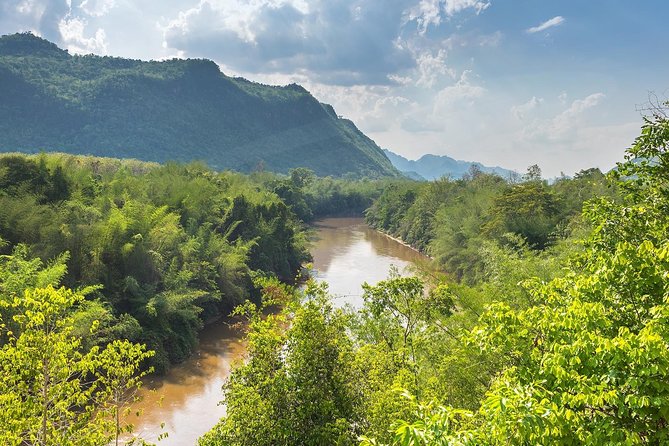
At the bridge, you have time to walk and look around. The bridge lies about a mile outside Kanchanaburi town and is linked to the beginning of the Death Railway.
The structure is famous, but the visit benefits from keeping its meaning in view. The bridge is a physical reminder of a much larger railway project and of the thousands of prisoners of war and forced laborers who died during its construction.
You may find this stop more open-ended than the cemetery and museum. Some guides provide a full explanation and then let you explore on your own, which can be a good balance. You can take photographs, walk across the bridge, and absorb the setting without being hurried through every step.
Do not expect a large block of uninterrupted time here. The bridge visit is listed at about 20 minutes, and the train schedule shapes the next part of the day. If bridge history is your main reason for booking, ask your guide how much time you will have for walking before the train departure.
Riding the Death Railway through the region
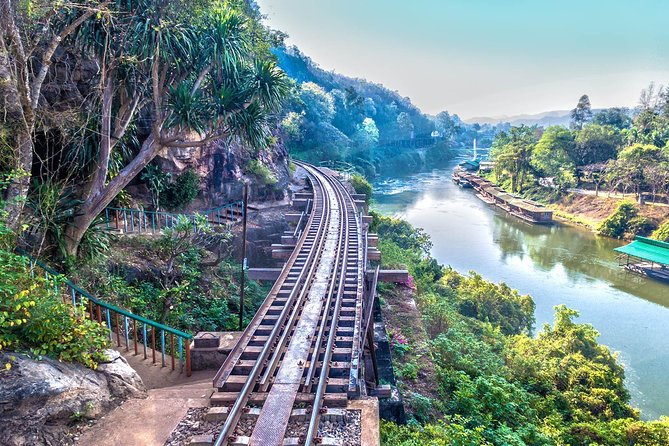
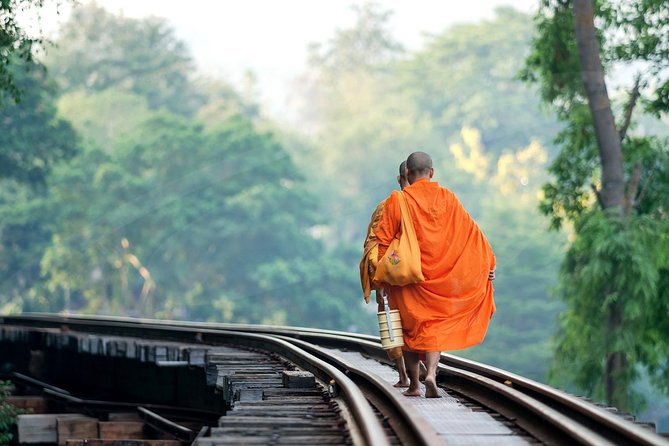
The train ride lasts about 1 hour and 30 minutes as part of the wider museum and railway stop. You board the train and travel through the jungle region, with sections running alongside the river.
This is the tour’s most active historical experience. Reading about the railway in a museum is one thing. Riding on the existing line gives you a physical sense of the route and the terrain that made the original construction so difficult.
The train ride also provides a break from the van. After several hours on the road and a series of serious stops, sitting back and watching the countryside pass by can be welcome. Your guide may point out details along the route, as Pearl did for one guest, adding useful background to the journey.
Still, the train is not for everyone. One person felt the day involved too much travel for a relatively short rail experience and would have preferred another attraction instead. I would book this only if the train matters to you. Rail enthusiasts and people with a strong interest in wartime infrastructure will likely value it more than visitors seeking a broad mix of Thai sights.
Lunch after the train ride
After the train, your guide takes you to a restaurant for a Thai meal. Lunch is included, along with bottled water and the listed admission fees.
The meal received good marks for quantity and overall quality. One person described having plenty of food and several choices. Another felt the meal was too Westernized and did not taste much like Thai food.
That mixed response is useful. Treat lunch as a convenient included meal in a pleasant setting, not as a central culinary event. If authentic Thai food is a high priority, keep your expectations modest. If you have dietary needs, tell the operator in advance. One guide made sure a gluten-free meal request was handled.
The included lunch adds real value because the day is long and the tour moves between several sites. You do not need to spend time finding a restaurant or arranging payment during the middle of the schedule.
The guide and driver can shape the whole day
A private tour depends heavily on the people assigned to it. The strongest experiences came from guides who could explain the cemetery, museum, bridge, and train route while also answering questions in clear English.
Betty was praised for her detailed explanations. Pearl kept the conversation going during the long drive and continued the historical commentary on the train. Jenny was described as friendly and helpful, and Luk received especially warm praise for making the day run smoothly.
The driver matters too. The road distance is substantial, and safe, confident driving makes the trip much easier. Early pickup also helps because traffic leaving Bangkok is often lighter than later in the morning.
There is some inconsistency in communication. One person found the English difficult to understand, while another felt the guide acted more like an escort than an active storyteller. I would ask questions directly and tell the guide what interests you. In a private setting, you have a better chance of turning a basic transfer into a useful history lesson.
Is $168.69 per person fair?
At $168.69 per person, this is not a budget day trip. The price makes more sense when you count what is included: private hotel pickup and drop-off from selected hotels, an air-conditioned vehicle, an English-speaking local guide, the boat ride, train ride, entrance fees, lunch, and bottled water.
For a small group, the private format is the key value. You are not sharing the vehicle with unrelated people, and you can ask questions without competing for the guide’s attention. A private group of three or a larger party can also spread the cost across the group, with group discounts listed as an available feature.
The price is less attractive if you dislike the itinerary’s long driving time or have little interest in the railway. You are paying for door-to-door convenience and a tightly arranged day, not for a large number of attractions.
I would consider it fair for a first visit from Bangkok, especially if you do not want to drive in Thailand. The trip is difficult to organize independently in one day, and the vehicle, guide, tickets, boat, train, and meal remove much of the planning work.
Who should book this private River Kwai trip?
I would recommend it most strongly to:
- People with a serious interest in World War II history
- Rail enthusiasts who want to ride the Death Railway
- Small groups that want their own guide and vehicle
- Visitors who prefer hotel pickup over arranging transport
- People who want both historical sites and a look at rural Thailand
- Anyone comfortable with a 9-hour day that may involve 5 to 6 hours on the road
I would be more cautious if you have limited time in Bangkok, dislike early starts, or want a relaxed day with little driving. You should also think carefully about the emotional weight of the sites. The cemetery and museum displays are not light entertainment, and the subject deserves a respectful attitude.
The tour is suitable for most people, according to the participation information provided, but the long day may be tiring. Ask about your hotel’s pickup eligibility and mention dietary needs when booking.
Booking, cancellation, and practical planning
The start time is 6:30 am, and confirmation is provided when you book. Pickup and drop-off are offered only at selected hotels, so verify this before paying.
Free cancellation is available up to 24 hours before the experience begins. Changes or cancellations made less than 24 hours before the start time are not accepted for a refund, with the cut-off based on local time.
I would wear comfortable clothing and shoes suitable for walking around the cemetery, museum grounds, bridge, and station areas. Bring patience for the road, and consider carrying a small book or other quiet way to pass time if Bangkok traffic slows the return.
Should you book it?
Book this tour if you want the River Kwai Bridge as part of a serious, guided history day rather than a quick photograph. The cemetery, JEATH museum, water approach, bridge walk, and train ride create a strong sequence, and the private vehicle makes a difficult day trip much easier.
Skip it if your main goal is a short train outing or a food-focused day. The long drive is unavoidable, the lunch may feel basic to some people, and guide communication is not equally strong every time.
For a small group, I think the package offers good value. The boat ride under the bridge, the Death Railway train, and the chance to ask questions privately are the reasons to pay for this version. Just start early, expect a full day, and approach the sites with the respect they require.
FAQ
Where does this River Kwai tour start?
The tour starts in Bangkok with pickup from selected hotels.
What time does the tour begin?
The stated start time is 6:30 am.
How long does the experience last?
The tour lasts approximately 9 hours.
Is this a private tour?
Yes. Only your own group participates in the private activity.
Is hotel pickup included?
Hotel pickup and drop-off are included from selected hotels only.
What transport is provided?
You travel in an air-conditioned vehicle, with a long-tail boat ride and train ride included during the day.
Is lunch included?
Yes. Lunch is included, along with bottled water.
Are admission fees included?
Yes. The listed entrance fees are included in the tour price.
Does the tour include a train ride?
Yes. You ride the Death Railway train for about 1 hour and 30 minutes as part of the itinerary.
Can I cancel for a full refund?
Yes, if you cancel at least 24 hours before the experience start time. Cancellations made less than 24 hours before the start time are not refunded.
Just added around Bangkok
- Kanchanaburi World War 2 Private Charter Pathway of the Past Tour★ 4.5 · 16 reviews
- 2-hour Bangkok Old City Night CHOB TUK TUK + Talat Noi Street Art★ 5.0 · 16 reviews
- Floating Market with Great Pagoda Temple and Wat Sam Phran★ 5.0 · 16 reviews
- Khao Yai National Park Hiking Day Tour: Haew Narok and Haew Suwat★ 5.0 · 16 reviews
- Shangri-La Hotel’s Salathip Thai Restaurant Experience★ 4.5 · 16 reviews
- Private Transfer Bangkok – Koh Kood Island★ 4.0 · 16 reviews
- The Best Bangkok Temples★ 4.0 · 16 reviews
- Private Half-Day Bangkok Tour Explore Grand Palace and Wat Pho★ 4.5 · 16 reviews
River Kwai & Kanchanaburi Tours, compared.
Bridge on the River Kwai and Thailand-Burma Railway Tour
Read our review →
Erawan Waterfalls and Bridge Over River Kwai Tour from Bangkok
Read our review →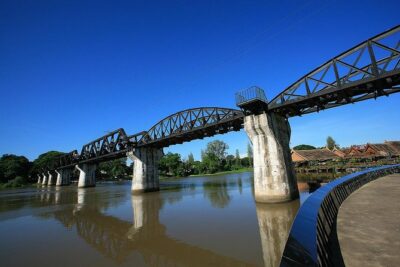
Bridge on the River Kwai and Thailand-Burma Railway Guided Tour
Read our review →
Kanchanaburi Full Day Tour: River Kwai and Erawan Falls
Read our review →
Floating Markets and Bridge on River Kwai Tour from Bangkok
Read our review →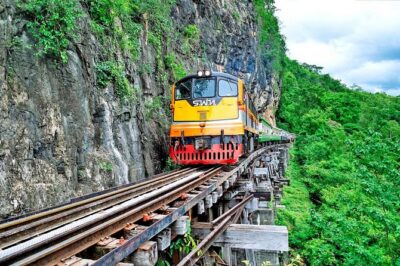
River Kwai Day Tour from Bangkok – History, Scenery & Culture
Read our review →Browse the lists this tour appears in