
Reviewed · STREET FOOD TOURS
Bangkok Electric Tuk Tuk: Street Food & Markets
Bangkok tastes better at street level. This four-hour outing pairs an electric tuk-tuk ride with local food, old crafts, a river crossing, and two very different markets. I especially like the visit to Baan Bu, where traditional stoneware and metalware work still has a place, and the stop at Wang Lang Market, where your tastings form a full meal rather than a token snack. The main drawback is comfort: you spend about two hours in the tuk-tuk and visit Bangkok in its heat, so this is not the best pick for anyone who dislikes traffic, fumes, or sweating.
The small size helps. With no more than nine people, your English-speaking guide can keep an eye on the group and explain what you are seeing without shouting across a coach. Guides such as PK, Poon, and Pam have earned especially strong praise for their warmth, patience, local insight, and ability to keep the pace comfortable. Bring modest clothing, though: shorts, short skirts, and sleeveless shirts are not allowed.
In This Review
- Key points at a glance
- Why this tour reaches beyond central Bangkok
- Meeting at Sanam Chai Station
- Baan Bu and the value of seeing working craft
- Thonburi Train Station and Bangkok railway history
- Wang Lang Market turns lunch into a lesson
- Grand Palace views from the west bank
- The Chao Phraya Express Boat adds local movement
- Finishing at Pak Khlong Talat flower market
- Is $64 a fair price?
- Comfort, clothing, and group size
- Who should book this Bangkok food tour?
- Should you book it?
- FAQ
- Where does the Bangkok Electric Tuk Tuk tour start?
- How long does the experience last?
- What language is the tour conducted in?
- How many people can join the small-group tour?
- Is hotel pickup and drop-off included?
- What food is included?
- Can vegetarians join the food portion?
- Is a drink included?
- What transport is included?
- What clothing is not allowed?
Key points at a glance
- Electric tuk-tuk through Thonburi: See Bangkok from an open, street-level seat while using a carbon-neutral transport option.
- Baan Bu craftsmanship: Watch demonstrations of stoneware and metalware work preserved by a long-established local community.
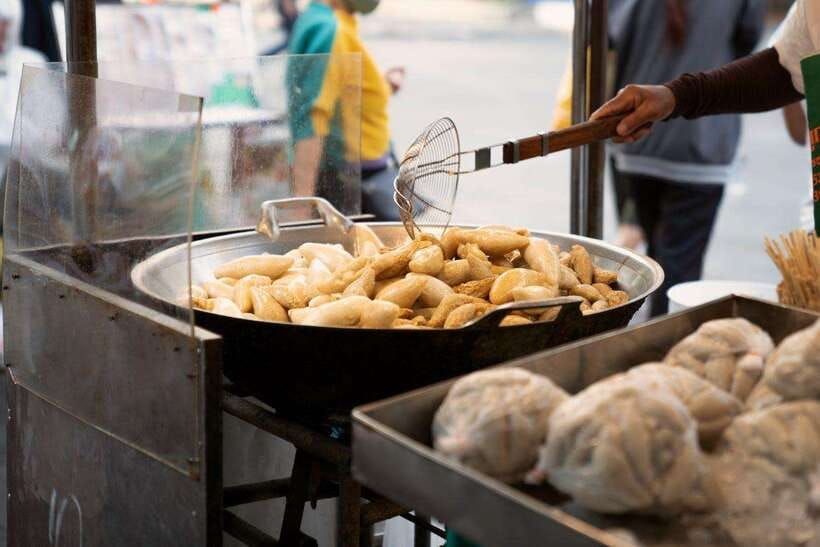
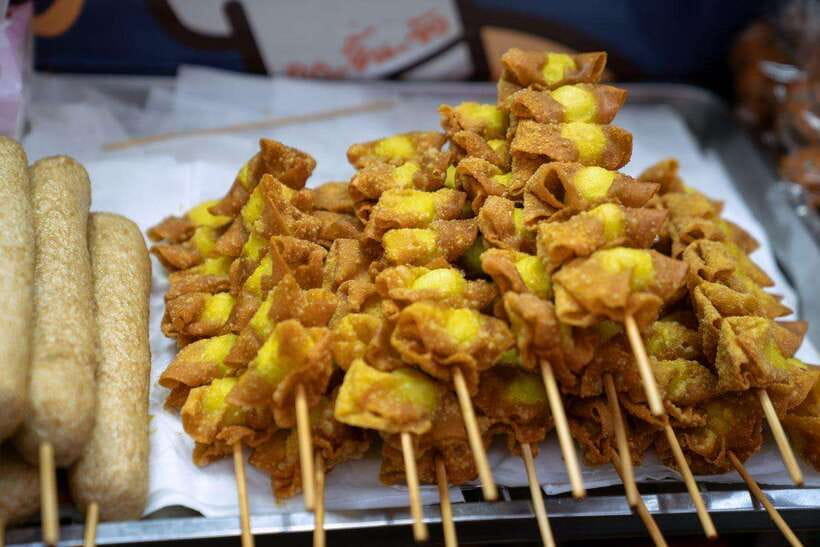
- Wang Lang food stop: Sample fried pork with sticky rice, Sa-Rim, Kanom Bueng, and other Thai sweets.
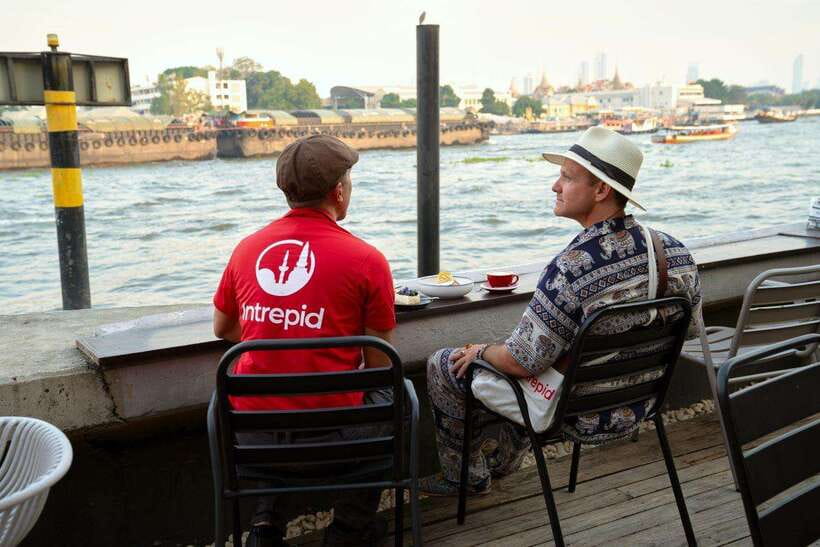
- Grand Palace river views: Enjoy the city skyline and palace views across the Chao Phraya River from the Wang Lang area.
- Express boat finale: Ride from Pran Nok Pier to Sapan Phut Pier before finishing at Pak Khlong Talat flower market.
- Nine-person maximum: A useful size for questions, photos, and help getting in and out of the tuk-tuk.
Why this tour reaches beyond central Bangkok
Many Bangkok sightseeing outings stay close to the Grand Palace, Wat Pho, and the main shopping streets. This one spends its time in Thonburi, on the west bank of the Chao Phraya River, where the city feels more connected to workshops, neighborhood markets, old railways, and river transport.
That change of setting is the real point. You are not only checking off major landmarks. You are seeing how Bangkok works at street level, with craftsmen, food sellers, railway relics, market stalls, and commuters sharing the same city.
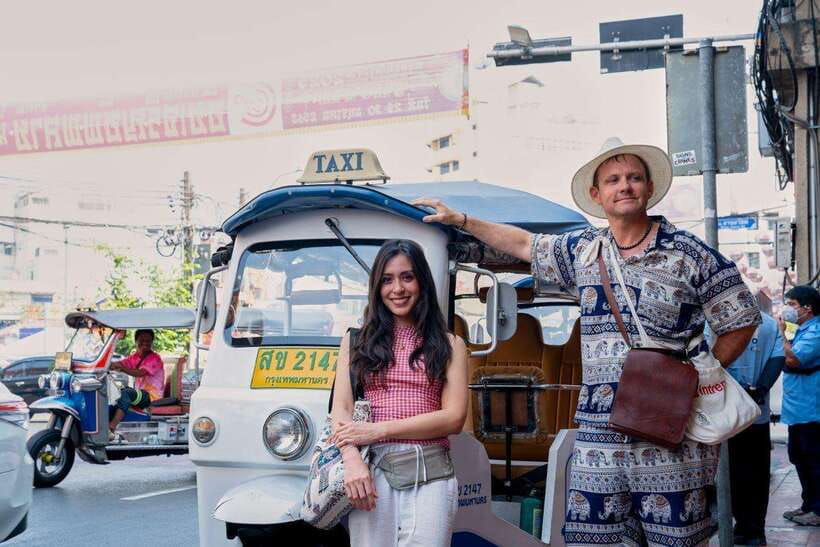
The electric tuk-tuk suits this kind of route. It can move through streets where a larger vehicle would be awkward, and its open sides give you a closer look at daily life. The ride is also part of the fun. You hear and see more than you would from behind a bus window.
Still, an electric motor does not make Bangkok cool. You should expect heat, road noise, and some jolting on uneven streets. Older comments about fumes apply more to the general tuk-tuk setting than to the newer electric vehicle, but the traffic and outdoor conditions remain part of the deal.
More Street Food Tours in Bangkok
- Bangkok: Michelin Guide Street Food Tour by Tuk Tuk
★ 4.4 · 1,274 reviews - Bangkok Tuk-Tuk Tour by Night with Chinatown Street Food Meal
★ 5.0 · 635 reviews - Bangkok: E-Scooter Night Tour with Local Street Food
★ 4.8 · 488 reviews
Meeting at Sanam Chai Station
The outing begins inside Sanam Chai MRT station, at the bottom of the escalators by Exit 1, near Museum Siam. If you arrive by taxi, enter the MRT station from the Museum Siam grounds and go down two sets of escalators.
This meeting point is practical if you are already near the Old Town, and the MRT makes it easier than arranging a pickup across Bangkok. The tradeoff is that hotel transfers are not included. Give yourself time to find the correct exit, especially if you are carrying bags or arriving during a busy period.
Once the group is together, you meet the local English-speaking guide and transfer to the electric tuk-tuk. The tour can be arranged as a private or small-group experience, but the maximum group size is nine passengers. That limit matters in a compact vehicle and also makes the commentary more personal.
Baan Bu and the value of seeing working craft
The Baan Bu Bronzework Community offers one of the most distinctive stops. Here, you watch a demonstration of stoneware and metalware making, with techniques preserved through generations.
A craft demonstration gives you context that a quick photograph cannot. You see that Bangkok’s older neighborhoods are not only collections of temples. They also contain people who maintain practical skills, produce objects, and pass methods from one generation to the next.
The stop is guided, so this is not simply a walk past a workshop. Your guide explains what you are seeing and helps connect the craft to the community. The exact demonstration can vary, but the focus is on traditional stoneware and metalware work.
If you prefer famous sights only, this part may feel less urgent than a major temple. I think it is one of the better reasons to choose this outing, since it gives the route a local purpose beyond sightseeing.
Thonburi Train Station and Bangkok railway history
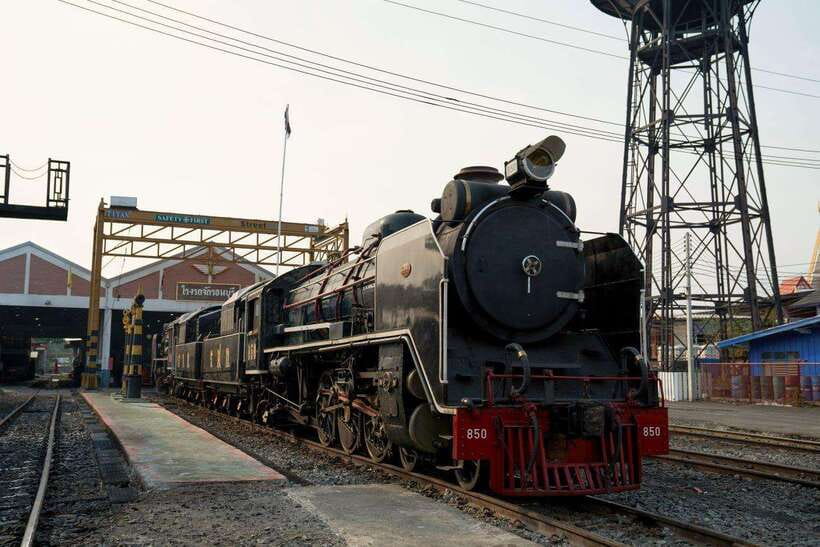
The route continues toward Thonburi Train Station, where you can see historic steam locomotives and hear about Bangkok’s railway heritage. The stop is brief, listed at about 15 minutes, so set your expectations correctly. This is an introduction, not a full railway museum visit.
The locomotives add a useful layer to the day. Bangkok is often presented through temples, food, and traffic, but railways helped shape how the city connected its districts and surrounding areas. Your guide gives you a short explanation while you look at the old engines.
For people interested in transport, engineering, or local history, this is a welcome stop. If you need a long photo session or detailed railway exhibits, the limited time may feel too short.
Something different for another day:
- Bangkok: Damnoen Saduak Market and Maeklong Railway Market
★ 4.5 · 26,723 reviews - The Old Siam: Damnoen Saduak and Maeklong Railway Market
★ 4.5 · 10,992 reviews - From Bangkok: Ayutthaya Temples Guided Tour with Lunch
★ 4.7 · 10,535 reviews - Bangkok: Train Market & Floating Market with Boat Ride
★ 4.7 · 9,547 reviews
Wang Lang Market turns lunch into a lesson
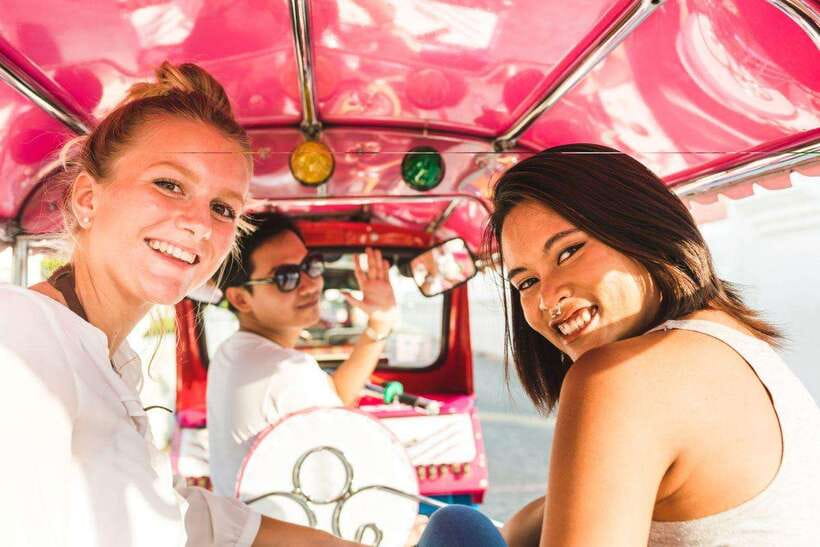
Wang Lang Market is the heart of the food portion, with about an hour to explore and taste. It is a local market rather than a polished food hall, so you should expect a busy mix of stalls, snacks, produce, prepared dishes, and sweets.
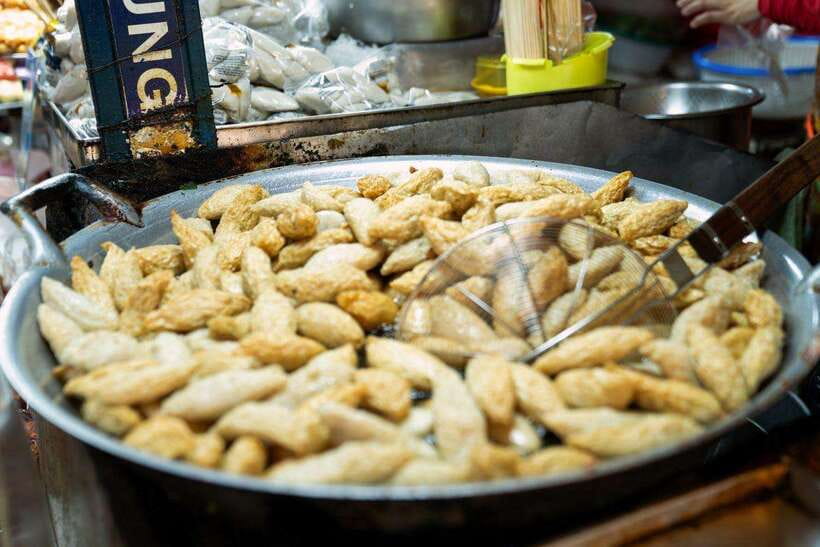
The included food is intended to equal a full meal, though the exact choices and portions change with the season and the day’s stops. You may taste fried pork with sticky rice, along with Thai desserts such as Sa-Rim and Kanom Bueng.
Sa-Rim is known for colorful noodles served with sweet coconut milk. Kanom Bueng is a crisp Thai crepe often filled with sweet or savory toppings. These are the sort of foods that can be difficult to identify when you are ordering alone, so having a guide explain what you are eating adds real value.
Vegetarians can be accommodated if you provide the information at least 24 hours before the tour. Other dietary needs are not listed as supported, so you should not assume that allergies, vegan requirements, or other restrictions can be handled.
You also receive a drink, such as coffee, tea, or boba tea. The drink is a small inclusion, but it is welcome in Bangkok’s heat and gives you a short pause before the next part of the route.
Some outings have included an amulet market and nearby temples, and guides have been praised for finding small local food shops as well as more famous sights. These additions may depend on the day and guide, so focus on the confirmed core: Wang Lang food, local market time, and views across the river.
Grand Palace views from the west bank
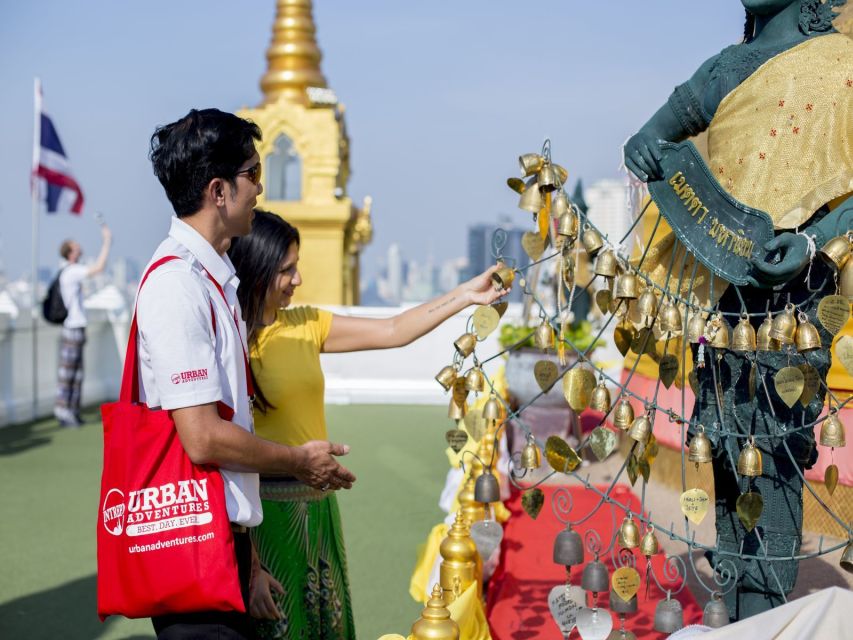
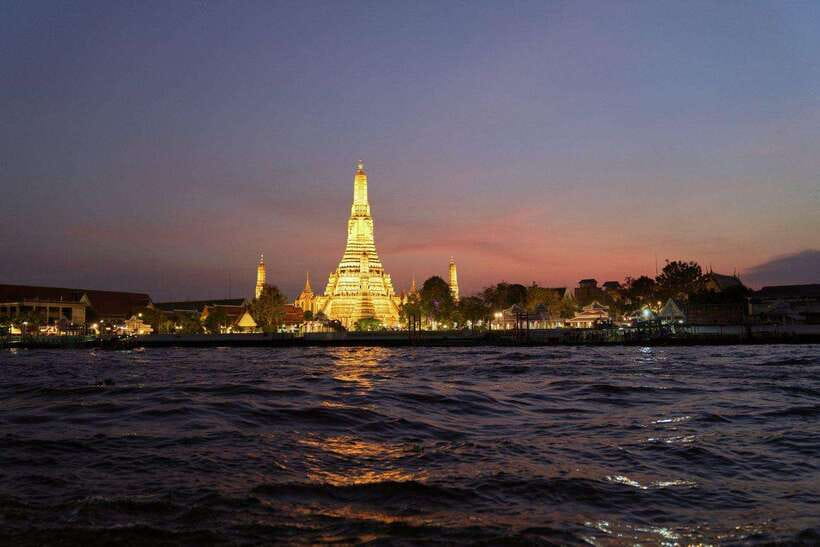
Wang Lang gives you a different angle on Bangkok’s Old Town. Across the Chao Phraya River, you can look toward the Grand Palace area rather than approaching it through the usual entrance routes.
That view helps you understand the city’s layout. Bangkok’s major sights are not isolated points on a map. The river connects them, separates them, and still shapes how people move through the city.
A riverside café stop follows the market. You can relax with coffee, tea, or another included drink while taking in the view. This pause is useful because the first half includes riding, walking, food, and market noise. It also keeps the outing from feeling like a nonstop chain of photo stops.
The Chao Phraya Express Boat adds local movement
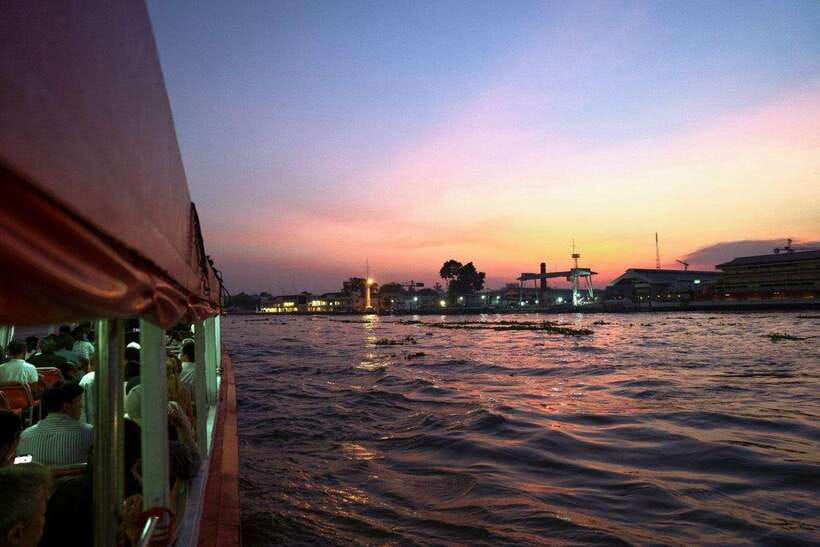
After the café, you walk to Pran Nok Pier and board a Chao Phraya Express Boat to Sapan Phut Pier. The boat ride takes about 20 minutes and is included in the price.
This is more than a scenic extra. River boats are a practical part of Bangkok’s transport system, and the trip gives you a change from the road. After the narrow tuk-tuk and crowded market, the open river can feel like a reset.
The boat also ties the route together. You begin in Thonburi, spend time on the west bank, then cross by water toward the flower market and the Old Town side. You get a short look at Bangkok from three levels: street, market, and river.
You will need to walk between some stops, with about 1.5 kilometers of walking in total. That is manageable for most people, but heat, uneven pavement, and market crowds can make it feel like more. Comfortable shoes and light clothing are sensible, while still following the modest dress rule.
Finishing at Pak Khlong Talat flower market
The final stop is Pak Khlong Talat, Bangkok’s 24-hour flower market. It is a fitting ending because it shifts the focus from eating and transport to color, fragrance, and trade.
You can expect rows of flowers, garlands, vegetables, and market activity. The setting is lively and practical rather than arranged for sightseeing. It gives you a glimpse of the work behind Bangkok’s temples, homes, ceremonies, and shops, where flowers are bought, prepared, and moved through the city.
The tour has two listed drop-off locations, Wat Phra Chetuphon Wimon Mangkhalaram Rajwaramahawihan, commonly called Wat Pho, and Pak Khlong Talat. Confirm your preferred end point with the guide on the day.
Ending here also makes sense for anyone who wants to continue exploring the Old Town independently. Hotel return transport is not included, so plan your next move from the drop-off point.
Is $64 a fair price?
At $64 per person, this is not the cheapest way to ride a tuk-tuk or visit a market. The value comes from the combination of services packed into four hours.
Your price includes an English-speaking guide, the electric tuk-tuk, the craft demonstration, food tastings equal to a full meal, a drink, the market visits, and the express boat ticket. You are also paying for route planning and interpretation. Without a guide, you could visit a market and take a boat, but you might miss the craft community, railway stop, food explanations, and local connections between the places.
The small group improves the value. A nine-person maximum gives the guide a chance to answer questions and help with the vehicle, something especially useful when moving through markets and piers.
I would call the price fair for a first Bangkok visit, particularly if you want several types of experience in one morning or afternoon. It is less attractive if your only goal is a long, relaxed market meal or a private tuk-tuk ride with no fixed schedule.
The company describes the outing as carbon neutral and operates as a B Corp certified business, with attention to social and environmental effects. The electric vehicle supports that aim, though the most important benefit for you is the chance to see smaller streets without traveling in a large vehicle.
Comfort, clothing, and group size
Plan for roughly two hours of tuk-tuk riding and 1.5 kilometers of walking. The ride is open and social, but it offers little protection from sun and heat. Bangkok can be demanding when temperatures rise, and one direct recommendation from past experience is to choose a cooler day when possible.
Wear breathable clothing that covers your shoulders and knees. Shorts, short skirts, and sleeveless shirts are not allowed. This rule is especially important because the route can include temple areas or religious sites, even though the main focus is on markets, crafts, and transport.
Children must be 6 to 11 years old to join under the stated child policy. The small group is a good fit if you want personal attention, but it may not suit you if you prefer to wander alone or stop for long periods at each stall.
Guide quality is a major strength. PK was praised for making the outing both fun and educational. Poon was noted for her patience, clear explanations, and care with the pace, while Pam received repeated praise for friendly service, local information, and enthusiasm. The individual guide shapes the day, but the format gives that person room to do a good job.
Who should book this Bangkok food tour?
I would recommend it most strongly to first-time visitors who want an introduction to Bangkok beyond the standard palace circuit. You get food, local craft, railway history, river transport, and a flower market without having to build the route yourself.
It also suits solo visitors and couples who want company without joining a large coach group. The nine-person limit keeps the outing friendly and makes it easier to ask questions or get help at the tuk-tuk and piers.
Food-focused visitors should note that this is not a dedicated cooking tour or a long market crawl. The food is varied and substantial, but the day keeps moving. You are choosing range over lingering.
This may not be right for you if you have strict dietary needs beyond vegetarian food, dislike heat, require hotel pickup, or want a fully private schedule. The transport is fun but not luxury, and traffic remains part of the Bangkok experience.
Should you book it?
Book this tour if you want a compact, well-guided introduction to Thonburi and enjoy switching between transport, food, craft, and markets. The electric tuk-tuk, Baan Bu demonstration, Wang Lang tastings, express boat, and flower market make a varied four-hour route, while the small group keeps it personal.
Skip it if you want a slow food day, guaranteed access to a particular temple, or full control over every stop. For most first-time visitors, though, $64 buys a useful cross-section of Bangkok and a guide who can make the city easier to read.
FAQ
Where does the Bangkok Electric Tuk Tuk tour start?
It starts inside Sanam Chai MRT station at the bottom of the escalators by Exit 1, near Museum Siam.
How long does the experience last?
The tour lasts four hours.
What language is the tour conducted in?
The live guide speaks English.
How many people can join the small-group tour?
The maximum group size is nine passengers.
Is hotel pickup and drop-off included?
No. You must make your own way to Sanam Chai MRT station, and hotel return transport is not included.
What food is included?
Food tastings can include fried pork with sticky rice and Thai desserts such as Sa-Rim and Kanom Bueng. The total food provided equals a full meal, though dishes and portions vary.
Can vegetarians join the food portion?
Yes. Vegetarian requests can be accommodated if you provide the information at least 24 hours before the tour.
Is a drink included?
Yes. The included drink may be coffee, tea, or boba tea.
What transport is included?
The experience includes an electric tuk-tuk ride and an express boat ticket from Pran Nok Pier to Sapan Phut Pier.
What clothing is not allowed?
Shorts, short skirts, and sleeveless shirts are not allowed.
More Food Tours in Bangkok
- Bangkok: White Orchid Chao Phraya Dinner Cruise free Beer
★ 4.4 · 4,573 reviews - Bangkok: Backstreets Food Tour with 15+ Tastings
★ 4.9 · 2,880 reviews - Bangkok Backstreets Food Tour with 15+ Tastings
★ 5.0 · 1,926 reviews - Old Siam Bangkok Food Tour with 15+ Tastings
★ 5.0 · 867 reviews
More Tuk-Tuks
- Bangkok by Night: Temples, Markets and Food Tuk-Tuk Tour
★ 5.0 · 3,752 reviews - Bangkok Midnight Food Tuk Tuk Tour
★ 5.0 · 2,542 reviews - Bangkok: Guided Tour in a Typical Thai Tuk-Tuk
★ 4.7 · 830 reviews - Bangkok: Tuk Tuk Adventure Chinatown Michelin Food & Temples
★ 4.3 · 725 reviews
Just added around Bangkok
- 2-hour Bangkok Old City Night CHOB TUK TUK + Talat Noi Street Art★ 5.0 · 16 reviews
- Kanchanaburi World War 2 Private Charter Pathway of the Past Tour★ 4.5 · 16 reviews
- Khao Yai National Park Hiking Day Tour: Haew Narok and Haew Suwat★ 5.0 · 16 reviews
- Floating Market with Great Pagoda Temple and Wat Sam Phran★ 5.0 · 16 reviews
- Shangri-La Hotel’s Salathip Thai Restaurant Experience★ 4.5 · 16 reviews
- Private Transfer Bangkok – Koh Kood Island★ 4.0 · 16 reviews
- Private Half-Day Bangkok Tour Explore Grand Palace and Wat Pho★ 4.5 · 16 reviews
- The Best Bangkok Temples★ 4.0 · 16 reviews
Street Food Tours, compared.
Small-Group Chiang Mai Evening Street Food Tour
Read our review →
Bangkok Tuk-Tuk Tour by Night with Chinatown Street Food Meal
Read our review →
Hands-on Learn to Cook 3 Popular Thai’s street food
Read our review →
Bangkok Tuk-Tuk by Night with Chinatown Street Food Meal
Read our review →
The 10 Tastings of Chiang Mai With Locals: Private Street Food Tour
Read our review →Browse the lists this tour appears in