
Reviewed · RIVER KWAI & KANCHANABURI TOURS
River Kwai Jungle Rafts: 2-Day Kanchanaburi Escape from Bangkok
The River Kwai still carries the weight of its past. This two-day escape combines World War II sites with a long-tail boat ride, an overnight stay on floating rafts, and a train journey along the Death Railway. I like the way it removes difficult transport planning, and I especially like the quiet river setting at night. The catch is simple accommodation, with no electricity and possible heat.
You spend a fair amount of time in a minivan, especially on the road between Bangkok and Kanchanaburi. Still, the mix of museum, memorial sites, river travel, Hellfire Pass, and Mon culture gives you far more than a quick bridge photo stop.
Guides can make or break the historical parts. Some, including guides named Lady, Sam, and Bligh, have been praised for their clear explanations and care, while others have been harder to understand in English. Ask questions when you can, and bring patience along with your camera.
In This Review
- Key points before you book
- Why this two-day Kanchanaburi trip works
- Starting at the Thailand-Burma Railway Centre
- The bridge and the first long-tail boat ride
- A night at the River Kwai Jungle Rafts
- Hellfire Pass and the hard facts of the railway
- The Mon village and a quieter second morning
- Riding the Death Railway back through the countryside
- What the $209 price really covers
- Guides, group size, and the pace of the trip
- Practical packing advice for the raft and railway
- Who should book this Kanchanaburi escape?
- Should you book it?
- FAQ
- How long is the River Kwai Jungle Rafts tour?
- Is pickup from Bangkok included?
- Is the overnight raft accommodation air-conditioned?
- Are meals included?
- Is Hellfire Pass included?
- Is the Death Railway train ticket included?
- How many people are in the group?
- Is the tour suitable for people with limited mobility?
Key points before you book
- The floating raft is genuinely off-grid: Expect fan-only accommodation, no electricity, no Wi-Fi, and possibly no hot water.
- Hellfire Pass gives the tour its emotional center: You walk through the cutting where POWs and Asian laborers worked in brutal conditions.
- The Mon village adds a human, local dimension: You see village life, take a short jungle walk, and watch a traditional dance performance.
- The Death Railway ride is more than a scenic train trip: You travel on tracks built by forced labor and cross sections of the original railway route.
- The $209 price covers a lot: Transport, guide, boat transfers, meals listed in the program, entrance fees, raft accommodation, and a train ticket are included.
- This is soft adventure, not a polished resort stay: Uneven roads, boat steps, jungle paths, heat, and long touring days are part of the deal.
Why this two-day Kanchanaburi trip works
Kanchanaburi is close enough to Bangkok for a day trip, but its important sites are spread out. The Bridge over the River Kwai, the Thailand-Burma Railway Centre, Hellfire Pass, the floating accommodation, and the Death Railway train are not arranged in a tidy city circuit.
That is where this tour earns its keep. You do not need to arrange a private car, find the right pier, negotiate with boat operators, locate a train station, or work out how to reach Hellfire Pass. The tour joins those pieces into one route, with a maximum of 15 people on the shared version.
The early start is the price of that convenience. Pickup begins at about 6:00 am from selected central Bangkok hotels, followed by a drive toward Kanchanaburi. Pickup is not normally available from every part of Bangkok. Khao San Road, both airports, Nonthaburi, Thonburi, Minburi, Ratchadapisek, upper Sukhumvit from Soi 55 onward, and several other areas may require a supplement or a nearby meeting point.
The drive can feel long, especially on the first morning. I would choose this tour for the complete route, not for a relaxed transfer from one attraction to the next.
More River Kwai and Death Railway trips:
- From Bangkok: Erawan Park & Kanchanaburi Small-Group Tour
★ 4.5 · 1,582 reviews - From Bangkok: Historical Day Tour to River Kwai
★ 4.6 · 868 reviews - Bridge on the River Kwai and Thailand-Burma Railway Tour
★ 4.5 · 658 reviews
Starting at the Thailand-Burma Railway Centre
The Thailand-Burma Railway Centre is a useful first stop because it gives you the facts before the river scenery begins to soften the mood. The museum uses displays, photographs, models, and written material to explain the construction of the Thailand-Burma Railway and the treatment of POWs.
Allow about an hour. That is enough for a purposeful visit, but not enough for a slow reading of every display. If you have a family connection to the railway, arrive mentally prepared for a serious visit. The museum can also search POW records, and one person on this tour was able to locate a father’s wartime record and receive a printed copy.
That kind of personal connection can change the entire day. Even without one, the museum makes the later stops easier to understand. You begin to see the railway as a system built through hunger, disease, violence, and forced labor, not simply as a picturesque train route.
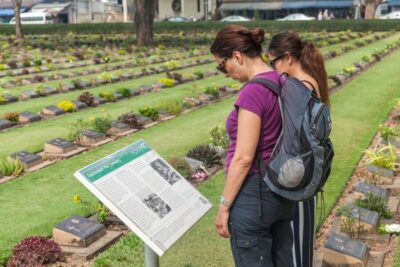
The program also refers to important wartime memorial sites in Kanchanaburi, and some tour arrangements have included a cemetery visit. Confirm the exact stops for your departure if this is a major reason for booking.
The bridge and the first long-tail boat ride
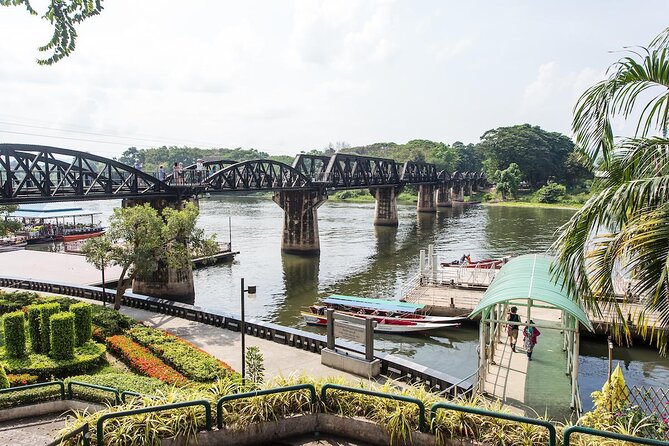
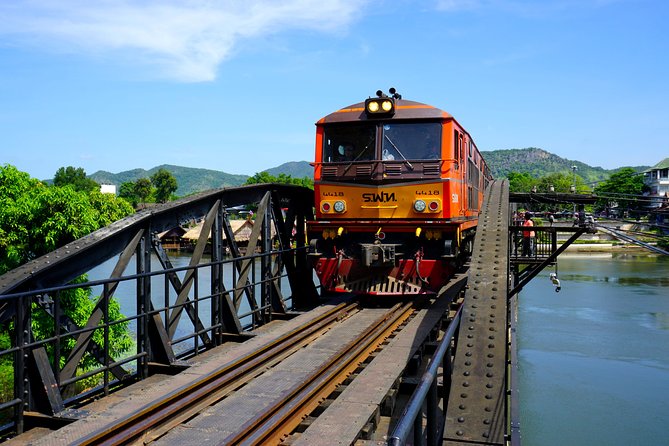
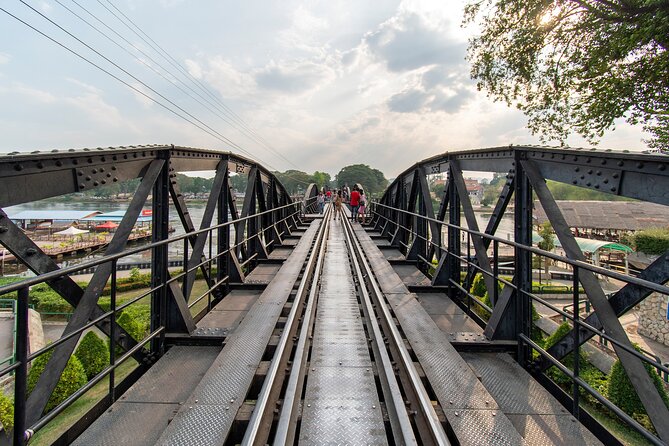
The famous Bridge over the River Kwai is a short stop, listed at around 30 minutes. You have time for photographs and a close look at the structure, but not an extended visit.
The bridge is visually striking, yet its importance is not only photographic. It helps you connect the museum’s explanation with a real piece of railway infrastructure. The setting can be busy, so do not expect a silent memorial atmosphere here.
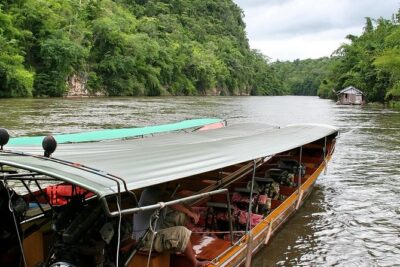
From the bridge, you board a local long-tail boat. The ride carries you toward the Jungle Rafts, your accommodation for the night. This is one of the tour’s best changes of pace. After the road journey and museum, the river gives you time to watch the banks slide past without another lecture or timetable.
Boat access requires care. You may need to step down into the boat and climb out again at later stops. People with knee, neck, back, or mobility problems should think seriously about this before booking. The tour also uses uneven paths, steps, and bumpy off-road roads, and it is not suitable for pregnant people or those with limited mobility.
Protect your phone and camera in a waterproof bag. Water spray, wet boat floors, and river transfers are all part of the route.
A night at the River Kwai Jungle Rafts
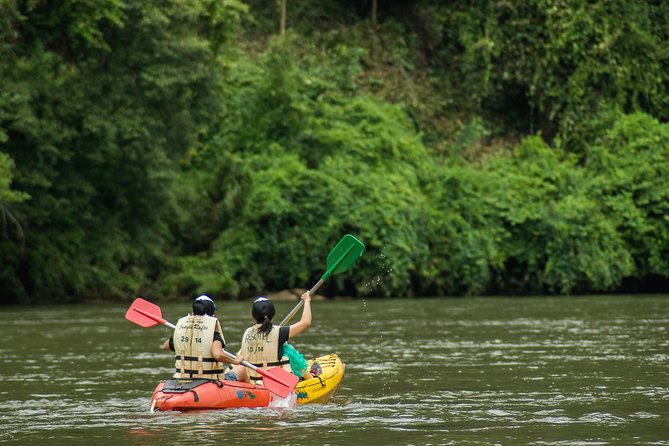
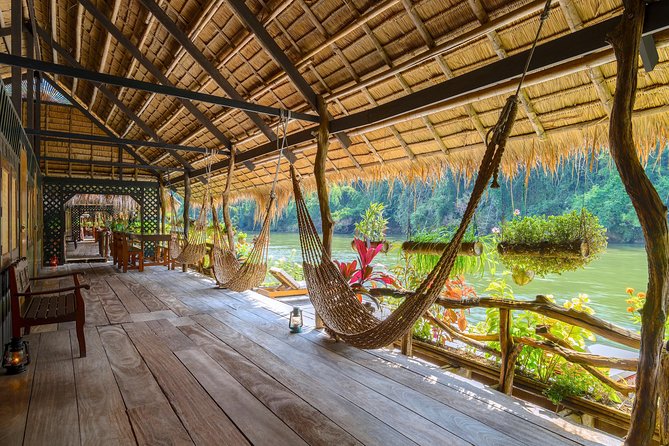
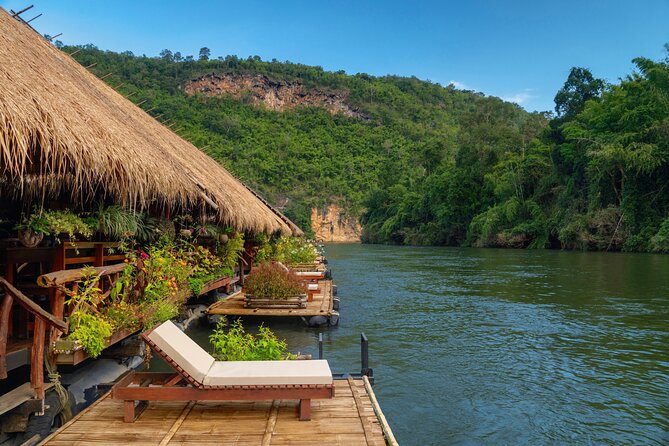
The Jungle Rafts are the tour’s signature experience. Your room floats on the river, and the setting is quiet, unusual, and far removed from Bangkok’s traffic and bright signs.
The accommodation is clean and simple, but the phrase simple accommodation deserves a direct explanation. There is no electricity at the raft hotel. Rooms may have fans, but not air-conditioning. Wi-Fi and warm water may not be available. You should charge your devices before leaving Bangkok, and bring a small flashlight if you prefer not to rely on your phone.
Heat is the main discomfort. A swim in the river can help, although you should follow local instructions and take care on wet surfaces. Some people consider the lack of modern comforts the best part because it turns the overnight stay into a real break from screens and city noise. Others find the humidity hard going, particularly at night.
The food receives strong praise. Lunch, dinner, and breakfast are included where shown in the program, and portions are described as generous. Vegetarian and other dietary requests can be passed on, but the operator cannot always confirm special meals in advance because food is prepared through local restaurants.
Water is one small cost to watch. At least one lunch arrangement did not include drinking water, so carry cash and do not assume every drink is covered. Small Thai notes are useful because staff at the raft site may struggle to provide change for large bills.
The traditional Mon dance performance takes place at the raft accommodation. It is a modest cultural presentation rather than a major theatrical show, but it adds context to the place where you are staying.
More Jungle Tours:
- Bangkok Jungle Bike Tour – Hotel-pickup & Lunch
★ 5.0 · 489 reviews - Bangkok: Bang Kachao E-Scooter Jungle Tour
★ 4.8 · 154 reviews - The Original Bicycle Tour in the Green Jungle of Bangkok
★ 5.0 · 106 reviews - Phuket: Elephant Jungle Sanctuary Ethical Feeding Experience
★ 4.8 · 4,359 reviews
Hellfire Pass and the hard facts of the railway
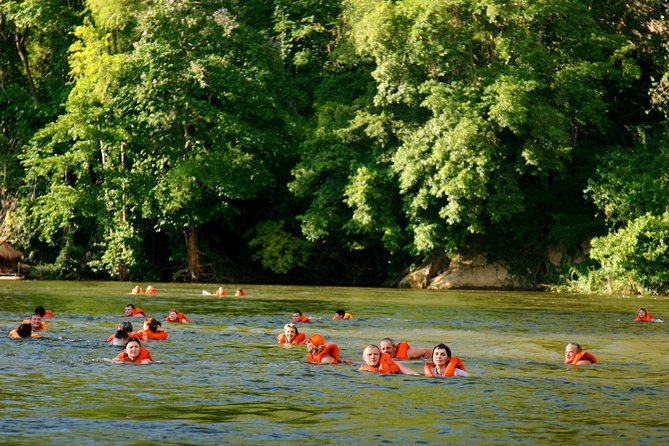
Hellfire Pass is the most sobering stop. You travel by boat toward the Hellfire Memorial Pass and spend about 90 minutes at the interpretive center and cutting.
The site shows the physical scale of the work. POWs and Asian laborers cut through rock using basic tools and explosives to create a railway passage. The achievement was enormous, but the human cost is the point. Thousands died from exhaustion, disease, starvation, mistreatment, and dangerous working conditions.
You should not rush this stop. The walk can involve uneven ground and an uphill section, so wear shoes with a firm grip. The heat can be intense even when the sky is cloudy. A hat, sunglasses, and high-SPF sunscreen are sensible, not optional extras.
Hellfire Pass may occasionally be closed for a public holiday or local operating reason. One departure had to use a substitute site after a closure, and that replacement was not considered equal. If Hellfire Pass is central to your decision, check the current operating status before you leave Bangkok.
The route may place Hellfire Pass on the first or second day depending on operational arrangements. The supplied schedule places it on day one after lunch, while some experiences have handled it the following morning. Either way, the stop is essential to the meaning of the trip.
The Mon village and a quieter second morning
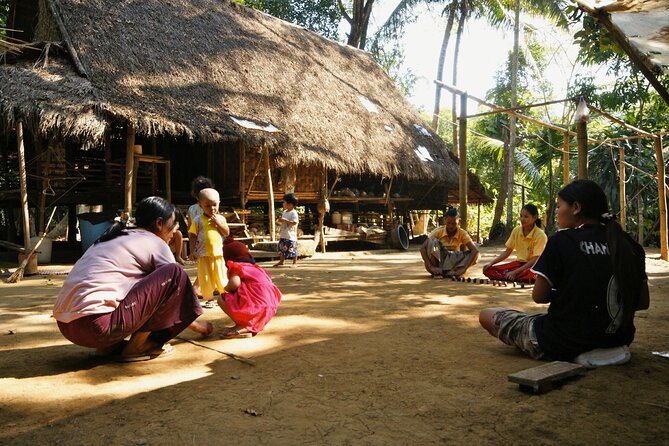
The visit to the Mon tribal village is a welcome change after the wartime sites. The Mon people have lived in the area for generations, and the visit includes a short walk through a rural setting surrounded by jungle.
This is not a museum display. You see a living community, hear about local traditions, and spend time away from the main tourist corridor. The visit is particularly useful because the tour is not only about military history. It shows you the people and culture of the river region today.
The walk lasts about two hours, including time in the village and surrounding area. Wear light clothing, comfortable shoes, and sun protection. You may find the ground uneven, and the tropical heat can make a short walk feel longer than expected.
A traditional Mon dance is also included at the Jungle Rafts. Together, the village visit and performance create a fuller picture of Kanchanaburi. Just keep your expectations respectful. This is a brief cultural encounter, not an in-depth community visit or a private cultural exchange.
Riding the Death Railway back through the countryside
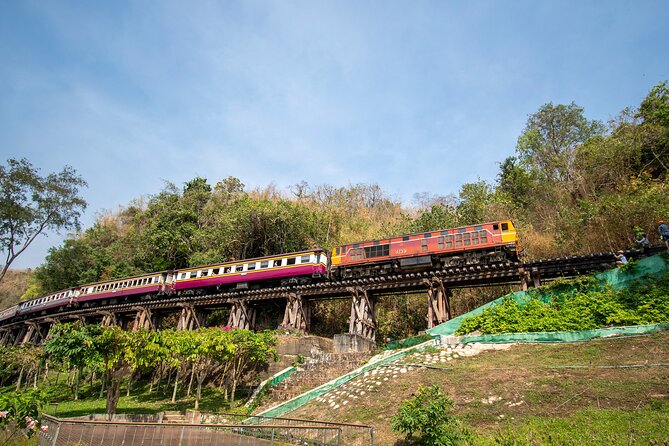
After checking out, you return by boat and board a local train for the Death Railway ride. The trip takes about 90 minutes and runs along the actual railway route constructed under wartime conditions.
The train is not a luxury excursion. That is part of its value. You are using a working local railway, watching the countryside pass through the windows, and crossing sections of track tied directly to the story you have been learning.
Some departures offer an upgrade for the train ride. If the train is one of your main reasons for booking, ask exactly what the upgrade changes before paying for it. The standard ticket is included, but upgraded seating or arrangements may cost extra.
This final journey works well because it brings the history into physical contact with the present. The tracks are not preserved only behind glass. They still carry trains, and you can see why the route remains both a transport link and a memorial to those who built it.
What the $209 price really covers
At $209 per person, the tour is not cheap by Bangkok day-trip standards. It becomes better value when you count what is bundled into two days: central hotel pickup where available, a professional English-speaking guide, private or shared vehicle transport, long-tail boats, the floating raft stay, meals specified in the program, entrance fees, refreshments, a Mon performance, and the Death Railway ticket.
You are also paying for coordination. The route involves several transport changes, including minivan, long-tail boat, and local train. A private car and driver could give you more control, but arranging the raft stay and boat transfers independently would take time and could produce a less tidy result.
The main value is access to a combination that is awkward to organize alone. If you only want the bridge, museum, and cemetery, a shorter Kanchanaburi trip may cost less and suit you better. If you want Hellfire Pass and the overnight raft, the two-day format makes more sense.
There are still extra expenses. Personal purchases, tips, optional activities, drinks outside the listed meals, and transfer supplements are not included. Airport transfers are also outside the normal package, and the tour does not include hotel accommodation in the destination.
Guides, group size, and the pace of the trip
The maximum group size is 15, though private departures are also available. A small shared group gives you a better chance to ask questions and move through boat transfers without the confusion of a large coach party.
Guide quality can vary. Lady has been praised for sharing information throughout the journey and taking good care of the group. Sam has been described as passionate about the history, while Bligh has received praise for his local and wartime knowledge. Other guides have spoken English that was difficult for some people to follow.
That is a fair concern because much of the tour’s value depends on explanation. If you receive a guide whose accent or phrasing is hard to catch, ask for key points to be repeated. The local guides at the raft and Mon village can also add useful detail.
Vehicle transport has generally been comfortable, with newer air-conditioned vehicles reported on some departures. Mechanical problems can happen on a long road trip. One return vehicle broke down, but replacement transport was arranged without derailing the day.
Practical packing advice for the raft and railway
Pack light. The operator asks you to bring no more than one suitcase and one piece of hand luggage per person because vehicle space can be limited.
I would bring:
- Light clothing and a change of clothes
- Secure walking shoes
- A swimsuit if you plan to swim
- Hat, sunglasses, and high-SPF sunscreen
- Insect protection
- A waterproof pouch for electronics
- Charged power banks
- Small cash, preferably in lower denominations
- Any required medication
- A small flashlight or headlamp
Do not count on charging facilities at the raft. Keep valuables in a waterproof bag during every boat trip. The operator makes clear that damage to electronics caused by water is your responsibility.
The tour is non-refundable and cannot be changed after booking, so confirm your hotel, pickup area, dates, and physical comfort before you pay. Pickup from private residences or unregistered apartments may not be possible, and you may be asked to meet at a nearby hotel.
Who should book this Kanchanaburi escape?
I would choose this tour if you want a strong blend of history, scenery, local culture, and unusual accommodation. It suits people who prefer a planned route and do not want to manage several transfers in rural Thailand.
It is especially meaningful if you have a family connection to the Death Railway or the POW story. The museum record search, Hellfire Pass, and train ride can give that connection a physical setting.
You should think twice if you need air-conditioning, reliable internet, hot showers, or a slow schedule. The overnight raft is not a hotel with a river view. It is a basic floating camp with real limitations.
Older people and anyone with knee, back, or balance problems should also be cautious. Long-tail boat boarding, steps, uphill walking, rough roads, and heat can make the experience tiring. Most people can participate, but that does not mean every part is easy.
Should you book it?
Yes, if you want the full Kanchanaburi story in two days and you can accept the raft’s lack of electricity. The best parts are the solemn visit to Hellfire Pass, the Mon village, the river setting, and the Death Railway train ride.
I would not book it for comfort or flexibility. I would book it for the chance to connect the museum exhibits, wartime sites, local communities, and railway into one well-organized journey. Bring modest expectations for the accommodation, enough cash for drinks and tips, and patience with long drives. Do that, and the $209 price represents solid value for a demanding but memorable escape from Bangkok.
FAQ
How long is the River Kwai Jungle Rafts tour?
The experience lasts approximately two days and starts at about 6:00 am. The exact pickup time may be confirmed close to departure.
Is pickup from Bangkok included?
Pickup is offered from selected main hotels in downtown Bangkok. Areas outside the central business district, both international airports, Khao San Road, private residences, and some apartment accommodations may require a supplement or a nearby meeting point.
Is the overnight raft accommodation air-conditioned?
No. The raft accommodation is simple and may have fans only. It may not have electricity, Wi-Fi, or warm water.
Are meals included?
Breakfast, lunch, and other meals specified in the program are included. Personal drinks, meals outside the program, and some drinking water may cost extra.
Is Hellfire Pass included?
Yes, the program includes travel to the Hellfire Pass Interpretive Centre and Memorial Pass, with about 90 minutes allocated to the visit. Closures can occasionally require a substitute stop.
Is the Death Railway train ticket included?
Yes. A train ticket for the Death Railway ride is included. Some departures may offer an optional upgrade at an additional cost.
How many people are in the group?
The tour has a maximum of 15 participants. It operates on both a shared basis and a private basis.
Is the tour suitable for people with limited mobility?
The tour includes uneven roads, bumpy off-road driving, boat boarding, steps, and walking on uneven ground. It is not suitable for pregnant people or those with neck, back, or limited-mobility concerns.
Just added around Bangkok
- 2-hour Bangkok Old City Night CHOB TUK TUK + Talat Noi Street Art★ 5.0 · 16 reviews
- Kanchanaburi World War 2 Private Charter Pathway of the Past Tour★ 4.5 · 16 reviews
- Floating Market with Great Pagoda Temple and Wat Sam Phran★ 5.0 · 16 reviews
- Khao Yai National Park Hiking Day Tour: Haew Narok and Haew Suwat★ 5.0 · 16 reviews
- Shangri-La Hotel’s Salathip Thai Restaurant Experience★ 4.5 · 16 reviews
- Private Transfer Bangkok – Koh Kood Island★ 4.0 · 16 reviews
- Private Half-Day Bangkok Tour Explore Grand Palace and Wat Pho★ 4.5 · 16 reviews
- The Best Bangkok Temples★ 4.0 · 16 reviews
River Kwai & Kanchanaburi Tours, compared.
Bridge on the River Kwai and Thailand-Burma Railway Tour
Read our review →
Erawan Waterfalls and Bridge Over River Kwai Tour from Bangkok
Read our review →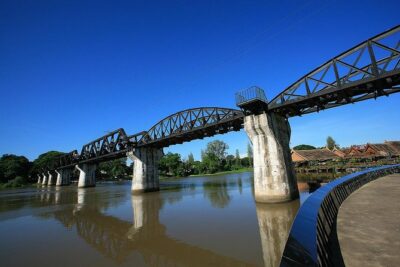
Bridge on the River Kwai and Thailand-Burma Railway Guided Tour
Read our review →
Kanchanaburi Full Day Tour: River Kwai and Erawan Falls
Read our review →
Floating Markets and Bridge on River Kwai Tour from Bangkok
Read our review →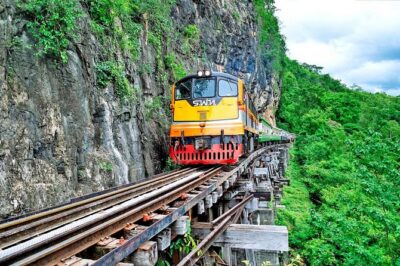
River Kwai Day Tour from Bangkok – History, Scenery & Culture
Read our review →Browse the lists this tour appears in