
Reviewed · COOKING CLASSES
Bangkok: Hands-on Thai Cooking Class and Market Tour
Thai food tastes better when you make it. This Bangkok class combines a guided market visit or mango carving with hands-on cooking, so you do more than watch a chef work. You prepare four dishes, eat each one fresh, and receive recipes by email for later. I especially like the small-class attention and the chance to make curry paste from scratch. The main drawback is that the morning market stop can be modest, with only a few stalls rather than a large wet market.
At $45 per person for 210 minutes, this is a strong food experience for the money. You get all ingredients, equipment, instruction, drinking water, a locker, and a full four-course meal. Just come hungry. The portions add up quickly, and the class is more filling than its neat schedule may suggest.
In This Review
- Key points before you book
- Meeting at Asoke and finding the cooking school
- The morning market visit: useful, but keep expectations modest
- Afternoon and evening sessions add mango carving
- What you cook from Monday through Sunday
- Making curry paste is the lesson worth remembering
- Cooking four dishes, one course at a time
- Food quality and the pleasure of eating your own work
- Dietary needs and ingredient substitutions
- Is $45 good value in Bangkok?
- Who will enjoy House of Taste most?
- Practical tips for a smoother class
- Should you book this Bangkok cooking class?
- FAQ
- How long does the Thai cooking class last?
- How much does the cooking class cost?
- Where does the morning class meet?
- Where do afternoon and evening classes meet?
- Does every class include a market tour?
- What dishes will I cook?
- Are ingredients and cooking equipment included?
- Will I receive the recipes?
- Can the class accommodate dietary restrictions?
- Is alcohol included?
- What should I bring?
- Can I cancel the booking?
Key points before you book
- Morning class starts with a market walk: The 8:30 AM session meets near BTS Asoke and MRT Sukhumvit, then visits nearby stalls for ingredients.
- Afternoon and evening classes swap the market for mango carving: Ingredient instruction takes place at the school, with carving saved for the final activity.
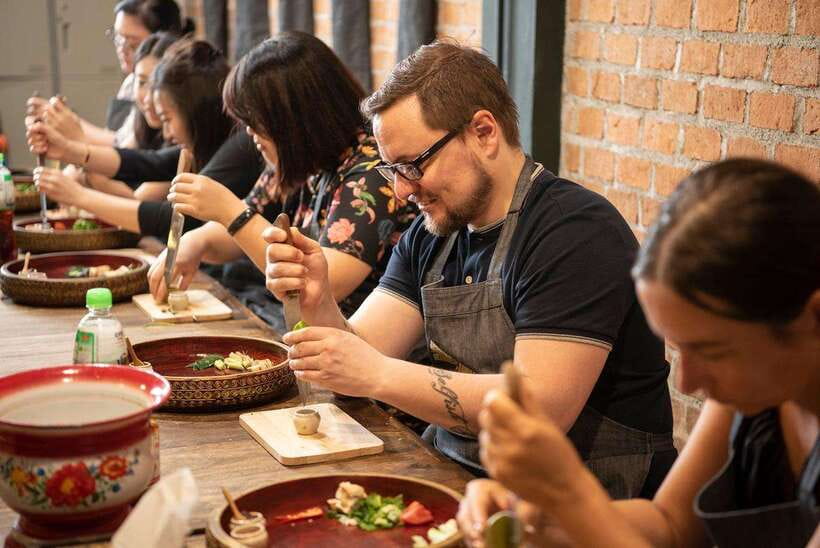
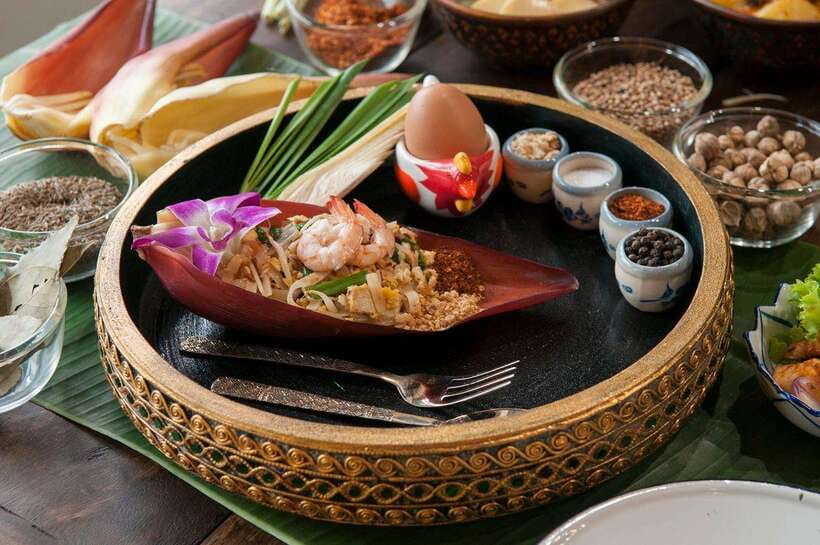
- You cook four dishes yourself: Each day offers three savory Thai dishes plus mango sticky rice.
- The menu changes by weekday: You may make Tom Yum, Pad Thai, green curry, Pad See Ew, Larb Gai, or other familiar favorites.
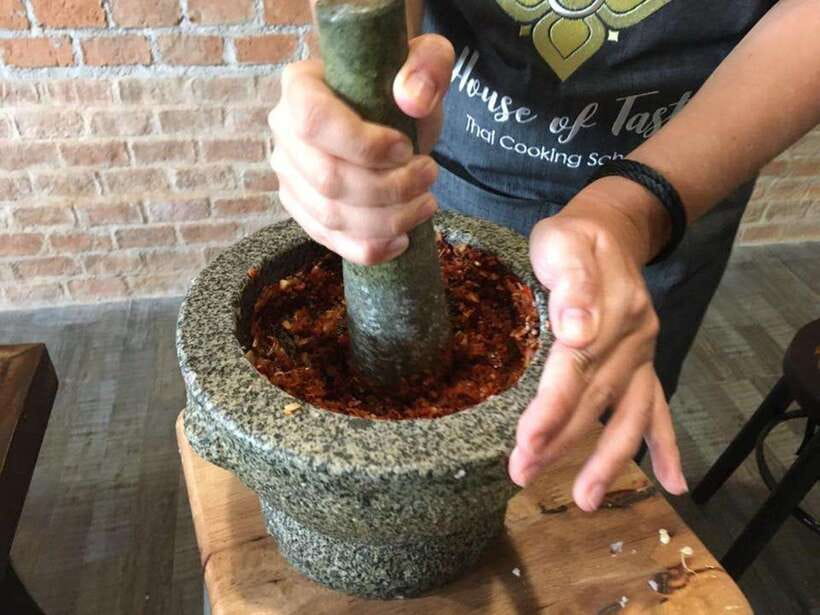
- Curry paste is made from scratch: This is the most useful lesson for understanding Thai flavor, not just copying a recipe.
- Dietary substitutions are available: Vegetarian, halal, kosher, and allergy needs can be handled with advance notice.
Meeting at Asoke and finding the cooking school
The morning meeting point is practical but worth taking seriously. Meet at street level by BTS Asoke Exit 3 and MRT Sukhumvit Exit 3. You can also search for Hey! Coffee MRT Sukhumvit, which marks the meeting area.
This central location makes the class easy to reach by Bangkok’s two main rail systems. Give yourself a few extra minutes, since Asoke and Sukhumvit are busy transport hubs and the meeting point is not inside the cooking school itself.
Afternoon and evening sessions begin at House of Taste Thai Cooking School in Sukhumvit 4. That difference matters when you choose a time. The morning class includes the market walk, while later sessions begin at the school and replace the market visit with mango carving.
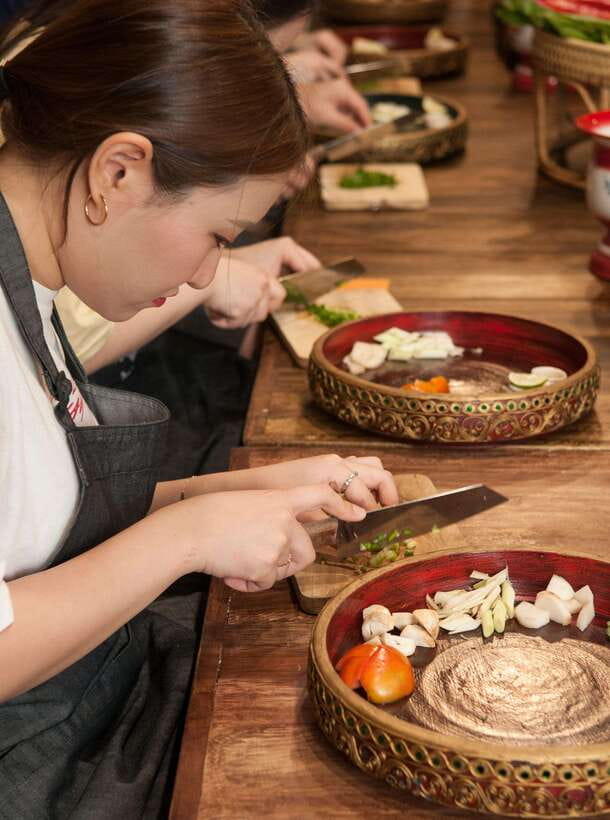
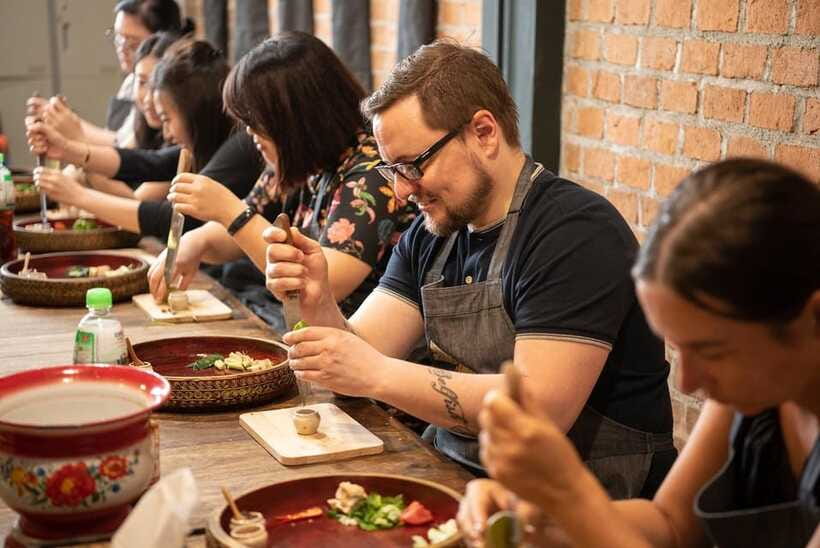
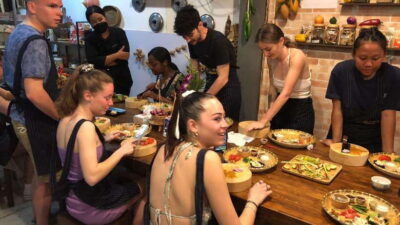
The class lasts three and a half hours. About two hours are spent preparing the dishes, with time set aside to eat as you go. This is not a demonstration where you sit back and take notes. You chop, pound, stir, season, and assemble the food yourself.
More Cooking Classes in Bangkok
- Bangkok: Tingly Thai Cooking School Half-Day Cooking Class
★ 4.9 · 1,191 reviews - Bangkok: Maliwan Thai Cooking Class with Market Tour
★ 4.9 · 1,133 reviews - Hands on Thai Cooking Class and Market Tour
★ 5.0 · 660 reviews
The morning market visit: useful, but keep expectations modest
The morning market walk gives you a quick introduction to the ingredients used in Thai cooking. You look at vegetables, rice, herbs, spices, coconut milk, and curry components before heading to the school.
I like this part because Thai ingredients can be confusing when you first see them in a recipe. A guided look at the raw materials gives you a better sense of how the dishes begin. It also connects the food on your plate with everyday shopping in Bangkok.
The market stop is not necessarily a grand food-market expedition. Some sessions visit a small group of stalls and a dry-ingredient shop behind the BTS area. If you picture a large wet market with long rows of seafood, meat, fruit, and vegetables, you may find this stop underwhelming.
That is the key trade-off. The walk is convenient and relevant to the class, but it is short and focused. I would treat it as an ingredient orientation rather than a major market tour. If the market is your main reason for booking, choose the morning class, but keep your expectations in check.
The early start also has a practical benefit. You get the market portion before the heat of the day becomes a problem, then spend most of the cooking session indoors. Wear comfortable walking shoes, as requested, and avoid arriving after a large breakfast.
Afternoon and evening sessions add mango carving
Later classes skip the market walk. Instead, you learn about the ingredients at House of Taste, then finish with mango carving.
This is not a small technical footnote. It changes the character of the session. The morning class gives you a little neighborhood shopping and street context. The afternoon and evening classes give you more time at the school and a creative final activity.
Mango carving can be a fun choice for families, couples, and anyone who likes a visual souvenir from a food class. You work with the fruit and learn how it can be shaped for presentation. It also fits well after the savory dishes and mango sticky rice.
The later start may suit you better if you dislike early mornings or want to visit another Bangkok sight first. Just remember that you are not getting both activities. The market and mango carving are alternatives based on class time.
What you cook from Monday through Sunday
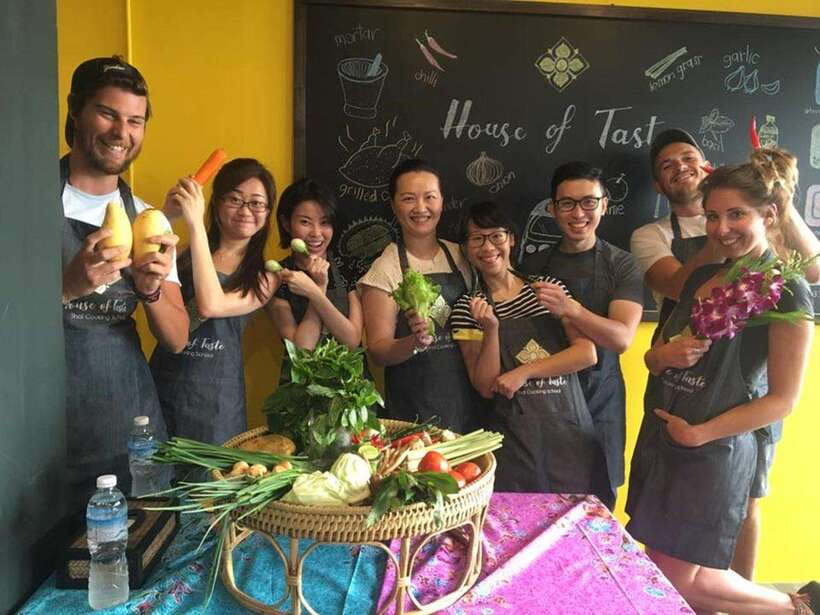
The daily menu changes, so check the weekday before booking if you have a favorite Thai dish in mind. Every schedule includes four dishes, normally three savory recipes and mango sticky rice.
- Monday: Som Tum, Pad Thai with shrimp, green curry with chicken, and mango sticky rice
- Tuesday: Tom Kha Gai, Pad Krapow Gai, red curry with chicken, and mango sticky rice
- Wednesday: Tom Yum Goong, Pad See Ew with chicken, green curry with chicken, and mango sticky rice
- Thursday: Larb Gai, Pad Thai with shrimp, Panang curry with chicken, and mango sticky rice
- Friday: Som Tum, Pad Krapow Gai, red curry with chicken, and mango sticky rice
- Saturday: Tom Kha Gai, Pad Thai with shrimp, green curry with chicken, and mango sticky rice
- Sunday: Tom Yum Goong, Pad See Ew with chicken, Panang curry with chicken, and mango sticky rice
This rotation covers several major styles of Thai food. You get sour and spicy soups, stir-fried noodles, aromatic curries, a salad, and a sweet rice dessert.
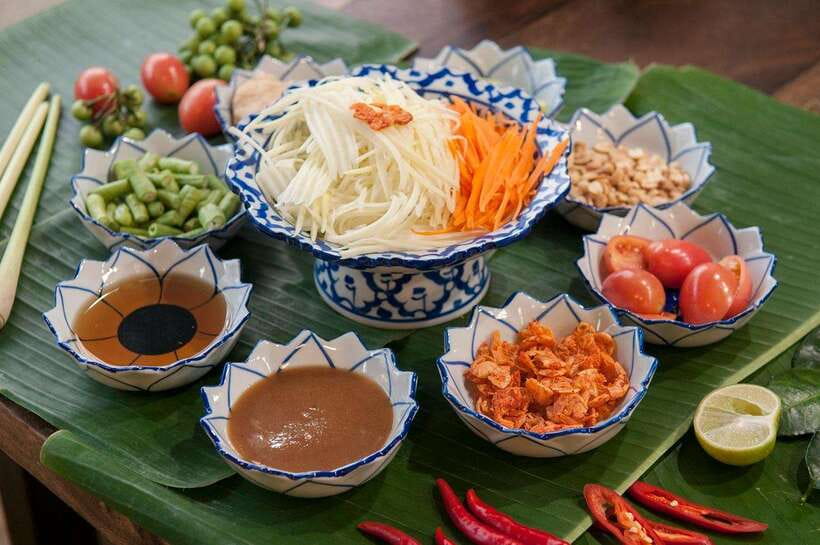
I like the way the menu balances variety with repetition. You might make Pad Thai, for example, but the curry or soup gives the meal a different flavor profile. The dessert appears every day, which is sensible. Mango sticky rice is both a classic and a friendly way to finish a fairly spicy meal.
The daily schedule also lets you plan around your taste. Choose Monday or Friday for Som Tum. Pick Wednesday or Sunday for Pad See Ew. Thursday and Sunday offer Panang curry, while Tuesday, Wednesday, and Saturday include green curry.
More Market Tours in Bangkok
- Bangkok: Damnoen Saduak Market and Maeklong Railway Market
★ 4.5 · 26,723 reviews - The Old Siam: Damnoen Saduak and Maeklong Railway Market
★ 4.5 · 10,992 reviews - Bangkok: Train Market & Floating Market with Boat Ride
★ 4.7 · 9,547 reviews - Bangkok: City Highlights Temple and Market Walking Tour
★ 4.5 · 3,990 reviews
Making curry paste is the lesson worth remembering
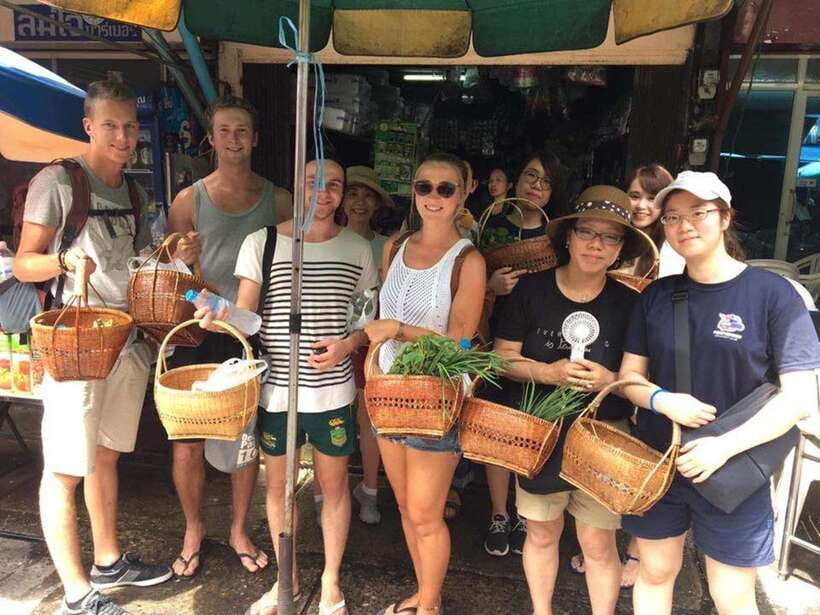
The most useful part of the class is the curry paste. You make it from scratch rather than opening a prepared container and simply adding it to a pan.
This teaches you how herbs, spices, and aromatics form the base of Thai curry. You also learn about coconut milk and the ingredients that give Thai food its familiar balance of heat, salt, sweetness, sourness, and fragrance.
You do not need serious cooking experience. The instructors explain the raw ingredients, show each stage, and guide you through the process. Several instructors, including Pitch, Jay, April, Jane, Jen, Jade, and Tony, have been praised for clear teaching, patience, humor, and good English.
The small-class format helps here. You can ask about a confusing ingredient or get help with a step before it goes wrong. People who rarely cook should be comfortable, while more experienced home cooks can still pick up useful methods.
No MSG is used in the cooking. That may matter to you if you prefer to control seasoning yourself. The recipes are also designed to be possible at home, rather than relying on equipment or techniques you can use only in Thailand.
Cooking four dishes, one course at a time
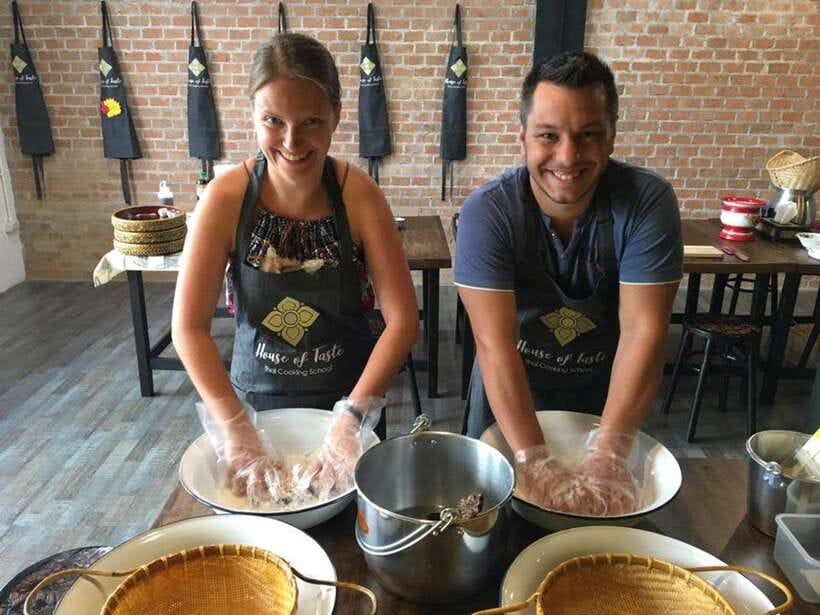
The class is organized around active cooking and immediate eating. You prepare a dish, finish it, and eat it while it is still hot and fresh. Then you move on to the next recipe.
That rhythm works better than preparing everything at once and facing a table of cooling food at the end. You can taste the result of each method while the instructions are still fresh in your mind. It also keeps the session social, since people are cooking, eating, and talking throughout.
You should expect three savory dishes plus dessert, though the exact recipes depend on the day. The pace is generally clear and manageable, but one session was described as slightly rushed. Three dishes, a dessert, explanations, questions, and eating take time, so do not expect a slow private lesson for every step.
The instructors and helpers keep the class organized. You get your own ingredients and equipment, then work through the recipes with guidance. The personal locker is a useful small touch, especially if you arrive with a day bag.
Come with an empty stomach. The class is generous enough that you will likely leave full, not merely satisfied after a few tasting spoonfuls.
Food quality and the pleasure of eating your own work
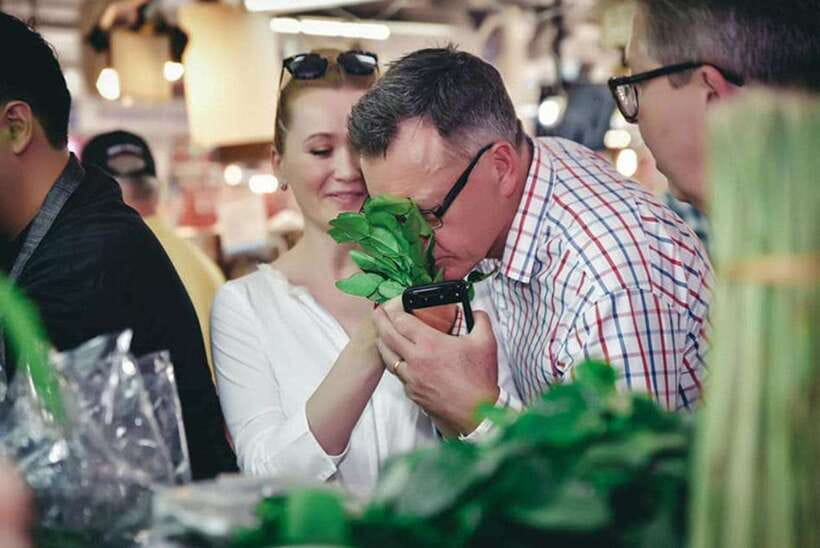
The food is the main reason this class earns such strong praise. People consistently single out the flavor, the fresh preparation, and the pleasure of making every item for themselves.
That last point is important. You are not watching a professional cook produce a perfect plate while you take photographs. You make your own version, then eat it. Even if your knife work is uneven or your curry looks less polished than the instructor’s, the meal feels personal.
Mango sticky rice is a reliable finale. You prepare the coconut cream and serve it with mango, and some sessions have included pink mango sticky rice as a memorable visual touch. It is sweet, creamy, and calming after the heat of curry and soup.
The food also arrives at a useful teaching moment. You can taste the difference between a soup that needs more sourness and a curry that needs better balance. That makes the class more practical than simply receiving a recipe card.
Dietary needs and ingredient substitutions
The school can provide substitute ingredients for vegetarian, halal, kosher, and allergy requirements. Low FODMAP substitutions have also been handled successfully.
You need to give advance notice. Do not wait until the instructor is handing you shrimp or chicken. Early communication gives the kitchen time to prepare a suitable alternative without slowing down the class.
The menu itself includes shrimp and chicken on several days, so this is especially important for vegetarians, pescatarians, people avoiding shellfish, and anyone with food allergies. Ask about your exact needs when booking or before arrival.
The cooking method remains hands-on even with substitutions. You still get to prepare the dishes and learn how the flavors are built.
Is $45 good value in Bangkok?
At $45, this is not the cheapest way to eat in Bangkok. Street food can cost far less, and you could order several Thai dishes for a fraction of the price.
But the comparison is not really between this class and a street-food meal. You are paying for 210 minutes of instruction, a guided ingredient introduction, four dishes, equipment, ingredients, a locker, drinking water, and recipes to use later. The value improves further if you cook Thai food at home after returning.
The recipes sent by email include the dishes you make and additional recipes from the school’s wider menu. That gives the class a longer life than the meal itself.
For a first cooking class, the price is fair. It is also a good choice for a couple, family, or small group looking for an activity that includes lunch or dinner. If you only want to sample Thai food, spend the money at local restaurants instead. If you want to understand how the food comes together, the class earns its price.
Free cancellation is available up to 24 hours before the start time, and you can reserve now and pay later. Check the current schedule before booking, since start times depend on availability.
Who will enjoy House of Taste most?
I would recommend this class to you if you like to stay active on holiday. It suits people who want to cook, not just watch. It is also friendly to beginners, since the instructors explain each step and offer individual help.
Families should find the format appealing, especially during the afternoon or evening session with mango carving. Couples can split the work, compare results, and leave with recipes rather than another souvenir.
Food lovers will appreciate the menu rotation and curry-paste lesson. The class also works well for people who want a manageable introduction to Thai ingredients without committing to a full-day culinary program.
You may want to skip it if your priority is a large traditional market. The morning stop is useful but limited. You should also avoid booking without checking the menu if you have strong preferences about shrimp, chicken, soup, or curry.
Practical tips for a smoother class
Wear comfortable shoes, especially for the morning session. Bring an appetite, but not a heavy breakfast.
Check the weekday menu before you choose a date. If you want the market, book the 8:30 AM morning class. If mango carving sounds more appealing, choose an afternoon or evening session and go directly to the school in Sukhumvit 4.
Arrive at the correct meeting point for your time slot. Morning participants meet near Asoke and Sukhumvit stations, while later participants meet at House of Taste.
Tell the school about dietary restrictions and allergies in advance. Ask questions during the curry-paste lesson, since that is where the most transferable cooking knowledge is packed into the session.
Should you book this Bangkok cooking class?
Yes, if you want a practical and filling Thai food experience at a fair price. The strongest parts are the hands-on format, patient English-speaking instruction, fresh food eaten immediately, and curry paste made from scratch.
Choose the morning class for the market introduction, but do not expect a huge wet market. Choose afternoon or evening for a later start and mango carving. Check the menu by weekday, notify the school about dietary needs, and arrive hungry.
The class is not a full cultural tour of Bangkok. It is something more focused: a friendly, well-organized lesson that sends you home with a full stomach and recipes you can actually try.
FAQ
How long does the Thai cooking class last?
The activity lasts 210 minutes, or three and a half hours. About two hours are spent preparing the four dishes.
How much does the cooking class cost?
The listed price is $45 per person.
Where does the morning class meet?
Meet at street level by BTS Asoke Exit 3 and MRT Sukhumvit Exit 3. You can also search for Hey! Coffee MRT Sukhumvit as the meeting point.
Where do afternoon and evening classes meet?
Afternoon and evening sessions meet at House of Taste Thai Cooking School in Sukhumvit 4.
Does every class include a market tour?
No. Only the morning class at 8:30 AM includes the market visit. Afternoon and evening classes include mango carving instead.
What dishes will I cook?
The menu changes by weekday. You will make four dishes, including three savory dishes and mango sticky rice. Options include Pad Thai, Tom Yum Goong, Tom Kha Gai, green curry, red curry, Panang curry, Pad See Ew, Som Tum, Larb Gai, and Pad Krapow Gai.
Are ingredients and cooking equipment included?
Yes. Ingredients, equipment, drinking water, and a personal locker are included.
Will I receive the recipes?
Yes. The recipes are sent by email after the class, including recipes for additional dishes made by the school.
Can the class accommodate dietary restrictions?
Vegetarian, halal, kosher, and allergy requirements can be accommodated with advance notice. Substitutions have also been provided for low FODMAP diets.
Is alcohol included?
No. Alcoholic drinks are not included, but they are available to purchase.
What should I bring?
Wear comfortable walking shoes, especially for the morning class. Bring an empty stomach because you will prepare and eat four dishes.
Can I cancel the booking?
You can cancel up to 24 hours in advance for a full refund. Reserve now and pay later is also available.
More Workshops
- Tingly Thai Cooking Class with Morning Market Tour
★ 5.0 · 589 reviews - Hands-on Thai Cooking Class & Market Tour in Sukhumvit
★ 5.0 · 571 reviews - Pink Chili – Thai Cooking Class and Market Tour in Bangkok
★ 5.0 · 416 reviews - Bangkok: Muay Thai Boxing Introduction Class for Beginners
★ 4.8 · 394 reviews
More Shopping Tours
- Half-Day Railway Market and Floating Market Tour in Thailand
★ 4.5 · 3,924 reviews - Bangkok: Damnoen Saduak, Train Market & Mahanakhon Day Trip
★ 4.7 · 2,162 reviews - From Bangkok: Damnoen Saduak Floating Market Guided Tour
★ 4.4 · 2,020 reviews - Damnoen Saduak Floating Market and Maeklong Railway Market Tour
★ 4.5 · 1,588 reviews
Just added around Bangkok
- Kanchanaburi World War 2 Private Charter Pathway of the Past Tour★ 4.5 · 16 reviews
- 2-hour Bangkok Old City Night CHOB TUK TUK + Talat Noi Street Art★ 5.0 · 16 reviews
- Khao Yai National Park Hiking Day Tour: Haew Narok and Haew Suwat★ 5.0 · 16 reviews
- Floating Market with Great Pagoda Temple and Wat Sam Phran★ 5.0 · 16 reviews
- Shangri-La Hotel’s Salathip Thai Restaurant Experience★ 4.5 · 16 reviews
- Private Transfer Bangkok – Koh Kood Island★ 4.0 · 16 reviews
- Private Half-Day Bangkok Tour Explore Grand Palace and Wat Pho★ 4.5 · 16 reviews
- The Best Bangkok Temples★ 4.0 · 16 reviews
Cooking Classes, compared.
Half-Day Thai Cooking Class at Organic Farm in Chiang Mai
Read our review →
Cooking Class, Market & Thai Herbs Garden Tour
Read our review →
Authentic Cooking Class with Market & Farm Visit
Read our review →
Phuket Thai Cooking Class with Market Tour Option
Read our review →
Tingly Thai Cooking School Half-Day Cooking Class
Read our review →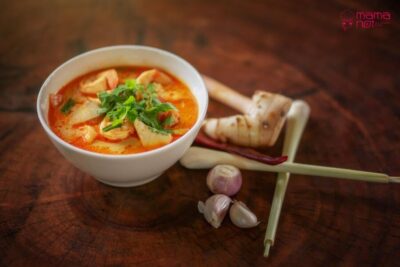
Browse the lists this tour appears in