
Reviewed · COOKING CLASSES
Bangkok: Tingly Thai Cooking School Half-Day Cooking Class
Come hungry, leave with Thai cooking skills. Tingly Thai Cooking School packs a lot into three hours, combining a morning market visit with hands-on preparation of four classic dishes. I like the fresh-ingredient shopping and the fact that you make curry paste from scratch, rather than simply stirring pre-made sauce into a pan.
I also like the generous $41 price, which covers ingredients, equipment, drinking water, recipes, and the meal you cook. The main consideration is timing: only the morning class includes the market walk, and the full four-course meal can leave you very full before the day is half over.
In This Review
- Key points at a glance
- Meeting the class opposite the Marriott
- The morning market adds real context
- Four dishes, with one menu change by weekday
- Making curry paste changes the lesson
- The teaching style is the main attraction
- Eating your own work is part of the reward
- What you take home
- Is $41 good value?
- Who will enjoy this class most?
- Morning or afternoon?
- Practical tips for a better class
- Should you book Tingly Thai Cooking School?
- FAQ
- How long is the Tingly Thai Cooking School class?
- How much does the cooking class cost?
- Where does the class meet?
- Does every class include a market tour?
- Which dishes are included?
- Which curry is made on each day?
- Are vegetarian options available?
- Are ingredients and cooking equipment included?
- Are children allowed to attend?
- Is hotel transportation included?
- Can I cancel the booking?
Key points at a glance
- Morning market visit: See local produce with an English-speaking guide and help choose ingredients before cooking.
- Four dishes from scratch: Every class includes Tom Yum Kung, Pad Thai Kung, and mango sticky rice, plus a curry that changes by day.
- Curry paste made by hand: Learn the base technique behind Thai curry instead of relying only on packaged paste.
- Friendly, lively teaching: Guides including Song, Cho, Nam, Naam, and Chon are praised for clear instruction, humor, and personal attention.
- Useful take-home recipes: The recipe book gives you a practical chance to remake the dishes at home.
- Good value for a full meal: At $41, you receive a three-hour lesson, four dishes, all supplies, and lunch or an early dinner.
Meeting the class opposite the Marriott
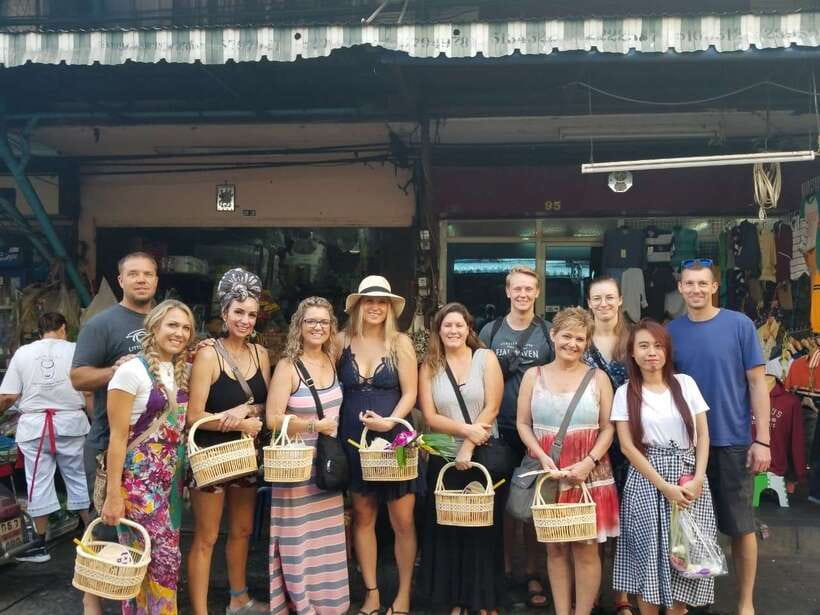
The cooking school is at Tingly Thai Cooking School, opposite the Marriott Hotel Surawong. You meet your English-speaking guide there, get settled, and begin with an introduction to the ingredients and the day’s menu.
The central location makes this an easy activity to add to a Bangkok itinerary, though hotel pickup and drop-off are not included. You will need to make your own way to the school and return afterward.
Classes last about three hours. Starting times vary, so check the available morning and afternoon departures when booking. If the market interests you, choose the morning session. The market closes by about 10 a.m., so the afternoon class skips that part.
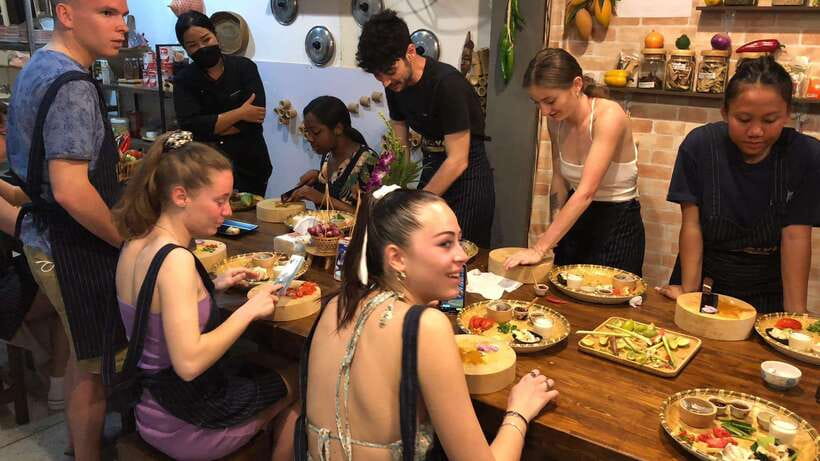
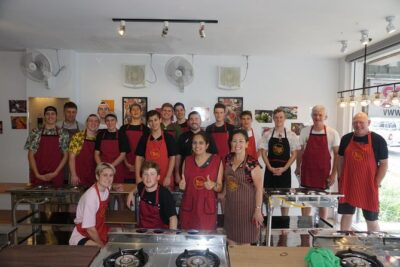
The school appears to be set up for group teaching rather than a private chef lesson. That is useful if you want a social activity, especially as a solo visitor, but it also means you should expect to share some preparation and cooking tasks with the group.
More Cooking Classes in Bangkok
- Bangkok: Hands-on Thai Cooking Class and Market Tour
★ 4.9 · 1,614 reviews - Bangkok: Maliwan Thai Cooking Class with Market Tour
★ 4.9 · 1,133 reviews - Hands on Thai Cooking Class and Market Tour
★ 5.0 · 660 reviews
The morning market adds real context
The morning class begins with a walk to the local market. Your guide explains the ingredients, shows you what is available, and helps select the produce used in the cooking session.
This short visit gives the food more meaning. Thai recipes often depend on fresh herbs, aromatics, curry ingredients, and produce that may look unfamiliar if you usually shop in a Western supermarket. Seeing the ingredients in their everyday market setting helps you understand that Thai cooking is built around fresh combinations, not just a bottled sauce or a packet of seasoning.
The market portion is also one of the more personal parts of the class. You are not simply handed a measured box of ingredients. You see what is on offer that morning and learn a little about Thai market culture along the way.
Keep your expectations sensible. This is a market introduction, not a long food tour. The visit is included only with the morning class and is shaped around buying ingredients for the lesson. Still, it is a worthwhile reason to choose the earlier start.
A practical tip: eat little or skip breakfast. The class includes four dishes, and several people finish feeling thoroughly stuffed. You may want only a light meal later.
Four dishes, with one menu change by weekday
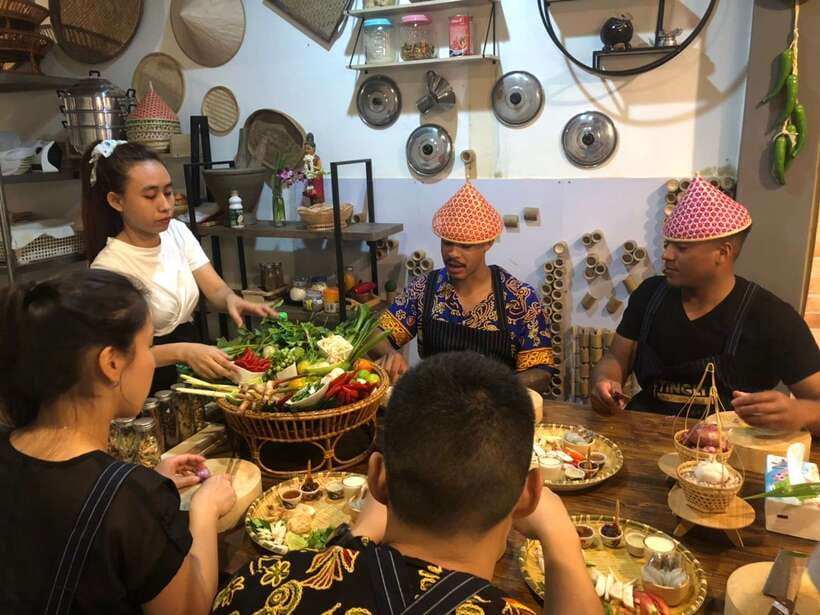
Every class prepares three set dishes:
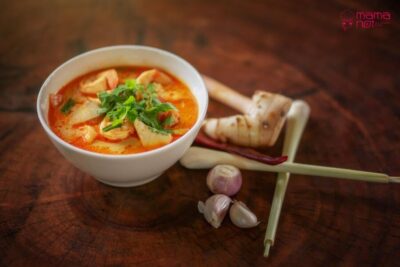
- Tom Yum Kung, hot and sour prawn soup
- Pad Thai Kung, Thai-style fried noodles with prawns
- Khao Neeaw Mamuang, mango with sticky rice
The fourth dish is a chicken curry selected according to the day:
- Monday and Friday: green curry
- Tuesday and Saturday: red curry
- Wednesday and Sunday: Panaeng curry
- Thursday: Massaman curry
This schedule matters if you have a favorite. Green curry is available on Mondays and Fridays, while Panaeng curry appears on Wednesdays and Sundays. Massaman curry is the Thursday choice.
The menu gives you a good spread of Thai flavors. Tom Yum brings heat and sourness. Pad Thai offers a familiar noodle dish with a balance of sweet, savory, and tangy notes. Curry introduces coconut-based spice and aromatics, while mango sticky rice provides a sweet finish.
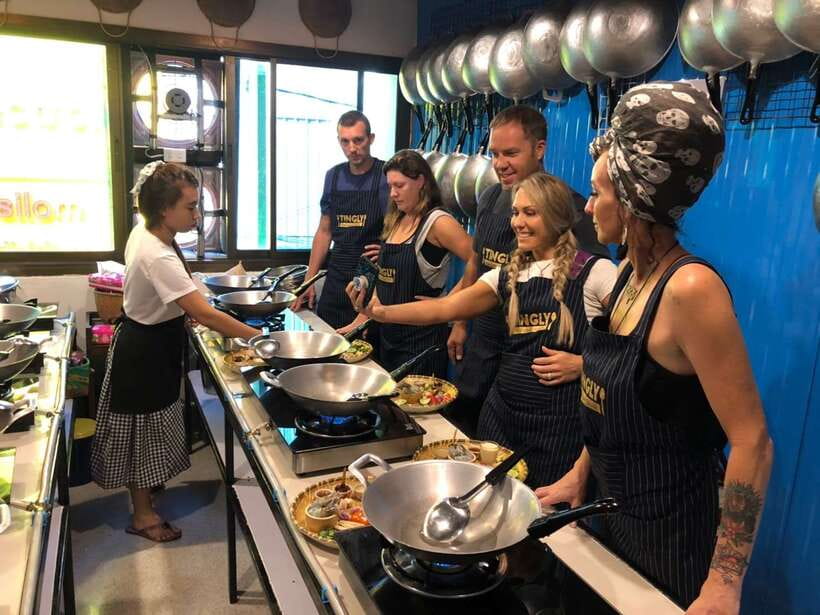
You are not just watching a chef prepare these recipes. You work through the preparation and cooking, with the guide explaining how the flavors are built. The class format keeps the food central, but it also gives you enough instruction to understand what each ingredient is doing.
Making curry paste changes the lesson
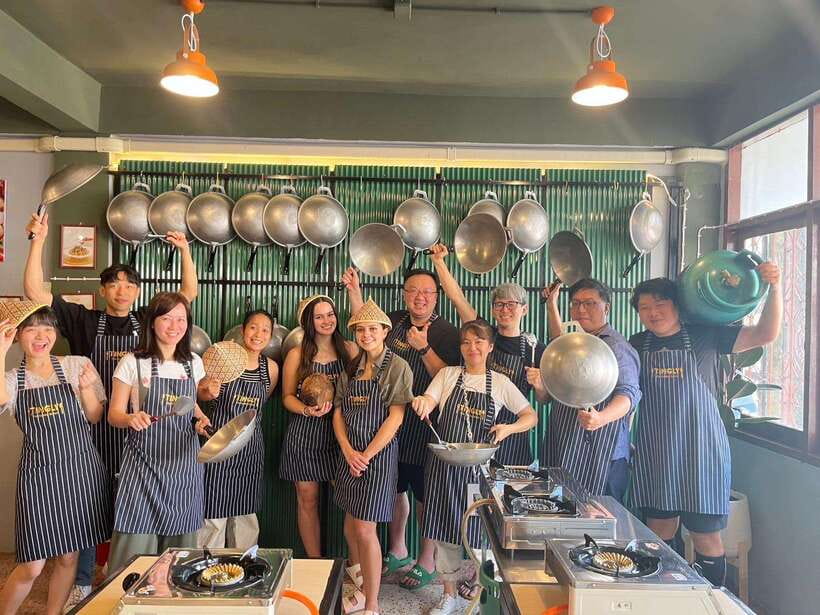
The most useful technique here is making curry paste from scratch. This is often the point where a Thai cooking class earns its place on your itinerary.
You learn how to combine and process the ingredients that give curry its fragrance, heat, and depth. The work takes more effort than opening a jar, but it shows you why freshly prepared curry tastes different.
The guides also explain Thai cooking methods, food storage, and the way ingredients are handled. That information helps you after the class, since knowing how to store herbs, curry paste, and prepared food can be just as useful as knowing what goes into the recipe.
The instruction is designed for ordinary cooks. Several people arrive worried that they are not good at cooking, then find the steps clear enough to follow. You do not need advanced kitchen skills, and the guides lead you through each stage.
Something different for another day:
- Bangkok: Damnoen Saduak Market and Maeklong Railway Market
★ 4.5 · 26,723 reviews - The Old Siam: Damnoen Saduak and Maeklong Railway Market
★ 4.5 · 10,992 reviews - From Bangkok: Ayutthaya Temples Guided Tour with Lunch
★ 4.7 · 10,535 reviews - Bangkok: Train Market & Floating Market with Boat Ride
★ 4.7 · 9,547 reviews
The teaching style is the main attraction
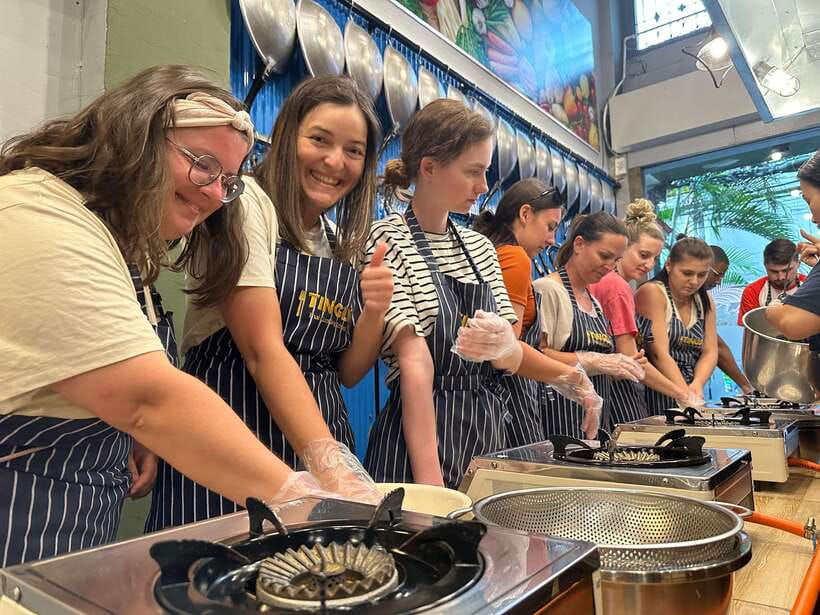
The food matters, but the instructor can make or break a group cooking class. Here, the teaching style is consistently lively and welcoming.
Song is praised for making the recipes simple, encouraging participation, and keeping the room engaged. Cho is described as energetic, funny, and especially good at helping families and nervous beginners feel comfortable. Nam and Naam are also singled out for clear explanations, humor, and attention to the entire group.
That energy is not just entertainment. It helps when several people are chopping, stirring, seasoning, and working at the same time. A good guide keeps the class moving without making you feel rushed.
You may take part in some preparation as a group, while other steps are handled at your own station or with guidance nearby. The class is hands-on, but it is still a group lesson rather than a private cooking appointment.
Food allergies and dietary needs should be explained in advance. The class offers vegetarian options, and specific experiences indicate that instructors have adjusted ingredients for allergies and different diets. It is sensible to state your needs clearly when booking and again at the start of class.
Spice levels can be adjusted. That is helpful because Thai food can range from gentle to fiery, and the same dish does not need to taste equally hot for everyone at the table.
Eating your own work is part of the reward
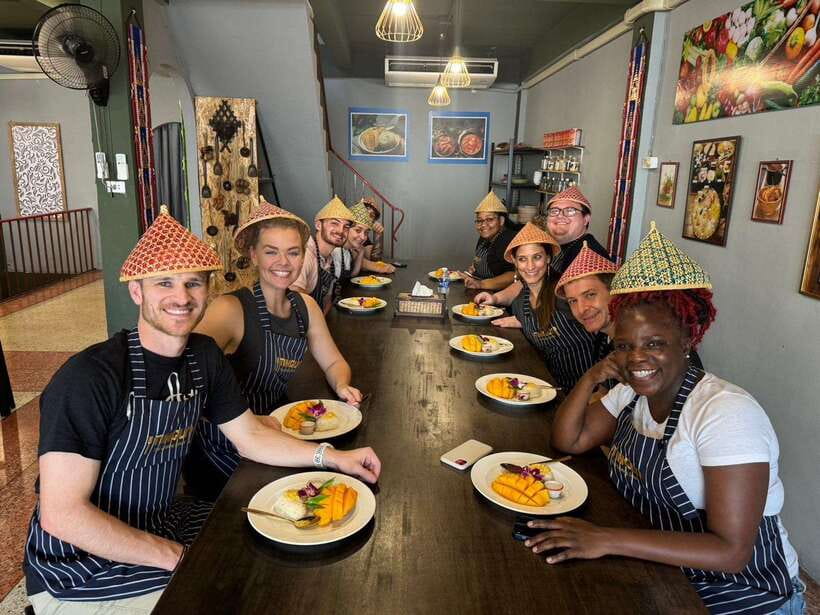
After the cooking, you sit down and eat the dishes you have prepared. This turns the class into a full meal, not just a demonstration followed by a small taste.
The four dishes are served as a shared meal, giving you time to compare results and chat with the group. The social side works well for solo visitors, couples, families, and friends who want an easy way to meet people during a Bangkok stay.
The meal is also a useful test of the teaching. If you can enjoy the soup, noodles, curry, and dessert after making them yourself, you leave with more confidence than you would get from simply watching a chef cook.
Expect substantial portions. The repeated advice to arrive hungry is practical, not just playful. You may want to avoid scheduling another large meal immediately afterward.
The dessert, mango sticky rice, is a pleasant finish because it requires a different style of preparation from the savory dishes. Sweet coconut flavor, sticky rice, and fresh mango offer a cooling contrast after the spicy soup and curry.
What you take home
Recipes are included, and the cooking school provides a recipe book for making the dishes again. Some people also receive complimentary chopsticks, according to the experience details shared after class.
The recipe book is one of the best parts of the package. You do not have to rely on memory once you return home, and the class gives you a practical starting point for recreating the food.
The recipes will be most useful if you also pay attention to substitutions during the lesson. Ingredients in your home country may differ from those at the Bangkok market, so ask the guide which items can be replaced and which ones are central to the flavor.
I would especially make notes about curry paste, spice level, storage, and the balance of sweet, sour, salty, and spicy flavors. Those are the details that help a home-cooked version taste Thai rather than simply tasting like noodles or chicken in sauce.
Is $41 good value?
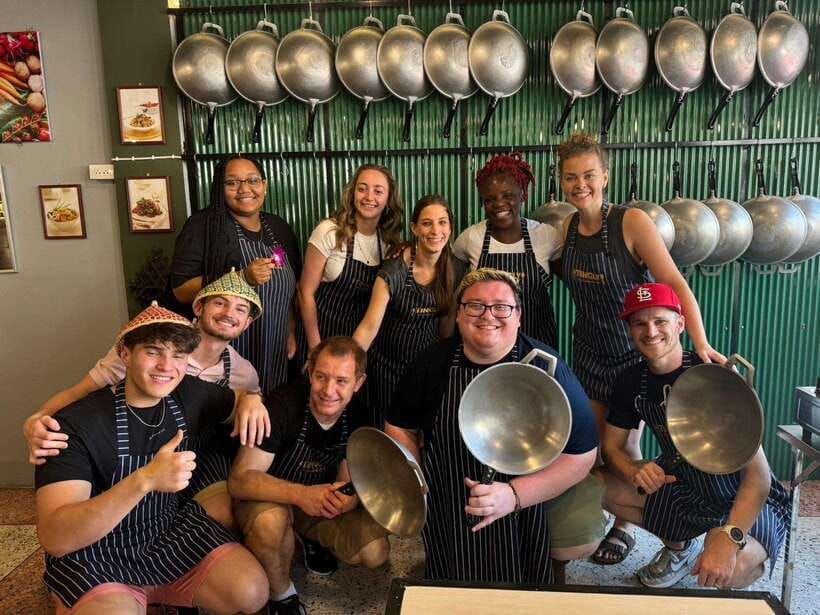
At $41 per person, this is a strong value for a three-hour Bangkok activity. The price includes all ingredients, cooking equipment, drinking water, a four-course meal, recipes, and the market visit if you choose the morning session.
A restaurant meal might cost less, but it would not teach you how to make curry paste, explain the ingredients, or send you home with recipes. A private cooking lesson could offer more individual attention, but it would likely cost more than this group format.
The value is strongest if you want both lunch and an activity. You are paying for a meal, a lesson, market context, and a social outing in one booking.
Alcoholic drinks are not included, though they are available for purchase. Hotel transportation is also not included, so factor in the cost and time of reaching the school yourself.
The high score of 4.9 from 1,191 ratings matches the strongest parts of the experience: the approachable guides, fresh ingredients, clear organization, and food that tastes good after you make it. No class can guarantee the same instructor or the same group dynamic every time, but the repeated praise for Song, Cho, Nam, Naam, and Chon suggests a strong teaching team.
Who will enjoy this class most?
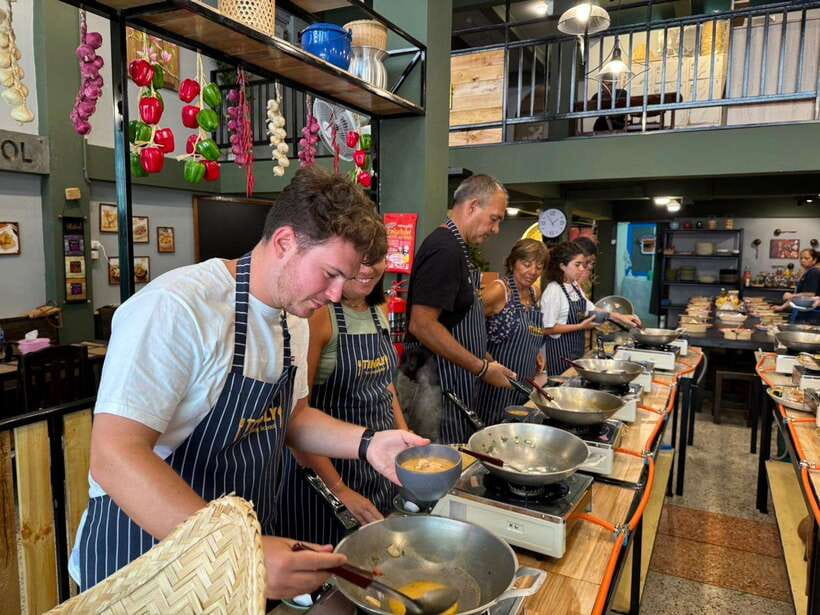
I would recommend Tingly Thai Cooking School to:
- First-time visitors who want a direct introduction to Thai food
- Solo visitors looking for a relaxed social activity
- Couples and families who enjoy doing something together
- Beginners who are nervous about cooking
- People who want recipes they can use after returning home
- Anyone who wants a filling half-day activity rather than a long tour
Families should note the age limits. Children under 3 are not suitable for the class, and babies under 1 are not accepted. Older children can do well when they are interested in cooking. A 12-year-old, for example, was able to prepare all the dishes with the group.
You should choose another activity if you want a private, quiet lesson or a serious chef-training session. The class is lively and social, with humor and group participation at its core.
It may also be a poor fit if you dislike prawns, since the standard Tom Yum and Pad Thai dishes use prawns. Vegetarian options are available, but confirm how the menu will be adapted before you attend.
Morning or afternoon?
Choose the morning class if you want the full program. The market visit adds local context and lets you see the ingredients before they are cleaned, chopped, and measured in the kitchen.
Choose the afternoon class if you prefer a later start or have already visited a market. You still receive the cooking lesson, four dishes, ingredients, equipment, drinking water, and recipes, but you miss the market walk.
The morning class begins early enough that the market may close during the lesson period. Plan around that detail rather than assuming both sessions include the same itinerary.
Either option takes about three hours. The morning class works especially well on a day when you want to cook lunch and then continue sightseeing. The afternoon class may suit you better after a slow start, though you should still avoid a heavy meal beforehand.
Practical tips for a better class
Arrive with an appetite, but not after a large breakfast. Four dishes add up quickly, especially when you are tasting as you cook.
Wear something comfortable and suitable for a kitchen. The experience provides cooking equipment and ingredients, but it does not describe a formal dress requirement.
Tell the instructor about allergies and dietary needs at the beginning. The guides have shown care with substitutions, and early notice gives them the best chance to adjust each dish.
Check the weekday curry before booking. The difference between green, red, Panaeng, and Massaman curry may matter if you have one particular favorite.
Bring a way to keep notes if you like precise cooking. The recipe book covers the core dishes, but personal notes about spice, texture, and substitutions can make your home version more successful.
Leave room in your schedule after class. You will have eaten a complete four-course meal, and the cooking itself is the main event. This is not a quick snack stop.
Should you book Tingly Thai Cooking School?
Yes, if you want a friendly, practical introduction to Thai food at a reasonable price. The combination of a local market visit, curry paste made from scratch, four dishes, a full meal, and take-home recipes gives the class real substance.
I would book the morning session for the market and check the curry schedule before choosing a date. Solo visitors, families with older children, and beginner cooks should find the format especially welcoming.
Skip it only if you want a private lesson, dislike group activities, or need a menu built around strict dietary restrictions without advance discussion. For most people, this is an enjoyable way to spend three hours in Bangkok and one of the few cooking classes where you are likely to leave both full and ready to try the recipes again.
FAQ
How long is the Tingly Thai Cooking School class?
The class lasts three hours.
How much does the cooking class cost?
The listed price is $41 per person.
Where does the class meet?
You meet at Tingly Thai Cooking School, opposite the Marriott Hotel Surawong.
Does every class include a market tour?
No. The market tour is included with the morning class only.
Which dishes are included?
Every class makes Tom Yum Kung, Pad Thai Kung, and mango sticky rice called Khao Neeaw Mamuang. The curry changes by weekday.
Which curry is made on each day?
Green curry is made on Mondays and Fridays. Red curry is made on Tuesdays and Saturdays. Panaeng curry is made on Wednesdays and Sundays. Massaman curry is made on Thursdays.
Are vegetarian options available?
Yes. Vegetarian options are available.
Are ingredients and cooking equipment included?
Yes. The price includes all ingredients and cooking equipment, along with drinking water, recipes, and the four-course meal.
Are children allowed to attend?
Children under 3 are not suitable for the class, and babies under 1 are not accepted.
Is hotel transportation included?
No. Hotel pickup and drop-off are not included.
Can I cancel the booking?
You can cancel up to 24 hours in advance for a full refund. A reserve-now, pay-later option is also available.
More Workshops
- Tingly Thai Cooking Class with Morning Market Tour
★ 5.0 · 589 reviews - Hands-on Thai Cooking Class & Market Tour in Sukhumvit
★ 5.0 · 571 reviews - Pink Chili – Thai Cooking Class and Market Tour in Bangkok
★ 5.0 · 416 reviews - Bangkok: Muay Thai Boxing Introduction Class for Beginners
★ 4.8 · 394 reviews
Just added around Bangkok
- Kanchanaburi World War 2 Private Charter Pathway of the Past Tour★ 4.5 · 16 reviews
- 2-hour Bangkok Old City Night CHOB TUK TUK + Talat Noi Street Art★ 5.0 · 16 reviews
- Floating Market with Great Pagoda Temple and Wat Sam Phran★ 5.0 · 16 reviews
- Khao Yai National Park Hiking Day Tour: Haew Narok and Haew Suwat★ 5.0 · 16 reviews
- Shangri-La Hotel’s Salathip Thai Restaurant Experience★ 4.5 · 16 reviews
- Private Transfer Bangkok – Koh Kood Island★ 4.0 · 16 reviews
- Private Half-Day Bangkok Tour Explore Grand Palace and Wat Pho★ 4.5 · 16 reviews
- The Best Bangkok Temples★ 4.0 · 16 reviews
Cooking Classes, compared.
Half-Day Thai Cooking Class at Organic Farm in Chiang Mai
Read our review →
Cooking Class, Market & Thai Herbs Garden Tour
Read our review →
Authentic Cooking Class with Market & Farm Visit
Read our review →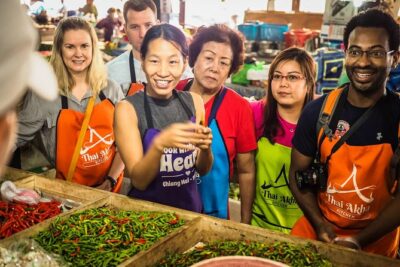
Phuket Thai Cooking Class with Market Tour Option
Read our review →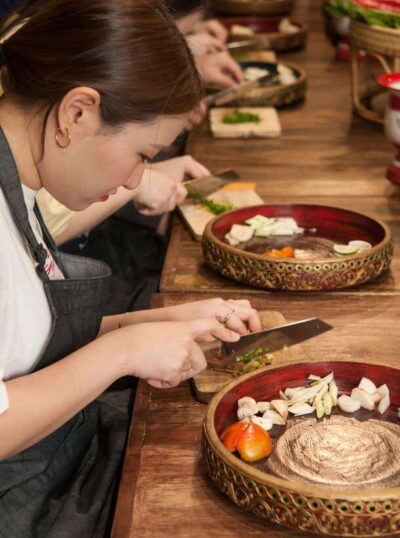
Browse the lists this tour appears in