
Reviewed · COOKING CLASSES
Hands on Thai Cooking Class and Market Tour
Thai food becomes less mysterious when you make it yourself. This 3.5-hour class at House of Taste Thai Cooking School combines a guided ingredient visit, practical instruction, and a generous meal built around classic Thai dishes. I like the hands-on curry paste preparation and the fact that you cook in an air-conditioned classroom with an experienced chef. I also like that the recipes go home with you, so the class can keep paying off after Bangkok.
The main catch is timing. Only the morning departure includes the Asok market tour. Afternoon and evening sessions replace it with mango carving. The class is also capped at 18 people, which is manageable but may feel larger than ideal if you prefer very personal instruction.
In This Review
- Key details before you book
- What the 3.5-hour Bangkok experience feels like
- The morning route through Asok market
- What changes in the afternoon and evening classes
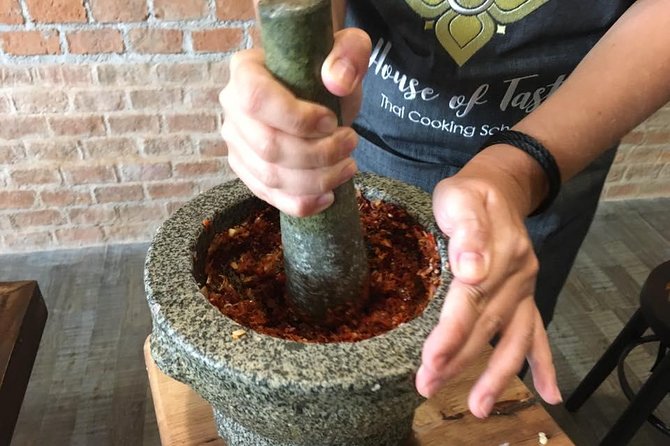
- Building curry paste from scratch
- Choosing from the Thai menu
- Eating four dishes is part of the lesson
- How good is the value at $45.66?
- Who will enjoy this class most?
- Getting there and planning the day
- The strongest parts, and the small weaknesses
- Should you book the House of Taste class?
- FAQ
- How long does the Thai cooking class last?
- Where does the experience begin?
- Where does the experience end?
- Is the market tour available at every departure time?
- What happens during the afternoon and evening classes?
- How many Thai dishes will I make?
- Are vegetarian options available?
- Can the school accommodate dietary requirements?
- Is hotel pickup included?
- Is the experience refundable if I cancel?
Key details before you book
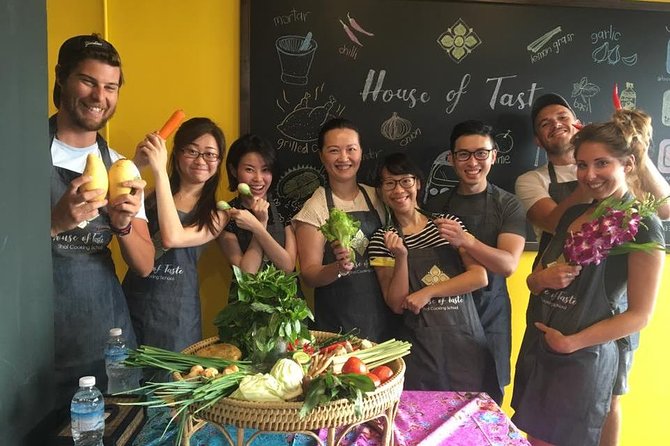
- Morning visits Asok market: You see the vegetables, herbs, spices, and other ingredients before cooking, then travel to the school by tuk-tuk.
- Afternoon and evening include mango carving: These departures skip the market and offer a fruit-carving workshop instead.
- Four Thai dishes are prepared: The menu includes a starter or soup, Pad Thai Goong, a chicken curry, and mango sticky rice, with choices in several categories.
- The class suits beginners and families: Clear step-by-step guidance makes it approachable, while experienced cooks can still pick up useful techniques.
- The meal is substantial: You eat what you prepare, with cold and hot drinking water included. Several dishes can make this a very filling session.
- The price is $45.66 per person: That covers instruction, ingredients, food, recipes, taxes, water, and a personal locker, but not alcohol or hotel transport.
What the 3.5-hour Bangkok experience feels like
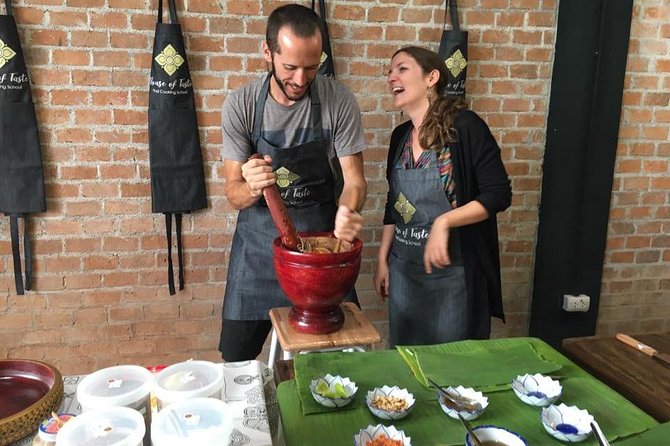
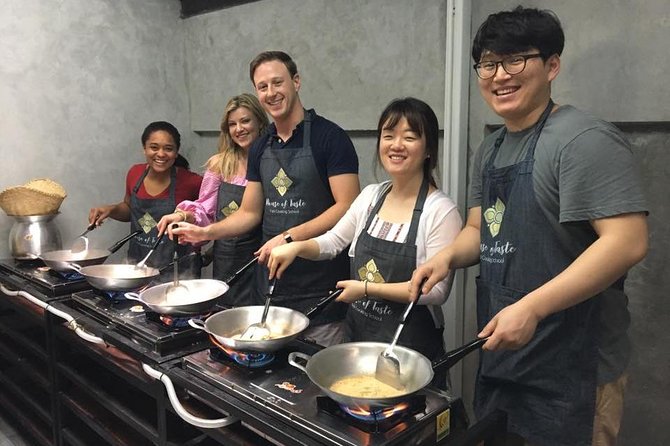
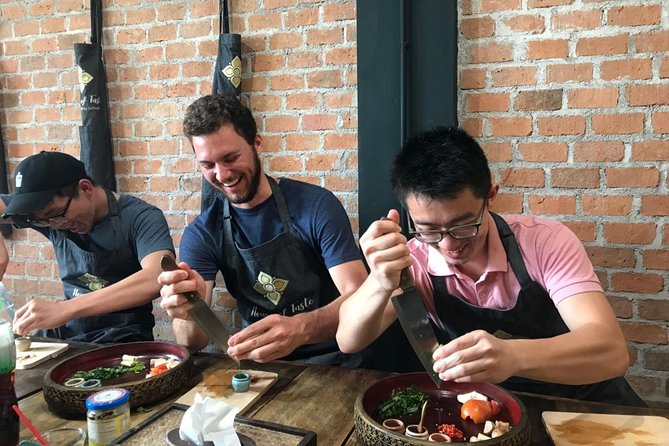
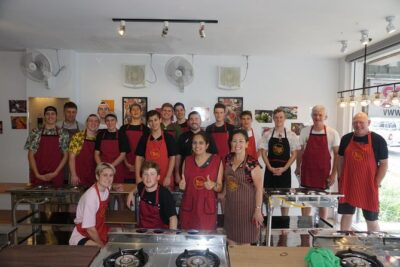
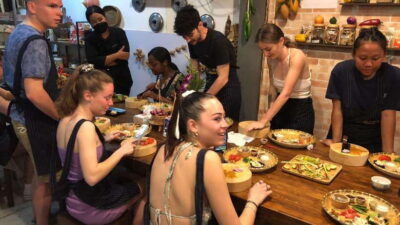
This is not a demonstration where you sit quietly and watch a chef do all the work. You prepare ingredients, make curry paste from scratch, cook your selected dishes, and then sit down to eat. That practical format is the chief reason I see value here.
The class takes place in an air-conditioned room, a welcome detail in Bangkok’s heat. A small amount of walking is involved, especially for the morning market portion, so comfortable shoes are sensible. Your activity begins and ends at 147/4 Soi Sukhumvit 4 in Khlong Toei, and hotel pickup is not included.
The school provides a personal locker, along with hot and cold drinking water. Those sound like small extras, but they make the session easier, especially if you arrive with a day bag or plan to continue sightseeing afterward.
A professional chef leads the lesson, and the strongest part of the teaching is the steady, step-by-step pace. The instructors named in the feedback include April, Jay, and May. Jay is praised for his humor and clear explanations, while April is described as warm, energetic, and particularly good at explaining ingredients and traditional methods. The exact chef depends on the departure, but the teaching style appears friendly rather than formal.
More Cooking Classes in Bangkok
- Bangkok: Hands-on Thai Cooking Class and Market Tour
★ 4.9 · 1,614 reviews - Bangkok: Tingly Thai Cooking School Half-Day Cooking Class
★ 4.9 · 1,191 reviews - Bangkok: Maliwan Thai Cooking Class with Market Tour
★ 4.9 · 1,133 reviews
The morning route through Asok market
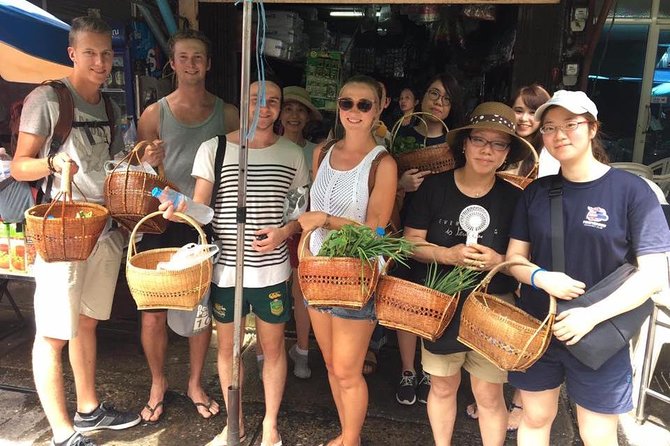
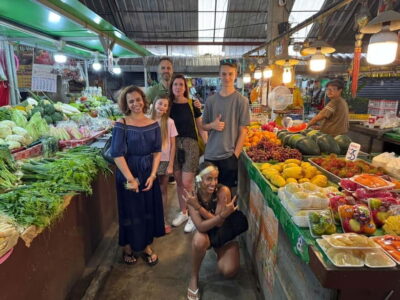
Choose the morning class if seeing the ingredients in their everyday setting matters to you. The session begins with a guided visit to Asok market, where you shop for the vegetables, herbs, spices, and other items used later in class.
This part gives the cooking lesson useful context. Thai recipes often depend on ingredients that can look unfamiliar when separated from the finished dish. Seeing them at the market helps you connect the fresh produce and aromatics with the curries, salads, soups, and noodle dishes you will prepare.
The market walk also adds a local food angle that a classroom-only lesson cannot provide. You are not just hearing a list of ingredients. You are seeing the raw materials before they are chopped, pounded, fried, or simmered.
After the market visit, tuk-tuk transport takes you to the cooking school. That short ride is a fun Bangkok touch and saves you from arranging your own transfer between the market and the school. Do not treat it as a sightseeing ride across the city, though. Its purpose is practical transport from the market to the class.
The morning departure is the best choice for anyone who wants the full food story, from shopping to cooking to eating. It is also the departure I would choose if you are booking only one Thai food activity in Bangkok.
What changes in the afternoon and evening classes
The later departures do not include the market visit. Instead, you take part in a mango-carving workshop before the cooking session.
Mango carving gives the afternoon and evening classes their own character. It is a hands-on introduction to Thai fruit presentation, and it breaks up the cooking lesson with a small creative task. Still, it is not an equal substitute if your main goal is to see where Thai ingredients are bought.
This timing may suit you better if you want to keep your morning free for temples, shopping, or a slow breakfast. The evening class can also fit neatly into a day of sightseeing, provided you arrive hungry enough for a multi-dish meal.
The practical difference is simple:
- Pick morning for the market and tuk-tuk ride.
- Pick afternoon or evening for mango carving and a more flexible sightseeing schedule.
The food instruction itself is the main event in every departure, so you are not giving up the cooking class by choosing a later time. You are giving up the market portion.
Building curry paste from scratch
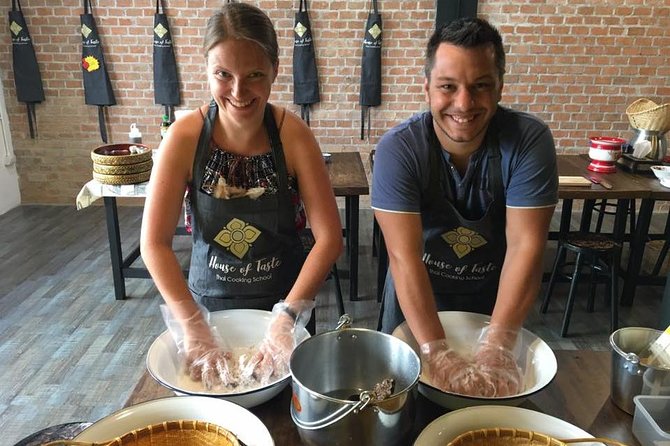
The curry paste session is where the class moves beyond recipe-following. You work with Thai herbs and spices, then turn them into the base for a curry rather than opening a prepared packet.
That process helps explain why Thai curries taste layered. You learn that the paste is not just a hot seasoning. It is a blend of aromatics and spices that shapes the final dish. The chef also explains ingredients, alternatives, and basic preparation methods, which is useful if you plan to recreate the food outside Thailand.
This is a good point for beginners. You do not need to arrive with knife skills or Thai cooking experience. The instruction is designed for all abilities, and several people praised how easy the dishes became once the chef broke the process into clear steps.
Experienced home cooks should not expect a masterclass in advanced restaurant technique. The value is in learning the building blocks of Thai food and practicing them immediately. You get a practical introduction, not a professional culinary qualification.
More Market Tours in Bangkok
- Bangkok: Damnoen Saduak Market and Maeklong Railway Market
★ 4.5 · 26,723 reviews - The Old Siam: Damnoen Saduak and Maeklong Railway Market
★ 4.5 · 10,992 reviews - Bangkok: Train Market & Floating Market with Boat Ride
★ 4.7 · 9,547 reviews - Bangkok: City Highlights Temple and Market Walking Tour
★ 4.5 · 3,990 reviews
Choosing from the Thai menu
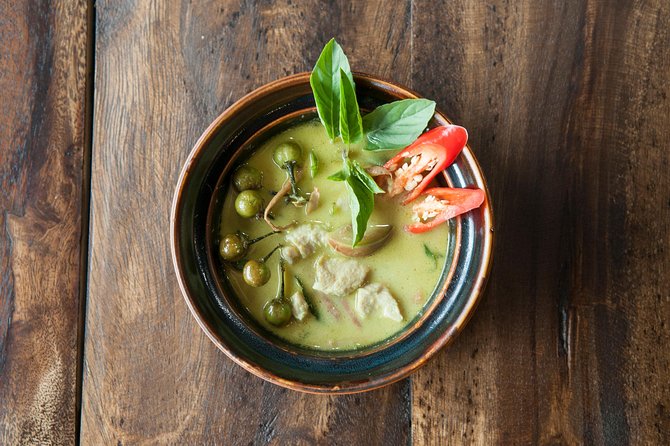
The daily menu is organized into several parts, with options in the starter or soup course and the curry course. The dishes listed include:
- Spicy lemongrass salad
- Spicy shrimp salad
- Green papaya salad
- Deep-fried spring rolls
- Tom Yum Goong, a hot and sour shrimp soup
- Tom Kha Gai, a spicy coconut soup with chicken
- Pad Thai Goong with shrimp
- Red, green, Massaman, or Panang curry with chicken
- Mango sticky rice
You should expect to prepare four favorite Thai dishes, with Pad Thai Goong and a chicken curry forming the two main parts of the meal. The exact starter or soup and curry choice can depend on the class setup or selected menu.
Pad Thai is a smart inclusion because it is familiar to many first-time visitors but still teaches useful details about balancing sweet, sour, salty, and savory flavors. One participant found the homemade version better than the Pad Thai served by hotel room service, which is a useful reminder that fresh preparation matters.
The curry choices give you room to match your taste. Green curry is usually the more herbal option, Massaman tends to be milder and warmer in spice, Panang is rich and concentrated, and red curry offers a familiar middle ground. The class information does not promise a custom spice level, so tell the chef about your preferences and dietary needs when booking.
Mango sticky rice closes the meal with something sweet and distinctly Thai. If you take the later class, the mango-carving workshop gives this dessert ingredient an extra role before you eat it.
Eating four dishes is part of the lesson
After cooking, you sit down to eat the food you prepared. This is more than a reward at the end. It lets you taste the effect of the techniques you just practiced and compare the balance of each dish.
The portions and number of dishes make this a serious meal. One useful tip is to avoid eating a large meal beforehand. The class can include several savory dishes plus dessert, and you will want room to enjoy what you have made.
The meal includes the listed food and drinking water. Alcohol is not included, though it is available to buy. If you do not drink, you are not paying for something you do not need.
The group format adds a social side to the class. People cook alongside one another, ask questions, and eat together. It can be lively and entertaining, especially with an engaging chef such as Jay, but it may not suit you if you want quiet, one-on-one coaching.
How good is the value at $45.66?
At $45.66 per person, I consider this a fair Bangkok activity price, especially if you choose the morning session. You receive a 3.5-hour experience, professional instruction, ingredients, a full meal, drinking water, recipes, locker use, market access in the morning, and tuk-tuk transport from the market to the school.
The value improves if you care about learning rather than simply eating. A restaurant meal gives you the finished dishes. This class shows you how to build them, and the standard recipe sheet gives you a way to try again at home.
The morning tour offers the strongest package because the market visit adds context without a separate fee. The afternoon and evening sessions can still be good value, particularly if mango carving appeals to you or the schedule works better.
There are limits. Hotel pickup and drop-off are not included, so you must reach the meeting point yourself. Alcohol costs extra. The non-refundable booking policy also means you should check your date and departure time carefully before paying.
The experience has a 4.8 rating from 660 reviews, with 96 percent recommending it. Those numbers suggest a reliable experience, but they do not remove the basic trade-offs: the class can feel busy at its maximum of 18 people, and the later departures lack the market visit.
Who will enjoy this class most?
I would recommend it to first-time visitors who want a useful introduction to Thai food. You learn the names and roles of ingredients, practice several dishes, and get a meal at the end rather than a small sample.
It also works well for families. Children must be accompanied by an adult, and the child rate applies only when sharing with two paying adults. Families with older children and teens may find the hands-on format easier to enjoy than a long cultural lecture. Kids can take part in preparation, ask questions, and leave with recipes they can try at home.
Couples and friends should find plenty to do together. The class has enough guidance for a novice cook but still leaves room for an experienced cook to pay attention to technique and flavor.
Vegetarians can participate if they request substitute ingredients in advance. Halal, kosher, and allergy-related substitutions are also available, but you need to advise the school when booking. Do not wait until the class begins, since the ingredients and menu preparation may need to be adjusted.
This is less suitable if you dislike group activities, cannot manage a little walking, or want a completely private lesson. It is also not the right pick if the Asok market is essential but only an afternoon or evening time is available.
Getting there and planning the day
The meeting point is 147/4 Soi Sukhumvit 4, in Bangkok’s Khlong Toei district. The activity ends back at that same meeting point, so plan your onward transport from there.
The location is near public transportation, but hotel transfers are not part of the package. Give yourself enough time to reach the school without rushing. A late arrival could mean missing the opening explanations, especially in the morning when the group goes to the market.
Wear comfortable shoes. The walking is described as limited, but market visits involve movement, and you will be on your feet for parts of the experience.
You receive booking confirmation at the time of booking. Since the experience is non-refundable and cannot be changed for any reason, check the date, time, number of participants, and dietary requests carefully. If the school cancels because of poor weather or because the minimum number of participants is not reached, you are offered another date or experience, or a full refund.
The strongest parts, and the small weaknesses
The best feature is the teaching. The chefs explain ingredients and methods in plain language, keep the mood light, and provide enough help for people who believe they cannot cook. The food itself receives consistent praise, especially the Pad Thai and the four-dish format.
The market visit is another strong point, but only in the morning. It turns the class into a complete food experience, from buying ingredients to eating the finished meal.
The main weakness is the departure difference. An afternoon booking may look similar at first glance, but it replaces the market with mango carving. That is not necessarily bad, but you should know what you are choosing.
Group size is another consideration. Eighteen people is the stated maximum. That is small enough for a lively class and shared instruction, but larger than a private kitchen lesson. The chef’s energy matters here, and the named instructors receive especially warm praise for keeping the group involved.
Should you book the House of Taste class?
Yes, if you want to cook several classic Thai dishes, eat a proper meal, and take home recipes without spending a full day in a culinary school. I would choose the morning departure for the Asok market and tuk-tuk ride.
Choose afternoon or evening if your Bangkok schedule is tight or if mango carving sounds more appealing than market shopping. Just make sure you understand the difference before booking.
At $45.66, this is a sensible pick for beginners, families with older children, couples, and anyone who wants more than another restaurant meal. Check the non-refundable terms carefully, request dietary substitutions in advance, and arrive hungry. Thai cooking class portions are not shy.
FAQ
How long does the Thai cooking class last?
The experience lasts approximately 3 hours and 30 minutes.
Where does the experience begin?
It begins at 147/4 Soi Sukhumvit 4, Khlong Toei, Bangkok, Thailand.
Where does the experience end?
The activity ends back at the meeting point.
Is the market tour available at every departure time?
No. The Asok market visit is available only with the morning class.
What happens during the afternoon and evening classes?
The afternoon and evening departures include a mango-carving workshop instead of the market visit.
How many Thai dishes will I make?
You will make four favorite Thai dishes. The menu includes a starter or soup, Pad Thai Goong, a chicken curry, and mango sticky rice.
Are vegetarian options available?
Yes. Vegetarian substitutions are available if you request them when booking.
Can the school accommodate dietary requirements?
Substitute ingredients can be provided for vegetarian, halal, kosher, and allergy-related requirements. You should advise the school of your needs at the time of booking.
Is hotel pickup included?
No. Hotel pickup and drop-off are not included. You must make your own way to the meeting point.
Is the experience refundable if I cancel?
No. The experience is non-refundable and cannot be changed for any reason. If the provider cancels because of poor weather or because the minimum number of participants is not met, you are offered a different date or experience, or a full refund.
More Workshops
- Tingly Thai Cooking Class with Morning Market Tour
★ 5.0 · 589 reviews - Hands-on Thai Cooking Class & Market Tour in Sukhumvit
★ 5.0 · 571 reviews - Pink Chili – Thai Cooking Class and Market Tour in Bangkok
★ 5.0 · 416 reviews - Bangkok: Muay Thai Boxing Introduction Class for Beginners
★ 4.8 · 394 reviews
More Shopping Tours
- Half-Day Railway Market and Floating Market Tour in Thailand
★ 4.5 · 3,924 reviews - Bangkok: Damnoen Saduak, Train Market & Mahanakhon Day Trip
★ 4.7 · 2,162 reviews - From Bangkok: Damnoen Saduak Floating Market Guided Tour
★ 4.4 · 2,020 reviews - Damnoen Saduak Floating Market and Maeklong Railway Market Tour
★ 4.5 · 1,588 reviews
Just added around Bangkok
- Kanchanaburi World War 2 Private Charter Pathway of the Past Tour★ 4.5 · 16 reviews
- 2-hour Bangkok Old City Night CHOB TUK TUK + Talat Noi Street Art★ 5.0 · 16 reviews
- Floating Market with Great Pagoda Temple and Wat Sam Phran★ 5.0 · 16 reviews
- Khao Yai National Park Hiking Day Tour: Haew Narok and Haew Suwat★ 5.0 · 16 reviews
- Shangri-La Hotel’s Salathip Thai Restaurant Experience★ 4.5 · 16 reviews
- Private Transfer Bangkok – Koh Kood Island★ 4.0 · 16 reviews
- Private Half-Day Bangkok Tour Explore Grand Palace and Wat Pho★ 4.5 · 16 reviews
- The Best Bangkok Temples★ 4.0 · 16 reviews
Cooking Classes, compared.
Half-Day Thai Cooking Class at Organic Farm in Chiang Mai
Read our review →
Cooking Class, Market & Thai Herbs Garden Tour
Read our review →
Authentic Cooking Class with Market & Farm Visit
Read our review →
Phuket Thai Cooking Class with Market Tour Option
Read our review →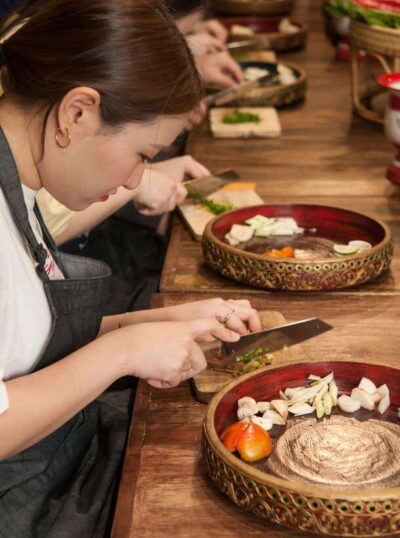
Tingly Thai Cooking School Half-Day Cooking Class
Read our review →Browse the lists this tour appears in