
Reviewed · COOKING CLASSES
Thai and Akha Cooking Class in Chiang Mai
Fresh food makes Chiang Mai taste better. This six-hour Thai and Akha cooking class combines a local market visit, hands-on instruction, and a very large meal in a clean central kitchen. I like the small groups of up to 12 and the chance to learn Akha dishes that rarely appear in standard Thai cooking lessons. I also like that you receive a full-color cookbook to keep cooking after your holiday.
The main thing to consider is the length. You prepare and eat many dishes, so the session can feel long if you prefer a quick demonstration. The morning class offers the most complete experience because it includes the market visit, while the afternoon class goes straight to the kitchen.
In This Review
- Key points at a glance
- Why this class offers more than Pad Thai
- Choosing the morning or afternoon session
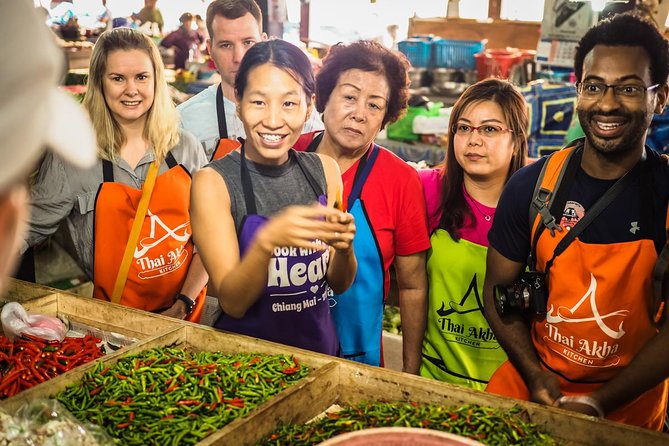
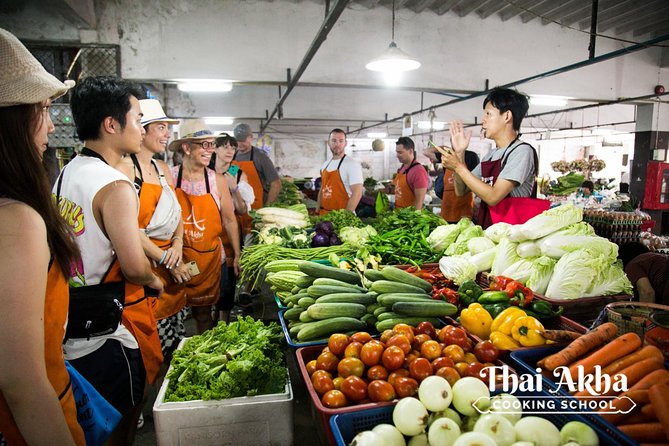
- The local market: a useful first lesson
- Inside the bright, tidy cooking kitchen
- A menu that keeps you busy for six hours
- The Akha dishes are the real point of difference
- What you actually learn for home cooking
- Eating the meal you prepared
- Price, transfers, and the real value
- Who will enjoy this class most
- Should you book the Thai and Akha Cooking Class?
- FAQ
- How long does the Thai and Akha cooking class last?
- Does the class include hotel pickup?
- Is the local market visit included?
- Does the afternoon session visit the market?
- What dishes will I prepare?
- Is the cooking class hands-on?
- How many people can join the class?
- Is food included?
- Are drinks included?
- Do I receive the recipes?
- Can I cancel for a full refund?
Key points at a glance
- Morning market visit: See, smell, and taste local herbs, vegetables, fruit, and other ingredients before cooking.
- Thai and Akha menu: Prepare familiar Thai favorites alongside Akha salad, Akha soup, and sapi thuong, a tomato dipping sauce.
- Individual cooking station: Work at your own station in a bright, tidy kitchen with close help from the instructor.
- A serious amount of food: The menu can include appetizers, soup, curry, stir-fry, desserts, and several Akha dishes.
- Friendly named instructors: On, Niti, Rita, Jasmine, Ano, and assistant Eveline are praised for clear teaching and good humor.
- Useful take-home extras: Akha hill tribe coffee, a full-color cookbook, and, in some sessions, a spice packet help extend the experience beyond Chiang Mai.
Why this class offers more than Pad Thai
Chiang Mai has no shortage of cooking schools. Many teach the familiar set of pad Thai, green curry, spring rolls, and mango sticky rice. This class adds a useful second layer by introducing the cooking of the Akha people, one of the hill-tribe communities associated with northern Thailand.
That difference matters. You still get recognizable Thai dishes, but you also work with Akha ingredients and recipes. The food lesson becomes a small introduction to culture, not just a sequence of chopping and frying tasks.
I especially like the balance between familiar and less familiar food. You can learn techniques you will actually use at home, then try Akha preparations such as Akha salad, Akha soup, and sapi thuong. The tomato dipping sauce is a good example of the class’s appeal: simple enough to recreate, but different from the usual Thai cooking-school menu.
The class also has a social side. People from Germany, France, Brazil, Ireland, Argentina, the United States, and elsewhere may share the room, creating an easy setting for conversation while everyone waits for the next dish. You are not simply watching a chef cook. You are working, eating, and comparing results with the group.
More Cooking Classes in Chiang Mai
- Half-Day Thai Cooking Class at Organic Farm in Chiang Mai
★ 5.0 · 19,087 reviews - Chiang Mai: Cooking Class, Market & Thai Herbs Garden Tour
★ 4.9 · 4,824 reviews - Chiang Mai: Authentic Cooking Class with Market & Farm Visit
★ 4.9 · 4,546 reviews
Choosing the morning or afternoon session
Both sessions begin with pickup from a central Chiang Mai hotel, but only the morning option includes the local market tour. If food culture is a major reason you are taking the class, I would choose the morning.
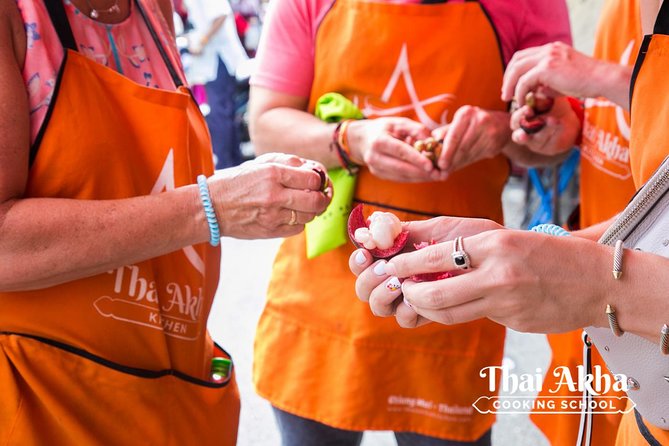
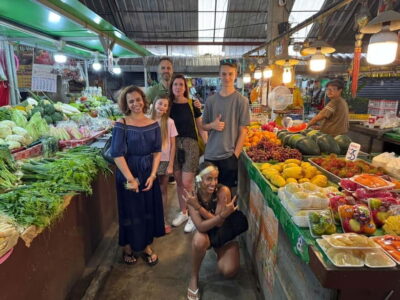
At the market, your instructor explains the ingredients used later in the kitchen. You may see and taste local fruit, herbs, vegetables, spices, and prepared foods. This gives you useful context: instead of meeting an unfamiliar leaf or paste at your cooking station, you have already seen it in its everyday setting.
The market also shows a slice of ordinary Chiang Mai life. It is not a staged food display built only for the class. The value lies in learning how ingredients look before they are measured, peeled, chopped, or ground.
The afternoon option is still worthwhile if you prefer a later start or have already spent time at local markets. It removes one part of the day, though, so you should not book it expecting the market experience. Both options lead to the same central cooking location and include the meal, coffee, instruction, and cookbook.
One practical tip appears again and again: come hungry. The class is built around a large menu, and eating beforehand can make the final meal less enjoyable. This is not a small tasting session.
The local market: a useful first lesson
The market visit is more than ingredient shopping. Your guide uses it to explain what you will cook and how northern Thai food is built.
You can expect to see ingredients in several forms, from fresh produce to prepared items and seasonings. The market stop also allows you to try some local foods. Costs for the market tasting are included, according to the experience details.
This part is strongest when your instructor brings the food to life. Guides such as Niti, On, and Rita are praised for explaining ingredients clearly, keeping the group together, and making the walk entertaining without losing the practical information.
The market is also where the Akha focus begins to make sense. You are not only learning a list of recipes. You are hearing about ingredients connected to a particular food tradition and seeing how those ingredients fit into daily cooking.
The limitation is simple: the market is available only in the morning. If you select the afternoon class, you will miss it. The experience does not claim to provide a separate market visit later in the day.
Inside the bright, tidy cooking kitchen
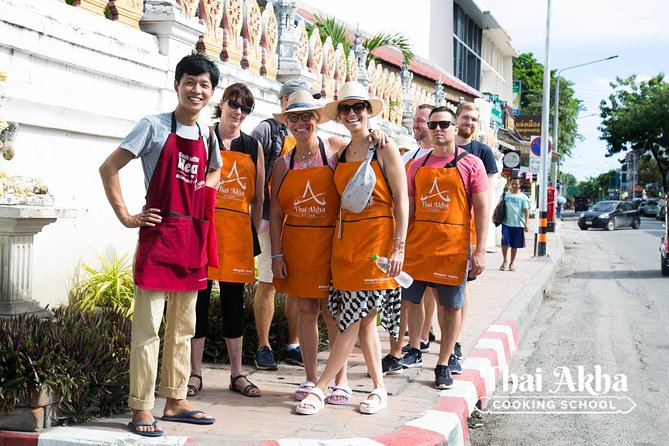
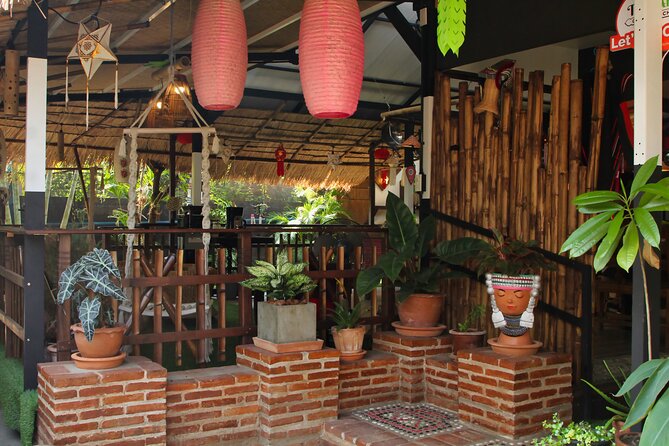
After the market, or after pickup for the afternoon class, you go to the Thai Akha Cooking School at 14/10 Soi Rat Chiang Saen 2, in the Hai Ya area of Chiang Mai.
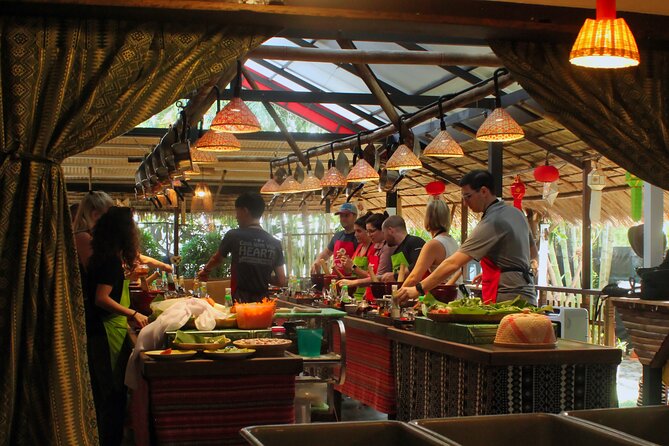
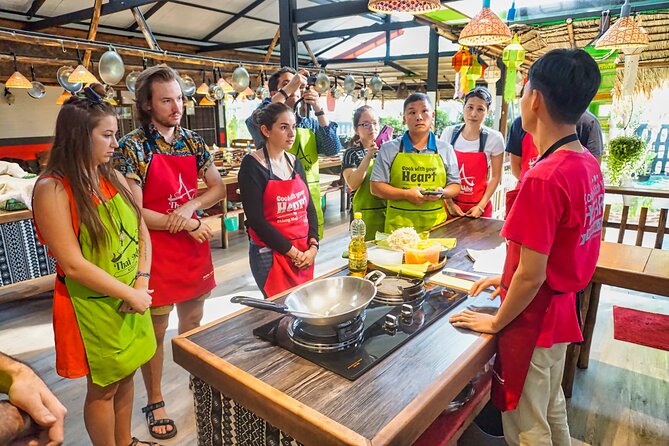
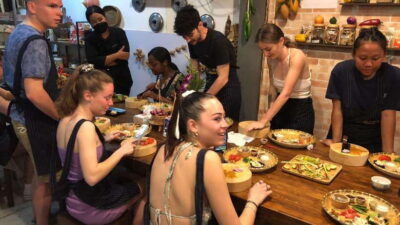
The kitchen is described as bright, well laid out, and clean. Each person receives an individual cooking station. That arrangement is important because it lets you handle the work yourself rather than standing behind one shared counter.
Hygiene is another strong point. The stations are reported to be immaculate, well stocked, and free of clutter. Clear organization matters during a menu this large. Ingredients, cooking tools, and instructions have to be easy to follow, especially when different people choose different dishes.
The maximum group size is 12. That is not a private lesson, but it is small enough for the instructor and assistants to keep an eye on each station. People particularly appreciate the close corrections and step-by-step guidance.
The class has been led by several instructors, including On, Niti, Rita, Jasmine, and Ano. Assistant Eveline is also praised in connection with one session. The names may vary by date, but the teaching style is consistent in the descriptions: warm, funny, clear, and active rather than formal or distant.
Something different for another day:
- Chiang Mai: Elephant Sanctuary, Waterfall & Bamboo Rafting
★ 4.9 · 9,160 reviews - Chiang Mai: Doi Inthanon National Park Eco-Friendly Tour
★ 4.6 · 6,667 reviews - Chiang Mai: Elephant Sanctuary & Waterfall Group Tour
★ 4.9 · 5,780 reviews - Chiang Mai: Chiang Rai Temples, Karen Tribe and Hot Springs
★ 4.7 · 5,401 reviews
A menu that keeps you busy for six hours
The menu is one of the biggest reasons to book this class. You prepare two appetizers, a soup, curry paste, a curry, and two desserts, along with several Akha-style dishes.
The exact selection can vary because many sessions allow you to choose among dishes. The main cooking work commonly centers on a soup, curry, and stir-fry, while other items are prepared as part of the larger group menu. You may make around nine to eleven dishes in total, depending on the session and choices.
That sounds like a lot because it is a lot. The class moves through several stages, building skills as it goes. You might begin with basic preparation, then work toward curry paste, soup, a main dish, and sweets.
The choice system is useful for mixed groups. One person can select a curry or soup that suits them, while another tries something different. You do not necessarily end up making exactly the same main dishes as everyone else.
The menu also gives you a better sense of how Thai food works. You learn how several small preparations come together into a meal, rather than focusing on one famous dish. Instructors also offer practical substitutions, such as using cucumber instead of green papaya when recreating certain recipes at home.
Do not expect every dish to be cooked entirely alone from start to finish. With a large menu and a group format, some preparation is shared or guided closely. The benefit is variety. The tradeoff is that the class feels busy and organized rather than slow and leisurely.
The Akha dishes are the real point of difference
The Thai recipes make the class accessible, but the Akha dishes give it its character.
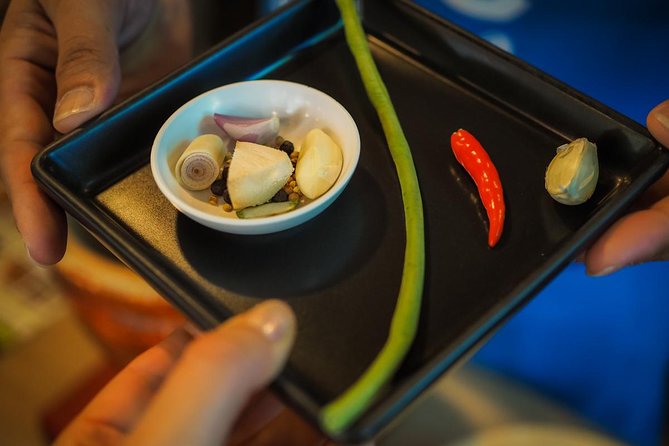
You may prepare Akha salad, Akha soup, and sapi thuong, a tomato dipping sauce. One especially noted dish is fuk kiow soup. These recipes introduce different combinations of herbs, vegetables, and seasoning from the standard Thai menu found in many cooking schools.
Your instructor also explains aspects of Akha culture and food traditions. The lesson is not an anthropology course, but it provides enough context to help you understand why the dishes matter and how they relate to the Akha people.
I would choose this class over a standard Thai-only lesson if you have already cooked Thai food before, or if you want something more particular to northern Thailand. The Akha material gives you a story to remember along with the recipes.
The best approach is to stay curious. Some ingredients may be unfamiliar, and the flavors may not match the Thai dishes you already know. That is exactly where the class earns its keep.
What you actually learn for home cooking
A good holiday cooking class should work twice: first in Chiang Mai, then later in your own kitchen. This one offers several practical advantages.
You learn professional tips for getting dishes right at home, including how to work with ingredients and how to adjust recipes when the original produce is unavailable. The instructors explain each stage clearly and demonstrate techniques in a way that suits beginners.
The recipes are designed to be manageable. People with little cooking experience can follow along, while confident home cooks still gain useful ideas from the northern Thai and Akha dishes.
The full-color cookbook is included. It contains the recipes from the session, allowing you to recreate the food after returning home. Some sessions also provide a spice packet, which makes the first attempt easier.
That cookbook is more valuable than a simple printed menu. With a menu this large, it is impossible to remember every measurement and sequence. Take a few notes if you have a particular favorite, but the book should cover the main recipes.
Eating the meal you prepared
The final meal is the reward, and it is substantial. You sit down with the food prepared during the class and eat the dishes together.
The meal may include nearly ten dishes, depending on the session. Expect a mixture of appetizers, soup, curry, stir-fry, desserts, and Akha specialties. Coffee is included, specifically Akha hill tribe coffee, while alcoholic drinks are available to buy separately.
This communal meal is a pleasant finish because the cooking has been shared across the room. You have seen the ingredients, made the dishes, and then tasted the results together.
The class is not designed for a quick bite before another fixed evening plan. The approximate duration is six hours, and the amount of food takes time to prepare and eat. I would leave the rest of your day open rather than scheduling a museum, show, or dinner reservation immediately afterward.
Price, transfers, and the real value
At $42 per person, this is strong value for a six-hour activity that includes transport within the central pickup zone, the market tour in the morning, all cooking instruction, the meal, coffee, and a cookbook.
A restaurant meal would cost less, but it would not give you the market visit, individual station, instruction, cultural context, or recipes to take home. A shorter cooking class might also cost less, but this menu offers far more food and practice.
The included hotel transfer is limited to locations within 3 kilometers of the city area. If you stay farther out, you should not assume pickup and drop-off are included. The stated meeting point is the cooking school, and the activity ends back there.
The maximum group size of 12 keeps the price below a private lesson while still offering personal help. For a family, couple, or solo participant who wants a full activity rather than a short demonstration, the price makes sense.
Who will enjoy this class most
I would recommend it to anyone who enjoys Thai food and wants to understand how it is made. It also suits families. Children and teenagers have taken part successfully, and the instructors keep the pace lively.
It works well for beginners because the instructions are clear and the cooking stations are organized. Experienced cooks will appreciate the Akha recipes, ingredient explanations, and substitution tips.
It is less suitable if you want a quiet, short lesson or dislike eating a large meal. The six-hour format is a commitment, and the menu can feel demanding if you are not interested in cooking several dishes.
The morning class is the better choice for food-focused people, first-time visitors to Chiang Mai, and anyone curious about markets. The afternoon class makes sense if you want the kitchen session without getting up early or if your schedule already includes a morning market.
Free cancellation is available if you cancel at least 24 hours before the start time. Cancellations or changes made inside that window are not accepted for a refund.
Should you book the Thai and Akha Cooking Class?
Yes, if you want a hands-on food experience with real cultural content and enough recipes to keep you busy for an afternoon or morning. The class’s best features are the small group, spotless individual stations, patient instructors, large menu, and Akha focus.
Choose the morning session if you can. The market visit adds context and lets you taste ingredients before using them. Bring an empty stomach, wear clothes suitable for cooking, and leave extra time afterward because six hours of preparation and eating is no small undertaking.
Skip it only if you prefer a brief class or have no interest in cooking a full meal. For everyone else, $42 buys much more than dinner. It buys a practical lesson, a northern Thai food introduction, and a cookbook that can bring Chiang Mai back to your kitchen.
FAQ
How long does the Thai and Akha cooking class last?
The experience lasts approximately six hours.
Does the class include hotel pickup?
Yes. Pickup and drop-off are included for central Chiang Mai hotels within 3 kilometers of the city area.
Is the local market visit included?
The local market visit is included only with the morning class.
Does the afternoon session visit the market?
No. The afternoon session goes directly to the cooking class.
What dishes will I prepare?
The menu includes two appetizers, soup, curry paste, curry, two desserts, and Akha dishes such as Akha salad, Akha soup, and sapi thuong tomato dipping sauce. The exact selection can vary.
Is the cooking class hands-on?
Yes. Each participant has an individual cooking station and prepares dishes with help from the instructor.
How many people can join the class?
The class has a maximum of 12 participants.
Is food included?
Yes. You eat the meal made during the class, including the dishes prepared by the group.
Are drinks included?
Akha hill tribe coffee is included. Alcoholic drinks are not included but can be purchased.
Do I receive the recipes?
Yes. A full-color cookbook is provided as a souvenir so you can recreate the dishes at home.
Can I cancel for a full refund?
Yes, if you cancel at least 24 hours before the experience start time. Changes or cancellations made less than 24 hours in advance are not accepted for a refund.
More Workshops
- Chiang Mai: Cooking Class with Market and Pickup
★ 4.9 · 1,365 reviews - Chiang Mai: Cooking Class with Organic Farm at Mama Noi
★ 4.9 · 1,151 reviews - Chiang Mai: Evening Cooking Class and Local Market Visit
★ 4.9 · 648 reviews - Cooking Class with Organic Farm in Chiang Mai at Mama Noi
★ 5.0 · 502 reviews
Just added around Chiang Mai
- Chiang Mai: Chiang Rai White, Blue & Black Temples Day Tour★ 4.2 · 16 reviews
- Chiang Mai Adventure ATV Secret Waterfall and Bamboo Rafting★ 5.0 · 16 reviews
- Inthanon Small-Group with Kew Mae Pan Trail from Chiang Mai include Lunch★ 4.5 · 16 reviews
- 2-Day Best of Chiang Rai from Chiang Mai Private Package★ 4.5 · 16 reviews
- Doi Inthanon Discovery Tour: Waterfalls, Villages & Highest Peak★ 3.5 · 16 reviews
- Private-Tour Doi Suthep Temple and Khun Chang Kien Village Half-Day★ 4.5 · 16 reviews
- Chiang Mai Iconic Temples and City Tour★ 4.5 · 17 reviews
- Fantastic! Famous Doi Inthanon National park tour with 2hr trekking★ 4.5 · 17 reviews
Cooking Classes, compared.
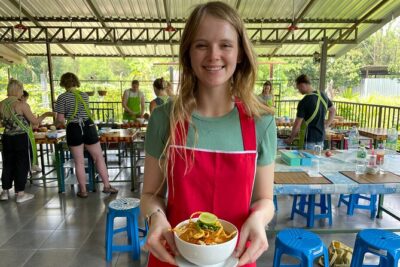
Half-Day Thai Cooking Class at Organic Farm in Chiang Mai
Read our review →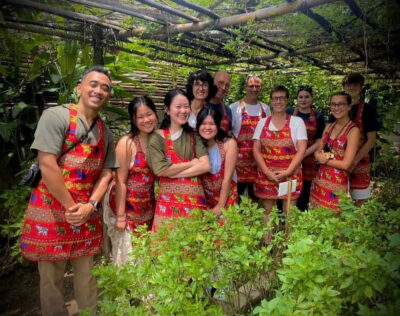
Cooking Class, Market & Thai Herbs Garden Tour
Read our review →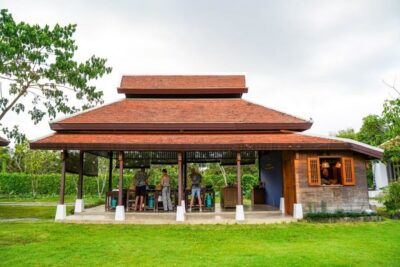
Authentic Cooking Class with Market & Farm Visit
Read our review →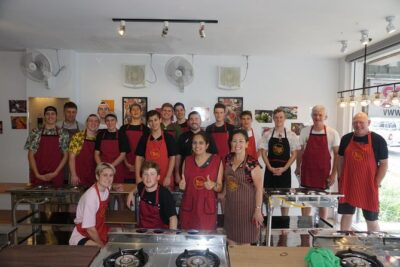
Phuket Thai Cooking Class with Market Tour Option
Read our review →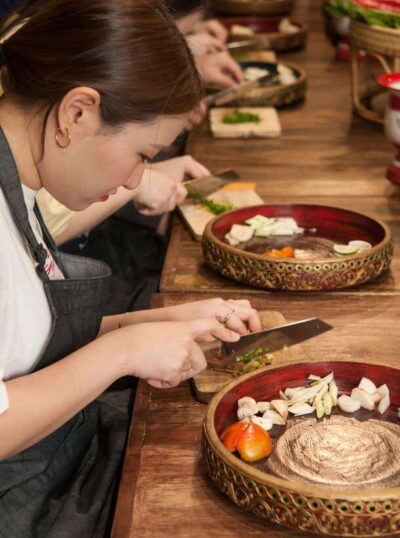
Tingly Thai Cooking School Half-Day Cooking Class
Read our review →
Browse the lists this tour appears in