
Reviewed · ELEPHANT TOURS
Chiang Mai: Elephant Dream Project Sanctuary – Half-Day
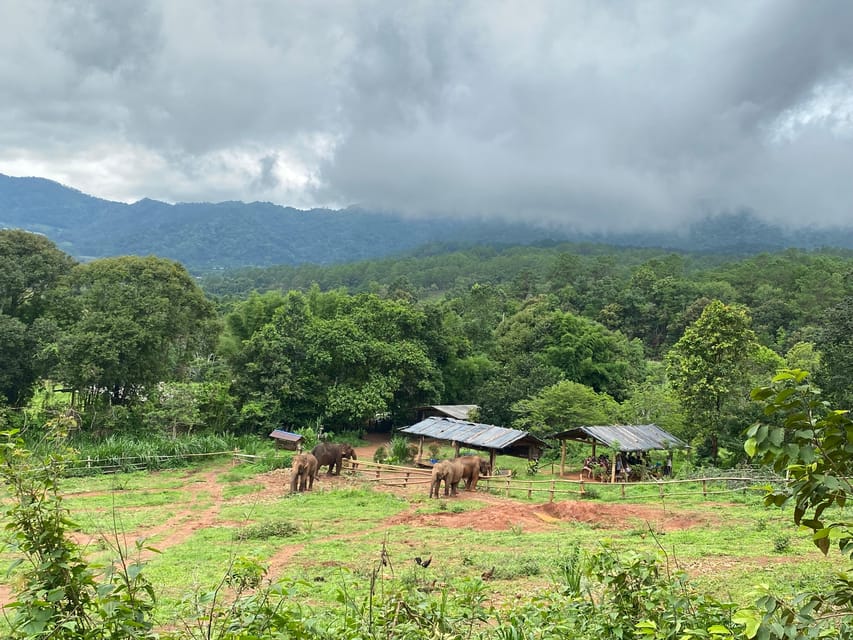
Elephants set the pace here. The Elephant Dream Project offers a small-scale Chiang Mai outing built around feeding Asian elephants, walking beside them in the mountain forest, and learning how local families care for them. I like the no-riding, no-tricks approach, and I like that the elephants are allowed to wander away when they are not interested. The main consideration is time: although the activity is sold as a four-hour experience, the full hotel-to-hotel outing takes about seven and a half to eight hours because of the drive.
This is not a polished theme park with a long menu of elephant activities. It is a simple, locally run project where food, patience, and observation matter more than staged performances. I especially like the chance to watch the elephants drink, bathe, and move through their own surroundings without being made to perform. You should still understand that this is a working sanctuary supported by tourism, not a wild-elephant encounter.
In This Review
- Key points before you book
- The long morning ride from Chiang Mai
- Meeting the elephants at the sanctuary
- Feeding elephants, one bucket at a time
- Walking beside them in the jungle
- What ethical care means here
- Lunch with the village team
- The return trip and the real time commitment
- Is $51 good value?
- Who will enjoy this half-day experience?
- What to pack for a better day
- Should you book Elephant Dream Project?
- FAQ
- How long does the Elephant Dream Project experience take?
- What activities are included with the elephants?
- Does the tour include elephant riding?
- Do visitors bathe the elephants?
- What is included in the $51 price?
- What should I bring?
Key points before you book
- Five elephants in a small local project: The elephants are cared for by a team connected to the village, with guides who describe them as family.
- No riding or forced bathing: You feed the elephants and walk beside them, but the program does not require tricks, rides, mud spas, or bathing with them.
- The elephants set the pace: If an elephant wanders off, the group follows at a respectful distance or waits.
- A mountain drive is part of the day: Allow roughly 7:00 AM to 3:00 PM from pickup to return, even though the listed activity duration is four hours.
- Food and transport are included: Hotel transfers within Chiang Mai, entry, elephant food, water, and a Thai lunch with seasonal fruit are covered.
- Good shoes matter: The forest walk can be slippery and climbs into the hills, so hiking shoes with solid grip are more useful than sandals.
The long morning ride from Chiang Mai
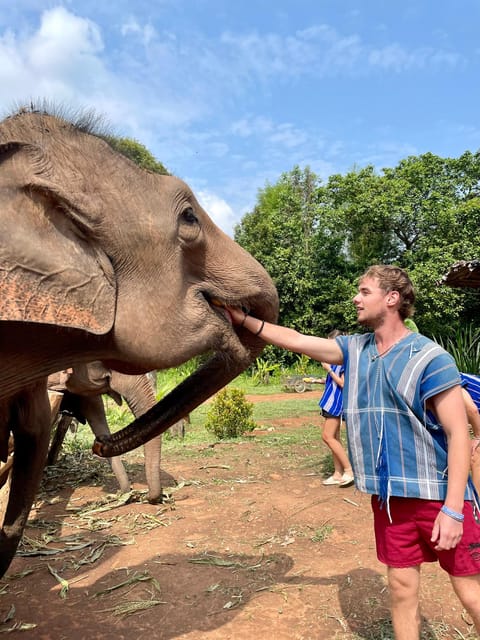
Pickup runs from about 7:00 to 7:30 AM at hotels in Chiang Mai city. You are asked to wait in the lobby five minutes early and look for the Elephant Dream Project vehicle.
The drive to the sanctuary takes about one hour and 45 minutes. That is not a minor detail. You spend a fair part of the day in the vehicle, but the route carries you away from the city and toward mountain villages, forest, and rural life. I would treat the drive as part of the outing rather than a nuisance, especially if you want a break from Chiang Mai’s traffic and busy streets.
Transport is included in the $51 price, and the available comments describe the driving as safe and professional. One recent description noted a comfortable nine-seat van, though vehicle details can change. If you are prone to motion sickness, take sensible precautions before leaving town. The journey is long enough that the half-day label can feel misleading.
You also spend time near a village, where the project connects with local residents and their way of life. The experience is not presented as a formal village tour with a list of separate stops. Instead, the village setting helps you see that elephant care here is tied to local families, work, food, and community income.
More Elephant Tours in Chiang Mai
- Chiang Mai: Elephant Sanctuary, Waterfall & Bamboo Rafting
★ 4.9 · 9,160 reviews - Chiang Mai: Elephant Sanctuary & Waterfall Group Tour
★ 4.9 · 5,780 reviews - Chiang Mai: Elephant Sanctuary Feeding Program Half-Day Tour
★ 4.8 · 4,527 reviews
Meeting the elephants at the sanctuary
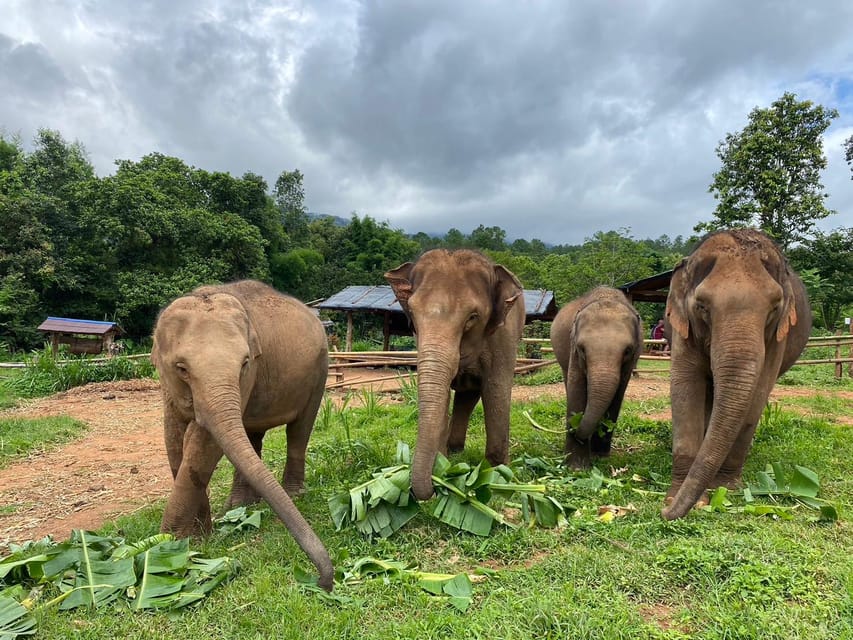
On arrival, an English-speaking local guide introduces the elephants and explains the purpose of the Elephant Dream Project. The guides are a major part of the experience. JJ is praised for his warm manner and care for the animals, while Mr. Dee, also called Mr. D in some accounts, is described as the owner and a person who grew up with elephants from his home village.
That personal connection gives the introduction more weight than a memorized animal talk. You learn about Asian elephants, their behavior, their past work with local families, and the practical challenges of feeding and caring for them. One useful point raised during the visit is that elephants cannot simply be released into any patch of forest. There is limited suitable forest, and elephants accustomed to people still need food, care, and safe supervision.
The project appears to care for five elephants, and the small scale helps the visit feel more personal. You are not moving through a large attraction with a crowded schedule of shows. The team can pay attention to the animals’ mood, movement, and comfort.
Still, keep your expectations sensible. These elephants are accustomed to people and food, so this is not a distant wildlife observation. You will be close to them, and staff will guide your movements. That is safer and kinder than treating the animals like photo props, but it remains a human-animal encounter.
Feeding elephants, one bucket at a time
Feeding is the first hands-on activity. Food for the elephants is included, and you can expect to offer them buckets of fruit and other food while learning how to approach them properly.
This is the moment when the size of an elephant becomes real. They eat a great deal, and feeding lets you notice their trunks, mouths, manners, and individual habits at close range. The guides explain how to offer food safely and help you stay calm around the animals.
You may receive a smock-style cover to keep your clothes cleaner. I would still wear clothes you do not mind getting dusty or damp. Sunscreen is important, and so is insect repellent. The forest setting brings shade, but it does not remove the heat or insects.
The project’s rules are more important than the photo opportunity. The stated policy is to avoid forcing elephants to entertain people. If one does not want to come over, it is allowed to leave. That means you may not get the exact photograph you imagined, but you get a more honest encounter. The animal is not being made to stand still for a queue of visitors.
Walking beside them in the jungle
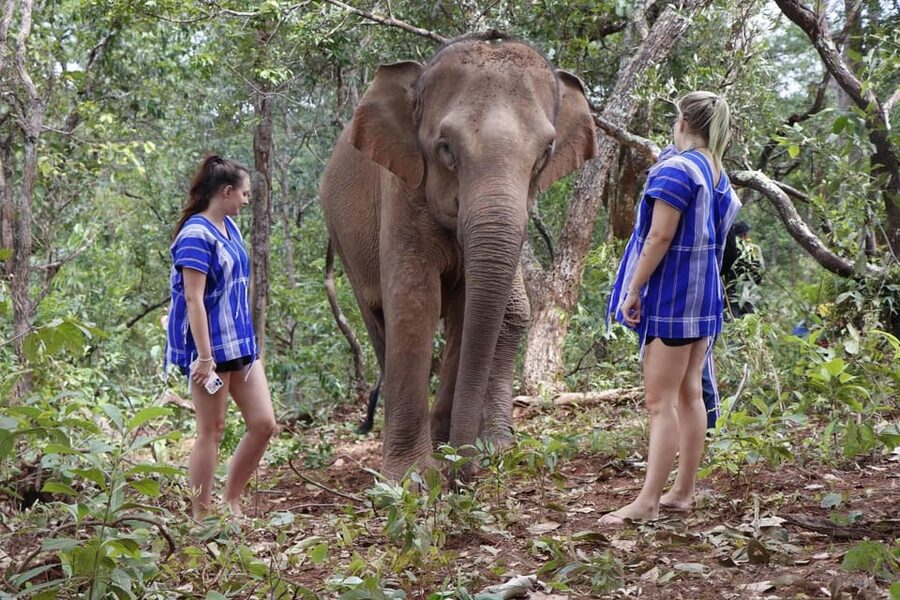
After feeding, you walk with the elephants through the jungle and up into the mountain area. The walk is described as a short trek, but the ground can be uneven and slippery. One account specifically recommends shoes with strong traction, and another describes guides helping when the path became slick.
You are not marching the elephants through a fixed obstacle course. The stated idea is to follow their natural pace and let them choose where to go. You might watch them move toward water, browse, drink from a river, or bathe on their own. The group may pause while an elephant explores, which is part of the charm and part of the uncertainty.
The walk is also where the project’s approach becomes clearest. There is no riding, and the experience does not require you to touch the elephants, bathe them, or make them perform tricks. Some descriptions mention being close enough to feed them and take photographs, while keeping physical contact limited. That distinction matters if you are trying to choose an elephant activity with fewer demands placed on the animals.
The forest is not a guarantee of perfect conditions. In wet weather, footing can be difficult. In hot weather, the climb may feel strenuous. Bring a towel and a change of clothes, as requested, particularly if you are visiting during a humid or rainy period. The guide’s English explanations and presence on the trail are useful, but this is still an outdoor walk, not an easy paved path.
Something different for another day:
- Half-Day Thai Cooking Class at Organic Farm in Chiang Mai
★ 5.0 · 19,087 reviews - Chiang Mai: Doi Inthanon National Park Eco-Friendly Tour
★ 4.6 · 6,667 reviews - Chiang Mai: Chiang Rai Temples, Karen Tribe and Hot Springs
★ 4.7 · 5,401 reviews - Chiang Mai: Cooking Class, Market & Thai Herbs Garden Tour
★ 4.9 · 4,824 reviews
What ethical care means here
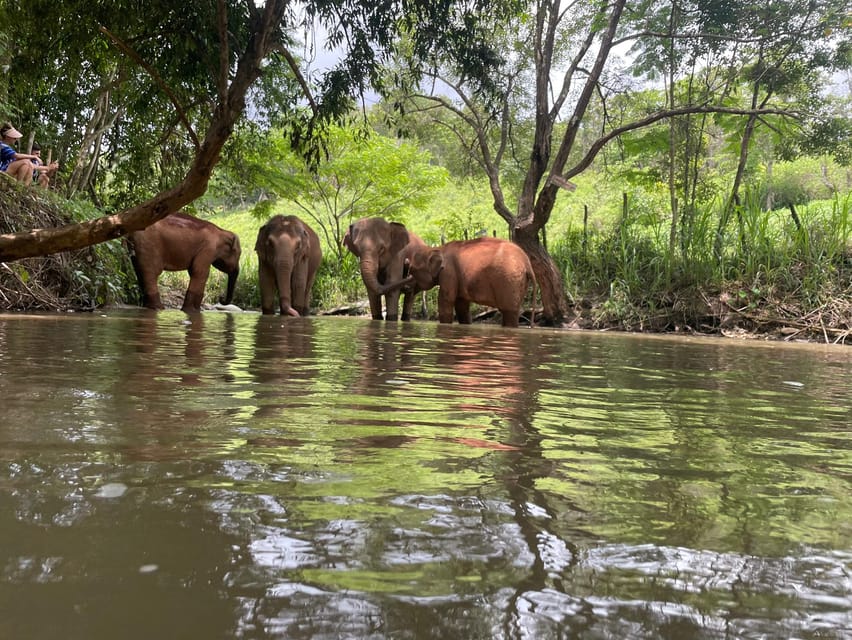
Many Chiang Mai elephant attractions use the word ethical, so you should look at the actual behavior offered rather than the label. At Elephant Dream Project, the strongest signs are the absence of riding and performances, the lack of required bathing, and the policy of letting elephants walk away when they do not want to participate.
You can watch an elephant bathe or drink, but you are not expected to get into the water with it. That may sound less exciting than bathing an elephant yourself, but it avoids turning a natural activity into a tourist command. You also do not need to touch the animals to have a memorable visit.
The project is locally run, and several guides are closely connected to the elephants’ owners and caretakers. The animals are described as having family ties to the village, with some coming from generations of elephant care. That does not erase the complications of elephant tourism, but it gives you useful context about why these projects need income.
One important practical point is that the owner cares for the elephants but does not own all the surrounding land. The project needs visitor income to buy food and work toward better, more secure land for the animals. Some elephants may also be rented to other companies when the project cannot afford to feed them all. This is a reminder that supporting a sanctuary does not solve every welfare problem overnight.
I would not claim that any tourist encounter is automatically perfect. Elephants that are comfortable near humans have learned that relationship over time, and tourism still plays a role. But this program offers a less intrusive pattern: feed, observe, walk, listen, and allow the elephants to decide when they have had enough.
Lunch with the village team
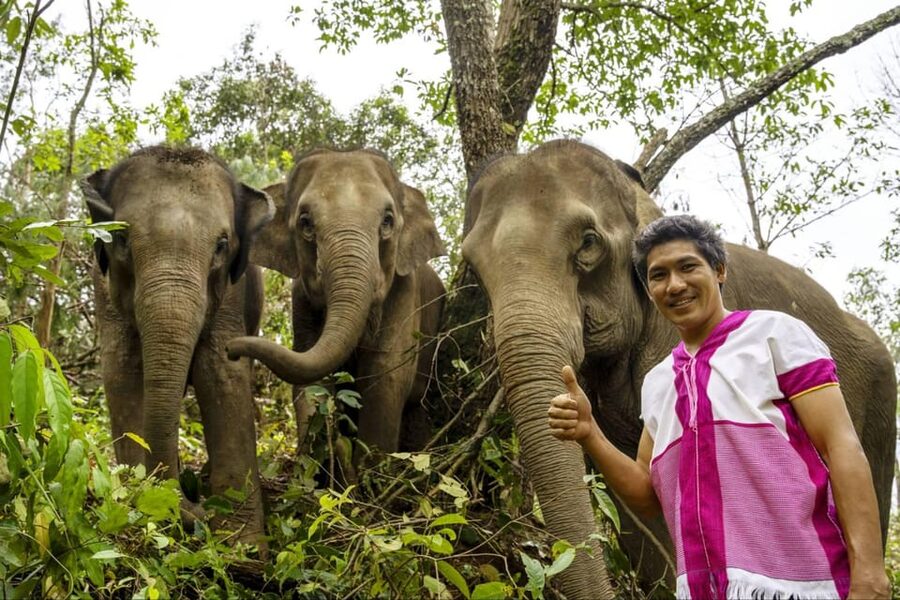
At around noon, you sit down for Thai food and seasonal fruit. Lunch is included, along with water. The meal is described as filling and delicious, and it gives the day a welcome pause after the walk.
This is not a restaurant stop chosen for fine dining. The value is in eating at the project and supporting the people doing the daily work. A shared meal also makes the village connection feel more natural than a quick photo stop.
Soft drinks are not included, so bring money if you want one. Water is provided. Since the program asks you to bring spare clothes and a towel, I would use lunch as a chance to change if your clothing is sweaty, dusty, or wet.
The schedule leaves about an hour for lunch before you say goodbye to the elephants. That is enough time to eat without rushing, though the exact pace will depend on the group, the elephants, and the road conditions.
The return trip and the real time commitment
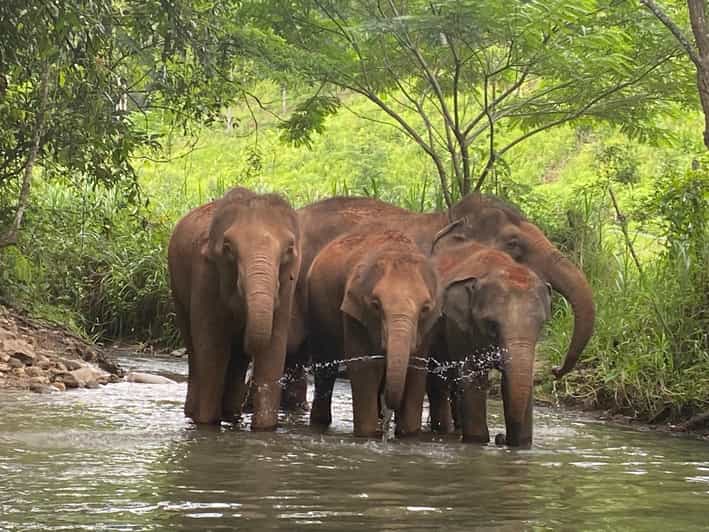
You leave the sanctuary at about 1:00 PM and return to Chiang Mai between 2:30 and 3:00 PM. Add the morning pickup window, and your full day runs roughly from 7:00 AM to 3:00 PM.
This is the biggest planning issue. The activity is advertised as four hours, but the detailed schedule includes nearly three and a half hours of roundtrip driving. The actual sanctuary portion runs from about 9:30 AM to 1:00 PM, with the main elephant activities taking place during that window.
I would not schedule a tight afternoon excursion, cooking class, massage, or flight immediately after the planned drop-off. Chiang Mai traffic and mountain roads can affect the return. The safe approach is to keep the rest of your day open.
Is $51 good value?
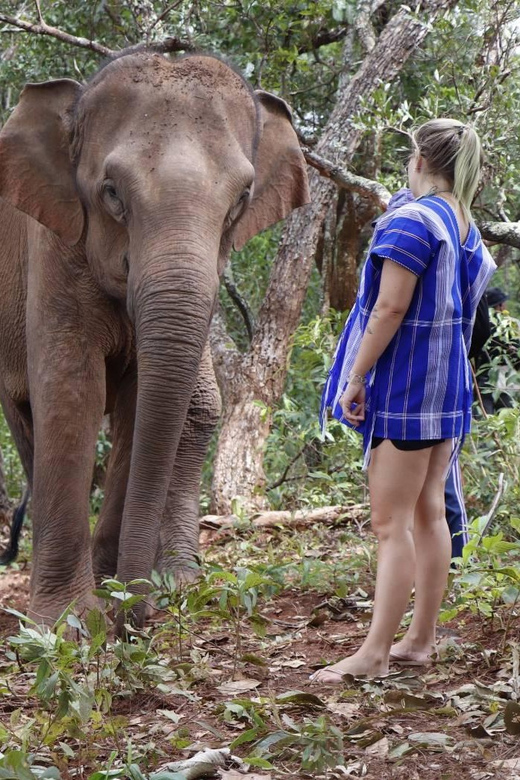
At $51 per person, the price includes more than admission. You receive roundtrip transport from a Chiang Mai city hotel, entry, elephant food, water, a local English-speaking guide, and lunch with fruit.
The value depends on what you want. If you are looking for the shortest possible elephant visit, the long transfer makes this less efficient. If you want a small project, time in the forest, a village setting, and a program that avoids riding and forced activities, the cost is reasonable.
I also like that the money supports a local operation with real daily expenses. Elephant food is not cheap, and the project is working toward more secure land. You should not view the ticket as a charitable donation, but your visit helps fund the care that makes the encounter possible.
The high rating, 4.9 from 552 reviews, matches the repeated praise for the guides, the elephants’ apparent comfort, the transport, and the food. The most frequently praised person is JJ, whose friendly style and attention to animal welfare help shape the day. Mr. Dee’s personal relationship with the elephants is another part of the project’s appeal.
Who will enjoy this half-day experience?
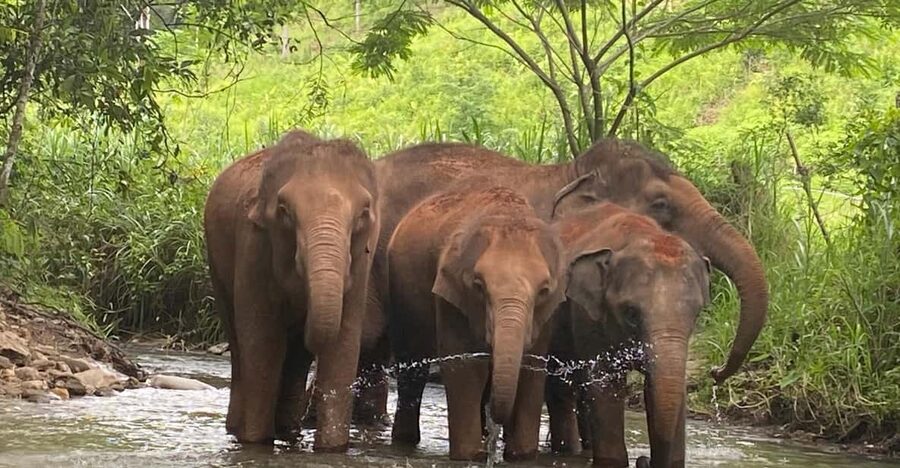
I would recommend it to you if you want:
- A calm encounter rather than a show
- A chance to feed elephants and walk beside them
- A local project with a family and village connection
- An English-speaking guide who can explain elephant care
- A mountain and forest setting outside Chiang Mai
- A program that does not include riding, tricks, or required bathing
It is less suitable if you need paved paths, wheelchair access, or a short transfer. The activity is not suitable for wheelchair users, and the stated age restrictions exclude people over 80 and over 95. The forest walk also calls for steady footing and reasonable mobility.
Families and older children may enjoy the feeding, but the supplied information does not give a minimum age or specific child policy. Ask the operator directly if you are booking for young children. The same applies if you have mobility limits that are not covered by the simple wheelchair restriction.
What to pack for a better day
Bring hiking shoes with good grip, sunscreen, insect repellent, a towel, and a change of clothes. Wear something comfortable and practical rather than your best holiday outfit.
A small day bag is useful for water, personal items, and a phone or camera. The guide will explain how to behave around the elephants, but you should still avoid sudden movements and follow instructions closely. The animals may be gentle and familiar with people, yet their size alone demands respect.
Do not assume you will bathe an elephant or get a hands-on photo. The appeal here is precisely that the animals are not required to provide those activities. You may watch them wash or drink, feed them, and walk near them, but the program keeps contact limited.
Should you book Elephant Dream Project?
Yes, if your priority is a quieter and more animal-centered elephant experience near Chiang Mai. I like the combination of local guides, a small group feel, forest walking, included lunch, and a clear refusal to use rides or forced entertainment.
Book it knowing that the outing takes most of a day, despite the four-hour activity label. The road is long, the trail can be slippery, and the experience depends on what the elephants choose to do. That uncertainty is not a flaw here. It is the point.
If you want elephants on their own terms, and you are willing to trade a quick attraction for a long drive and a simple village setting, Elephant Dream Project is a strong choice. Bring good shoes, leave your afternoon free, and let the elephants decide the schedule.
FAQ
How long does the Elephant Dream Project experience take?
The sanctuary activities run from about 9:30 AM to 1:00 PM, but the full hotel-to-hotel outing usually runs from approximately 7:00 AM until 2:30 or 3:00 PM because of the drive from Chiang Mai.
What activities are included with the elephants?
You can feed the elephants, walk with them in the jungle, and learn about Asian elephants from an English-speaking local guide. You may also watch them drink or bathe naturally.
Does the tour include elephant riding?
No. Elephant riding is not included.
Do visitors bathe the elephants?
No required bathing activity is included. You may watch the elephants bathe themselves, but visitors do not get into the water with them.
What is included in the $51 price?
The price includes roundtrip Chiang Mai hotel transfers, entry tickets, water, food for feeding the elephants, and lunch with Thai food and seasonal fruit. Soft drinks are not included.
What should I bring?
Bring a change of clothes, a towel, hiking shoes, sunscreen, and insect repellent. Wait in your hotel lobby five minutes before pickup.
Just added around Chiang Mai
- Chiang Mai: Chiang Rai White, Blue & Black Temples Day Tour★ 4.2 · 16 reviews
- Chiang Mai Adventure ATV Secret Waterfall and Bamboo Rafting★ 5.0 · 16 reviews
- Inthanon Small-Group with Kew Mae Pan Trail from Chiang Mai include Lunch★ 4.5 · 16 reviews
- 2-Day Best of Chiang Rai from Chiang Mai Private Package★ 4.5 · 16 reviews
- Doi Inthanon Discovery Tour: Waterfalls, Villages & Highest Peak★ 3.5 · 16 reviews
- Private-Tour Doi Suthep Temple and Khun Chang Kien Village Half-Day★ 4.5 · 16 reviews
- Chiang Mai Iconic Temples and City Tour★ 4.5 · 17 reviews
- Fantastic! Famous Doi Inthanon National park tour with 2hr trekking★ 4.5 · 17 reviews
Elephant Tours, compared.
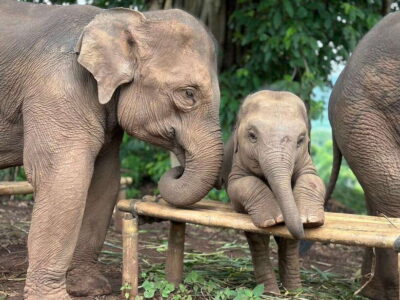
Elephant Sanctuary, Waterfall & Bamboo Rafting
Read our review →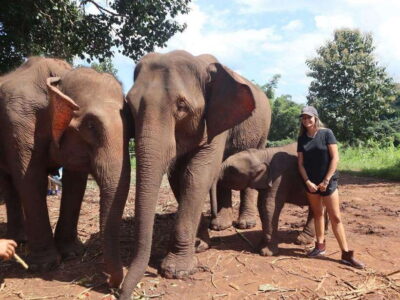
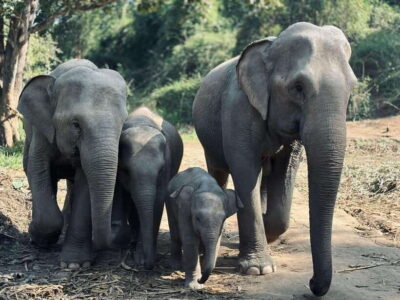
Elephant Sanctuary Feeding Program Half-Day Tour
Read our review →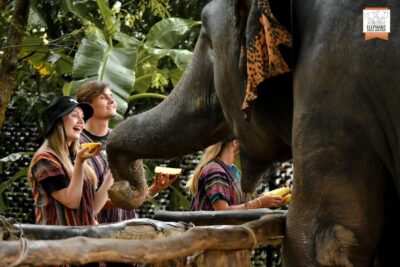
Elephant Jungle Sanctuary Ethical Feeding Experience
Read our review →
Elephant Sanctuary, Long Neck & Sticky Waterfall
Read our review →
Elephant Bathing Session at Krabi Elephant Shelter
Read our review →
Elephant Sanctuary Guided Tour with Hotel Transfers
Read our review →
Browse the lists this tour appears in