
Reviewed · ELEPHANT TOURS
Chiang Mai: Jungle Kayak Adventure with Rapids & Elephants
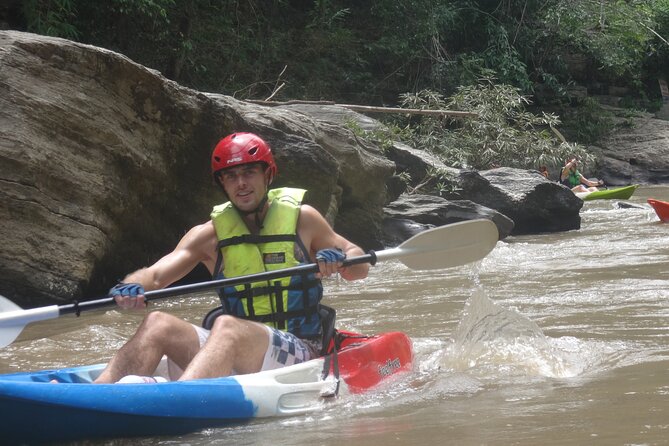
Leave Chiang Mai behind. This Mae Wang kayaking trip takes you from city streets to a jungle-fringed river beneath Doi Inthanon, Thailand’s highest mountain. I like the mix of gentle Class I and II rapids, wildlife watching, and a riverside lunch. I also like that you can choose between a whitewater kayak and a sit-on-top boat.
The main drawback is simple: horse flies can be a nuisance, especially in warm, damp conditions. You should also have moderate physical fitness, and advanced paddlers need to confirm that the more difficult lower-river section is right for their ability.
In This Review
- Key things to know before you go
- From Chiang Mai to the Mae Wang Valley
- Getting ready at the kayaking base
- The upper Mae Wang River and its Class I and II rapids
- Elephants beside the river
- The lower river for advanced paddlers
- Lunch beside the Mae Wang
- What the guides and equipment add
- Practical cautions before booking
- Who should book this Mae Wang trip?
- Is the $81.24 price fair?
- Should you book it?
- FAQ
- Where does the kayaking trip take place?
- How long does the experience last?
- What time does the tour start?
- Is hotel pickup available from Chiang Mai?
- How long is the drive to Mae Wang Valley?
- Are beginners allowed to join?
- Can experienced kayakers paddle harder rapids?
- What type of kayak can I use?
- Is lunch included?
- What safety equipment is provided?
- Is water provided during the trip?
- Do I need to provide passport information?
- What is the cancellation policy?
- What happens if bad weather cancels the trip?
Key things to know before you go
- Mae Wang Valley setting: You paddle beneath Doi Inthanon, with forest, riverbanks, birds, butterflies, and elephant camps along the route.
- Two levels of river action: The upper river offers Class I and II rapids for beginners, while the lower Mae Wang includes Class III and IV water for advanced boaters.
- A boat for your ability: Choose a whitewater kayak or a hard-shell sit-on-top kayak, depending on your comfort and experience.
- Small-group format: The maximum group size is 10 people, which should allow for close support without turning the river into a parade.
- Useful support system: A following truck provides assistance and secure storage for valuables, while guides carry first-aid and CPR certification.
- Lunch and hydration included: You get a riverside meal, vegetarian and vegan choices, bottled water, and water for hydration packs.
From Chiang Mai to the Mae Wang Valley
The day begins at 8:30 a.m. with pickup from your Chiang Mai hotel. The drive to Mae Wang Valley takes about 45 minutes, giving you a quick change from urban Thailand to open countryside and wooded foothills.
The valley sits in the shadow of Doi Inthanon. You do not need to climb the mountain to appreciate its presence. The cooler, forested setting helps explain why this river trip feels far removed from Chiang Mai, even though the transfer is fairly short.
Pickup is offered from hotels, but you need to provide the exact address if your accommodation does not appear in the booking system. The operator confirms the pickup details, so check your email for morning instructions. That small step matters. A rural pickup is less forgiving than meeting beside a well-known city landmark.
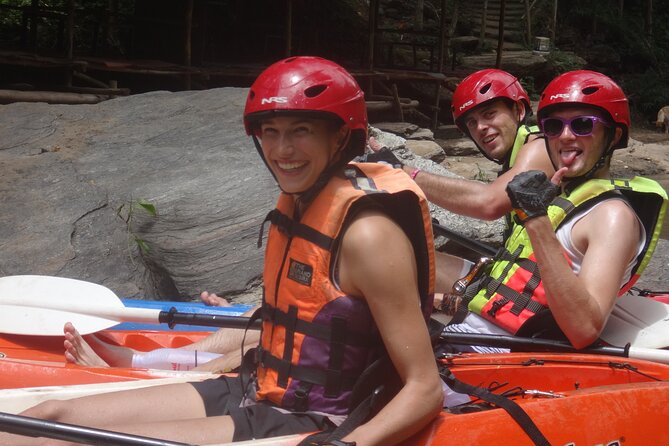
The group is limited to 10 people. I see that as a good size for a river activity. You are not lost in a large crowd, and the guide can keep a closer eye on boat handling and safety. The drive also gives you time to meet the people sharing your boat day, though the experience remains focused on the river rather than on social activities.
More Elephant Tours in Chiang Mai
- Chiang Mai: Elephant Sanctuary, Waterfall & Bamboo Rafting
★ 4.9 · 9,160 reviews - Chiang Mai: Elephant Sanctuary & Waterfall Group Tour
★ 4.9 · 5,780 reviews - Chiang Mai: Elephant Sanctuary Feeding Program Half-Day Tour
★ 4.8 · 4,527 reviews
Getting ready at the kayaking base
Before you launch, the guides explain basic paddling technique and river safety. The company provides sized personal flotation devices, helmets, and spray decks for whitewater kayaks. Instructors are certified in first aid and CPR, which is important on a river far from the city.
You also receive a Google Earth orientation at the pro shop. This is a practical touch. Seeing the route before getting on the water helps you understand where the easier upper section fits with the more demanding lower river.
Your boat choice depends on your ability and comfort. A whitewater kayak is suited to intermediate and expert paddlers. A hard-shell sit-on-top kayak offers a more straightforward option for people who want stability and an easier exit if they capsize.
The phrase you are the captain of your own boat tells you something useful about the day. This is not a passive sightseeing ride. You will need to paddle, steer, listen to instructions, and make small corrections as the current moves the boat.
You should arrive ready for wet conditions. Sunscreen, insect repellent, and water shoes are available for purchase at the pro shop, but you should ask about them before setting off. The horse flies are a real consideration, so repellent is worth treating as basic equipment rather than an afterthought.
The upper Mae Wang River and its Class I and II rapids
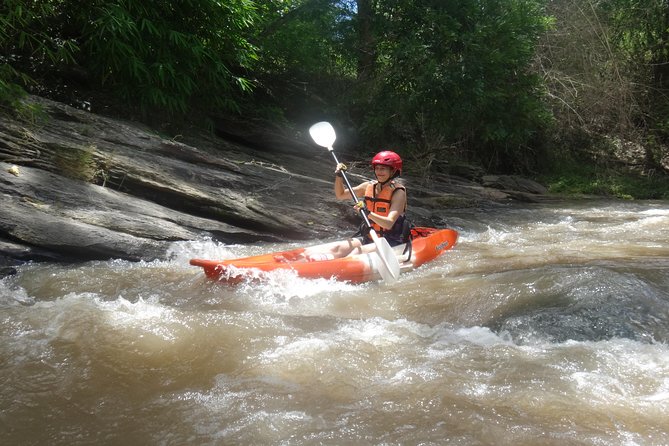
The first section uses the upper Mae Wang River, where Class I and II rapids suit beginners. These rapids provide movement and a little excitement without demanding expert whitewater technique.
You can expect stretches of easy paddling between the rapids. That rhythm is one of the trip’s strengths. You get enough current to make the river feel active, then calmer water where you can look around, catch your breath, and watch the forest.
This part of the river is a good match if you have never kayaked before or have limited whitewater experience. You still need to pay attention, but you are not immediately thrown into large waves and complex rock channels.
The guides teach you how to handle the boat before the harder sections arrive. Listen closely to instructions about where to point the kayak and how to use your paddle. On a moving river, a simple correction made early is far easier than a desperate correction made beside a rock.
A sit-on-top kayak may appeal to families and cautious beginners because it feels open and stable. The whitewater kayak gives more control for paddlers with experience. Neither option removes the need for fitness, but the choice lets you match the boat to your confidence.
Elephants beside the river
One of the most unusual parts of the route is the series of elephant camps along the river. Elephants may come to the water’s edge to drink or bathe, giving you a chance to see them from the boat.
This is best treated as a possible wildlife sighting, not a guaranteed show. Animals follow their own schedule. If elephants are near the river, keep your attention on the guide and the current as well as the bank. A good sighting should add to the day, not distract you from paddling safely.
The river setting also gives you a different view of the area’s wildlife. You can look for birds and butterflies in the tropical forest, and you might spot other jungle mammals. The quiet stretches are the best time to scan the banks, since rapids require your full attention.
For me, this mix of activity and observation gives the trip more character than a simple whitewater run. You are not only measuring the day by how fast or forcefully you paddle. You are also watching the river edges and the life that depends on them.
More Jungle Tours in Chiang Mai
- Chiang Mai: Full-Day Jungle Trek, Tubing & Waterfall Adventure
★ 5.0 · 216 reviews - No.1 Full-Day Chiang Mai Caving & Jungle Kayaking: Chiang Dao
★ 4.5 · 206 reviews - Off the Map Chiang Mai Jungle Coffee Trek Roast and Brew
★ 5.0 · 107 reviews - Jungle Flight Zipline Roller Coaster
★ 5.0 · 102 reviews
The lower river for advanced paddlers
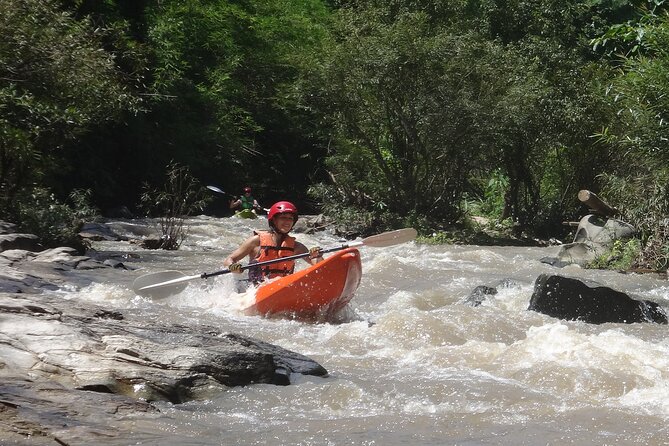
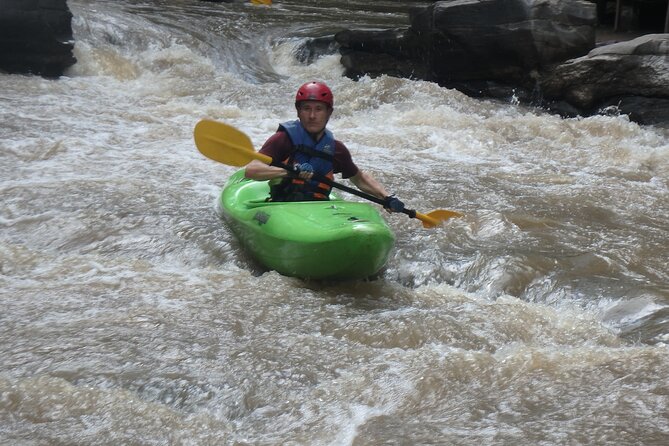
Experienced kayakers can continue into the lower Mae Wang River, where the water becomes much more serious. Class III and IV rapids bring larger challenges, with boulders and riverbanks shaping the current.
The Lost Canyon section is the main test. Boulders and white water make this a place for advanced boaters, not for someone who has only paddled calm water or gentle rapids.
This distinction is important because the trip is promoted as suitable for all ages and skill levels, but that does not mean every person should paddle every section. Beginners belong on the upper river. Advanced paddlers can ask about continuing farther down.
You should be honest about your ability before choosing the lower section. Whitewater experience is more useful than general fitness here. If you are uncertain, take the easier route and enjoy the scenery. There is no prize for turning a pleasant day into a rescue exercise.
The support truck follows the group and can assist when needed. It also provides secure storage for valuables, so you do not need to carry your phone, passport, or other items in the kayak. Even so, bring only what you need to the river.
Lunch beside the Mae Wang
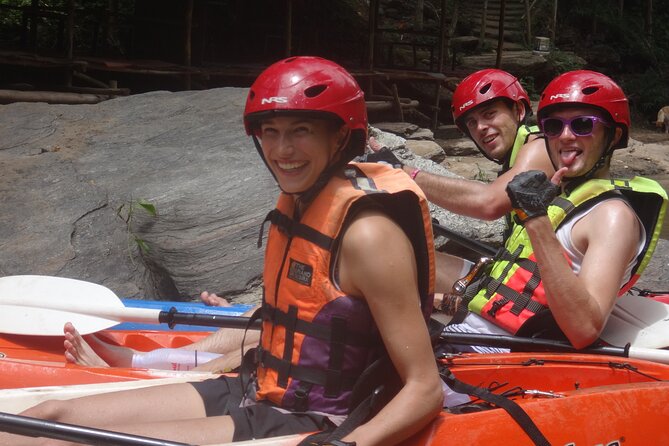
Lunch is served at a riverside restaurant. After paddling, a proper meal beside the water is more useful than a quick snack. It gives you time to relax, dry off a little, and enjoy the valley without having to steer a boat at the same time.
Vegetarian and vegan meals are available. Mention your preference when arranging the trip, rather than waiting until you sit down to eat. Bottled water and water for hydration packs are also provided throughout the activity.
The meal helps make the $81.24 price easier to assess. You are paying for hotel pickup and return transport, a guided river trip, safety equipment, two boat options, support from a following truck, lunch, hydration, and insurance. For a five-hour experience, that is a fuller package than simply renting a kayak beside the river.
The value depends on how much of the river you use. A beginner taking the upper route receives a scenic introduction with wildlife potential. An experienced paddler who continues into the lower river gets more technical water for the same general outing. Ask about the planned section if the price is a major factor in your decision.
What the guides and equipment add
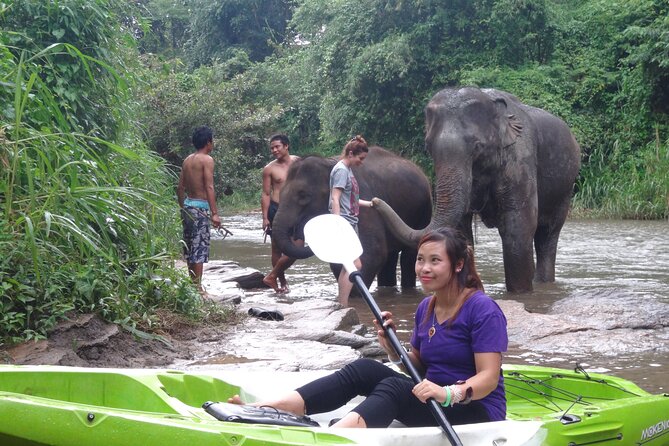
The company uses professional kayaking guides, and the small group gives the guides room to offer direct help. You should expect instruction, safety advice, and support rather than a guide who simply points downriver and leaves you to manage alone.
The supplied safety equipment includes helmets, personal flotation devices, and spray decks for whitewater kayaks. Equipment is sized for each person, so give the guide accurate information about your build and experience.
The sit-on-top boats are hard-shell models. That matters because they are designed to be stable and easy to handle compared with a more enclosed whitewater kayak. The whitewater kayaks are aimed at intermediate and expert paddlers who want greater control in moving water.
First-aid and CPR certification does not mean the river is risk-free. It means the team has preparation for emergencies. You still need to follow instructions, wear the supplied safety gear, and choose the river section that matches your ability.
Insurance is included, but you must provide your passport number at check-in for the insurance identification. This is an easy requirement to miss, so have the information available.
Practical cautions before booking
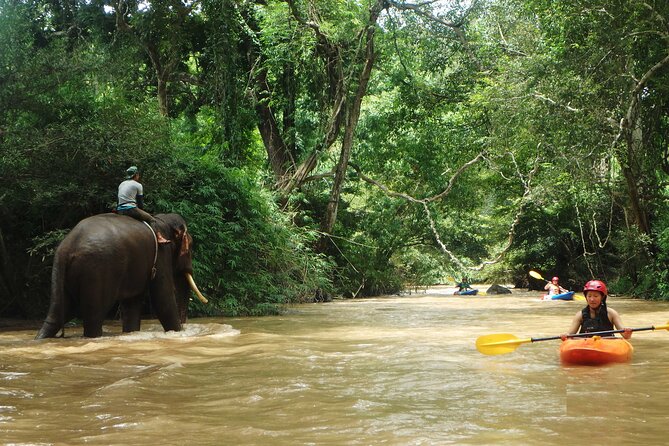
The trip requires moderate physical fitness. Paddling is not an extreme workout on every section, but you will be active for several hours, including the time spent handling your boat and responding to current.
Weather also matters. If poor conditions force cancellation, you can receive a full refund or move to another date. The free cancellation policy allows cancellation up to 24 hours before the start time. Cancellations or changes made inside that window are not refunded or accepted.
The most specific comfort warning concerns horse flies. Bring or buy insect repellent, and expect the possibility of bites in a warm river valley. Sunscreen is also sensible because calmer sections may leave you exposed to the sun.
This is not the best choice if you want a dry, polished sightseeing outing with no physical effort. It is a better fit if you are happy to get wet, paddle your own boat, and accept a little discomfort in exchange for a closer look at Northern Thailand’s countryside.
Who should book this Mae Wang trip?
I would recommend it to:
- Beginners who want gentle rapids with professional instruction.
- Families seeking an outdoor day suitable for different ability levels.
- Couples or small groups who prefer a river activity to a standard city excursion.
- Experienced kayakers interested in Class III and IV rapids.
- Wildlife-minded visitors who would enjoy the chance to see elephants, birds, butterflies, and jungle mammals.
- Anyone wanting a break from Chiang Mai’s busy streets without spending a full day on a long transfer.
I would hesitate to recommend it to anyone with low fitness, a strong fear of moving water, or no interest in getting wet. Advanced paddlers should also confirm the lower-river plan, since the easy upper section may not offer enough challenge on its own.
Is the $81.24 price fair?
At $81.24 per person, this is not the cheapest way to see the countryside around Chiang Mai. It is also not just a boat rental. The fee includes transport, instruction, equipment, safety support, food, water, insurance, and a small group capped at 10 people.
That combination gives the trip solid value if you would otherwise need to arrange transport and rent gear separately. The price is especially reasonable for an advanced paddler who uses the lower river, or for a beginner who values having trained guides and supplied equipment.
The value is weaker if you are mainly looking for elephant viewing. Sightings depend on timing and animal behavior, and the central activity is kayaking. Book this for the river first, with elephants as an added possibility.
Should you book it?
Book this experience if you want a practical, active escape from Chiang Mai with gentle rapids, jungle scenery, a chance to see elephants by the water, and a clear upgrade path for skilled paddlers.
Skip it if horse flies, wet clothes, or several hours of paddling sound unpleasant. If you do book, bring repellent, use the provided safety gear, state your kayaking experience honestly, and confirm your hotel pickup. For the right person, the Mae Wang River offers a memorable change of pace and a much more personal view of the valley than a drive past it.
FAQ
Where does the kayaking trip take place?
The activity takes place on the Mae Wang River in Mae Wang Valley, beneath Doi Inthanon, Thailand’s highest mountain.
How long does the experience last?
The kayaking experience lasts approximately five hours.
What time does the tour start?
The stated start time is 8:30 a.m.
Is hotel pickup available from Chiang Mai?
Yes. Pickup is offered from Chiang Mai hotels, and return transport to your hotel is included.
How long is the drive to Mae Wang Valley?
The drive from Chiang Mai to the Mae Wang Valley takes about 45 minutes.
Are beginners allowed to join?
Yes. The upper river has Class I and II rapids suited to beginning boaters, and the activity is described as suitable for all ages and skill levels. Moderate physical fitness is required.
Can experienced kayakers paddle harder rapids?
Yes. Advanced kayakers can continue into the lower Mae Wang River, which includes Class III and IV rapids and the Lost Canyon section.
What type of kayak can I use?
You can choose between a whitewater kayak and a hard-shell sit-on-top kayak, based on your skill level and comfort.
Is lunch included?
Yes. A riverside lunch is included, with vegetarian and vegan options available.
What safety equipment is provided?
The company provides sized personal flotation devices, helmets, and spray decks for whitewater kayaks. Guides are certified in first aid and CPR, and a support truck follows the group.
Is water provided during the trip?
Yes. Bottled water and water for hydration packs are available throughout the activity.
Do I need to provide passport information?
Yes. You must provide your passport number at check-in for insurance identification.
What is the cancellation policy?
You can cancel up to 24 hours before the start time for a full refund. Cancellations or changes made less than 24 hours before the start time are not accepted or refunded.
What happens if bad weather cancels the trip?
If poor weather causes cancellation, you can choose another date or receive a full refund.
More Canoes & Kayaks
- Chiang Mai: Ping River Night Kayaking into City Center
★ 4.8 · 144 reviews - Chiang Mai : Kayak the Jungle Rivers of Chiang Dao Valley!
★ 5.0 · 89 reviews - Chiang Mai:Explore kayaking through Mae Ping River on sunset
★ 4.6 · 76 reviews - Chiang Mai: Kayak Under the Stars – 6 km to the Heart of the City
★ 4.5 · 53 reviews
Just added around Chiang Mai
- Chiang Mai: Chiang Rai White, Blue & Black Temples Day Tour★ 4.2 · 16 reviews
- Chiang Mai Adventure ATV Secret Waterfall and Bamboo Rafting★ 5.0 · 16 reviews
- Inthanon Small-Group with Kew Mae Pan Trail from Chiang Mai include Lunch★ 4.5 · 16 reviews
- 2-Day Best of Chiang Rai from Chiang Mai Private Package★ 4.5 · 16 reviews
- Private-Tour Doi Suthep Temple and Khun Chang Kien Village Half-Day★ 4.5 · 16 reviews
- Doi Inthanon Discovery Tour: Waterfalls, Villages & Highest Peak★ 3.5 · 16 reviews
- Chiang Mai Iconic Temples and City Tour★ 4.5 · 17 reviews
- 1 Hour Hot Oil Relaxing – Free Transportation★ 4.5 · 17 reviews
Elephant Tours, compared.

Elephant Sanctuary, Waterfall & Bamboo Rafting
Read our review →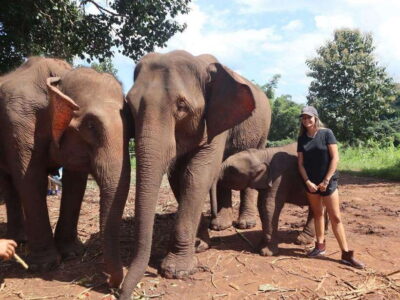
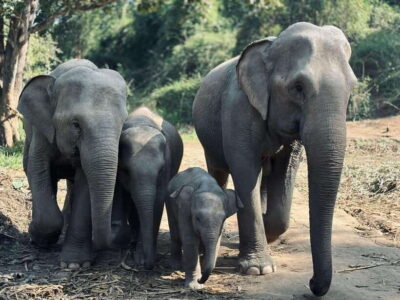
Elephant Sanctuary Feeding Program Half-Day Tour
Read our review →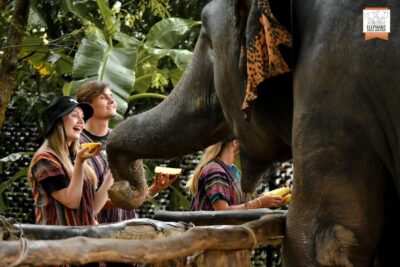
Elephant Jungle Sanctuary Ethical Feeding Experience
Read our review →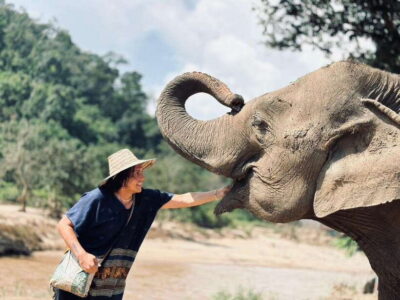
Elephant Sanctuary, Long Neck & Sticky Waterfall
Read our review →
Elephant Bathing Session at Krabi Elephant Shelter
Read our review →
Elephant Sanctuary Guided Tour with Hotel Transfers
Read our review →
Browse the lists this tour appears in