
Reviewed · MUSEUMS
Samut Prakan: Erawan Museum Discounted Admission Ticket
A giant elephant guards a very unusual museum. Just outside Bangkok, the Erawan Museum combines Asian religious ideas, fine craft, collected antiques, and bold architecture beneath a huge three-headed bronze elephant. I like the clear three-part design, which takes you from the underworld to Earth and then heaven, and I like the gardens, where Thai trees and quiet paths give you a break from the city.
The $12 ticket is good value if you enjoy art, symbolism, and unusual buildings rather than a conventional museum. The main caution is practical: your ticket is tied to a specified date and time, transfers are not included, and visitors must dress modestly. A little planning makes this outing much easier.
In This Review
- Key Points Before You Go
- Why the Elephant Matters
- The Suvarnabhumi Level and the Underworld
- The Earth Section Beneath the Elephant
- The Cosmo Level Inside the Elephant
- The Garden and Grounds Around the Museum
- Getting There by BTS and Shuttle Tuk-Tuk
- Is the $12 Ticket Good Value?
- Who Will Enjoy This Visit Most?
- Should You Book Erawan Museum?
- FAQ
- Where is Erawan Museum located?
- How much does admission cost?
- How long is the ticket valid?
- How do I reach the museum by public transport?
- Is transportation included in the ticket?
- What does the admission ticket include?
- Are audio guides available?
- What should I wear?
- Can I bring food, drinks, or pets?
Key Points Before You Go
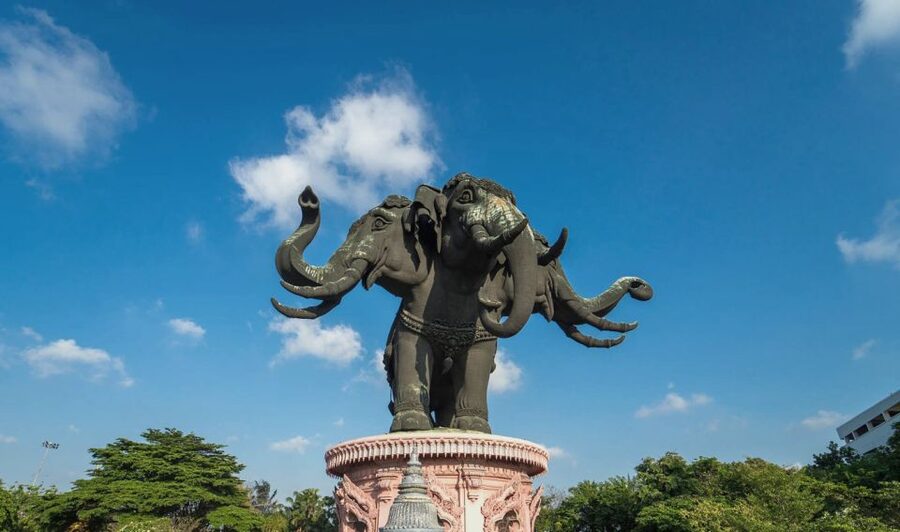
- The three-headed elephant is the main event outside: This massive hand-carved sculpture forms the upper part of the museum and gives you excellent photo opportunities before you even enter.
- The museum follows three symbolic levels: The underground Suvarnabhumi Level represents the past and the underworld, the Earth Section represents the present world, and the Cosmo Level represents heaven.
- The $12 admission includes useful extras: Flowers, incense, and a lotus flower are included, along with access to the surrounding grounds, taxes, and fees.
- The BTS is the simplest way to arrive: Get off at Chang Erawan Station, E17, Exit 2, then use the free shuttle tuk-tuk service to the museum.
- The interior rewards slow looking: Stained glass, porcelain, Thai ceramics, painted religious scenes, and mixed Eastern and Western design make this more than a quick photo stop.
- Modest clothing is required: Shorts, short skirts, sleeveless shirts, food, drinks, and pets are not allowed inside.
Why the Elephant Matters
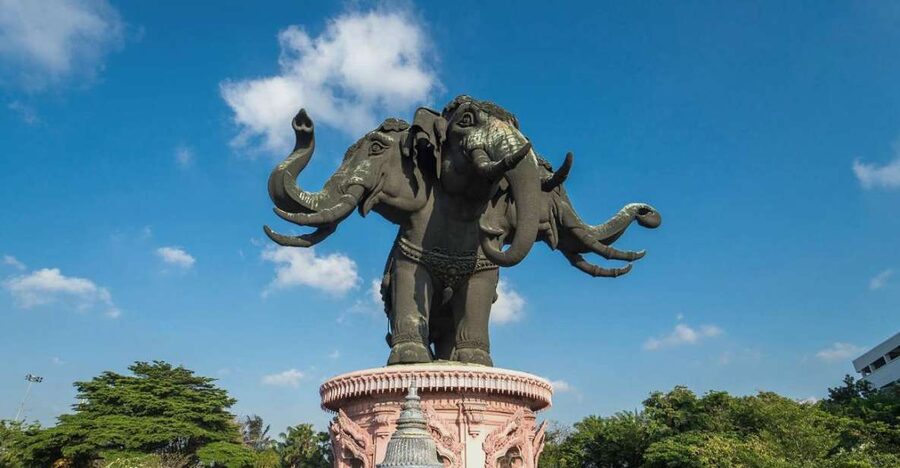
The Erawan Museum is in Samut Prakan, just outside Bangkok, at 99 Tambon Bang Muang Mai. Its most visible feature is the enormous three-headed bronze elephant, which forms part of the building itself. The scale is hard to grasp in a single photograph, so give yourself time to walk around the exterior and look up from several angles.
The elephant is described as the first and biggest hand-carved sculpture of its kind in the world. Whatever your interest in that claim, the practical point is simple: this is not a small statue placed beside a museum entrance. It is the building’s defining structure, and the museum below is designed to support its symbolic meaning.
The museum was created as a symbol of peace and humanity. Its displays bring together Asian art, religious thought, philosophy, and the owner’s collection of antiques and porcelain. That mix can feel more personal and imaginative than a standard national museum, but it also means the visit is driven by ideas and visual impact rather than a strict historical timeline.
I would plan on treating the exterior as part of the visit, not as a backdrop for one quick photograph. The elephant, entrance details, gardens, and small architectural features all offer good picture opportunities. Commercial photography and video are not allowed inside, so keep personal photos respectful and follow the museum’s rules.
More Museums in Bangkok:
- Samut Prakan: The Erawan Museum Admission Ticket (NON THAI)
★ 4.8 · 89 reviews - Skip the Line: Patpong Museum Guided Tour
★ 5.0 · 80 reviews - Bangkok: Samut Prakan Ancient City and Erawan Museum Ticket
★ 4.4 · 73 reviews
The Suvarnabhumi Level and the Underworld
Begin underground at the Suvarnabhumi Level, located below the elephant. This section represents the past and the underworld. It is also where you see ancient artifacts and porcelain from the owner’s collection.
The displays include Benjarong, a Thai-style ceramic ware known for detailed decoration and strong color. You do not need to be a ceramics expert to appreciate the careful patterns. The pieces help explain why the museum feels like both a religious building and a private collection placed on public view.
A figure of Naga, the snake-like god of the underworld, adds another layer of meaning. In Buddhist belief, Naga is connected with water and the giving of water. This is a useful detail to keep in mind as you move through the museum because the building is not simply divided into three floors for convenience. Each level carries a place in a larger view of existence.
This lower section may be the most rewarding stop for anyone interested in Thai objects and symbolism. It can also be the least immediately dramatic part of the visit compared with the elephant or stained glass above. Take your time with the cases rather than rushing toward the more theatrical rooms.
An audio guide is included in English, Thai, Chinese, Korean, and Russian. That matters here. Some objects and religious figures may not be obvious without context, and the audio option can help you understand why they are placed where they are.
The Earth Section Beneath the Elephant
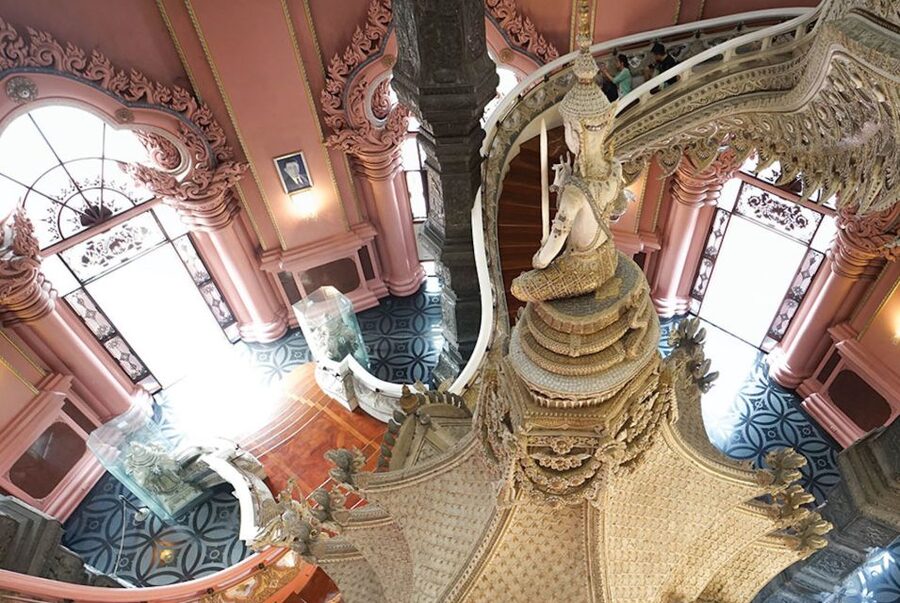
From the underground level, continue to the Earth Section. This is the circular base that supports the elephant’s weight, and it represents the human world between the underworld and heaven.
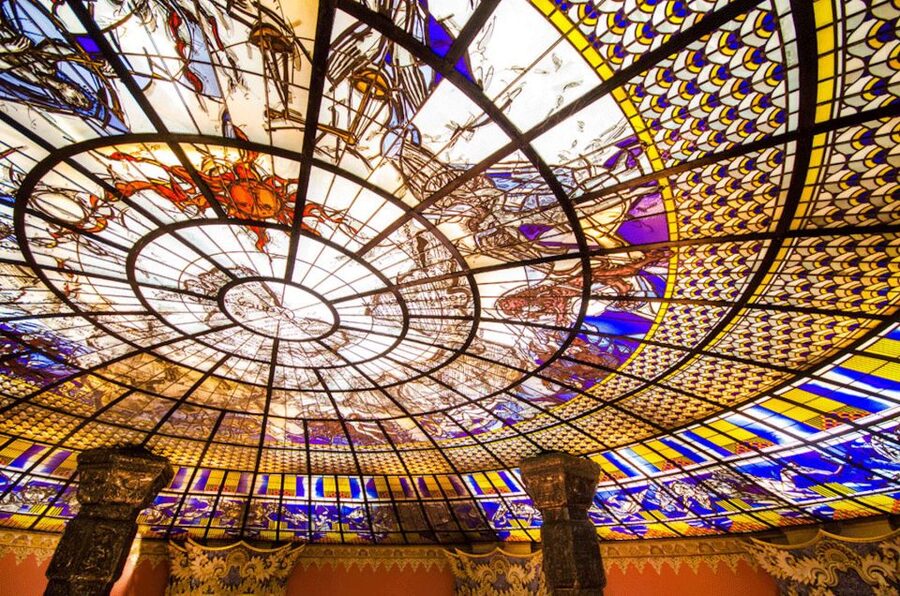
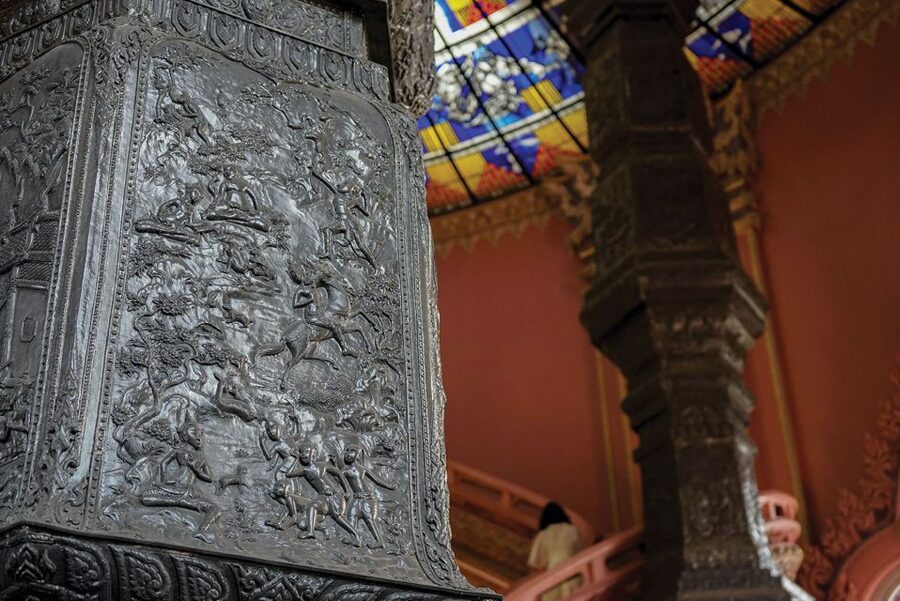
The design brings together Western and Eastern art forms. Look at the entrance ceiling, which is made to suggest the ceiling of the Earth, and notice how stained glass creates a pattern representing the planet. The effect is theatrical, but not merely decorative. The building uses architecture to express its ideas, so ceilings, curves, colors, and light all carry part of the story.
This is likely the section where you will spend the most time looking upward. The circular shape makes the room feel different from an ordinary gallery, and the artwork is built into the structure rather than hung in a row of plain rooms. If you enjoy architecture, this area may be as important as the objects in the display cases.
The unusual design is also the main reason the museum will not suit everyone. If you want a straightforward collection arranged by date and place, the organization can feel less direct. If you like buildings that make you stop and interpret what you see, the Earth Section gives you plenty to consider.
Keep your voice low while inside. The museum asks for quiet and respectful behavior, which fits the religious setting. You will get more from the interior if you slow down, listen to the audio guide, and give the artwork a few minutes rather than treating each room as a photo stop.
The Cosmo Level Inside the Elephant
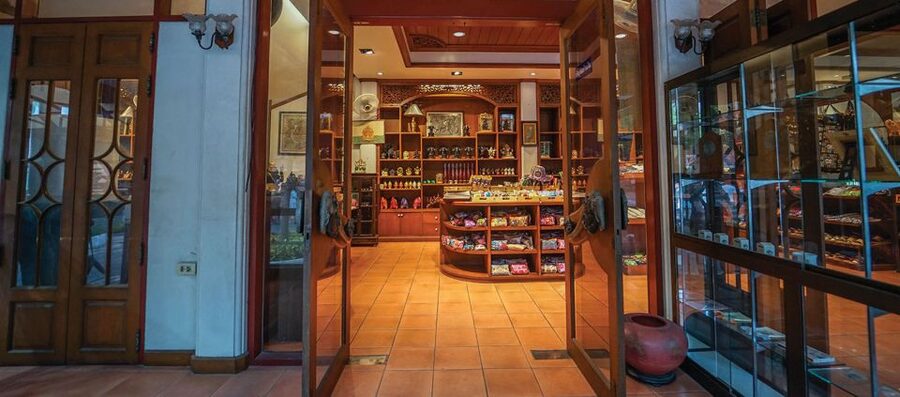
The final section is the Cosmo Level, located inside the body of the elephant. You reach it through two passageways leading from the right and left feet. The route itself helps connect the lower parts of the building with the enormous sculpture above.
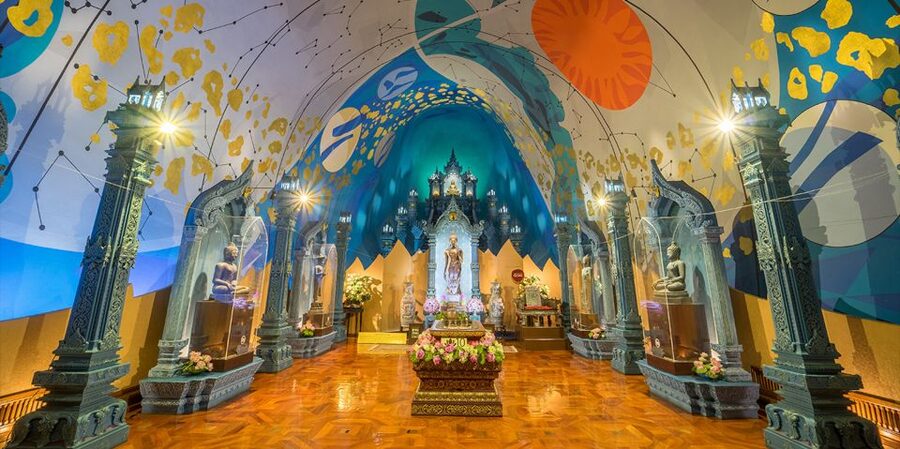
Inside, painted scenes show gods and goddesses floating in heaven. This is the most direct expression of the museum’s upper-world theme, and it gives the visit a strong sense of arrival after the darker underground displays and the Earth Section’s stained glass.
The Cosmo Level is especially appealing if you enjoy religious art and imaginative interiors. The painted ceiling and curved spaces make it feel unlike a typical museum gallery. It is also another place where the audio guide can help, since the meaning of the figures may not be clear at first glance.
Photo opportunities are plentiful, but remember that commercial photography and video are not permitted indoors. Personal photographs are part of the appeal, yet you should avoid turning the room into a loud photo session. Quiet attention is expected, and the sacred setting deserves it.
The architecture gave one recent visitor a strong sense of awe, and that reaction makes sense. The museum is designed to produce a spiritual and emotional response through scale, light, color, and movement. You may find that the building affects you more than any single artifact.
A few more tours and experiences worth a look
- Bangkok: Muay Thai Boxing Tickets at Rajadamnern Stadium
★ 4.9 · 4,740 reviews - Bangkok: Mahanakhon SkyWalk Entry Ticket with Options
★ 4.6 · 4,094 reviews - Bangkok: Chao Phraya Princess Dinner Cruise Ticket
★ 4.2 · 793 reviews - Bangkok: Grand Palace Skip-the-Line Entry Ticket
★ 4.2 · 720 reviews
The Garden and Grounds Around the Museum
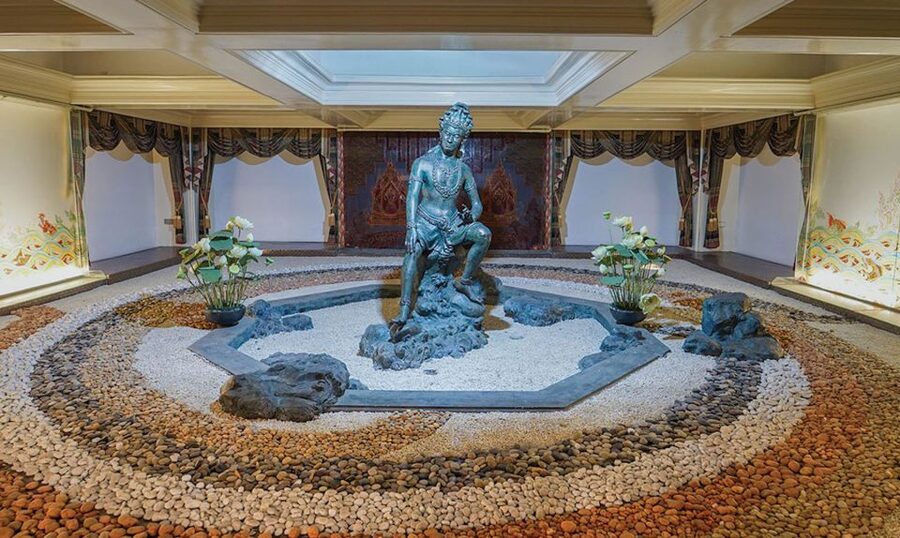
After the interior, walk through the surrounding garden. The grounds include rare tree species from different parts of Thailand, including trees with a place in Thai literature.
This outdoor area gives you a useful change of pace. Inside, the museum asks you to look at ceilings, religious scenes, ceramics, and architectural details. Outside, you can slow down and see how the building sits among plants, paths, and open space.
The garden is also valuable for photographs. The elephant is the obvious subject, but the grounds offer less crowded angles and smaller details. If you arrive with enough time, do not leave as soon as you finish the Cosmo Level. The exterior is included in your admission, and it adds a calmer final chapter to the visit.
Food and drinks are not permitted, so plan to eat before or after your museum stop. The attraction is best treated as a focused cultural outing rather than a place to spend the whole day with refreshments and casual wandering.
Getting There by BTS and Shuttle Tuk-Tuk
The BTS Skytrain makes this visit fairly simple from Bangkok. Take the Green Line to Chang Erawan Station, also identified as E17. Leave through Exit 2, where a free shuttle tuk-tuk service operates every day.
This is a helpful arrangement because transfers are not included in the ticket. You need to arrange your own way to the BTS station and allow time for the final shuttle connection. The transport plan is easy once understood, but it is worth checking the route before leaving your hotel so you do not arrive late for your assigned entry time.
The museum is in Samut Prakan province rather than central Bangkok. That location gives you a break from the main tourist core, but it also means you should not treat the outing as a quick walk from a central hotel. Your ticket is valid only on the date and at the time you selected, so build in a buffer for the Skytrain, finding Exit 2, and waiting for the shuttle.
One booking issue is worth noting. A Japanese visitor needed extra follow-up before the ticket confirmation was settled, although the problem was handled and entry was completed. I would check your confirmation soon after booking and contact the provider promptly if the ticket is slow to arrive or the time looks unclear.
Is the $12 Ticket Good Value?
At $12 per person, the admission is reasonably priced for a museum that includes the elephant building, three interior levels, gardens, audio guides, and flowers, incense, and a lotus flower. Taxes and fees are also included, so the price is fairly easy to understand.
The value depends on what you want from a museum. You get the most for your money if you appreciate architecture, symbolism, religious art, and unusual collections. The ticket is less compelling if you want a large institution with many galleries, a long chronological story, or a full-day program of changing exhibitions.
The discounted price is useful because the main attraction is easy to combine with a wider Bangkok itinerary. You do not need to pay for a separate guided tour to understand the basic layout, since audio guides are offered in five languages. You do, however, need to pay for your own transportation to Samut Prakan.
The one-day validity refers to the selected date, not unlimited admission on any day. Check the available starting times and choose one that fits your transport plan. Free cancellation up to 24 hours before the visit and the reserve-now, pay-later option add flexibility, but they do not remove the need to arrive on the correct date and time.
Who Will Enjoy This Visit Most?
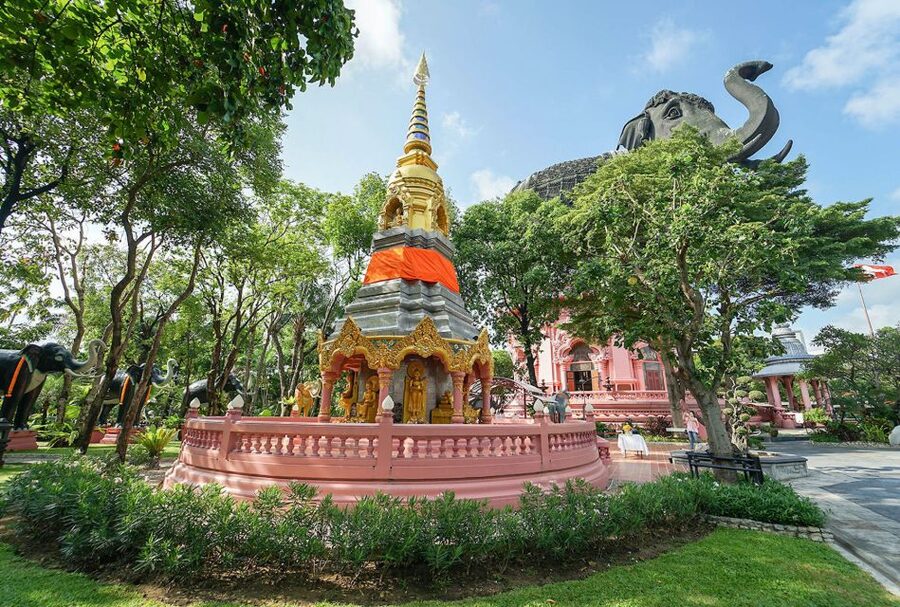
I would recommend Erawan Museum to you if you like places that combine art, religion, and architecture. It suits visitors who want something different from Bangkok’s temples and major city museums, especially if a giant sculpture and carefully designed interiors appeal to you.
Families may enjoy the elephant and the colorful rooms, though adults should help children follow the rules about quiet behavior, clothing, and photography. Anyone interested in Thai ceramics will find the Benjarong displays worthwhile, while architecture fans may spend most of their time examining the ceiling and stained glass.
The museum also works well for a half-day outing from Bangkok, though the ticket itself is valid for one day. It is not a good choice if you need a completely open schedule, dislike time-specific admissions, or do not want to arrange transport beyond the city center.
Dress before you leave. Shorts, short skirts, and sleeveless shirts are not permitted. Modest clothing is the safest choice for the entire visit, and it avoids a problem at the entrance.
Should You Book Erawan Museum?
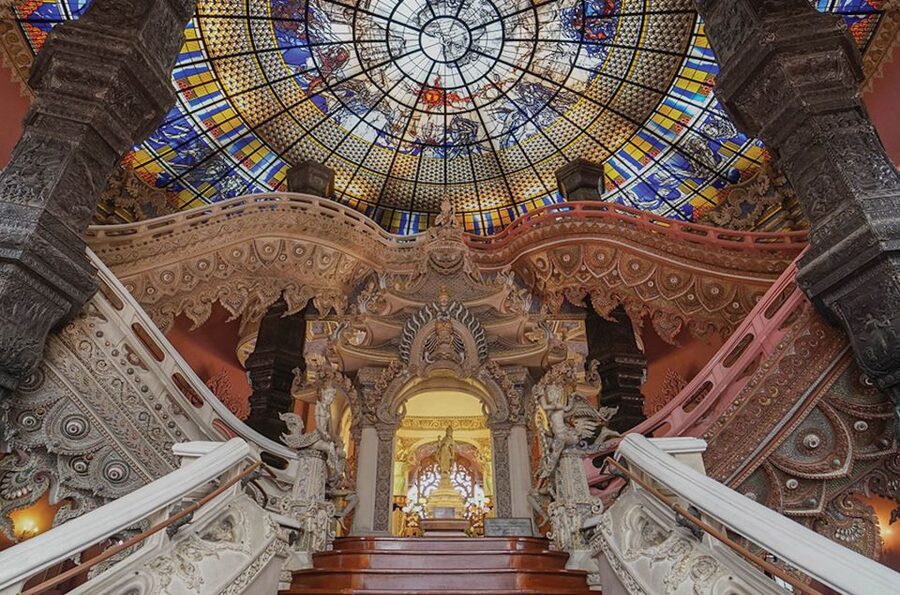
I would book this $12 ticket if you want a visually striking cultural stop with a clear symbolic structure. The three-headed elephant is memorable, the three levels give the visit purpose, and the gardens prevent the experience from feeling like an indoor-only attraction.
I would skip it if your priority is a conventional art museum or a flexible stop that you can enter at any hour. The specified time, transport arrangements, modest dress rules, and quiet setting require more planning than a casual city attraction.
For the best visit, take the BTS Green Line to Chang Erawan Station, use Exit 2 and the free shuttle tuk-tuk, arrive with time to spare, and allow yourself to study all three sections before walking through the garden. The architecture and sacred atmosphere are the strongest reasons to go, and the ticket price makes the outing an easy addition to a Bangkok stay.
FAQ
Where is Erawan Museum located?
Erawan Museum is at 99 Tambon Bang Muang Mai, Amphoe Mueang Samut Prakan, Samut Prakan 10270, Thailand, just outside Bangkok.
How much does admission cost?
The discounted entrance ticket costs $12 per person.
How long is the ticket valid?
The ticket is valid for one day, but you must visit on the specified date and at the selected time.
How do I reach the museum by public transport?
Take the BTS Skytrain Green Line to Chang Erawan Station, E17. Use Exit 2, where a free shuttle tuk-tuk service operates every day.
Is transportation included in the ticket?
No. Transfers are not included, so you need to arrange your own transport to the museum and the BTS station.
What does the admission ticket include?
It includes discounted admission, flowers, incense, a lotus flower, access to the surrounding museum areas, and all taxes and fees.
Are audio guides available?
Yes. Audio guides are available in English, Thai, Chinese, Korean, and Russian.
What should I wear?
Dress modestly. Shorts, short skirts, and sleeveless shirts are not permitted.
Can I bring food, drinks, or pets?
No. Food, drinks, and pets are not allowed at the museum.
Just added around Bangkok
- Kanchanaburi World War 2 Private Charter Pathway of the Past Tour★ 4.5 · 16 reviews
- 2-hour Bangkok Old City Night CHOB TUK TUK + Talat Noi Street Art★ 5.0 · 16 reviews
- Floating Market with Great Pagoda Temple and Wat Sam Phran★ 5.0 · 16 reviews
- Khao Yai National Park Hiking Day Tour: Haew Narok and Haew Suwat★ 5.0 · 16 reviews
- Shangri-La Hotel’s Salathip Thai Restaurant Experience★ 4.5 · 16 reviews
- Private Transfer Bangkok – Koh Kood Island★ 4.0 · 16 reviews
- Private Half-Day Bangkok Tour Explore Grand Palace and Wat Pho★ 4.5 · 16 reviews
- The Best Bangkok Temples★ 4.0 · 16 reviews
Museums, compared.
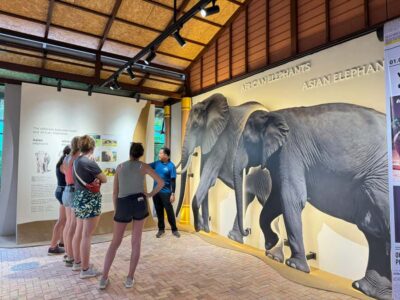
Samui:Elephant Jungle experience & The First Elephant Museum
Read our review →
Samut Prakan: The Erawan Museum Admission Ticket (NON THAI)
Read our review →

Samut Prakan Ancient City and Erawan Museum Ticket
Read our review →
Koh Samui Elephant Home Sanctuary and the first Elephant Museum
Read our review →
Chiang Mai to White & Blue Temple, Black Museum & Golden Triangle
Read our review →Browse the lists this tour appears in