
Reviewed · COOKING CLASSES
Bangkok: White Lotus Thai Cooking Class with Market Tour
Thai food makes more sense at the market. This $35 cooking class pairs a guided walk through Bangkok’s wholesale produce and flower markets with hands-on lessons in Tom Yam Goong, Pad Thai, Som Tam, and Mango Sticky Rice. I like the fresh coconut milk lesson and the chance to adjust spice levels to your taste. The one drawback is that you must find the school yourself, since transport is not included.
The setting is clean, home-like, and social, with a class size reported at about 10 people in one session. Instructors such as Jeab, Sasi, Chon, Pat, and Blue Jay have earned praise for clear English, patience, humor, and cultural insight. You should arrive hungry, because you eat each dish after preparing it.
In This Review
- Key details that make this class worthwhile
- Finding White Lotus above Paak Klong Talad
- Starting with Bangkok’s wholesale markets
- Four dishes, four different cooking lessons
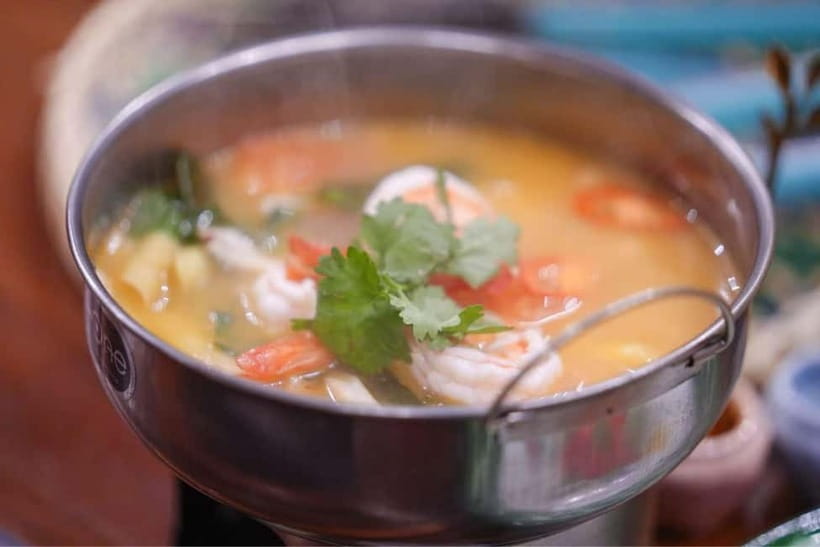
- Tom Yam Goong
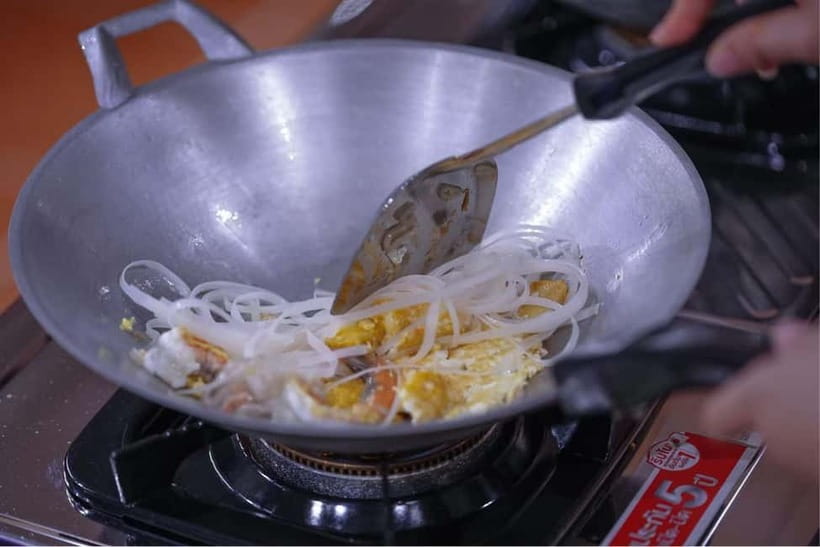
- Pad Thai
- Som Tam
- Mango Sticky Rice
- A clean kitchen with a home-style mood
- Why the $35 price offers good value
- The small extras that make the class memorable
- Families, children, and dietary needs
- Timing, comfort, and practical advice
- Who will enjoy White Lotus most
- Should you book this Bangkok cooking class?
- FAQ
- How long does the White Lotus Thai Cooking Class last?
- How much does the class cost?
- Where does the class meet?
- How close is the school to public transportation?
- What markets does the experience visit?
- Which dishes will I cook?
- Will I eat the food I prepare?
- Is the class suitable for beginners?
- Can children attend the class?
- Is the class wheelchair accessible?
- What languages are spoken?
- Can I cancel my booking?
Key details that make this class worthwhile
- Market-first format: Begin at Bangkok’s wholesale vegetable, fruit, and flower markets before cooking, so ingredients have a local context.
- Four complete dishes: Prepare Tom Yam Goong, Pad Thai, Som Tam, and Mango Sticky Rice rather than watching a short demonstration.
- Fresh coconut milk: Learn to make coconut milk from scratch for the dessert, a memorable skill you can repeat at home.
- Flexible spice and dietary choices: You can choose how spicy your food will be, and vegetarian substitutions have been provided.
- A friendly finish: Fold a white lotus, join a lucky draw, and take home a certificate and recipes or small souvenir items.
Finding White Lotus above Paak Klong Talad
White Lotus Thai Cooking School is on the second floor of The Market Organization at Paak Klong Talad. That places you beside one of Bangkok’s major flower-market areas, and the school is only about 150 meters from Sanamchai MRT station.
The nearest landmark is a 7/11, about 60 meters from the building. Even so, allow a few extra minutes to get your bearings. One participant specifically wished for clearer directions with pictures, so it is sensible to check the exact entrance before you set out.
The location works well with a sightseeing day around Bangkok’s old center. You can reach it by MRT, and you are close to the river and the flower market after class. There is no hotel pickup or return transport, so your $35 price covers the activity itself, not the trip there.
The school is wheelchair accessible, which is useful in a market district where pavement and entrances can sometimes be less predictable. The activity lasts 210 minutes, or three and a half hours, so plan enough time afterward rather than squeezing it between two fixed appointments.
More Cooking Classes in Bangkok
- Bangkok: Hands-on Thai Cooking Class and Market Tour
★ 4.9 · 1,614 reviews - Bangkok: Tingly Thai Cooking School Half-Day Cooking Class
★ 4.9 · 1,191 reviews - Bangkok: Maliwan Thai Cooking Class with Market Tour
★ 4.9 · 1,133 reviews
Starting with Bangkok’s wholesale markets
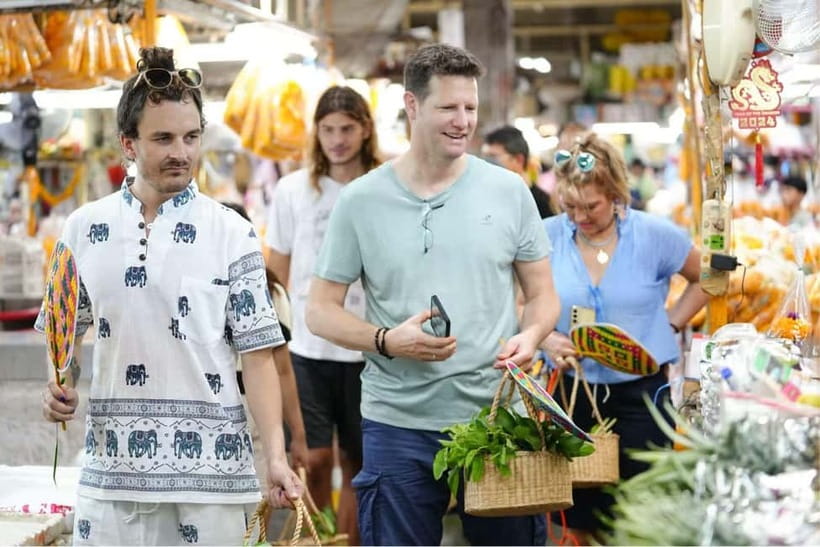
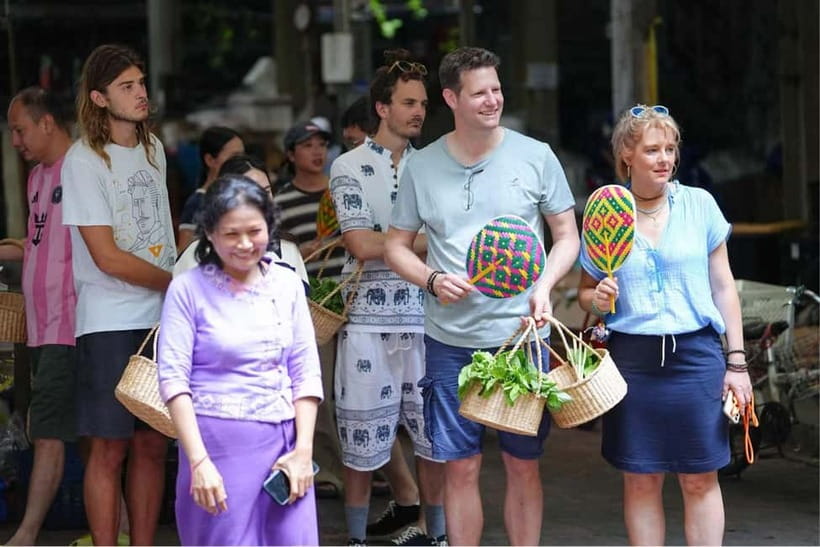
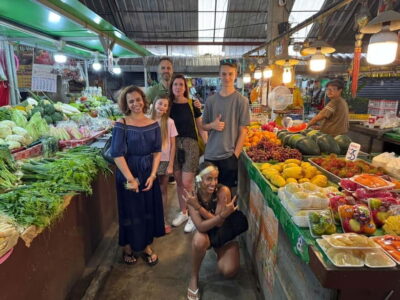
The class begins outside the kitchen, with a walk through local wholesale fruit and vegetable markets. This is more useful than simply receiving a printed ingredient list. Your teacher can point out unfamiliar produce, explain how it is used, and help you connect what you see on the stall to the dishes you will soon cook.
You are encouraged to feel, smell, and taste some of the ingredients. That hands-on approach matters in Thai cooking, where the scent of herbs, the heat of chilies, and the texture of fresh produce all shape the final dish.
The market walk also adds a cultural layer. Teachers explain local customs and Thai food culture while introducing you to vendors. This is where guides such as Jaeb and Sasi have received especially warm praise. Jaeb has been singled out for knowing the market well and explaining how to choose good ingredients, while Sasi has been praised for sharing her passion for Thai culture in clear English.
Do not expect a long historical tour or a formal shopping expedition. The market visit is a practical introduction tied to the cooking lesson. You might find the wholesale setting crowded or humid, depending on the time of day, but that is part of seeing where local ingredients move before reaching kitchens and restaurants.
The flower market is another strong part of the morning or afternoon. It is not included simply as a colorful photo stop. The visit gives you a look at flowers used in Thai cooking and daily culture, and it helps explain why the school includes a white lotus folding activity later.
Four dishes, four different cooking lessons
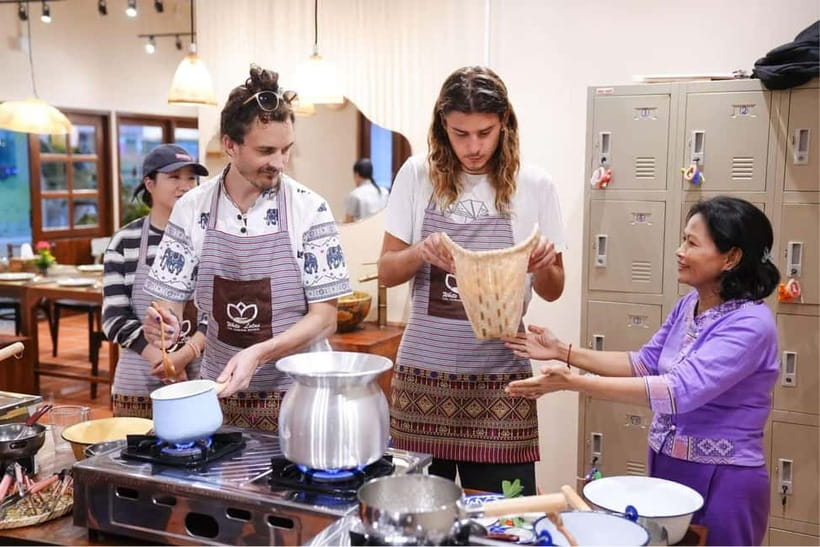
Back at the school, you prepare four Thai dishes. The menu covers soup, noodles, salad, and dessert, giving you a useful range of techniques rather than four variations on the same meal.
Tom Yam Goong
Tom Yam Goong is the savory, spicy shrimp soup. It teaches you how Thai cooking balances heat, sourness, fragrance, and savory flavor in one bowl.
The teacher demonstrates each stage, then watches as you work. You are not simply standing behind a counter while someone else cooks. The class is designed for active participation, but the pace remains manageable for beginners.
Some sessions have offered a choice of shrimp, chicken, or vegetarian preparations. Confirm the available option when booking if you have strict dietary needs. The supplied experiences also show that instructors can adjust dishes for vegetarians, with one teacher taking care to provide a vegetarian version of every course.
More Market Tours in Bangkok
- Bangkok: Damnoen Saduak Market and Maeklong Railway Market
★ 4.5 · 26,723 reviews - The Old Siam: Damnoen Saduak and Maeklong Railway Market
★ 4.5 · 10,992 reviews - Bangkok: Train Market & Floating Market with Boat Ride
★ 4.7 · 9,547 reviews - Bangkok: City Highlights Temple and Market Walking Tour
★ 4.5 · 3,990 reviews
Pad Thai
Pad Thai is likely to be the dish you recognize most easily, but making it yourself gives you a better feel for the balance of noodles, sauce, vegetables, and protein. One participant especially enjoyed preparing Pad Thai and planned to make it at home.
This is a useful home-cooking lesson because the instructor explains the steps in sequence and then supervises your work. You can also control the spice level, which makes the meal easier to enjoy if you prefer mild food.
Som Tam
Som Tam, or green papaya salad, brings fresh texture and chili heat to the menu. It contrasts nicely with the cooked dishes and shows how Thai food can be bright, crisp, sour, sweet, and hot at the same time.
The class gives you a chance to decide how much heat you want. That detail is small but important. Thai restaurant dishes are often prepared to a standard spice level, while here you can make a version that suits your own palate.
Mango Sticky Rice
Mango Sticky Rice supplies the sweet finish. The special part is learning to prepare fresh coconut milk from scratch for the sticky rice.
That lesson gives the dessert more meaning than a quick assembly of mango and rice. You see one of the basic ingredients being made before using it, and you leave with a technique that can be repeated at home. If you arrive without much appetite, this is the point when you may regret it, since the class serves every course after you prepare it.
A clean kitchen with a home-style mood
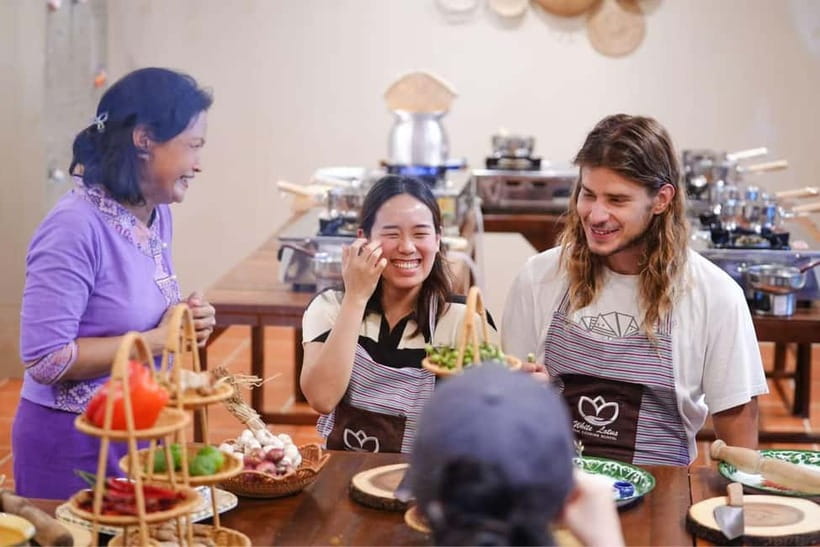
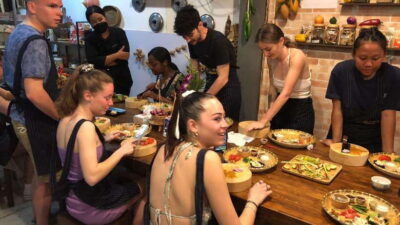
The school has been described as clean, stylish, well equipped, and practical. The kitchen is above the market, but the cooking room itself is designed to feel more like a welcoming home than a commercial training facility.
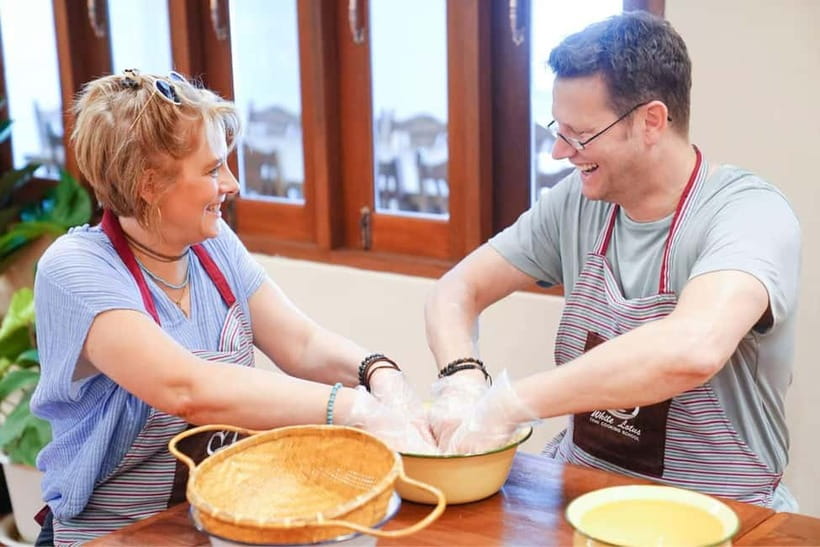
That atmosphere is part of the value. You cook alongside people from different countries, then sit down to eat what you have made. The meal becomes a shared activity rather than four separate demonstrations.
The teachers are central to the experience. Jeab is known for humor and strong explanations. Sasi has been praised for her calm manner and patience. Chon has been described as energetic, friendly, and efficient, while Pat has been credited with giving close attention to each participant. The instructor changes, so your exact style of class will depend on who is teaching that day.
The English instruction is a major practical benefit. The listed languages are English and Thai, and the available comments repeatedly describe the English explanations as clear. That helps when the lesson moves quickly between chopping, mixing, seasoning, and cooking.
The class is suitable for beginners. You do not need previous cooking experience, and the instructors are used to guiding people through each step. Still, hands-on cooking means you should expect to stand, handle ingredients, and keep up with the group’s sequence.
Why the $35 price offers good value
At $35 per person, the class is priced well for a three-and-a-half-hour activity that includes a market tour, four dishes, a full meal, coconut milk preparation, and a certificate. You are also paying for instruction and ingredient preparation, not just food.
The meal alone is not the whole measure of value. A restaurant dinner gives you food with no work, while this class gives you practical skills, an introduction to local markets, and recipes you can use later. The market tour would also be difficult to understand fully without a guide who can explain unfamiliar products.
The class is particularly good value if you want one activity that combines food, culture, and social time. It may be less appealing if you are looking only for a quick cooking demonstration or if you dislike group activities.
Personal expenses and transportation are extra. Bring your appetite rather than planning another large meal immediately afterward. Several courses are served, and the food portions appear generous enough that most people will want to pace themselves.
The small extras that make the class memorable
The class ends with more than a certificate. You take part in a lucky draw and learn how to fold a white lotus, linking the cooking lesson back to the flower market visit.
The small souvenir and certificate are not major financial benefits, but they give the experience a pleasant finish. You also receive the recipes or cooking guidance needed to recreate the dishes, which is far more useful than a generic souvenir.
The cultural exchange can be an unexpected bonus. One participant who teaches sushi in Japan enjoyed being introduced to other members of the group, creating a friendly moment between Japanese and Thai food traditions. That kind of interaction is likely when the class brings together people from several countries.
The social side works best if you are open to sharing a table and cooking space. If you are traveling alone, this is an easy way to spend part of a day with other people. If you are traveling as a couple, with friends, or as a family, you can still work together while meeting others.
Families, children, and dietary needs
The official minimum age is six, so children under six should not attend. The class has worked well for families with older children, including a seven-year-old and children around 10, and instructors have been described as kind and accommodating with young cooks.
For families, the advantage is that children do more than watch. They can take part in the market visit, cooking, tasting, and lotus folding. The three-and-a-half-hour length may be a lot for a very young child, so consider your child’s attention span before booking.
Vegetarians have been accommodated in the available sessions, with alternatives prepared for each dish. The menu description itself highlights Tom Yam Goong, so if you avoid seafood, request a vegetarian or chicken option in advance rather than assuming every class will use the same substitutions.
The class can also work for people with no cooking background. Teachers demonstrate the process and then supervise your work. You do not need to arrive with knife skills or Thai food experience.
Timing, comfort, and practical advice
Wear comfortable clothing that you do not mind wearing in a market and kitchen. The experience includes walking through produce and flower markets before you begin cooking, so practical shoes are a better choice than anything delicate.
Arrive hungry, but not so hungry that you rush through the market walk. The meal is spread across the lesson, with each dish eaten after it is cooked. That makes the experience feel relaxed, but it also means you are eating repeatedly over several hours.
Give yourself time to find the second-floor school. Sanamchai MRT is close, but the building is part of the market organization rather than a prominent standalone cooking school. Look for the nearby 7/11 and allow a little time to ask for directions if needed.
The activity is offered at set starting times, so check availability for your date. Free cancellation is available up to 24 hours before the start time, and the reserve-now, pay-later option can help if your Bangkok plans are still shifting.
Who will enjoy White Lotus most
I would choose this class if you want to understand Thai ingredients instead of simply eating Thai food. The market visit gives you useful context, and the four-course format lets you try several parts of the cuisine in one sitting.
It is also a good pick for first-time cooks. The teachers are patient, the instructions are practical, and you can adjust the spice level. You will likely leave feeling capable of making at least some of the dishes at home.
Couples, families with children six and older, solo visitors, and small groups all fit the format. The class also suits food fans who want a social activity near Bangkok’s old center rather than a full-day trip outside the city.
I would hesitate only if you need private instruction, dislike eating food you have prepared in a group, or have strict dietary restrictions that require guaranteed substitutions. In those cases, contact the school before committing.
Should you book this Bangkok cooking class?
Yes, if you want a hands-on food experience with a strong local setting. The combination of the wholesale markets, Bangkok’s flower market, fresh coconut milk, four dishes, and a shared meal gives you plenty for $35.
Book it especially if you enjoy practical souvenirs. You leave with recipes, new cooking skills, a certificate, and a better sense of what you are seeing in Thai markets. Just plan your route carefully, arrive hungry, and confirm dietary needs ahead of time.
FAQ
How long does the White Lotus Thai Cooking Class last?
The experience lasts 210 minutes, or three and a half hours.
How much does the class cost?
The listed price is $35 per person.
Where does the class meet?
Meet at White Lotus Thai Cooking School on the second floor of The Market Organization at Paak Klong Talad.
How close is the school to public transportation?
The school is about 150 meters from Sanamchai MRT station.
What markets does the experience visit?
You visit local wholesale vegetable and fruit markets and Bangkok’s biggest flower market.
Which dishes will I cook?
The class includes Tom Yam Goong, Pad Thai, Som Tam, and Mango Sticky Rice.
Will I eat the food I prepare?
Yes. You eat each dish after it is cooked, sharing the meal with the group.
Is the class suitable for beginners?
Yes. The class is suitable for all skill levels, including people with no cooking experience.
Can children attend the class?
Children under six are not suitable for the activity. Older children have taken part in family sessions.
Is the class wheelchair accessible?
Yes, the activity is listed as wheelchair accessible.
What languages are spoken?
Instruction is available in English and Thai.
Can I cancel my booking?
You can cancel up to 24 hours in advance for a full refund.
More Workshops
- Hands on Thai Cooking Class and Market Tour
★ 5.0 · 660 reviews - Tingly Thai Cooking Class with Morning Market Tour
★ 5.0 · 589 reviews - Hands-on Thai Cooking Class & Market Tour in Sukhumvit
★ 5.0 · 571 reviews - Pink Chili – Thai Cooking Class and Market Tour in Bangkok
★ 5.0 · 416 reviews
More Shopping Tours
- Half-Day Railway Market and Floating Market Tour in Thailand
★ 4.5 · 3,924 reviews - Bangkok: Damnoen Saduak, Train Market & Mahanakhon Day Trip
★ 4.7 · 2,162 reviews - From Bangkok: Damnoen Saduak Floating Market Guided Tour
★ 4.4 · 2,020 reviews - Damnoen Saduak Floating Market and Maeklong Railway Market Tour
★ 4.5 · 1,588 reviews
Just added around Bangkok
- 2-hour Bangkok Old City Night CHOB TUK TUK + Talat Noi Street Art★ 5.0 · 16 reviews
- Kanchanaburi World War 2 Private Charter Pathway of the Past Tour★ 4.5 · 16 reviews
- Floating Market with Great Pagoda Temple and Wat Sam Phran★ 5.0 · 16 reviews
- Khao Yai National Park Hiking Day Tour: Haew Narok and Haew Suwat★ 5.0 · 16 reviews
- Shangri-La Hotel’s Salathip Thai Restaurant Experience★ 4.5 · 16 reviews
- Private Transfer Bangkok – Koh Kood Island★ 4.0 · 16 reviews
- Private Half-Day Bangkok Tour Explore Grand Palace and Wat Pho★ 4.5 · 16 reviews
- The Best Bangkok Temples★ 4.0 · 16 reviews
Cooking Classes, compared.
Half-Day Thai Cooking Class at Organic Farm in Chiang Mai
Read our review →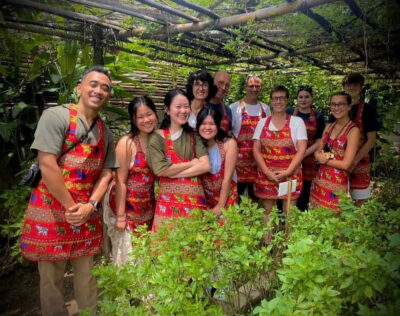
Cooking Class, Market & Thai Herbs Garden Tour
Read our review →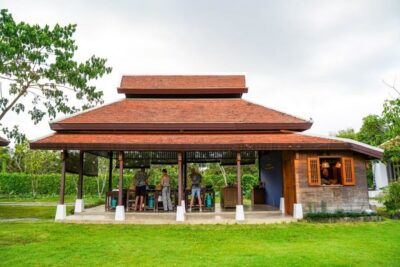
Authentic Cooking Class with Market & Farm Visit
Read our review →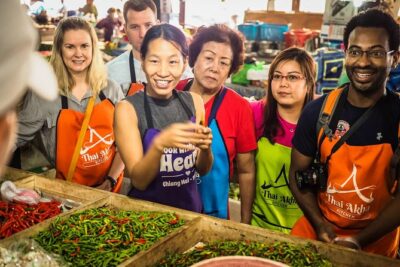
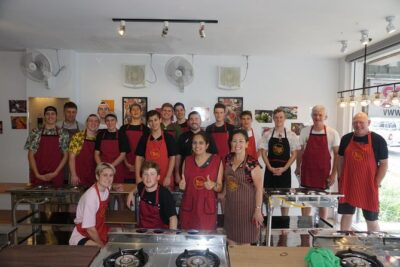
Phuket Thai Cooking Class with Market Tour Option
Read our review →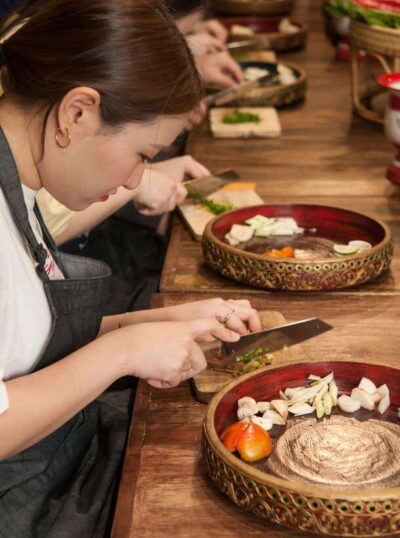
Tingly Thai Cooking School Half-Day Cooking Class
Read our review →Browse the lists this tour appears in