
Reviewed · COOKING CLASSES
Chiang Mai: Local Northern Thai Cooking Class at Grandma’s
Northern Thai cooking begins at the market. Grandma’s Home Cooking School gives you more than a standard recipe lesson: you visit a local market, walk through an organic farm, collect herbs and vegetables, then cook a full Northern Thai meal. I especially like the market and farm visits, which explain why ingredients matter before you start chopping. I also like the old-fashioned work, including milling flour with a stone mill and grating coconut by hand.
The main consideration is the menu wording. The course description refers to six dishes in one place, while the included menu lists five main dishes plus a coconut dessert session. The exact choices may also vary between Nam Prik Ong and Nam Prik Num, so confirm the day’s menu if one particular dish matters to you. Small class sizes received especially strong praise, and an instructor named Best was singled out for friendly, careful teaching.
In This Review
- Key points at a glance
- Why this Chiang Mai cooking class feels different
- The 8:30 to 9:00 pickup matters
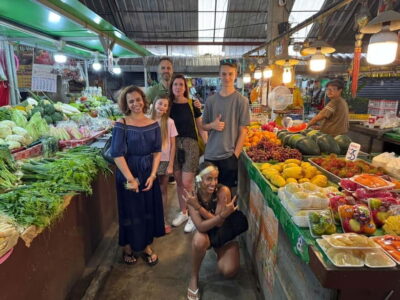
- A local market lesson before the knives come out
- Herbs, vegetables, and eggs at the organic farm
- Five Northern Thai dishes, plus a dessert session
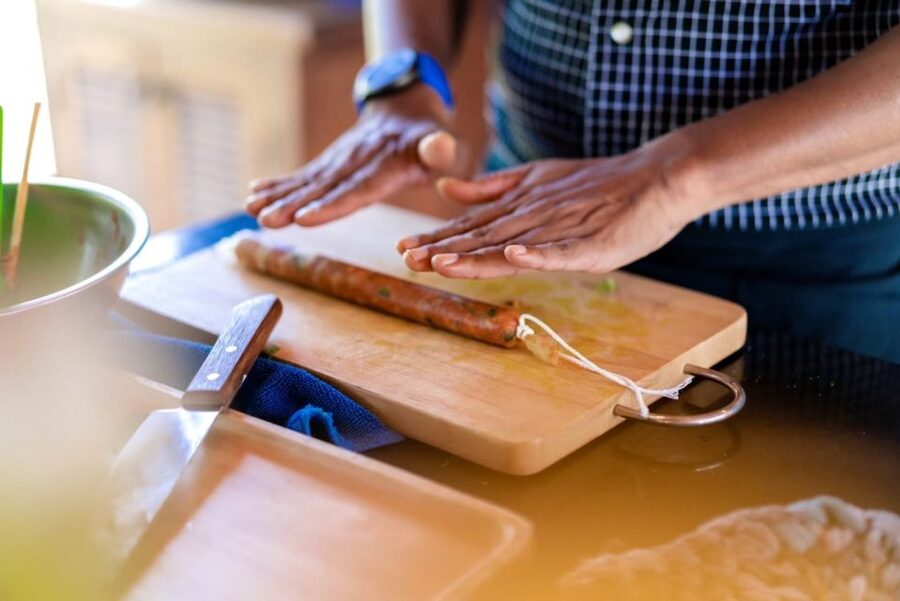
- Northern Thai sausage
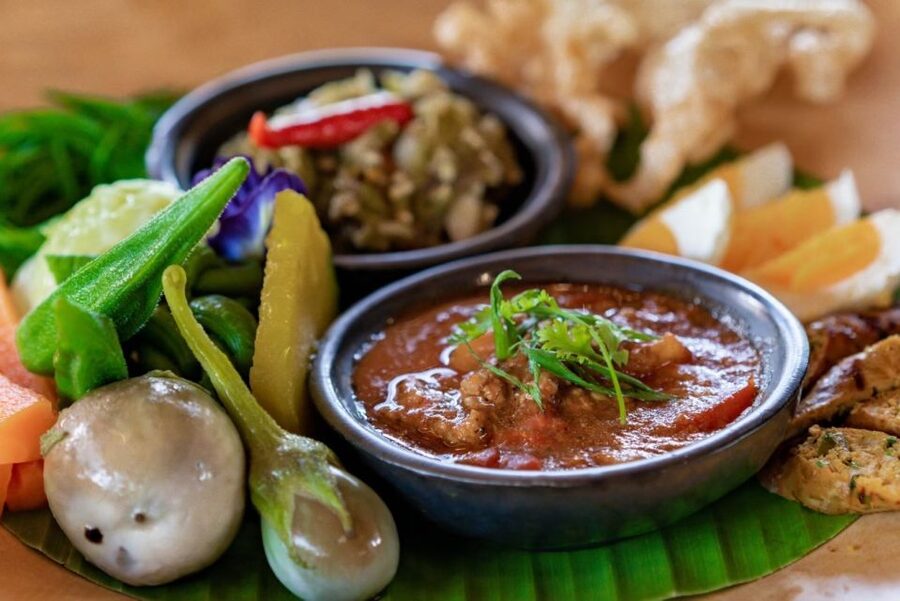
- Nam Prik Ong or Nam Prik Num
- Hang Lay curry
- Curry young jackfruit
- Stuffed dough pyramids
- The most memorable work happens by hand
- Lunch lets you judge your own cooking
- Dessert is a real lesson, not just a sweet ending
- Group size and teaching style
- Is $48 good value for six hours?
- Dietary needs and accessibility
- Who should book Grandma’s Home Cooking School?
- Should you book this Chiang Mai cooking class?
- FAQ
- How long does Grandma’s Northern Thai cooking class last?
- What time is hotel pickup?
- Is hotel transportation included?
- How much does the class cost?
- Which dishes will I cook?
- Are Thai desserts included?
- Will I visit a market?
- Will I visit a farm?
- Is the class taught in English?
- Can the class accommodate dietary requirements?
- Is the activity wheelchair accessible?
- Can children join?
- What should I bring?
- Do I receive the recipes afterward?
- Can I cancel for a refund?
Key points at a glance
- Market before cooking: You learn about Northern Thai seasonings and ingredients while shopping at a local market.
- Farm-to-table work: The organic farm tour includes picking herbs and vegetables and visiting the chicken coop to collect eggs.
- Five main dishes: You prepare Northern Thai sausage, a chilli dip, Hang Lay curry, young jackfruit curry, and stuffed dough pyramids.
- Traditional tools: You light a charcoal grill, use a millstone, wash vegetables, and grate coconut with a hand grater.
- A full six-hour outing: Hotel transfers, welcome refreshments, lunch, dessert tasting, and an electronic recipe book are included.
- Good small-group signs: Recent classes had five and eight people, with warm praise for the care given by instructor Best.
Why this Chiang Mai cooking class feels different
Many cooking classes give you a workstation, a knife, and a stack of pre-measured ingredients. This one takes a slower route. You first see the food in its local setting, then learn how it becomes lunch.
That order matters in Northern Thai cooking. Herbs, chilli pastes, vegetables, coconut, pork, and seasonings are not just items on a printed recipe. Their smell, texture, and freshness shape the final dish. A market visit gives you a useful introduction before the cooking begins, while the farm tour connects the meal to the soil and plants around the school.
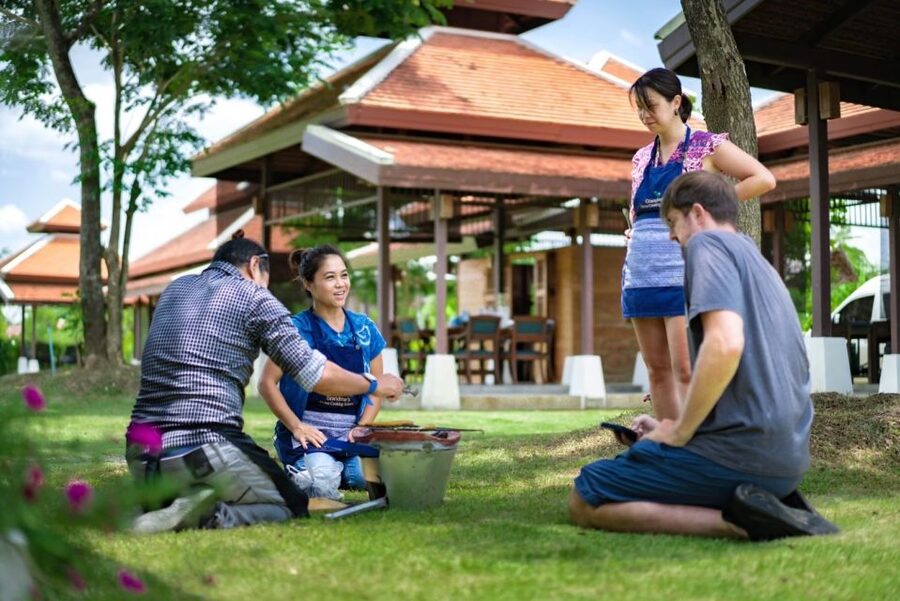
I also like that the class includes jobs that are often hidden from the final recipe. You wash vegetables, light a charcoal grill, mill flour, collect eggs, and grate coconut. None of these tasks is glamorous, but they show you the work behind familiar Thai food. The hand grater and traditional millstone are especially useful for understanding how food was prepared before electric kitchen equipment took over.
The setting sounds spacious, with separate areas that can still feel private from other classes. That is a welcome feature if you prefer a calm lesson rather than a noisy cooking hall.
More Cooking Classes in Chiang Mai
- Half-Day Thai Cooking Class at Organic Farm in Chiang Mai
★ 5.0 · 19,087 reviews - Chiang Mai: Cooking Class, Market & Thai Herbs Garden Tour
★ 4.9 · 4,824 reviews - Chiang Mai: Authentic Cooking Class with Market & Farm Visit
★ 4.9 · 4,546 reviews
The 8:30 to 9:00 pickup matters
Hotel pickup is included, with collection scheduled around 8:30 to 9:00 in the morning. You should be ready in the lobby by 8:30, even if your vehicle arrives later in that window.
This is practical in Chiang Mai, where a cooking school outside the central hotel area can be awkward to reach on your own. The return transfer is also included, so you do not need to arrange a taxi after a long morning of cooking and eating.
The full activity lasts six hours. That gives the class enough time for the market, farm, preparation, cooking, lunch, and dessert work. It also means this is not a quick activity to squeeze between temples and an afternoon train. Set aside most of the day.
Wear comfortable shoes. You will be moving between the market, farm, cooking spaces, and outdoor work areas. Sunglasses are also recommended. Leave valuables behind, since they are not allowed during the activity.
A local market lesson before the knives come out
The first useful stop is the local market. Instructors introduce the ingredients and seasonings used in Northern Thai food, helping you connect the names in the recipes with their real appearance.
This is one of the best parts of the day for anyone who wants to cook Thai food at home. A recipe can tell you to use chilli, herbs, vegetables, or curry ingredients, but it cannot always show you what to look for when shopping. Seeing the produce and seasonings in person gives you a better chance of finding suitable substitutes later.
English-speaking instruction is provided throughout the activity. You can ask about an ingredient before you use it, rather than simply copying a demonstration without knowing what is in the bowl.
The market portion may be less appealing if you want a class that begins cooking immediately. It takes time, and the aim is understanding rather than a fast route to lunch. For me, that tradeoff is worthwhile because the market explains the food culture behind the recipes.
Herbs, vegetables, and eggs at the organic farm
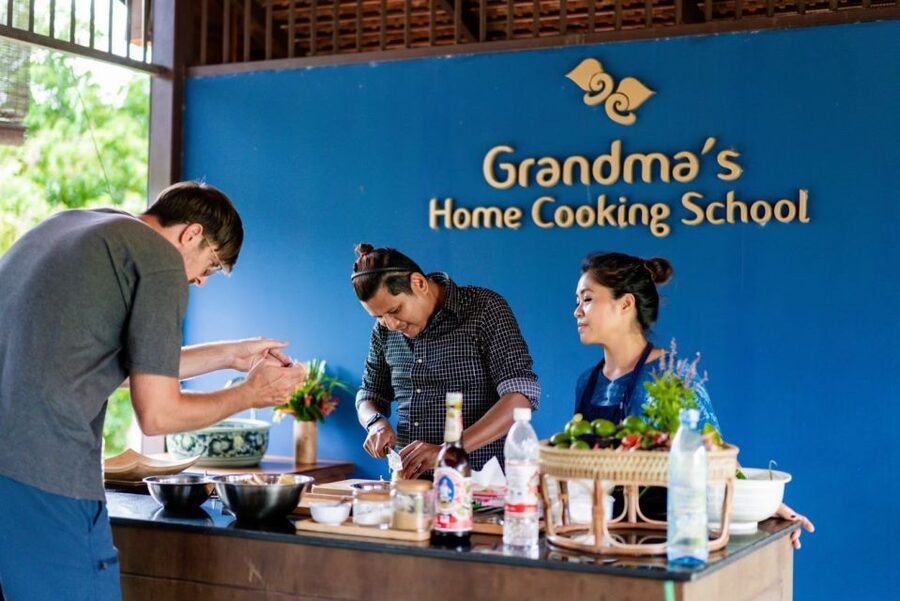
After the market, you tour the organic farm. The instructors explain Thai herbs and vegetables, and you pick ingredients for the dishes. The visit also includes the chicken coop, where you collect eggs.
This gives the class a clear sense of place. You are not only learning a Northern Thai recipe in Chiang Mai. You are handling some of the plants and ingredients used to make it, then carrying them into the cooking session.
The farm also adds variety to a six-hour class. You are not standing at a counter for the entire morning. Expect a mix of walking, listening, collecting, washing, and preparing.
You should keep your expectations practical. The information provided does not promise a large agricultural tour or a long lesson about farming methods. Think of it as a guided ingredient walk connected directly to your lunch.
Something different for another day:
- Chiang Mai: Elephant Sanctuary, Waterfall & Bamboo Rafting
★ 4.9 · 9,160 reviews - Chiang Mai: Doi Inthanon National Park Eco-Friendly Tour
★ 4.6 · 6,667 reviews - Chiang Mai: Elephant Sanctuary & Waterfall Group Tour
★ 4.9 · 5,780 reviews - Chiang Mai: Chiang Rai Temples, Karen Tribe and Hot Springs
★ 4.7 · 5,401 reviews
Five Northern Thai dishes, plus a dessert session
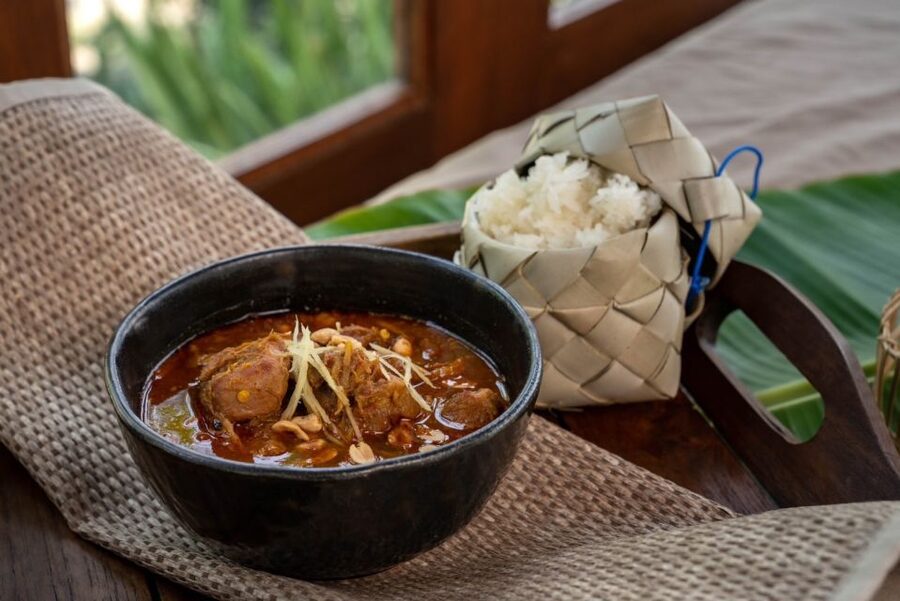
The included menu lists five main dishes. You prepare Northern Thai sausage, Nam Prik Ong or Nam Prik Num, Northern pork belly curry, curry young jackfruit, and stuffed dough pyramids.
Northern Thai sausage
Northern Thai sausage gives the class a chance to work with one of the region’s best-known foods. Making it yourself helps you understand the preparation rather than simply ordering it at a restaurant.
Nam Prik Ong or Nam Prik Num
You may prepare Nam Prik Ong, a spicy Northern Thai pork and tomato dip, or Nam Prik Num, a green chilli dip. These are different choices, so ask which one is planned if you have a strong preference.
This either-or format is useful for dietary planning and personal taste. It also means the menu is not quite as fixed as a restaurant tasting menu.
Hang Lay curry
Northern pork belly curry, commonly called Hang Lay curry, brings a more substantial dish to the table. The class gives you hands-on guidance as you prepare it, so you can follow the steps and seasonings closely.
Curry young jackfruit
Young jackfruit curry adds a vegetable-based Northern Thai dish to the meal. It is a good reminder that the menu is not simply a series of meat recipes. You work with different textures and cooking methods across the meal.
Stuffed dough pyramids
The final included dish is stuffed dough pyramids, listed as Ka Nhom Tian or Kanomjok. This is one of the more unusual items on the menu for a visitor who has mostly encountered familiar Thai curries and noodles.
The course description also names grilled egg in banana leaf and Thai coconut pancakes. Because the information presents the class as six dishes in one section but five included dishes in another, I would ask the school to confirm the exact menu before booking. The dessert session clearly includes traditional sweets and refreshments, and the activity description specifically explains the traditional preparation of coconut pancakes.
The most memorable work happens by hand
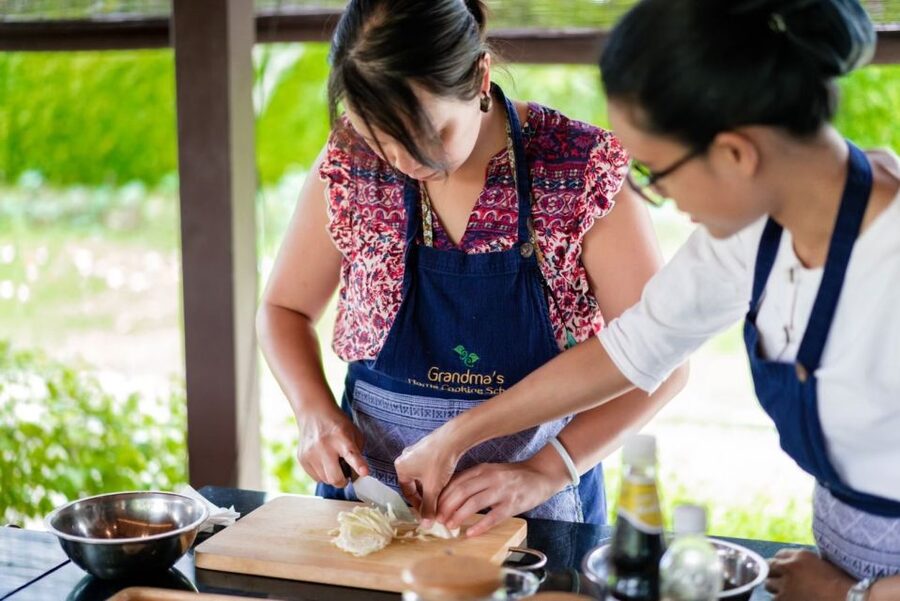
The class does not stop at mixing ingredients. You learn to light a charcoal grill, which adds a basic but useful cooking skill. You also wash vegetables, prepare flour with a traditional millstone, and grate coconut meat using a coconut grater.
These details give the day its character. You may forget one seasoning measurement later, but you are more likely to remember the feel of coconut being scraped by hand or the effort needed to mill flour with stone.
The work also helps you understand why traditional food preparation takes time. Modern kitchen tools make cooking quicker, but they can hide the physical steps that shape texture and flavour. This class lets you see those steps without turning the lesson into a museum demonstration. You take part in them.
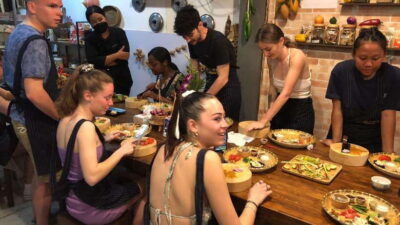
The instructors guide the group in English, and each person prepares their own portions. That last point is important. It allows you to focus on your own food and makes it easier to manage chilli, meat, or other dietary needs.
Lunch lets you judge your own cooking
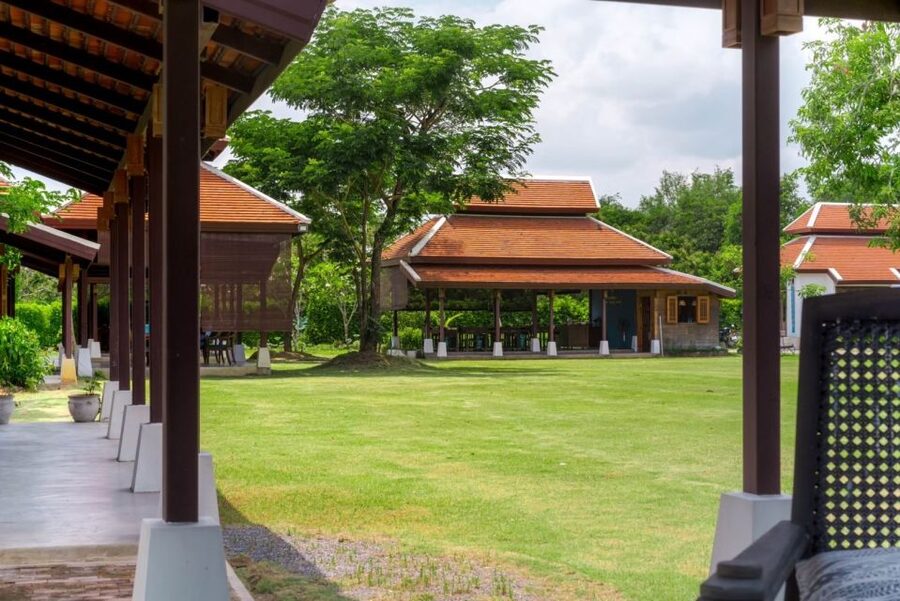
After the cooking, you sit down to eat your creations. Lunch is included, so the value of the class is not limited to watching demonstrations or taking home recipes.
Preparing your own food can make lunch more useful than a standard restaurant meal. You can identify which step produced a certain taste, which texture you prefer, and how much chilli suits you. The class is built around shared preparation, but your own portions are kept distinct. That helps ensure you receive the food you prepared.
If you cannot finish everything, take-home containers are available. This was a thoughtful detail in a recent class, especially because five dishes and dessert can make for a generous meal. You should not feel pressured to eat everything at once.
Dessert is a real lesson, not just a sweet ending
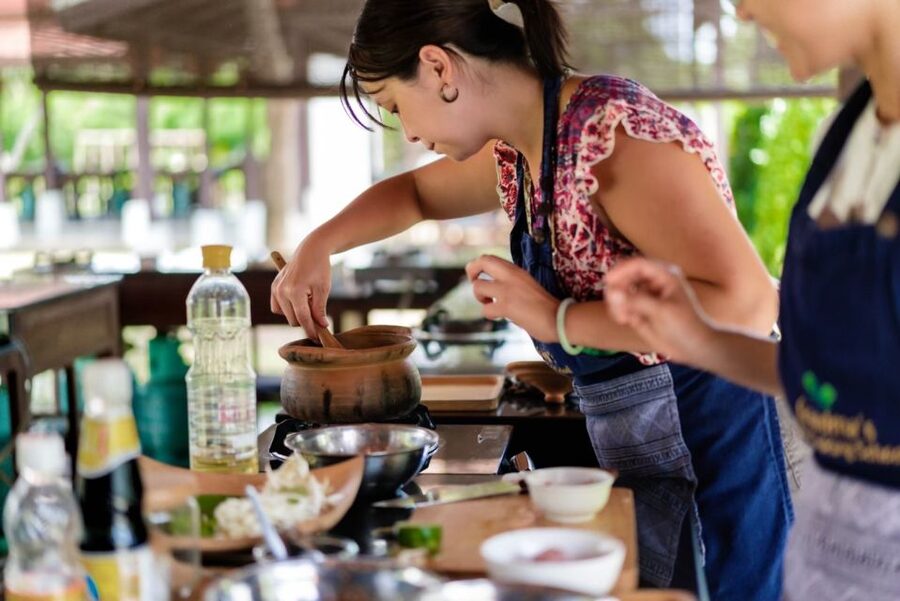
The dessert and refreshment session includes traditional Thai desserts and drinks. It also covers the traditional preparation of Thai coconut pancakes, including flour milling and hand-grated coconut.
This part gives the class a change of pace after the savoury dishes. You get to work with different ingredients and techniques, then taste the results with refreshments.
For children, the dessert work may be the easiest part to enjoy. Visitors aged 0 to 10 can join as observers, but they do not take part as full cooking students. That makes the activity workable for families, although younger children will need supervision and should not be counted on to complete the hands-on tasks.
Group size and teaching style
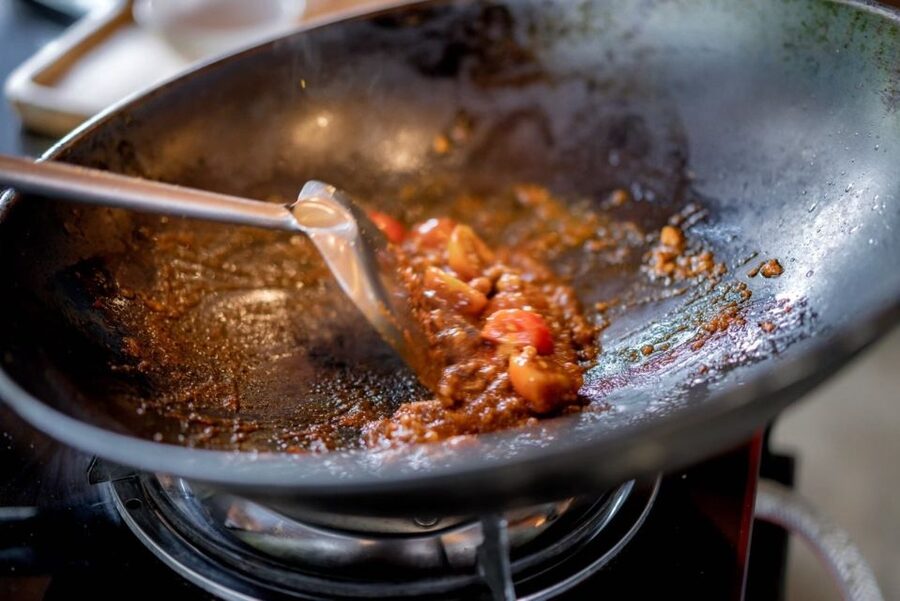
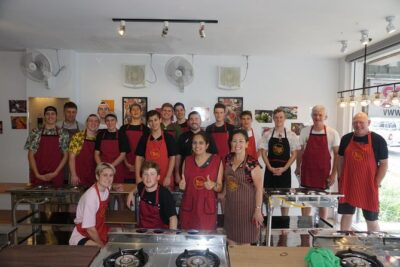
The recent classes described in the supplied information were notably small, with groups of five and eight people. That is a strong advantage for a cooking lesson. You have more room to ask questions, watch the demonstration, and get help before a sauce or dough moves past the right stage.
The instructor Best received particularly warm praise for being friendly, humorous, attentive, and clear. One participant appreciated that Best explained the ingredients during the garden walk and stayed involved throughout the day. Another class member said the instructor took excellent care of a group of only five.
A small group is not guaranteed unless the school confirms it for your date. Still, these examples suggest that the teaching style is personal rather than strictly scripted. The class is based on people helping one another, with English-speaking instructors guiding the work.
The school also received praise for cleanliness, including the toilets. That may sound like a minor point, but it matters during a six-hour food activity. Clean work areas and comfortable facilities make a long class much easier.
Is $48 good value for six hours?
At $48 per person, this is not the cheapest way to eat lunch in Chiang Mai. It offers better value if you count the full day rather than the meal alone.
Your price includes hotel pickup and return, a market visit, an organic farm tour, ingredient instruction, hands-on teaching, lunch, welcome snacks, drinks, dessert tasting, and an electronic recipe book. You also get access to a cooking setup and several traditional tools that would be difficult to experience during an ordinary restaurant meal.
The strongest value comes from the amount of participation. You are not paying only for a chef demonstration. You wash, grind, grate, grill, prepare, and eat. The recipe book gives the class some lasting use, although you will still need access to suitable ingredients and equipment at home.
For a visitor seeking a quick lunch or a short cultural stop, six hours may feel long. For someone who wants a full food-focused day with transport included, the price is fair.
Dietary needs and accessibility
The activity can accommodate special dietary requirements. Tell the school about your needs in advance so the instructors can plan the ingredients and portions.
The class is wheelchair accessible. The provided information does not describe every surface or transfer point, so you should still confirm any specific mobility needs before booking.
English is the listed teaching language. That makes the class suitable for English-speaking visitors who want explanations rather than a demonstration without much context.
Free cancellation is available up to 24 hours in advance for a full refund. You can also reserve now and pay later, which helps if your Chiang Mai schedule is still changing.
Who should book Grandma’s Home Cooking School?
I would recommend this class to you if you want to understand Northern Thai food at a practical level. It suits people who enjoy markets, gardens, traditional tools, and a relaxed meal made through several stages.
It is also a good choice for families with younger children who are happy to observe, couples looking for a full-day activity, and anyone who wants recipes to practice after returning home. The small groups described recently make it especially appealing if you prefer direct help from the instructor.
I would hesitate if you want a short, polished cooking demonstration with no walking or outdoor work. The market, farm, charcoal grill, and hand tools are central to the experience. They are the reason to book, but they also make the day longer and more active than a basic kitchen class.
Should you book this Chiang Mai cooking class?
Book it if you want more than a list of Thai recipes. The market and farm give context, the traditional tools make the work memorable, and lunch rewards you for taking part. The included transfers and recipe book strengthen the value at $48.
Before paying, confirm the exact menu, especially if you want grilled egg in banana leaf, Thai coconut pancakes, Nam Prik Ong, or Nam Prik Num. Also share dietary needs early and be ready in your hotel lobby by 8:30. For a hands-on introduction to Northern Thai food with a personal teaching style, Grandma’s Home Cooking School is a strong choice.
FAQ
How long does Grandma’s Northern Thai cooking class last?
The activity lasts six hours.
What time is hotel pickup?
Pickup is scheduled around 8:30 to 9:00 in the morning. You should be ready in your hotel lobby at 8:30.
Is hotel transportation included?
Yes. Round-trip transfers to and from your hotel are included.
How much does the class cost?
The listed price is $48 per person.
Which dishes will I cook?
The included menu lists Northern Thai sausage, Nam Prik Ong or Nam Prik Num, Northern pork belly curry, curry young jackfruit, and stuffed dough pyramids.
Are Thai desserts included?
Yes. The class includes a dessert and refreshment session with traditional Thai desserts. Thai coconut pancakes are also included in the activity description.
Will I visit a market?
Yes. You visit a local market to learn about Northern Thai ingredients and seasonings.
Will I visit a farm?
Yes. The class includes an organic farm tour where you learn about and pick Thai herbs and vegetables. You also visit a chicken coop to collect eggs.
Is the class taught in English?
Yes. English-speaking instructors provide the cooking instruction.
Can the class accommodate dietary requirements?
Yes. The activity can accommodate special dietary requirements. Share your needs with the school before the class.
Is the activity wheelchair accessible?
Yes. The activity is listed as wheelchair accessible.
Can children join?
Visitors aged 0 to 10 can join as observers.
What should I bring?
Bring comfortable shoes and sunglasses. Valuables are not allowed.
Do I receive the recipes afterward?
Yes. You receive an electronic recipe book that you can download and use to practice the dishes at home.
Can I cancel for a refund?
You can cancel up to 24 hours in advance for a full refund.
More Workshops
- Thai and Akha Cooking Class in Chiang Mai
★ 5.0 · 4,358 reviews - Chiang Mai: Cooking Class with Market and Pickup
★ 4.9 · 1,365 reviews - Chiang Mai: Cooking Class with Organic Farm at Mama Noi
★ 4.9 · 1,151 reviews - Chiang Mai: Evening Cooking Class and Local Market Visit
★ 4.9 · 648 reviews
Just added around Chiang Mai
- Chiang Mai: Chiang Rai White, Blue & Black Temples Day Tour★ 4.2 · 16 reviews
- Chiang Mai Adventure ATV Secret Waterfall and Bamboo Rafting★ 5.0 · 16 reviews
- Inthanon Small-Group with Kew Mae Pan Trail from Chiang Mai include Lunch★ 4.5 · 16 reviews
- 2-Day Best of Chiang Rai from Chiang Mai Private Package★ 4.5 · 16 reviews
- Doi Inthanon Discovery Tour: Waterfalls, Villages & Highest Peak★ 3.5 · 16 reviews
- Private-Tour Doi Suthep Temple and Khun Chang Kien Village Half-Day★ 4.5 · 16 reviews
- Chiang Mai Iconic Temples and City Tour★ 4.5 · 17 reviews
- Fantastic! Famous Doi Inthanon National park tour with 2hr trekking★ 4.5 · 17 reviews
Cooking Classes, compared.
Half-Day Thai Cooking Class at Organic Farm in Chiang Mai
Read our review →
Cooking Class, Market & Thai Herbs Garden Tour
Read our review →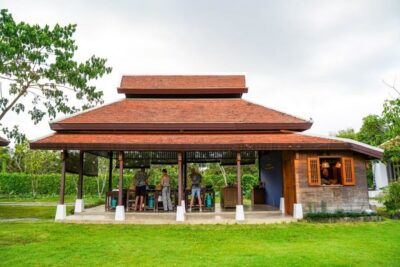
Authentic Cooking Class with Market & Farm Visit
Read our review →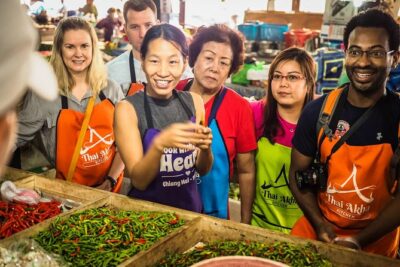
Phuket Thai Cooking Class with Market Tour Option
Read our review →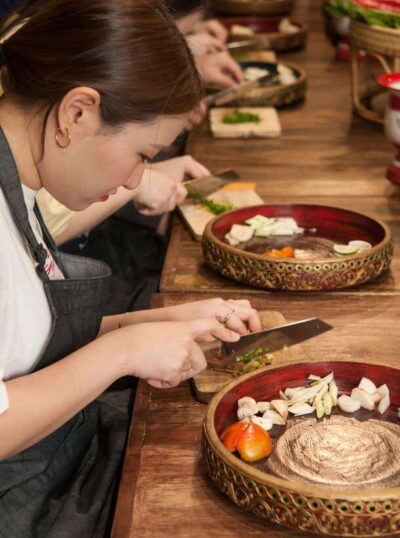
Tingly Thai Cooking School Half-Day Cooking Class
Read our review →Browse the lists this tour appears in