
Reviewed · COOKING CLASSES
Sukhumvit: Hands-on Thai Cooking Class & Market Tour in BKK
Come hungry, leave with recipes. This 210-minute class gives you a useful taste of Bangkok beyond restaurant tables, starting with fresh ingredients and ending with four dishes you prepare yourself. I especially like the hands-on curry-paste lesson and the chance to eat each dish while it is hot, rather than watching a chef do all the work.
I also like the clear daily menu, which lets you choose a class based on the Thai foods you enjoy most. The main thing to consider is the schedule: only the morning session includes the market visit. Afternoon and evening classes replace it with mango carving, and the meeting point changes, so you need to read your booking details carefully.
In This Review
- Key Details Before You Book
- Why This Class Works Well in Bangkok
- The Morning Market Tour Near Asoke
- Afternoon and Evening Classes at Sukhumvit 4
- Four Dishes, Prepared One at a Time
- Monday
- Tuesday
- Wednesday
- Thursday
- Friday
- Saturday
- Sunday
- The Curry Paste Is the Best Learning Moment
- The Kitchen, Teaching Style, and Pace
- Food Quantity, Dietary Requests, and Practical Comfort
- What You Take Home
- Meeting Points and Timing That Matter
- Is the $45 Price Worth It?
- Who Should Book This Cooking Class?
- Final Verdict: A Practical Bangkok Food Experience
- FAQ
- How long does the Thai cooking class last?
- How much does the class cost?
- Does every class include a market tour?
- Where does the morning class meet?
- Where do afternoon and evening classes meet?
- How many dishes will I make?
- Can the school accommodate dietary requirements?
- Are drinks included?
- Do I receive the recipes after class?
Key Details Before You Book
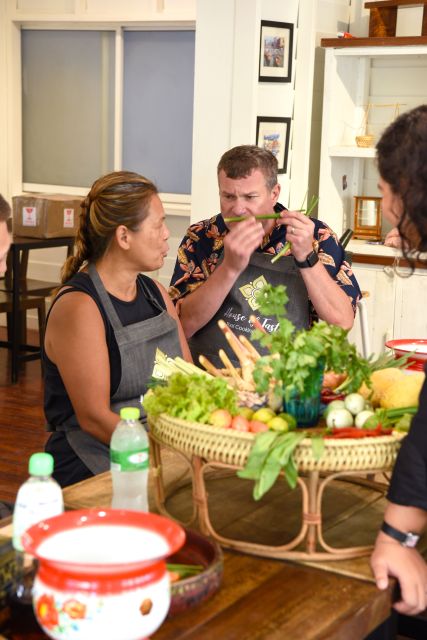
- Fresh-market start: The morning class begins near BTS Asoke and MRT Sukhumvit, then visits a nearby local market to study vegetables, herbs, spices, rice, and other ingredients.
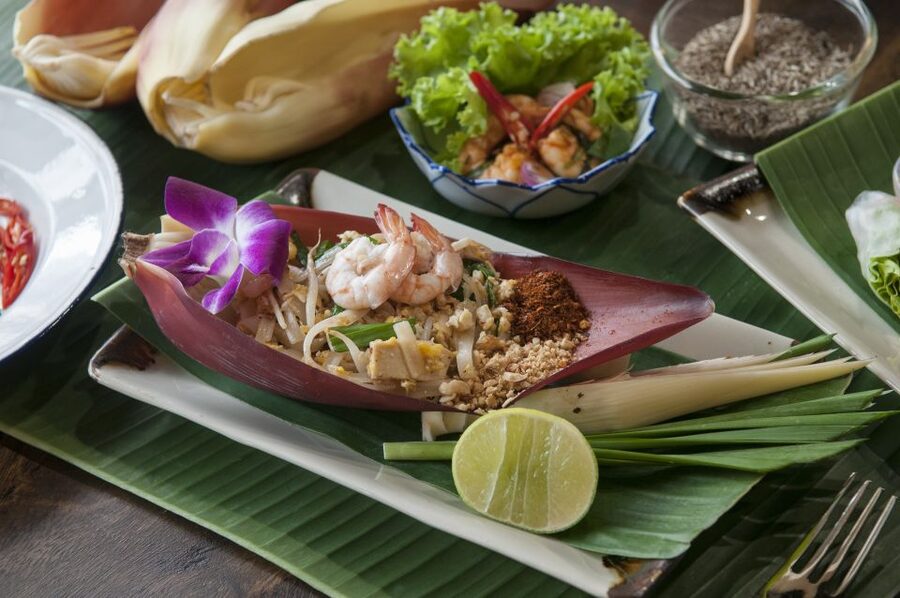
- Four dishes in one session: You cook and eat a soup or salad, a stir-fried dish, a curry, and mango sticky rice, with the exact menu changing by day.
- Curry paste from scratch: You do more than stir prepared sauces. The class includes making curry paste and learning about coconut milk.
- Different afternoon program: Afternoon and evening sessions do not include the market tour. They include mango carving instead, with ingredient instruction held at the school.
- Recipes sent afterward: You receive standard recipes by follow-up email, giving you a practical way to repeat the dishes at home.
- English and Thai instruction: The class is taught in English and Thai, with instructors such as April, Jay, May, and Pitch praised for clear explanations and good humor.
Why This Class Works Well in Bangkok
Bangkok has no shortage of cooking schools, but this experience gets the basic formula right: shop, learn, cook, eat, and take the recipes home. It is not a demonstration where you sit politely while someone else handles the knife. You take part in the preparation and taste your own work after each dish.
That matters because Thai cooking depends on balance. Sour lime, salty fish sauce, sweet palm sugar, hot chilies, fragrant herbs, coconut milk, and curry paste all have to work together. Seeing the ingredients before they reach the cooking station helps you understand what is going into the food.
The class is also a useful choice if you have only a short time in Bangkok. The meeting point for the morning session is at street level by BTS Asoke Exit 3 and MRT Sukhumvit Exit 3, two easy public transport references in central Bangkok. The school is in Sukhumvit 4 for afternoon and evening sessions.
At $45 per person, the price is reasonable for a three-and-a-half-hour activity that includes ingredients, equipment, drinking water, a four-course meal, a locker, instruction, and recipes. You are paying for more than lunch, but lunch is a substantial part of the value. Several dishes are prepared, served hot, and eaten during the session, so you should not plan a large meal before or after.
More Cooking Classes in Bangkok
- Bangkok: Hands-on Thai Cooking Class and Market Tour
★ 4.9 · 1,614 reviews - Bangkok: Tingly Thai Cooking School Half-Day Cooking Class
★ 4.9 · 1,191 reviews - Bangkok: Maliwan Thai Cooking Class with Market Tour
★ 4.9 · 1,133 reviews
The Morning Market Tour Near Asoke
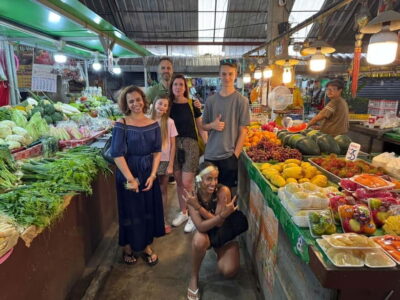
The morning version starts with a guided walk through a nearby market. This is the most local part of the experience, and I would choose it if you want more than a polished classroom lesson.
You browse for the ingredients used later in the kitchen. The instructor introduces Thai vegetables, rice, herbs, spices, sauces, and other items that can look unfamiliar when you first see them on a market stall. This short introduction gives you useful context before you start cooking.
The market visit also helps you notice the difference between a recipe on paper and the way Thai cooks shop. Fresh produce is not just a decorative part of the tour. It is the foundation of dishes such as som tum, tom yum, green curry, and pad Thai.
The exact length of the market portion is not stated, but the full activity lasts 210 minutes. You should wear comfortable walking shoes, especially if you are combining the market visit with a full cooking session.
One practical warning: make sure you go to the correct meeting point. The morning meeting place is at the street floor of the Asoke and Sukhumvit station exits, not at the school. Some people have found the school difficult to identify when arriving independently, so follow the directions closely and keep the school contact details available.
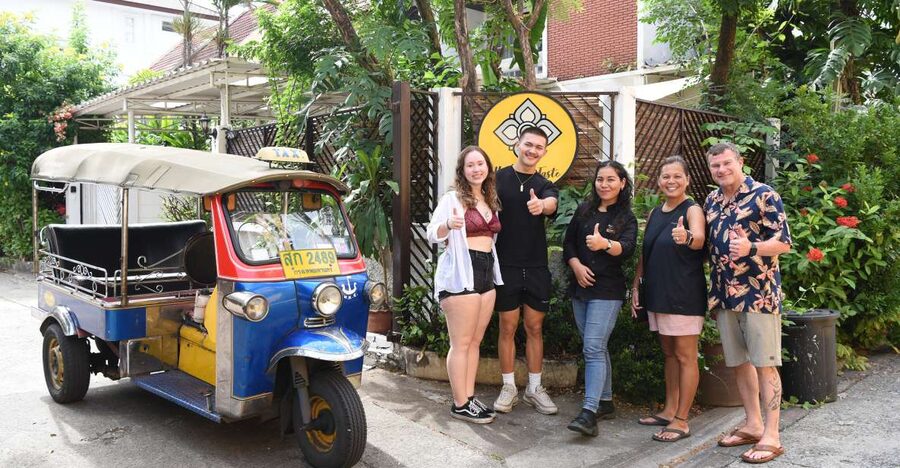
A short tuk tuk ride may be part of the morning transfer, depending on the session arrangements. It can add a pleasant Bangkok touch, but the confirmed essentials are the meeting point, market visit, cooking school, and class.
Afternoon and Evening Classes at Sukhumvit 4
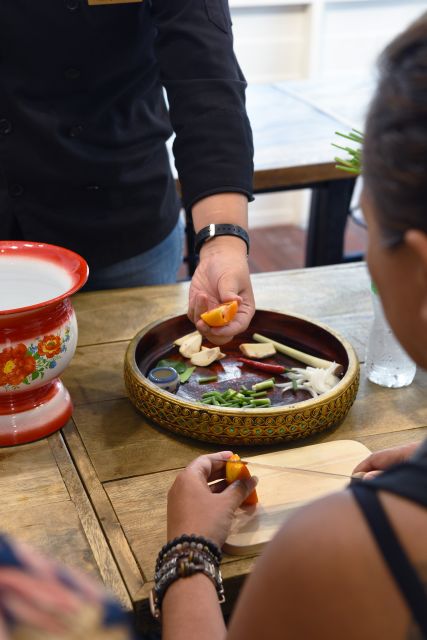
The later sessions follow a different pattern. You meet directly at House of Taste Thai Cooking School in Sukhumvit 4, where the introduction to Thai ingredients takes place.
Instead of walking through a market, you learn about ingredients at the school and take part in mango carving. This is not an inferior option, but it suits a different kind of afternoon. If you care most about shopping with a guide and seeing produce in its local setting, select the morning class.
If you want a later start, a smaller group, or a more direct route into the cooking, afternoon and evening sessions may work better. One evening class was described as having a smaller group, which can make it easier to ask questions and get individual attention. Group size can vary, so do not assume every evening class will be small.
Mango carving is a fun extra, but it does not replace the market experience in terms of local food context. I would treat it as a choice between two formats rather than a simple morning versus evening decision.
Four Dishes, Prepared One at a Time
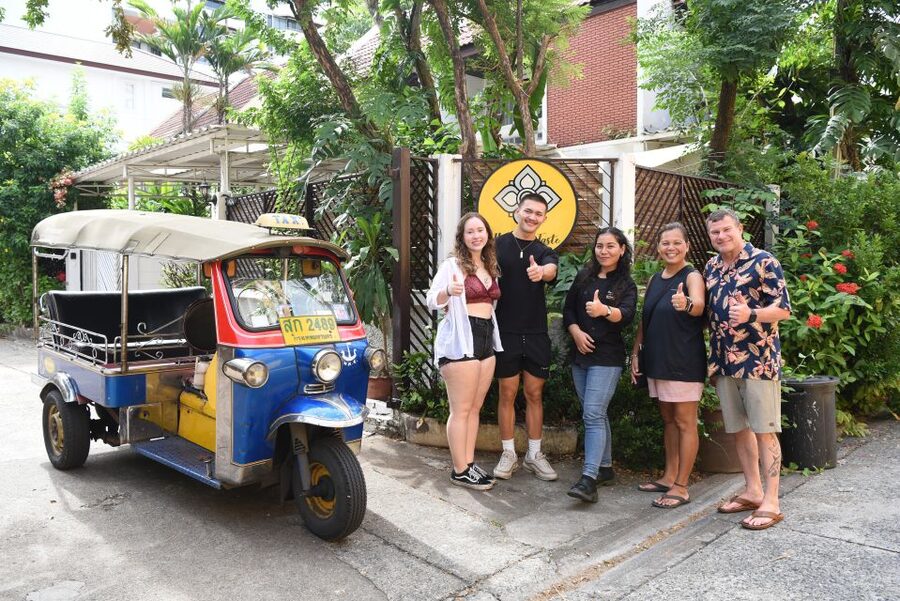
The class spends about two hours on the cooking portion. Ingredients and equipment are provided, and the kitchen team lays out the items needed for each dish in an organized way.
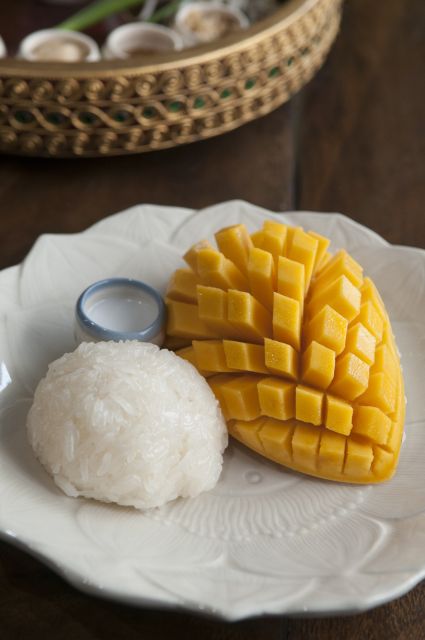
You prepare four traditional dishes, tasting them individually while they are fresh. The menus change each day, so check the weekday before booking if you have a particular favorite.
More Market Tours in Bangkok
- Bangkok: Damnoen Saduak Market and Maeklong Railway Market
★ 4.5 · 26,723 reviews - The Old Siam: Damnoen Saduak and Maeklong Railway Market
★ 4.5 · 10,992 reviews - Bangkok: Train Market & Floating Market with Boat Ride
★ 4.7 · 9,547 reviews - Bangkok: City Highlights Temple and Market Walking Tour
★ 4.5 · 3,990 reviews
Monday
- Thai papaya salad, som tum
- Stir-fried noodles with shrimp, pad Thai
- Green curry with chicken
- Mango sticky rice
Monday gives you a broad introduction to Thai food. Som tum brings heat, acidity, and crunch. Pad Thai covers the sweet-salty stir-fried noodle style, while green curry shows how coconut milk and curry paste create a softer, fragrant dish.
Tuesday
- Spicy coconut soup with chicken, tom kha gai
- Stir-fried Thai basil chicken, pad krapow gai
- Red curry with chicken
- Mango sticky rice
This is a good menu for someone who wants to compare several rich and spicy flavors. Tom kha gai is creamy and aromatic, while pad krapow gai is sharper and more savory. Red curry gives you a useful contrast with green curry.
Wednesday
- Hot and sour soup with shrimp, tom yum goong
- Stir-fried flat rice noodles with chicken, pad see ew
- Green curry with chicken
- Mango sticky rice
Wednesday covers three very recognizable Thai styles. Tom yum gives you hot and sour intensity, pad see ew is a milder noodle dish with a satisfying chewy texture, and green curry returns to coconut milk and curry paste.
Thursday
- Spicy minced chicken salad, larb gai
- Stir-fried noodles with shrimp, pad Thai
- Panang curry with chicken
- Mango sticky rice
Thursday is a smart choice if you enjoy salads with heat and herbs. Larb gai is quite different from som tum, and the Panang curry offers a thicker, rounder curry profile than green curry.
Friday
- Thai papaya salad, som tum
- Stir-fried Thai basil chicken, pad krapow gai
- Red curry with chicken
- Mango sticky rice
Friday focuses on bold, familiar Thai flavors. It is a strong pick if you already know you like papaya salad, basil chicken, and red curry.
Saturday
- Spicy coconut soup with chicken, tom kha gai
- Stir-fried noodles with shrimp, pad Thai
- Green curry with chicken
- Mango sticky rice
Saturday combines the creamy soup, famous noodles, and green curry. It is an accessible menu for first-time cooks because each dish shows a different technique and flavor balance.
Sunday
- Hot and sour soup with shrimp, tom yum goong
- Stir-fried flat rice noodles with chicken, pad see ew
- Panang curry with chicken
- Mango sticky rice
Sunday is the choice for tom yum and Panang curry fans. It also gives you pad see ew, a useful home-cooking dish because it is less dependent on a large list of curry ingredients.
The Curry Paste Is the Best Learning Moment
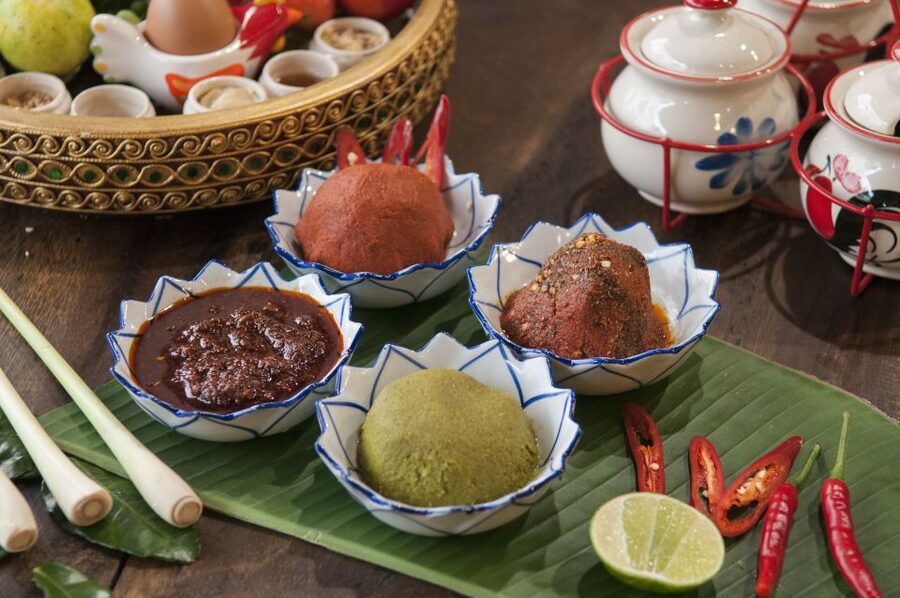
The curry paste lesson is the part I would value most. Many Thai meals are easy to order but harder to understand. Curry paste shows you where the flavor begins.
You work with herbs and spices, then combine them into a paste rather than opening a ready-made jar. The class also explains coconut milk and how it fits into curry preparation. This helps you see why green, red, and Panang curries are related but not identical.
Do not expect to become a Thai chef in one afternoon. You will not cover every regional style or every technique used in Thai kitchens. You will, however, gain a working pattern you can repeat: identify the main flavors, prepare the paste, add the protein or substitute, and balance the finished dish.
The school does not use MSG in the cooking. That may matter to you if you prefer to know exactly what is added to your food.
The Kitchen, Teaching Style, and Pace
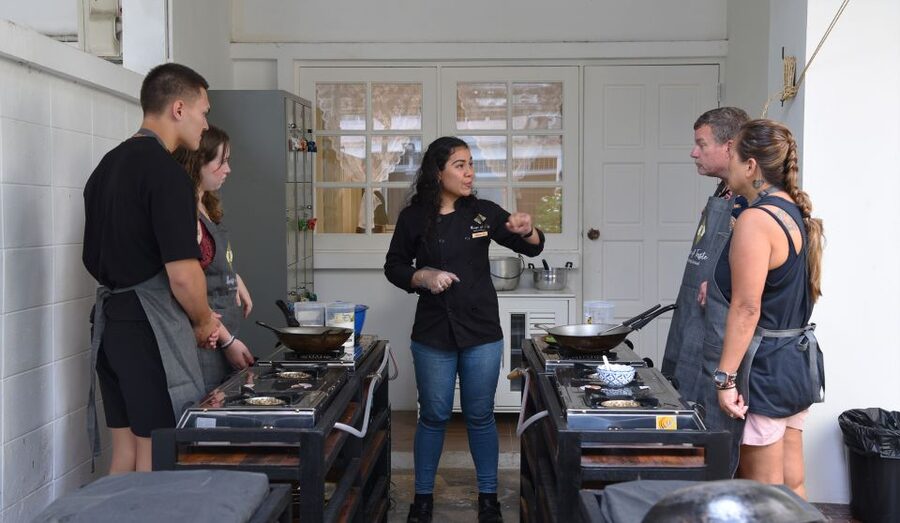
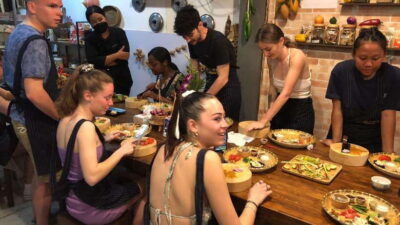
The cooking school is described as clean, modern, and well organized. Trays are prepared with the ingredients for each dish, and kitchen staff help with preparation and tidying. That organization keeps the class moving and leaves you more time to cook rather than search for missing items.
The instructors are a major part of the experience. April is repeatedly praised for her humor, friendly manner, and clear step-by-step teaching. Jay is also praised for explaining ingredients carefully and making the class easy to follow. Pitch is described as professional and thorough, while May received praise for her teaching and classroom setup.
The tone sounds relaxed rather than formal. That is helpful if you are a beginner or feel nervous about cooking in front of strangers. The class is designed to include the whole group, and instructors make an effort to explain each stage clearly.
The pace is another strength. You cook a dish, taste it, and then move on. That lets you notice the result while it is still fresh and gives you a chance to understand how the ingredients came together.
The tradeoff is that a group class cannot provide unlimited personal coaching. If you want a private chef lesson with every technique adjusted to your preferences, this is not that format. It is a social class with shared instruction, though smaller sessions may feel more personal.
Food Quantity, Dietary Requests, and Practical Comfort
Come with an empty stomach. Four dishes add up to a large meal, and you taste each one during the class. Several people found there was enough food to leave them very full, so avoid scheduling a heavy meal immediately afterward.
You can request vegetarian, halal, kosher, or allergy-friendly substitutions, but you need to notify the school in advance. Tofu has been used as a replacement for chicken, which is useful for people who do not eat meat. Do not wait until the first cooking step to explain a serious allergy or dietary restriction.
Alcohol is not included, though alcoholic drinks are available for purchase. Drinking water is included.
Comfortable shoes are recommended because the morning program involves walking to the market. The activity information says wheelchair access is available, but it also lists the experience as unsuitable for people with mobility impairments. That is a mixed message, so contact the provider before booking if you have specific mobility needs.
What You Take Home
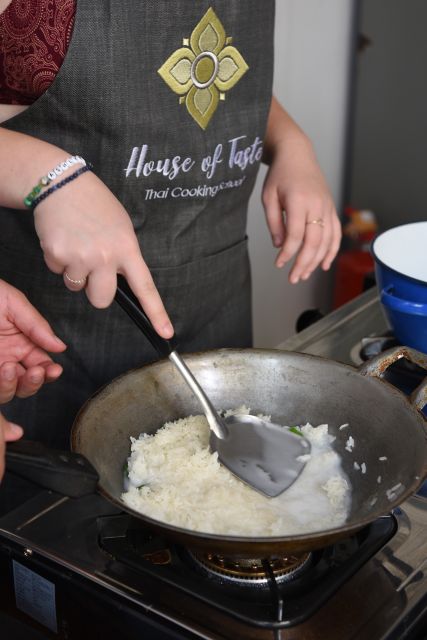
The recipes are sent by email after class. This is more useful than a souvenir photograph because it gives you a chance to repeat the food once the trip is over.
The recipes are described as standard recipes, so you should not assume they include every variation or a full Thai culinary course. Still, they provide a practical reminder of the dishes and methods covered in class.
A small food container could be useful if you want to save leftovers. The class does not promise takeaway packaging, but some people wished they had brought a container because the portions were generous. Pack one only if you are comfortable carrying it for the rest of your day.
Meeting Points and Timing That Matter
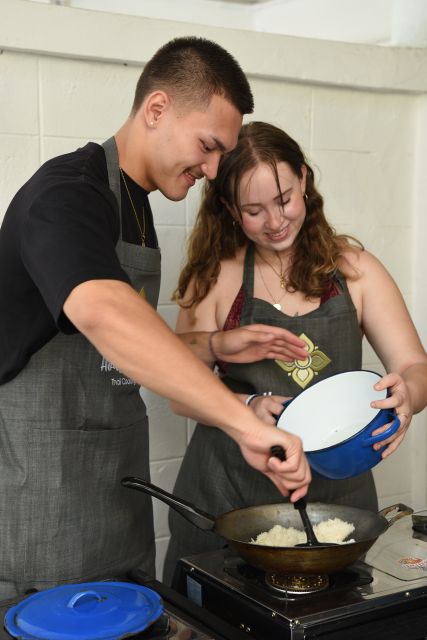
The morning meeting point is at street level by BTS Asoke Exit 3 and MRT Sukhumvit Exit 3. You can also pin Hey! Coffee MRT Sukhumvit as the meeting reference.
For afternoon and evening classes, meet at the school in Sukhumvit 4. These are different locations, so confirm your class time before setting out. Arriving ten minutes early is requested.
The total duration is 210 minutes, but starting times depend on availability. The instructor speaks English and Thai. You should allow extra time around the session if you have a flight, train, massage appointment, or dinner reservation afterward.
Free cancellation is available up to 24 hours before the activity for a full refund. You can also reserve now and pay later, which is useful if your Bangkok plans are still changing.
Is the $45 Price Worth It?
I think the price is fair, especially for the morning session. You receive a market visit, instruction, ingredients, equipment, a locker, drinking water, four dishes, and recipes. A full meal in Bangkok can be inexpensive, but this experience adds practical instruction and several hours of entertainment.
The value is strongest if you plan to cook Thai food at home. The recipes and curry-paste lesson continue to pay off after your holiday. The class is also good value for families and couples who want an activity rather than another restaurant meal. Teenagers have taken part successfully, and the format works for beginners.
The value is weaker if you mainly want a market tour. The market visit is limited to the morning class, and the class itself is the main event. If you dislike group activities, prefer a private lesson, or have very specific mobility needs, you should compare other options before committing.
Who Should Book This Cooking Class?
I would recommend it for first-time visitors who want a friendly introduction to Thai food. You do not need advanced cooking skills, and the step-by-step format makes the dishes approachable.
It is also a good fit for families with older children and teenagers, couples, solo participants, and anyone who enjoys meeting people while learning something practical. The social setting can be as enjoyable as the food.
Choose the morning session if the market matters to you. Choose afternoon or evening if you prefer a later schedule and like the sound of mango carving. Check the weekday menus before booking, especially if you have your heart set on tom yum, pad Thai, Panang curry, or pad krapow.
Final Verdict: A Practical Bangkok Food Experience
I would book this class if I wanted to understand Thai food rather than simply eat it. The strongest features are the clear instruction, fresh ingredients, curry paste made from scratch, generous meal, and recipes sent afterward.
The main limitation is the split format. Only the morning class includes the market, and the meeting points differ by session. Read the time and location details carefully, notify the school about dietary needs early, wear comfortable shoes, and arrive hungry.
For $45, you get a substantial meal plus a skill you can carry home. That makes House of Taste Thai Cooking School a worthwhile Bangkok activity, especially when you choose the menu and class time that match your interests.
FAQ
How long does the Thai cooking class last?
The activity lasts 210 minutes, or three and a half hours.
How much does the class cost?
The listed price is $45 per person.
Does every class include a market tour?
No. The market tour is available only with the morning class. Afternoon and evening classes include mango carving instead.
Where does the morning class meet?
Meet at street level by BTS Asoke Exit 3 and MRT Sukhumvit Exit 3. You can also use Hey! Coffee MRT Sukhumvit as the meeting reference.
Where do afternoon and evening classes meet?
Afternoon and evening participants meet at House of Taste Thai Cooking School in Sukhumvit 4.
How many dishes will I make?
You will prepare four traditional Thai dishes. The menu changes according to the day of the week.
Can the school accommodate dietary requirements?
Yes. Vegetarian, halal, kosher, and allergy-related substitutions can be arranged with advance notice.
Are drinks included?
Drinking water is included. Alcoholic drinks are not included, but they are available for purchase.
Do I receive the recipes after class?
Yes. Standard recipes are provided by follow-up email after the class.
More Workshops
- Hands on Thai Cooking Class and Market Tour
★ 5.0 · 660 reviews - Tingly Thai Cooking Class with Morning Market Tour
★ 5.0 · 589 reviews - Hands-on Thai Cooking Class & Market Tour in Sukhumvit
★ 5.0 · 571 reviews - Pink Chili – Thai Cooking Class and Market Tour in Bangkok
★ 5.0 · 416 reviews
More Shopping Tours
- Half-Day Railway Market and Floating Market Tour in Thailand
★ 4.5 · 3,924 reviews - Bangkok: Damnoen Saduak, Train Market & Mahanakhon Day Trip
★ 4.7 · 2,162 reviews - From Bangkok: Damnoen Saduak Floating Market Guided Tour
★ 4.4 · 2,020 reviews - Damnoen Saduak Floating Market and Maeklong Railway Market Tour
★ 4.5 · 1,588 reviews
Just added around Bangkok
- Kanchanaburi World War 2 Private Charter Pathway of the Past Tour★ 4.5 · 16 reviews
- 2-hour Bangkok Old City Night CHOB TUK TUK + Talat Noi Street Art★ 5.0 · 16 reviews
- Khao Yai National Park Hiking Day Tour: Haew Narok and Haew Suwat★ 5.0 · 16 reviews
- Floating Market with Great Pagoda Temple and Wat Sam Phran★ 5.0 · 16 reviews
- Shangri-La Hotel’s Salathip Thai Restaurant Experience★ 4.5 · 16 reviews
- Private Transfer Bangkok – Koh Kood Island★ 4.0 · 16 reviews
- Private Half-Day Bangkok Tour Explore Grand Palace and Wat Pho★ 4.5 · 16 reviews
- The Best Bangkok Temples★ 4.0 · 16 reviews
Cooking Classes, compared.
Half-Day Thai Cooking Class at Organic Farm in Chiang Mai
Read our review →
Cooking Class, Market & Thai Herbs Garden Tour
Read our review →
Authentic Cooking Class with Market & Farm Visit
Read our review →
Phuket Thai Cooking Class with Market Tour Option
Read our review →
Tingly Thai Cooking School Half-Day Cooking Class
Read our review →Browse the lists this tour appears in